 King County
 Why Board & Batten Fits Shoreline Homes
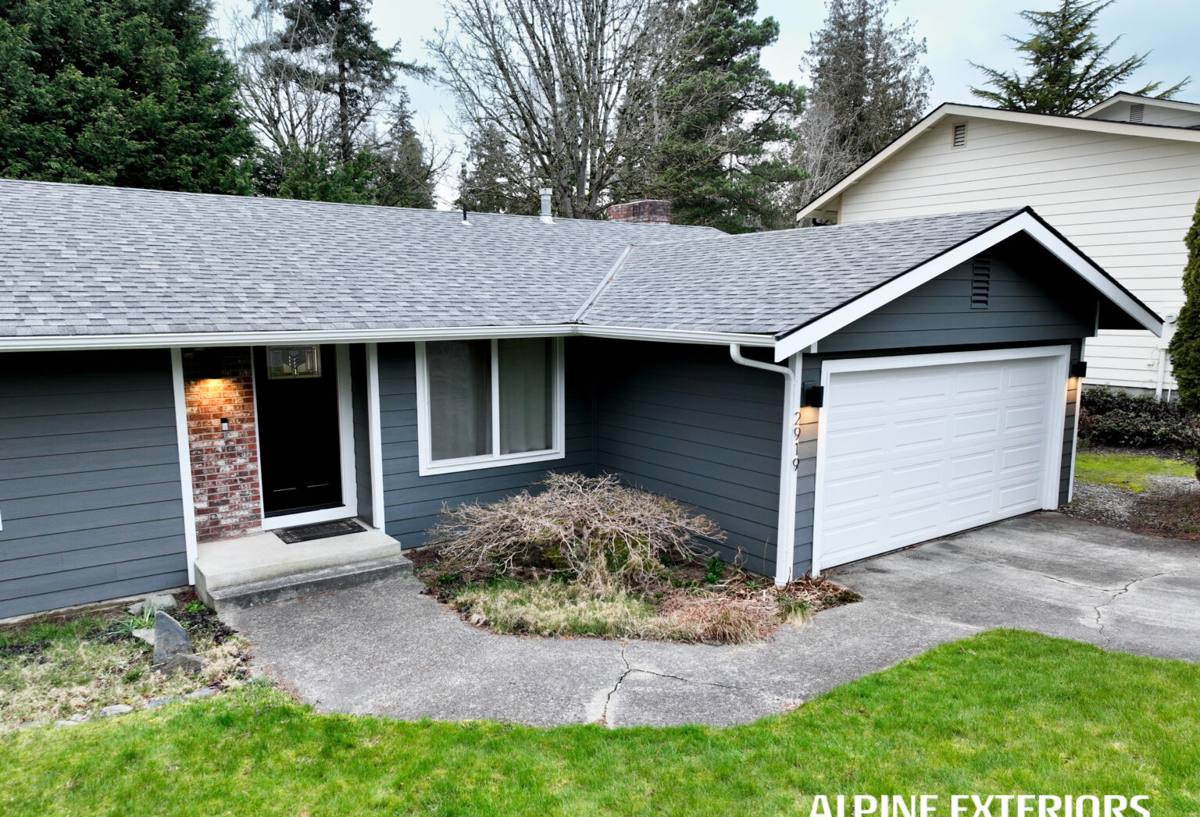
Board and batten has become one of the most requested siding styles in Shoreline over the past several years, and it's easy to see why. The wide, vertical boards with narrow battens covering each seam give a home a clean, modern-farmhouse or craftsman look that works well on the mix of mid-century ranches, updated bungalows, and newer builds found throughout King County. It also pairs naturally with gable accents, porch columns, and mixed-material facades — a popular combination in this part of the Puget Sound region.
But board and batten is also one of the least forgiving siding styles when it's installed wrong. The vertical orientation, the number of seams, and the reliance on battens to shed water mean that small installation mistakes show up as real problems faster than they would with standard lap siding. In a climate like Shoreline's, that margin for error gets even thinner.
What Shoreline's Climate Does to Siding
Shoreline sits along Puget Sound, and that proximity shapes what siding has to deal with here. Homes closer to the water get periodic salt-laden air off the Sound, while the broader King County marine climate brings long stretches of damp, low-sun weather for much of the year. Add mature tree canopy — common in many Shoreline neighborhoods — and you get shaded, slow-to-dry wall sections that never fully catch a break between storms.
Salt Air and Corrosion
Salt air accelerates corrosion on fasteners, flashing, and any exposed metal trim. It also degrades untreated wood and lower-grade coatings faster than a purely inland climate would. Material choice and hardware matter more here than they would on the east side of the county.
Driving Rain and Wall Exposure
Pacific storm systems often push rain sideways against west- and south-facing walls. On a board and batten installation, that driving rain gets forced directly at the vertical seams under the battens — exactly where water intrusion is most likely if the assembly wasn't built with proper drainage behind it.
Moss, Algae, and Shade
King County's long, wet moss season is hard on any siding material that can't dry out or that gives moss and algae a rough surface to grab onto. Shaded lots, north-facing walls, and areas under tree cover are the first places you'll see green growth start to creep in if the siding and finish aren't up to it.
Why We Only Install James Hardie for Board & Batten
We install James Hardie fiber cement exclusively — we don't offer LP SmartSide, vinyl, Cemplank, Allura, primed spruce, or cedar board and batten. That's a deliberate standard, not a sales pitch, and it matters even more on a style like board and batten where the material has to perform on every seam, not just the field of the wall.
How the Options Compare for This Style
| Material | Behavior in Shoreline's climate | Long-term concern for board & batten |
|---|---|---|
| Cedar / primed spruce | Attractive initially, but wood swells and shrinks with moisture cycling | Seams under battens are prone to cupping, splitting, and repainting on a short cycle |
| Vinyl vertical panel | Low maintenance but flexes and expands/contracts with temperature swings | Panel joints can telegraph, and impact damage is common and hard to color-match |
| LP SmartSide | Engineered wood strand product, sensitive to sustained moisture exposure | Cut and fastener edges need diligent sealing; a missed spot invites swelling over time |
| James Hardie fiber cement | Non-combustible, dimensionally stable, engineered for Pacific Northwest moisture | Requires correct installation but doesn't rot, and factory finish resists moss and fading |
We're not claiming the other products are junk — cedar can look beautiful, and vinyl has its place on some budgets. Our position is narrower: for the moisture load, temperature swings, and long wet season Shoreline sees, fiber cement gives the most predictable, lowest-maintenance result over a 20-30 year horizon, and it's the only material we're willing to warranty our workmanship against.
ColorPlus Finish on Vertical Boards
James Hardie's ColorPlus factory finish is baked on and backed by its own finish warranty, which matters more on board and batten than on lap siding — vertical boards catch more direct sun and rain exposure per square foot, and a job-site paint job simply doesn't hold up to that as evenly over time.
What a Correct Board & Batten Installation Involves
Most board and batten failures we get called out to inspect trace back to a handful of installation shortcuts, not the material itself. A correct job on a Shoreline home involves several things that aren't visible once the job is done, which is exactly why they're worth understanding before you hire someone.
Rainscreen and Drainage Plane
Vertical siding needs a drainage gap behind it — typically furring strips over a weather-resistant barrier — so any water that gets past the surface can drain and the wall assembly can dry. Face-nailing boards directly to sheathing with no gap traps moisture behind the siding, which is a slow-motion problem in a climate as wet as ours.
Fastening and Board Layout
Boards and battens need to be fastened according to Hardie's engineering specs — correct nail type, spacing, and embedment depth — with layout planned around window and door openings so seams don't land in awkward, leak-prone spots. Battens need enough width to reliably cover the gap beneath them under wind-driven rain, not just look right from the ground.
Flashing and Trim Details
Every horizontal transition — window heads, water tables, roof-to-wall intersections — needs proper flashing integrated with the drainage plane. On board and batten, the bottom termination and any horizontal trim bands are common failure points if they're caulked instead of properly flashed.
- Furring strips or an approved rainscreen product behind the siding, not direct-to-sheathing installation
- Manufacturer-specified fastener type, spacing, and penetration depth
- Properly sized and lapped flashing at every horizontal trim break and window head
- Factory-primed or ColorPlus-finished cut edges sealed per Hardie's install guide
- Batten width sufficient to shed wind-driven rain, not just meet the boards visually
- Ground clearance and bottom termination detailed to keep splash-back off the lowest boards
Our Process for Shoreline Homeowners
We start with a walk-around assessment of the home, looking at wall orientation, tree cover, existing moisture damage, and how exposed the house is to wind-driven rain off the Sound. That assessment shapes decisions like furring strip thickness, flashing details, and where extra attention is needed — a shaded north wall under mature trees gets treated differently than a sun-exposed south elevation.
From there we walk through Hardie panel and color options, confirm the layout and batten spacing against the home's window and trim lines, and give a clear scope before work starts. Installation follows manufacturer specifications throughout, not job-site shortcuts, and we clean up thoroughly at the end of each work day — siding jobs generate a lot of cut material and packaging, and we don't leave that for the homeowner to deal with.
Maintenance: What Board & Batten Actually Needs Here
One of the appeals of fiber cement board and batten is how little ongoing maintenance it needs compared to wood, but "little" isn't "none," especially in King County's climate.
- An annual rinse-down helps keep moss and algae from establishing on shaded walls
- Caulking at trim joints and penetrations should be inspected every year or two and refreshed if it's cracking
- Gutters and downspouts should be kept clear so overflow isn't running down the siding face
- Any impact damage or cracked boards should be addressed promptly rather than left through a wet season
Compared to repainting cedar board and batten every few years or chasing swelling on engineered wood panels, this is a modest list — but skipping it entirely still shortens the life of any siding system.
Cost Factors to Expect
| Factor | Why it affects your project |
|---|---|
| Wall complexity | More corners, windows, and trim transitions mean more cuts, flashing, and labor time |
| Existing siding removal | Tear-off and disposal of old material adds cost versus a bare or already-stripped wall |
| Sheathing or moisture repair | Rot or damage found once old siding comes off needs to be repaired before new siding goes on |
| Board width and batten spacing | Wider boards and closer batten spacing use more material per square foot |
| Height and access | Two-story walls, steep lots, or limited access increase equipment and labor needs |
We don't quote pricing without seeing the home — too many of these factors are specific to your walls — but we're always upfront about what's driving the number once we've assessed the job.
Why Hire a Crew That Already Works Shoreline
Board and batten done right depends on details that are easy to get wrong if a crew isn't used to the Puget Sound region's moisture load: how much rainscreen gap is enough, where flashing needs extra attention on a shaded wall, how salt air affects fastener choice near the water. A crew that regularly works Shoreline and the surrounding King County area has already worked through those questions on other homes with similar exposure, tree cover, and weather patterns — not guessing at them for the first time on yours.
If you're considering board and batten siding for a Shoreline home, we're happy to take a look and walk you through what your specific walls need. The estimate is free, there's no pressure, and you'll get a straight answer about what a correct installation involves for your property — just fill out the form below to get started.