 King County
 Bothell's Exterior Climate Challenge
Bothell sits in a pocket of King County where tree canopy, proximity to the Sammamish River and Lake Washington watershed, and the broader Puget Sound weather pattern combine into a tough environment for exterior building materials. Homes here deal with long stretches of driving rain in fall and winter, humid air that lingers under mature trees, and a moss and algae season that can run most of the year on north-facing walls and shaded siding. None of that is unusual for King County, but it adds up differently depending on what your siding is actually made of.
Wood-based products absorb moisture and swell. Vinyl doesn't rot, but it doesn't stop moss and grime from taking hold in its seams either, and it can warp with the temperature swings between a cold, wet winter and a warm summer afternoon. Over years, homeowners in Bothell tend to notice the same failure points: caulk lines opening up, paint peeling on south and west exposures, dark streaking and green growth on shaded sides, and soft or delaminating spots low on the wall where rain splashes back off the ground.
Why This Matters Before You Pick a Material
Siding in this climate isn't just about looks. It's a moisture management system. Every seam, joint, and fastener is a place where water can get behind the cladding if the product or the installation isn't right for the conditions. That's the lens we use on every Bothell project, and it's the reason we've narrowed what we install down to one product family.
Why We Only Install James Hardie Fiber Cement
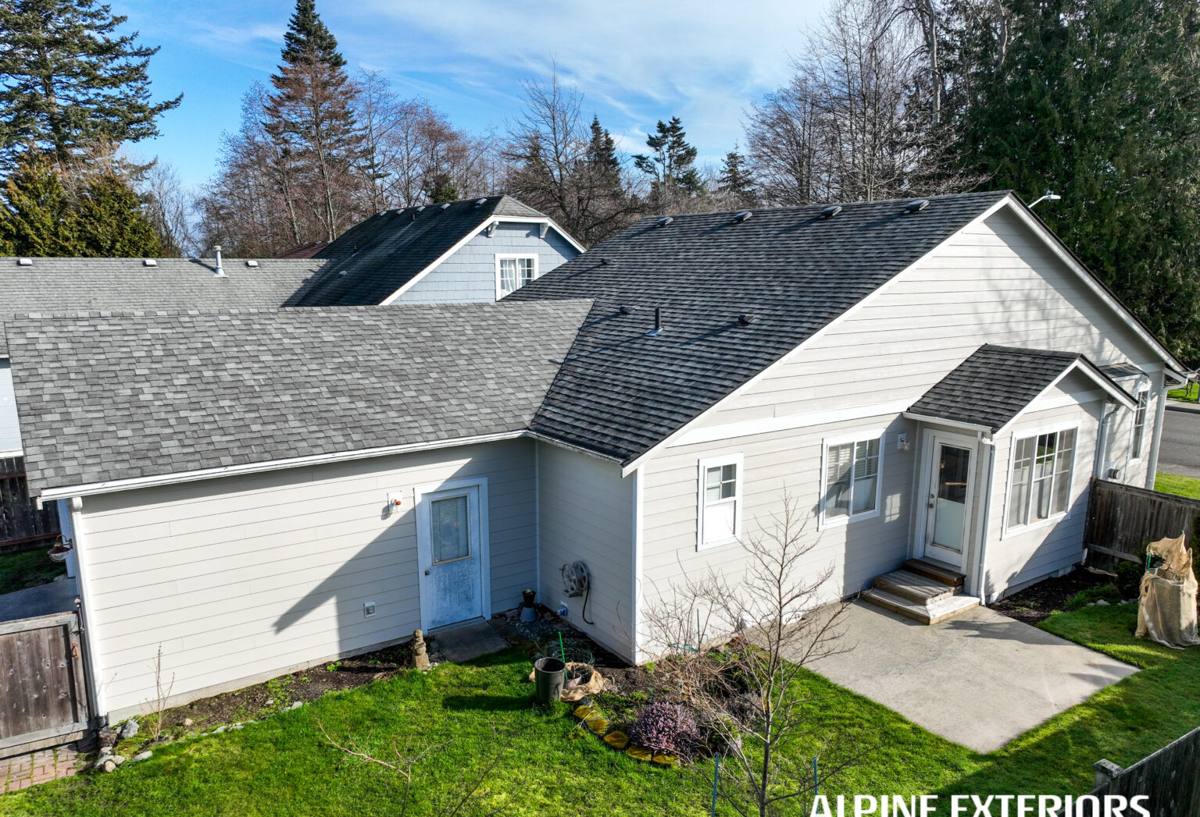
King County Siding installs James Hardie fiber cement siding exclusively. We don't install LP SmartSide, vinyl, Cemplank, Allura, primed spruce, or raw cedar. That's not a marketing line — it's a standard we hold because of what we've seen play out on homes in this exact climate over time.
Fiber cement is a mix of cement, sand, and cellulose fibers, engineered to resist moisture absorption far better than wood-based composites and to hold paint and factory finish far longer than most alternatives. James Hardie in particular builds region-specific product lines — their HZ5 formulation is engineered for climates like ours, with freeze-thaw cycling and sustained moisture exposure factored into the product itself. It's non-combustible, which matters increasingly across Washington as wildfire risk gets factored into insurance and building decisions, and it carries a factory-applied ColorPlus finish backed by a real transferable warranty, rather than a job-site paint job that starts weathering the day it's rolled on.
What We're Not Saying
We're not telling you every other product is junk. LP SmartSide and cedar both have legitimate uses and defenders. Vinyl is inexpensive and low-maintenance in the right setting. But each comes with a trade-off we're not willing to install and stand behind under Bothell's rain load and shade patterns — whether that's a wood-based core's sensitivity to sustained moisture, a field-applied finish that ages faster than a factory finish, or seam and expansion behavior that doesn't hold up as well over 20-plus years of Pacific Northwest weather. We'd rather install one product very well than several products with an asterisk.
What Correct Installation Looks Like Here
Fiber cement performs the way it's supposed to only when it's installed to spec, and in a wet climate the details around water management matter more than the siding itself. Our process on a Bothell home generally includes:
- Removal of the existing siding and inspection of the sheathing underneath for rot, soft spots, or prior water damage
- Repair or replacement of any compromised sheathing before anything new goes up
- A correctly lapped weather-resistant barrier (house wrap) with all seams and penetrations properly taped and sealed
- Rain screen or furring strategy where appropriate, to let the wall assembly drain and dry rather than trap moisture against the siding back
- Proper flashing at windows, doors, and roof-to-wall intersections — the single most common source of hidden leaks
- Correct fastener type, spacing, and penetration depth per James Hardie's installation guidelines
- Factory-finished panels and trim installed with the manufacturer-specified gaps and sealant, not caulked tight in a way that traps water
That last point matters more than people expect. A huge share of "siding failures" we get called out to inspect aren't a material problem — they're an installation shortcut that let water in behind a perfectly good product.
The Rest of the Exterior: Roofing, Windows, and Decks
Siding doesn't work in isolation. Water that gets past a bad roof edge, an aging window flashing, or a rotting deck ledger board will find its way into your wall assembly regardless of what siding is on it. Because we handle roofing, windows, and decks in addition to siding, we look at a Bothell home as one connected system rather than four separate trades that never talk to each other.
That's especially relevant here because of how often roof, gutter, and siding issues in this region trace back to the same root cause: water that isn't being shed and directed away from the structure fast enough during our wet months. When we quote a siding job, we're also looking at your roofline, your window flashing, and any deck structures tied into the wall — not to upsell you, but because ignoring them can undermine new siding within a few years.
Siding Material Comparison for This Climate
| Material | Moisture Behavior in Wet Climates | Maintenance Load | Finish Longevity |
|---|---|---|---|
| James Hardie Fiber Cement | Engineered resistance to moisture absorption; HZ5 line built for this climate zone | Low — periodic washing | Factory ColorPlus finish, long transferable warranty |
| Vinyl | Doesn't absorb water, but seams and laps trap moisture, moss, and grime | Low to moderate — regular cleaning to prevent buildup | Color baked into material but can fade and become brittle over time |
| Wood-Based Composite (LP SmartSide type) | Wood core is sensitive to sustained moisture exposure if seals fail | Moderate — finish and seams need monitoring | Field or factory finish, variable depending on install and exposure |
| Raw Cedar | Absorbs and releases moisture readily; needs a functioning finish to manage it | High — refinishing on a recurring cycle | Finish typically needs attention every few years in this climate |
Why a Local Crew Matters
Bothell homes vary a lot — older homes closer to the historic downtown core, newer construction in the surrounding neighborhoods, homes tucked under heavy tree cover along the river corridor versus more open, sun-exposed lots. A crew that works across King County day in and day out recognizes those differences on sight: which walls are going to fight moss year-round, which exposures need extra attention to flashing, where the rain tends to drive hardest given the prevailing weather patterns off the Sound.
That local familiarity also shows up in smaller ways — knowing local permitting expectations, understanding how King County's building requirements apply to exterior work, and being able to show up for a warranty question or a follow-up inspection without a multi-hour drive. We're not a national outfit passing through; this is the region we work in every week.
What Drives Cost on a Bothell Siding Project
| Factor | Why It Matters |
|---|---|
| Extent of sheathing repair needed | Hidden water damage under old siding is common in mature Bothell neighborhoods and adds labor and material |
| Home size and wall complexity | More corners, gables, and trim detail means more cutting, fitting, and labor time |
| Siding profile and finish selection | Lap width, shingle-style panels, and trim packages vary in material cost |
| Access and site conditions | Tree cover, tight lots, and sloped yards can affect staging and scaffolding needs |
| Scope beyond siding | Bundling roofing, window, or deck work can affect overall project sequencing and pricing |
Living With Moss Season Once New Siding Is On
Even the best siding in King County will see some algae and moss activity on shaded, north-facing walls — that's just the reality of our climate, not a defect. What changes with a correctly installed James Hardie system is how easily that growth washes off and how little it actually harms the material underneath. A periodic gentle rinse keeps factory-finished fiber cement looking clean without the recurring refinishing or seam maintenance that wood-based or lower-grade products tend to demand. Trimming back overhanging branches where practical, keeping gutters clear so water isn't sheeting down the wall, and an occasional soft wash are typically all a Hardie exterior needs to look right through Bothell's long wet season.
If you're planning siding work, a roof replacement, new windows, or deck repairs on a Bothell home, we're happy to take a look and walk you through what we're seeing and why. Reach out for a free, no-pressure estimate — there's a form right below this page.