 King County
 Bothell's Weather Doesn't Go Easy on Roofs
Bothell sits in the Sammamish River valley in north King County, which gives it a specific kind of weather exposure. Storm systems moving in off Puget Sound bring driving, wind-pushed rain rather than the gentle straight-down kind, and the surrounding hills and river valley can funnel wind gusts that catch roofs at odd angles. Add in the mature tree canopy found throughout so many Bothell neighborhoods, a long wet season that stretches from fall through spring, and the moss growth that comes with all that shade and moisture, and you have a roof that's working hard almost year-round. Most of the time it holds up fine. But after a real windstorm, a fallen limb, or a stretch of sustained driving rain, damage can happen fast — and it isn't always obvious from the ground.
This page is about one thing specifically: storm damage roof repair for Bothell homes. Not a full re-roof, not general maintenance — the targeted work of assessing what a storm actually did to your roof and fixing it correctly, the first time.
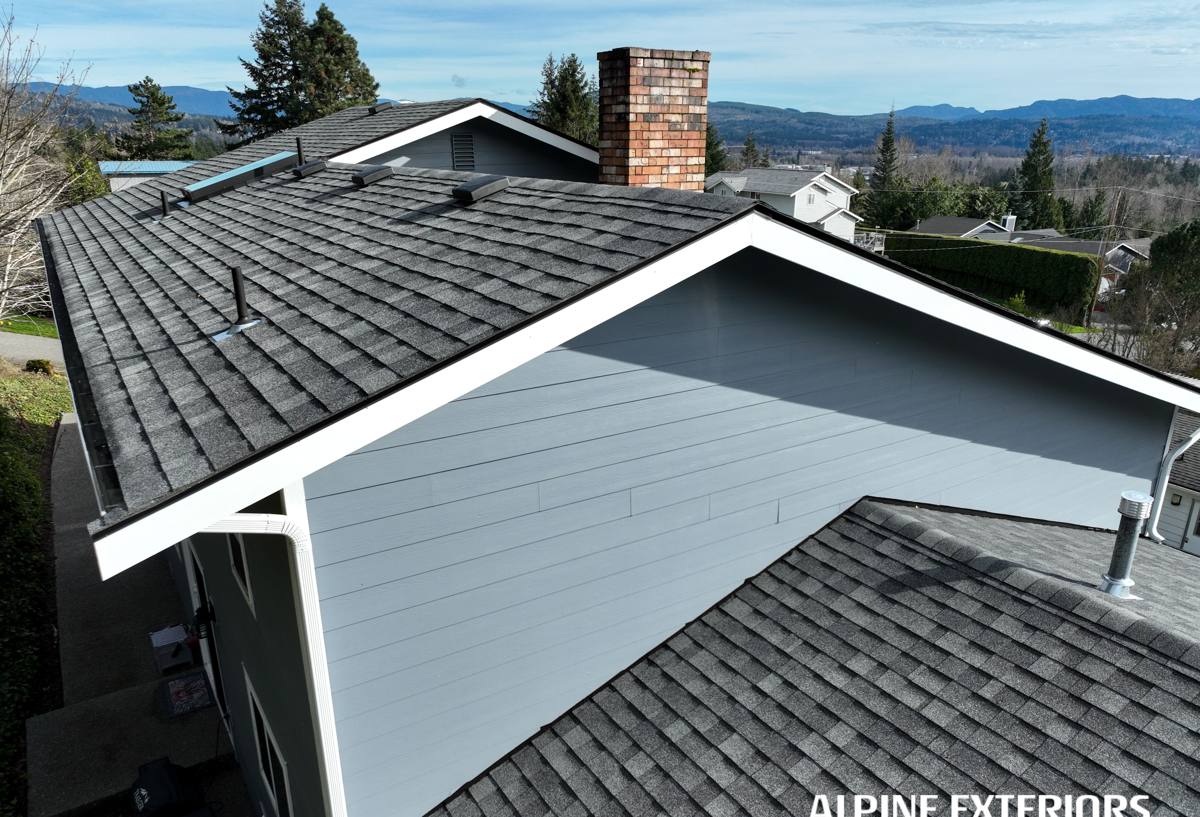
What Storm Damage Actually Looks Like on a Bothell Roof
Wind-Lifted or Missing Shingles
Strong gusts, especially the kind that funnel through the valley during fall and winter storms, can lift the tab edge of a shingle enough to break its seal without tearing it off completely. From the ground it may look fine. Up close, the seal is broken and the next rain gets underneath it. Fully missing shingles are the obvious version of this same problem.
Tree Limb and Debris Impact
With as much tree cover as Bothell has, falling limbs are one of the most common causes of storm-related roof damage in this area. Impact damage ranges from a few cracked or punctured shingles to bent flashing, dented vents, or in more serious cases, damage to the roof deck underneath. Even a limb that bounces off without leaving an obvious hole can crack a shingle's mat or knock granules loose in a way that shortens its life.
Wind-Driven Rain Intrusion
Because Bothell storms often push rain sideways, water can find its way in around chimneys, skylights, vent boots, and roof-to-wall transitions even when the shingle field itself looks undamaged. This kind of leak is sneaky — it shows up as a stain on a ceiling or a damp attic weeks after the actual storm, once the flashing seal has finally given way.
Moss and Debris Damming
Storm debris — needles, small branches, moss torn loose by wind — often piles up at valleys and behind chimneys right when heavy rain is coming down hardest. That creates a temporary dam that backs water up under the shingles above it. It's not always a case of the roofing material failing; sometimes it's simply debris in the wrong place during the wrong storm.
Why a Quick, Correct Repair Matters More Than It Seems
A small amount of water intrusion after a storm rarely causes a dramatic, obvious problem right away. That's exactly the issue. Moisture that gets into the roof deck, insulation, or wall cavity and isn't addressed can sit there through Bothell's long wet season, leading to soft decking, mold growth, or rot that costs far more to fix than the original storm damage would have. A repair done quickly, and done correctly the first time, is almost always cheaper than a repair done late or done wrong.
What a Correct Storm Repair Actually Involves
Storm repair gets treated as an afterthought by some contractors — a bead of sealant over a crack, a mismatched shingle nailed down without checking what's underneath it. That approach might stop a leak for a season, but it doesn't hold up to another Bothell winter. A repair worth paying for includes:
- A full inspection of the storm-affected area, not just the spot that's visibly leaking, since impact and wind damage often extends beyond the obvious point
- Checking the roof deck itself where there's been impact or sustained water intrusion, not just the shingle layer
- Replacing damaged underlayment, not just the shingles on top of it
- Correcting flashing at chimneys, vents, and valleys rather than just re-sealing over a failed flashing joint
- Matching shingle type, color, and where possible manufacturer as closely as the existing roof allows
- Confirming the repair meets current code requirements, especially around flashing and ventilation, rather than simply replicating what failed
Temporary protection matters too. If a storm has left an active leak or exposed decking, that area should be tarped and secured the same day it's found, before any permanent repair work begins — not left open to the next round of weather while paperwork gets sorted out.
Repair or Replace? What We Actually Weigh
Not every storm-damaged roof needs a full replacement, and not every roof is a good candidate for another patch repair. The right call depends on a handful of honest factors:
| Factor | Leans Toward Repair | Leans Toward Replacement |
|---|---|---|
| Roof age | Under roughly 12-15 years, still within expected service life | Nearing or past the manufacturer's expected lifespan |
| Extent of damage | Isolated to one section or slope | Spread across multiple slopes or the deck itself |
| Prior repair history | Few or no previous patches in the area | Multiple past repairs already stacked on the same section |
| Material availability | Existing shingle line is still available or a close match exists | Discontinued product with no reasonable match |
| Underlying deck condition | Solid, dry decking once exposed | Soft, rotted, or repeatedly wet decking found underneath |
We'll give you a straight answer on which side of that table your roof actually falls on, and why — not the answer that happens to be more profitable for us.
Working With Your Insurance Claim
Most storm damage repairs in this area go through a homeowner's insurance claim, and the process goes smoother when the documentation is solid from the start. When we assess storm damage, we photograph and describe it in enough detail to support a claim: what was damaged, how it's consistent with storm activity rather than pre-existing wear, and what a correct repair requires. We're glad to walk an adjuster through the roof directly if that's helpful, and we'll write our repair scope to match what actually needs fixing — not padded to inflate a claim, and not trimmed to save the insurer money at your expense. Our job is to give you an honest, well-documented assessment; what you do with your claim is between you and your carrier.
Our Process, Start to Finish
- Initial contact and scheduling. Tell us what happened and what you're seeing — a specific leak, visible debris damage, or just wanting a roof checked after a storm.
- On-site inspection. We look at the roof from the ground and, where it's safe to do so, up close, checking the full storm-affected area rather than just the reported spot.
- Temporary protection if needed. Active leaks or exposed decking get tarped the same visit to stop further damage while repair work is planned.
- Written assessment and estimate. You get a clear explanation of what's damaged, what caused it, and what the repair involves — including whether repair or replacement makes more sense.
- Repair work. Deck, underlayment, flashing, and shingle work performed to match the existing roof and meet current code.
- Final walkthrough. We confirm the repair with you before we consider the job done.
Why Hire a Crew That Already Works in Bothell
Storm damage repair isn't the kind of job where you want a contractor learning the local conditions on your roof. A crew that already works throughout King County and knows Bothell's particular mix of tree cover, valley wind patterns, and long wet season brings real advantages: they recognize the difference between storm damage and ordinary moss-season wear at a glance, they know what the City of Bothell and King County expect in terms of permitting for repair work when it's required, and they're not starting from scratch figuring out material suppliers or code requirements specific to this area. After a widespread storm event, local crews are also simply easier to get to your property quickly, rather than waiting on a company dispatching from outside the region.
Reducing the Impact of the Next Storm
A good repair fixes the damage that's already happened. A little follow-up maintenance reduces how much the next storm can do. Once your repair is complete, a few habits go a long way in a climate like Bothell's:
- Clear gutters and valleys of needles and debris before the heavy fall rains start, not after
- Trim back tree limbs that overhang the roofline, especially any that looked marginal after the last windstorm
- Address moss growth before it thickens into a mat that holds moisture against the shingles through the wet season
- Have flashing at chimneys, skylights, and vents checked annually, since these are the most common failure points in wind-driven rain
- Confirm attic ventilation is adequate, since trapped moisture from the inside can weaken a roof deck the same way storm intrusion does from the outside
If a recent storm has left you with a leak, visible debris damage, or just a nagging feeling that your roof took a hit, we're happy to take a look. Reach out for a free, no-pressure estimate using the form below — there's no obligation, just an honest read on where your roof actually stands.