 King County
 Siding in Ballard: Built for a Neighborhood Between Salt Water and Rain
Ballard sits close to Puget Sound and Salmon Bay, and that location shapes what happens to the outside of a house here. Homes in this part of King County deal with a near-constant mix of moisture and salt-laden air moving in off the water, layered on top of the long gray stretches of driving rain that define a Pacific Northwest winter. Add in the shade from mature trees on many Ballard lots, and you get a climate that is genuinely tough on exterior building materials — not in a dramatic, single-storm way, but in a slow, cumulative way that shows up as soft trim, streaked paint, and moss creeping up the north side of a house.
We install siding, roofing, windows, and decks across King County, and Ballard is one of the areas where we see the clearest evidence of what happens when exterior materials aren't matched to the environment. This page walks through what local homes tend to face, how we approach siding work here, and why we've standardized on one product system instead of offering the full menu of options.
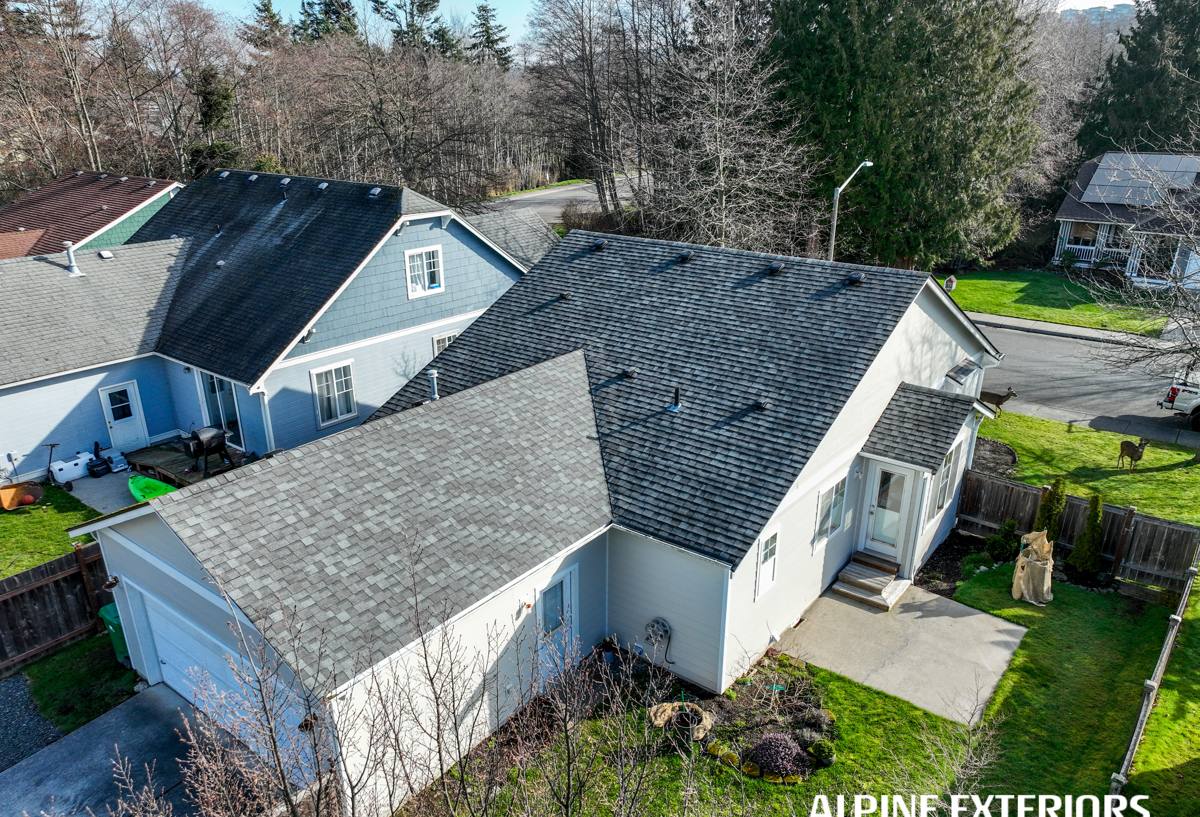
What Ballard's Climate Does to a House
Salt Air and Marine Moisture
Proximity to Puget Sound means Ballard homes are exposed to salt-carrying air more than communities further inland. Salt exposure accelerates corrosion on fasteners and metal flashing, and it can be harder on certain paint finishes and coatings over time, especially on the sides of a house that face the water or catch prevailing winds.
Driving Rain
Seattle's rain isn't usually intense, but it's frequent and often wind-driven, which means water gets pushed sideways into seams, laps, and trim joints that a straight-down rain would never reach. Over years, that's what causes hidden rot behind siding that looks fine from the curb — the damage starts at the joints and works inward.
Moss and Shade
Ballard's tree canopy and marine layer keep a lot of surfaces damp longer than they'd stay in a drier climate. North- and east-facing walls, and anything under overhangs or tree cover, are prone to moss and algae growth. Moss holds moisture against the siding surface, which is exactly the condition that speeds up decay in wood-based products and can dull or stain painted finishes.
Temperature Swings and Wood Movement
Our region doesn't see extreme heat, but the freeze-thaw cycles and seasonal humidity swings still cause wood and wood-composite products to expand, contract, and eventually check or crack at the surface — particularly at end cuts and fastener points that weren't sealed correctly.
Why We Install Only James Hardie Fiber Cement
We don't offer vinyl, LP SmartSide, Cemplank, Allura, primed spruce, or cedar siding. That's a deliberate decision, not a limitation of what we're capable of installing. Each of those products has legitimate strengths — cedar looks beautiful, vinyl is inexpensive, engineered wood siding installs quickly — but each also has a trade-off that shows up specifically in a climate like Ballard's:
- Cedar and primed spruce are wood. Wood needs consistent maintenance — recoating, caulking, and prompt repair of any breach — to hold up against the rain and moss exposure common here. Skip a maintenance cycle or two and moisture finds a way in.
- Vinyl siding is low-maintenance but it's a thin plastic product that can warp in heat, crack in cold impacts, and it relies on lapped, unsealed seams — those seams are exactly where wind-driven rain wants to go.
- LP SmartSide and other engineered wood products use wood strand cores. They perform well when installation and caulking are done exactly to spec and maintained on schedule, but any lapse in that maintenance in a wet climate shortens their working life.
- Cemplank and Allura are also fiber cement, and fiber cement as a category is the right material class for this climate. We chose to standardize on James Hardie specifically for its ColorPlus factory finish, its HZ5 formulation engineered for Pacific Northwest moisture conditions, and the depth of its installed track record and warranty backing.
James Hardie fiber cement is non-combustible, doesn't rot, and doesn't provide moss the same organic food source that wood-based sidings do. The ColorPlus finish is baked on at the factory under controlled conditions, which gives it more consistent, longer-lasting color performance than field-applied paint — a real advantage in a climate where a fresh paint job on wood siding might need attention again in five to seven years.
James Hardie Product Lines for This Area
| Product | Best Use | Why It Fits Ballard |
|---|---|---|
| HardiePlank lap siding | Most common wall application | Traditional lap look, engineered for wet-climate performance, wide color range |
| HardiePanel vertical siding | Modern facades, accent walls | Clean lines popular on Ballard's mix of older homes and newer infill builds |
| HardieShingle siding | Craftsman and traditional styling | Matches the shingle-style detailing common on older Ballard homes without the maintenance burden of real wood shingles |
| HardieTrim boards | Fascia, corners, window and door trim | Resists the moisture and rot that plague wood trim at joints and end cuts |
How the Siding Process Works
Assessment
We start by looking at the existing siding and the sheathing and framing behind it, not just the surface. In a moisture-exposed area like Ballard, hidden water damage behind old siding is common enough that we always plan for the possibility and check for it directly rather than assuming.
Water Management Details
Fiber cement siding is only as good as the water-resistive barrier and flashing details behind it. We pay particular attention to window and door flashing, kick-out flashing at roof-wall intersections, and proper lap and joint spacing — these are the details that determine whether a house stays dry through decades of driving rain, regardless of what siding product is on the surface.
Installation to Manufacturer Spec
James Hardie's warranty depends on correct installation — proper fastening, clearances, caulking at the right joints (and no caulking at the ones that need to breathe), and factory-recommended nailing patterns. We install to that spec as standard practice, not as an upsell.
Cleanup and Final Walkthrough
We walk the finished job with the homeowner, review the work, and make sure any questions about care and warranty registration are answered before we consider the job done.
Roofing, Windows, and Decks in the Same Climate
Siding doesn't work in isolation — a roof that's shedding granules or has failing flashing will eventually push moisture down into wall assemblies no matter how good the siding is. We handle roofing, window replacement, and deck construction as well, which lets us look at a Ballard home's full exterior envelope together instead of treating siding as a separate problem. Windows in particular matter here: aging window flashing is one of the more common hidden sources of wall moisture we find when we open up old siding.
What to Ask Before Hiring an Exterior Contractor
- Do they carry manufacturer certification for the specific siding product they're proposing?
- Will they show you the flashing and water-barrier details in writing, not just the finish product?
- Do they inspect for existing moisture damage before quoting, or just measure the visible surface?
- Is the warranty backed by the manufacturer and transferable if you sell the home?
- Do they have a permanent local presence, or are they working a route through the region?
Why a Local Crew Matters Here
Ballard's building stock ranges from early-1900s houses to recent infill construction, and the right approach to siding and flashing details can differ house to house depending on age, orientation to the water, and tree cover. A crew that works King County regularly has seen how these specific conditions play out over time — which walls tend to hold moisture, which older assemblies need extra attention at the sheathing level, and how moss and shade patterns on a given lot affect long-term maintenance. That local pattern recognition is hard to replace with a generic install process.
Maintenance After Installation
James Hardie siding is genuinely low-maintenance, but "low" isn't "none." A practical care routine in a climate like Ballard's includes:
- Rinsing off accumulated grime, pollen, and light moss growth once or twice a year, especially on shaded walls
- Keeping gutters clear so overflow doesn't run directly down the siding face
- Trimming back vegetation that keeps a wall surface damp or blocks airflow
- Re-caulking at trim joints if you ever notice a gap opening up, rather than waiting
- A visual check after major windstorms for any displaced or loosened pieces
Getting Started
If you're noticing moss buildup, soft trim, fading, or you're simply planning ahead for a home in Ballard, we're happy to take a look and talk through honest options — including whether siding replacement is even the right move yet, or if targeted repairs make more sense first. Reach out for a free, no-pressure estimate using the form below.