 King County
 Why Ballard Siding Takes a Different Kind of Beating
Ballard sits close enough to Puget Sound and Salmon Bay that homes here deal with a combination of stressors most inland King County neighborhoods don't face at the same intensity. Salt-laden air moves off the water and settles on exterior surfaces, accelerating corrosion on fasteners, trim flashing, and any metal components tied into the siding system. Add in Seattle's long wet season — months of driving rain pushed sideways by wind off the water — and siding here is under near-constant moisture pressure for a good chunk of the year.
Then there's moss. Ballard's tree cover, damp shade pockets, and mild temperatures create ideal conditions for moss and algae to take hold on north-facing walls, under eaves, and anywhere airflow is limited. Moss doesn't just look bad — it holds moisture against the siding surface far longer than open air would, which matters a lot depending on what the siding is actually made of.
None of this means Ballard homes are doomed to constant repair. It means the siding has to be installed correctly in the first place, and repairs need to address the actual cause of failure — not just patch the visible symptom.
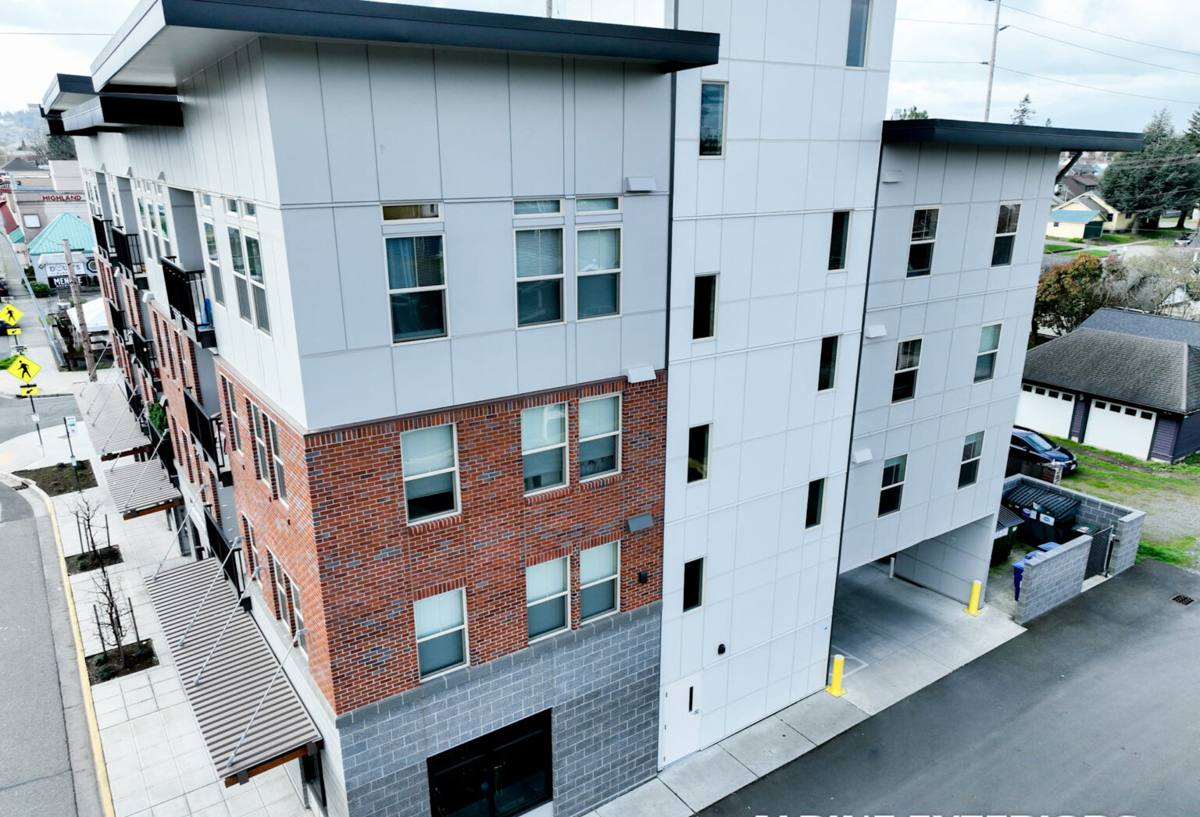
How Salt Air, Rain, and Moss Actually Damage Siding
It helps to understand the failure mechanisms, because they determine what a proper repair looks like.
Salt Air
Airborne salt is corrosive to exposed metal — nails, screws, flashing, and any fastener that wasn't rated for coastal exposure. Over years, corroding fasteners lose their grip, siding panels loosen, and small gaps open up that let water behind the cladding.
Driving Rain
Wind-driven rain doesn't just fall — it gets pushed sideways and upward into laps, seams, and butt joints. If those joints weren't sealed and shingled correctly during the original install, water works its way behind the siding rather than shedding off the face of it.
Moss and Prolonged Moisture
Moss holds water against the surface. For wood-based products — cedar, primed spruce, or engineered wood siding — that sustained moisture contact is where rot and delamination typically start. Fiber cement handles this exposure very differently than wood-based products, which is a big part of why product choice matters as much as installation quality.
Signs a Ballard Home Needs Siding Repair
Most siding problems don't show up as an obvious hole in the wall. They show up as small signals that are easy to write off as cosmetic. In a climate like Ballard's, it's worth taking these seriously earlier rather than later.
- Soft or spongy spots when you press on the siding surface
- Visible swelling, bubbling, or warping, especially near the bottom courses or under windows
- Paint that's peeling, bubbling, or failing faster than it should on one section of the house
- Persistent moss or algae growth that keeps coming back after cleaning
- Gaps or separation at butt joints, corners, or around trim
- Rust streaks below nail heads or fasteners
- Musty smell or visible staining on interior walls that share an exterior wall with a damaged section
- Siding that flexes or feels loose when you press on it near a seam
Any one of these on its own might be minor. Several together, especially on a wall that faces prevailing wind and rain, usually means moisture has already gotten behind the siding.
What a Correct Siding Repair Actually Involves
A repair that just replaces the damaged board and moves on often misses the reason the damage happened in the first place. Done right, a repair call includes a few distinct steps.
Diagnosis Before Demo
Before anything comes off the wall, the damaged area and the surrounding sections get inspected for how far the moisture has traveled. Water rarely stays exactly where the visible damage is — it tends to travel down and sideways behind the cladding, so the repair boundary needs to be based on where the sheathing and framing are actually dry, not just where the siding looks bad.
Checking What's Underneath
Once siding is pulled back, the house wrap or weather-resistive barrier, flashing, and sheathing underneath get evaluated. If the barrier is torn, improperly lapped, or missing at a critical point like a window head or butt joint, that's very likely the root cause — and it has to be corrected, not just covered back up.
Correcting Flashing and Drainage Details
This is the step that gets skipped most often on cheap repairs, and it's the one that determines whether the same spot fails again in two years. Flashing at windows, doors, and horizontal joints needs to shed water outward and downward, lapped correctly so gravity and drainage do the work they're supposed to do.
Matching and Installing New Material
New siding gets cut, fitted, and fastened to match the existing reveal and coursing, with fasteners appropriate for coastal exposure. Where we're doing the replacement, that material is James Hardie fiber cement — not a mixed patch of whatever product happens to be on hand.
Finish and Detail Work
Caulking, touch-up paint or factory-matched ColorPlus finish, and a final check of surrounding trim and corner boards close out the job so the repair blends in rather than standing out as an obvious patch.
Repair vs. Replacement: How We Decide
Not every damaged section needs a full re-side, and not every "quick patch" is actually the right call. The decision usually comes down to how much of the wall is affected and what's driving the damage.
| Factor | Points Toward Repair | Points Toward Replacement |
|---|---|---|
| Extent of damage | Isolated to one wall or a few boards | Recurring across multiple elevations |
| Underlying cause | One-off flashing or fastener failure | Systemic install issue (bad wrap, missing flashing throughout) |
| Age of existing siding | Newer install, otherwise sound | Original siding near or past expected service life |
| Sheathing condition | Dry, structurally sound | Soft, delaminated, or rotted framing found |
| Material match | Current product still available/matchable | Discontinued profile or incompatible legacy product |
We'll always tell you honestly which side of that table your home falls on. A targeted repair is often the right, cost-effective call — we're not going to push a full replacement when it isn't warranted.
Why We Only Repair and Replace With James Hardie Fiber Cement
When damaged sections need new material, we install James Hardie fiber cement — full stop. We don't carry LP SmartSide, vinyl, Cemplank, Allura, primed spruce, or cedar, and in a climate like Ballard's, that's a deliberate standard, not a brand preference.
Wood-based and engineered wood products depend heavily on an intact factory coating and perfect field sealing to resist moisture. Once that coating is compromised — by a nail pop, a cut edge left unsealed, or years of moss holding water against the surface — the substrate underneath is genuinely vulnerable to swelling and rot. Vinyl handles moisture fine but expands and contracts significantly with temperature and can crack or loosen fasteners over time in a way that opens gaps for wind-driven rain to exploit. Fiber cement doesn't share those weak points: it's non-combustible, dimensionally stable, and manufactured to resist moisture intrusion at the material level, not just at the coating level.
James Hardie's HZ5 product line is engineered specifically for climates like the Pacific Northwest's, and the factory-applied ColorPlus finish is baked on under controlled conditions rather than field-applied, which means better adhesion and a longer, more even service life on a house that's going to sit in wet weather for months at a time. It also comes with a strong transferable warranty, which matters on a repair job as much as a full install — new sections should carry the same protection as the rest of the house.
Our Process for a Ballard Siding Repair Call
- Inspection and diagnosis — We look at the damaged area and the surrounding wall, checking for how far moisture has traveled and what's driving it.
- Honest scope and estimate — You get a clear explanation of what needs to happen, what it will cost, and why — repair or replacement, no upsell either direction.
- Removal and underlayment check — Damaged siding comes off and we evaluate the house wrap, flashing, and sheathing before anything goes back on.
- Correcting root cause — Flashing, wrap, and drainage details get fixed, not just covered.
- New Hardie material installed — Cut, fitted, and fastened to match existing coursing and reveal, with fasteners suited to coastal exposure.
- Finish work and walkthrough — Caulking, color match, cleanup, and a walkthrough so you know exactly what was done and why.
What Happens When Siding Repair Gets Delayed
It's tempting to let a small area of damage sit, especially if it's on a wall you don't look at often. In Ballard's climate, that delay tends to cost more than the repair would have. Moisture that's gotten behind siding doesn't dry out on its own during a Pacific Northwest fall and winter — it sits there, and depending on the material, it can start affecting sheathing and framing underneath. What starts as a board replacement can turn into a sheathing repair, and in the worst cases, framing repair, once water has had a season or two to work its way in. Catching it early is almost always the cheaper path.
Simple Maintenance That Extends Siding Life Between Repairs
A well-installed, well-repaired siding system still benefits from basic upkeep, particularly given Ballard's moss and salt exposure.
- Rinse siding periodically to clear salt residue and airborne grime, especially on walls that face open water or prevailing wind
- Keep gutters clear so overflow doesn't run down the wall behind the siding
- Trim back vegetation and tree cover that keeps a wall shaded and damp, which encourages moss
- Address moss promptly with gentle cleaning rather than pressure washing, which can force water behind panels
- Walk the exterior once or twice a year and look for the early warning signs listed earlier in this page
None of this replaces a proper repair when damage is already present, but it does stretch the time between repairs and protects the investment once the work is done.
Why Hiring a Crew That Already Works in Ballard Matters
Siding repair isn't a one-size-fits-all trade. A crew that regularly works in Ballard and the surrounding King County waterfront neighborhoods has already seen how salt air, wind-driven rain, and moss interact with different siding systems over years, not just in a showroom. That experience shows up in the details — knowing which walls in this kind of setting tend to take the worst of the weather, what fastener and flashing choices hold up long-term near the water, and how to spot moisture damage before it becomes a structural problem. It's the difference between a repair that solves the actual problem and one that just looks fixed until the next wet season.
If you're seeing any of the warning signs above, or you just want a second opinion on a section of siding that doesn't look right, we're happy to take a look. Reach out for a free, no-pressure estimate using the form below — we'll give you a straight answer on what's going on and what it would take to fix it right.