 King County
 Kirkland's Exterior Climate Challenge
Kirkland sits on the east shore of Lake Washington, in the heart of King County's marine climate belt. That location gives homeowners some of the best views in the region, but it also means exteriors take a steady beating from moisture that never fully lets up. Rain here rarely falls straight down. Storms move through with wind behind them, driving water sideways into wall assemblies, around trim, and up under lap siding that isn't detailed correctly. Add the humidity that collects near the lakefront and the shade thrown by mature Douglas fir and cedar trees on many older Kirkland lots, and you get a climate that's almost custom-built to grow moss, feed mildew, and swell out weak siding materials.
Homeowners moving to Kirkland from drier parts of the country are often surprised by how fast an exterior can start looking tired here. It's not a defect in the house — it's the environment. Between the wind-driven rain, the extended damp season that can stretch from October through May, and the lower sun angles that leave north- and west-facing walls wet longer, King County exteriors are working harder than most people realize. Siding, trim, roofing, and window seals all take that load, and the materials that don't handle water well show it within a few years, not a few decades.
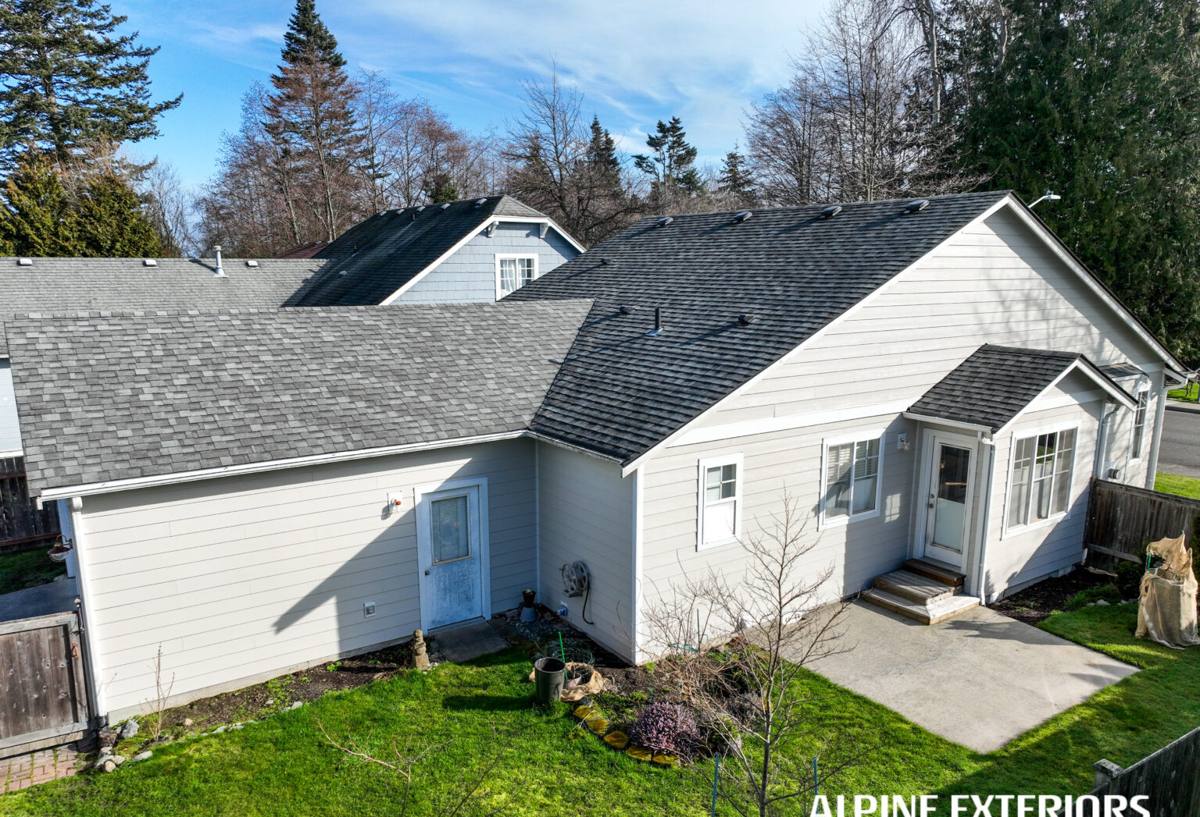
How Moisture and Moss Attack Siding Over Time
Moss and algae don't just look bad — they hold moisture directly against a wall surface, which is the one thing you don't want happening to most siding materials. Once a green film establishes on a north-facing wall or under an overhang with limited sun exposure, it keeps that section of siding wetter, longer, than the rest of the house. Over a few seasons, that constant dampness starts breaking down paint film, softening wood fiber, and in some cases working its way into seams and fastener holes.
Why This Hits Certain Products Harder
Wood-based products — including primed spruce and engineered wood siding like LP SmartSide — depend entirely on an intact factory or field-applied coating to keep water out. Once that coating is compromised at a cut edge, a nail hole, or a scuffed corner, the wood substrate underneath can begin to absorb moisture. In a climate with this much sustained dampness, that's a slow but real risk. Vinyl siding handles moisture differently — it doesn't rot — but it isn't rigid, and long spans can bow, buckle, or pop out of their track in wind, leaving gaps where water and pests get behind the panel.
Fiber cement behaves differently because cement and sand don't feed mold, don't rot, and aren't a food source for insects. That doesn't make it maintenance-free, but it changes the failure mode from "the material itself breaks down" to "the finish needs attention eventually" — a much easier problem to manage over the life of a home.
Our Siding Process for Kirkland Homes
Every Kirkland project starts with an actual walk-around, not a drive-by estimate. We look at the specific exposures on your lot: which walls get direct weather, which stay shaded and damp, where past moisture damage shows up around windows, trim, and the bottom courses of existing siding. That inspection shapes the plan more than any standard spec sheet does, because two houses a block apart can have very different moisture exposure depending on tree cover, roof overhangs, and which direction they face.
What Happens Once Work Begins
- Remove existing siding and inspect the sheathing and weather-resistive barrier underneath for hidden rot or moisture damage before covering anything back up
- Repair or replace any compromised sheathing, framing, or flashing — this step gets skipped by corner-cutting crews and it's the one that actually protects the house long-term
- Install or correct weather barrier and flashing details around windows, doors, and penetrations, since this is where most water intrusion actually starts
- Install James Hardie fiber cement siding per manufacturer specification, including correct fastening, clearances, and joint treatment
- Final detail work: trim, caulking at appropriate joints only, and a full walk-through with the homeowner
That sheathing inspection step matters more in Kirkland than it might in a drier climate. If water has been getting behind old siding for years, the framing underneath may already be compromised, and putting new siding over a wet wall assembly just hides the problem instead of solving it.
Why We Only Install James Hardie Fiber Cement
We made a decision, as a company, to install one siding product: James Hardie fiber cement. We don't install LP SmartSide, vinyl, Cemplank, Allura, primed spruce, or cedar. That's not a marketing position — it's a standard we hold to because of what we've seen happen to lower-tolerance products in exactly this climate.
James Hardie's HZ10 product line is engineered specifically for climates like ours — regions with sustained moisture, freeze-thaw cycling, and heavy rain exposure. The fiber cement composition doesn't support rot or insect damage, which removes two of the biggest long-term risks a King County home faces. The ColorPlus factory finish is baked on under controlled conditions and holds color and integrity longer than most field-applied paint jobs, which matters in a climate where UV exposure is inconsistent but moisture exposure is constant. Hardie also backs its siding with a strong, transferable limited warranty — meaningful protection on a product that's meant to last as long as the house.
None of this means Hardie is maintenance-free or immune to problems. Fiber cement still needs to be installed to spec — correct clearances off grade, correct fastening, correct joint and caulk details — or it can develop issues just like any other product installed wrong. The difference is that when it's installed correctly, it holds up to this climate better than the alternatives we've chosen not to carry.
Comparing Siding Materials in a Wet Climate
| Material | Moisture Behavior | Typical Maintenance | Longevity in This Climate |
|---|---|---|---|
| James Hardie fiber cement | Does not rot; resists moss-related degradation | Occasional wash-down; repaint decades out, not years | Decades with correct installation |
| Vinyl siding | Won't rot but can warp, bow, or gap under wind and temperature swings | Low, but gaps invite moisture behind panels | Variable; panel and seam issues over time |
| LP SmartSide / engineered wood | Wood substrate vulnerable once coating is compromised | Coating upkeep, edge sealing, prompt repair of damage | Depends heavily on maintenance discipline |
| Primed spruce / cedar | Absorbs moisture readily; needs an intact coating at all times | Highest — regular repainting and moisture monitoring | Shortest without consistent upkeep |
This table reflects general material behavior, not a claim about any specific product failing on any specific house. Every material on this list can perform reasonably well if installed correctly and maintained — the differences show up in how much ongoing attention each one needs to keep performing in a climate this wet.
Roofing, Windows, and Decks: The Whole Envelope
Siding doesn't work in isolation. We handle roofing, windows, and decks alongside siding because a house's exterior is one connected system, and problems in one area tend to show up in another. A roof that's shedding water improperly can send moisture down behind siding at the eaves. Window flashing that's failed lets water track into wall cavities regardless of how good the siding itself is. Decks attached to the house need proper ledger flashing so water doesn't migrate into the wall it's bolted to — a common failure point on older Kirkland homes with lakefront-style decks and outdoor living spaces.
When we're on a siding project, we're looking at these adjacent systems as a matter of course, because a full siding replacement is the best opportunity to catch and correct issues at these transition points before they're covered up for another 20 years.
Signs Your Siding Needs Attention
- Green or black film building up on north- or west-facing walls, especially under overhangs or near mature trees
- Soft spots, bubbling, or visible warping when you press on siding, particularly near the bottom courses or around window trim
- Paint that's peeling, chalking heavily, or failing faster than it should for its age
- Gaps, cracks, or visible seams where panels have shifted or pulled away from the wall
- Rising energy bills or noticeably drafty rooms, which can point to a compromised weather barrier behind the siding
- Visible rot or damage at corners, butt joints, and anywhere siding meets trim, flashing, or the foundation
Any one of these on its own might be minor. Several showing up together, especially on a home that hasn't had its siding inspected in a decade or more, is a good reason to get a professional set of eyes on it before winter's rain season arrives.
Why Choose a Local King County Crew
Kirkland isn't a generic climate zone — it's a specific set of conditions shaped by the lake, the tree cover, and the broader Puget Sound weather pattern that pushes damp, salt-tinged marine air across this part of King County for much of the year. A crew that works this region regularly knows which walls on a typical Kirkland lot take the worst of the weather, how local permitting and inspection processes run, and what actually holds up here versus what looks good on a spec sheet from a drier climate. That local knowledge shapes real decisions — where extra flashing attention pays off, which details matter most on a lakefront-adjacent property, and how to sequence work around our wet season instead of fighting it.
We're a King County-based exterior contractor, and Kirkland is part of the area we work in regularly, not a one-off trip. That means accountability if something needs a follow-up look after the job is done, and a crew that's already seen how our siding, roofing, window, and deck installations hold up through a full year of local weather.
If your Kirkland home's siding is showing its age, or you're planning ahead before the next wet season sets in, we're happy to take a look and walk you through what we'd actually recommend for your specific house. There's no pressure and no obligation — just a straightforward assessment and a free estimate using the form below.