 King County
 Why Kirkland's Climate Is Hard on Siding
Kirkland sits on the shores of Lake Washington in King County, inside the broader Puget Sound marine climate zone. That means homes here deal with near-constant moisture for much of the year: driving rain off the lake, long stretches of overcast and drizzle from fall through spring, and humidity that rarely lets exterior surfaces fully dry out. Add the salt-tinged marine air that moves inland off Puget Sound and you get a climate that is genuinely tough on building materials, not just uncomfortable to work in.
Many Kirkland lots also carry heavy tree cover, which keeps siding shaded and damp long after a storm passes. That combination of shade, moisture, and mild year-round temperatures is exactly what moss, algae, and mildew need to take hold. On siding that isn't engineered for this climate, you'll see it show up as green-black staining, soft spots, and paint that fails years before it should. A siding replacement in Kirkland isn't just a cosmetic project — it's an opportunity to correct the moisture path a house has been fighting for years.
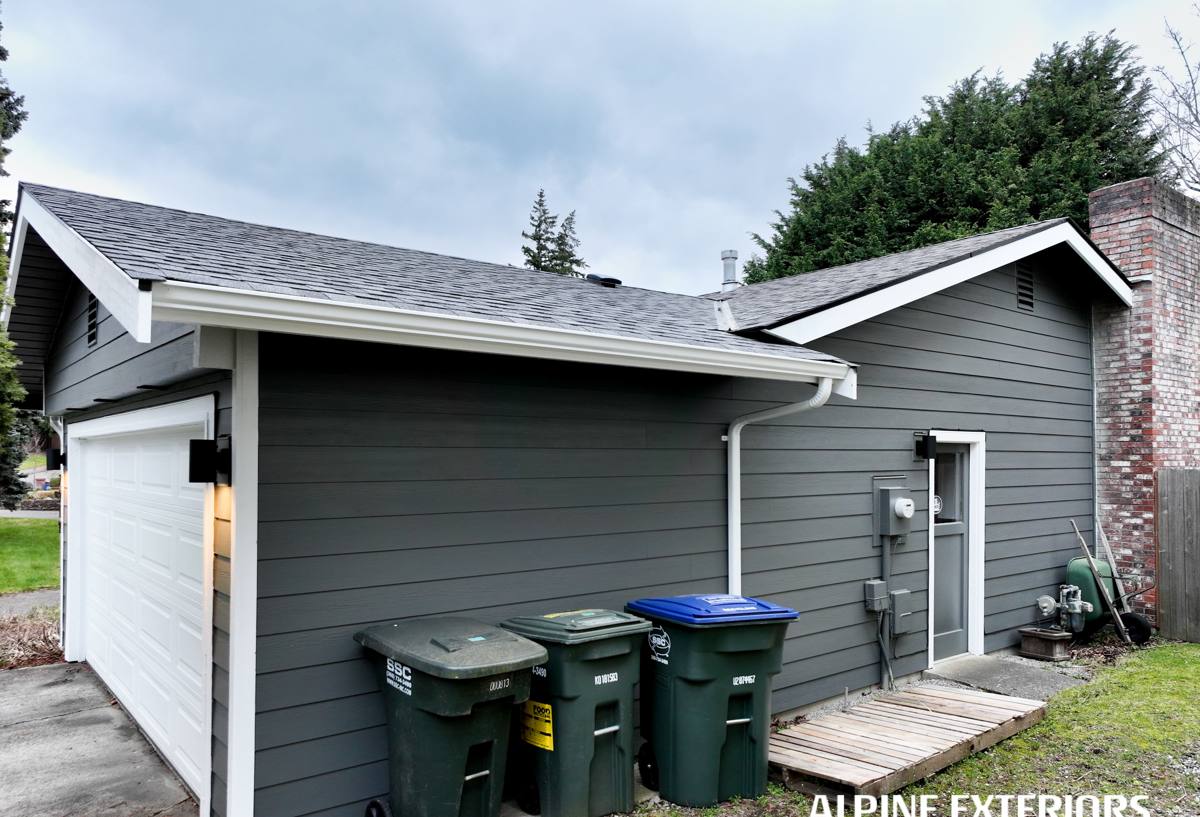
Signs Your Kirkland Home's Siding Needs Replacing, Not Just Patching
Some siding problems are legitimately fixable with a repair. Others are a sign the whole system — siding, house wrap, flashing — has reached the end of its useful life. Before you commit to a full replacement, it's worth knowing which category your home is in.
- Soft, spongy, or bouncy spots when you press on the siding, especially near the bottom courses and corners
- Paint or finish that bubbles, peels, or fails within a couple of years of repainting
- Moss or algae that returns within months of being cleaned off
- Boards that are visibly warped, cupped, or separating at the seams
- Gaps opening up around trim, windows, and doors that weren't there when the home was newer
- Rot or discoloration at the bottom edge of siding boards, especially near grade or under decks
- Rising heating bills with no other explanation, which can point to a compromised weather barrier
- Siding that has already outlived the realistic service life of its material
If you're only seeing one or two of these on a small area, a repair may be appropriate. If several show up across multiple walls, that usually means the underlying moisture management has failed, and patching individual boards won't solve the root problem.
What a Correct Siding Replacement Actually Involves
Tear-Off and What's Underneath
A proper replacement starts with removing the old siding down to the sheathing, not siding over it. That's the only way to actually see what's happening underneath — soft sheathing, missing or degraded house wrap, and old flashing mistakes are common finds on homes that are decades old, and none of them are visible until the siding comes off. Any damaged sheathing gets repaired before anything new goes back on; installing new siding over a compromised substrate just hides the problem for a few more years.
Flashing and Drainage Details
In a climate like Kirkland's, flashing and drainage details matter more than the siding material itself. Window and door flashing needs to shed water outward, not trap it behind the cladding. Kick-out flashing where a roofline meets a wall has to be installed correctly to keep runoff from dumping straight down behind the siding — one of the most common failure points on homes across King County. A drainage gap behind the siding, sometimes called a rainscreen, gives any moisture that does get behind the cladding a path to dry out instead of sitting against the wall.
Fastening and Manufacturer Spec
Fiber cement siding has specific fastening requirements — nail type, spacing, and clearance from grade, roofing, and decks — that are set by the manufacturer for a reason. Installed off-spec, even a good product will underperform. That includes sealing factory-cut edges, maintaining proper clearances so the bottom of the siding never sits in standing water, and leaving the correct expansion gaps at trim and butt joints.
Why We Only Install James Hardie Fiber Cement
We made a deliberate decision to install James Hardie fiber cement siding exclusively, and to turn down jobs where a homeowner wants vinyl, LP SmartSide, or bare wood instead. That's not about brand loyalty — it's about what holds up in a climate like this one without turning into a maintenance project every couple of years. Vinyl can work loose and rattle in wind, fades unevenly in UV, and can distort near heat sources. Untreated or primed wood needs consistent repainting and is the most vulnerable to the rot and moss issues that Kirkland's damp, shaded lots create. Engineered wood products depend heavily on flawless installation and ongoing sealant maintenance to keep moisture out of the wood fiber core; when that maintenance slips, damage can progress quickly. None of these are automatically bad products — they're products that ask a lot of a homeowner in a climate that doesn't give much back.
| Factor | James Hardie Fiber Cement | Vinyl | Untreated/Primed Wood |
|---|---|---|---|
| Moisture tolerance | Engineered for wet climates; won't rot | Doesn't absorb water, but seams and traps can hold it | Vulnerable to rot without diligent maintenance |
| Moss/algae resistance | Factory finish resists staining and buildup | Can stain and streak over time | Prone to moss and mildew, especially shaded walls |
| Maintenance | Periodic washing; no repainting needed for years | Low, but repairs to warped panels are difficult | Regular repainting and caulking required |
| Fire resistance | Non-combustible | Combustible | Combustible |
| Typical lifespan | Multi-decade with proper install | Decades, but prone to early cracking/fading | Shorter without consistent upkeep |
Matching the Right Hardie Product and Finish to a Kirkland Home
James Hardie makes climate-specific product lines, and the Pacific Northwest falls under their HZ5 engineering zone, formulated for regions with sustained moisture and moderate freeze-thaw cycling rather than extreme heat. That matters more than most homeowners realize — a siding product engineered for the desert Southwest and one engineered for King County are not interchangeable, even if they look the same in a photo.
We typically install Hardie's factory-applied ColorPlus finish rather than field-painted siding. It's baked on under controlled conditions, resists fading and chipping better than a job-site paint job, and comes with its own finish warranty. For Kirkland's tree-heavy lots, color choice is worth thinking through — lighter colors show less thermal stress but can show dirt streaking under heavy tree cover, while darker tones hide streaking better but run warmer in direct sun. Board profile matters too: traditional lap siding, shingle-style panels, and vertical board-and-batten all perform the same structurally, so the choice usually comes down to matching the home's existing architecture or the look you're going for on a full replacement.
Our Siding Replacement Process, Start to Finish
- On-site inspection. We look at the current siding, check for moisture intrusion at trim, windows, and grade, and assess what's likely underneath before quoting anything.
- Scope and product selection. You get a written scope of work, along with Hardie product line and ColorPlus color options suited to your home.
- Permitting. Siding replacement in Kirkland typically requires a permit through the City of Kirkland or King County depending on jurisdiction; we handle that paperwork.
- Tear-off and substrate repair. Old siding comes off, sheathing is inspected, and any damaged material is repaired or replaced before moving forward.
- Weather-resistive barrier and flashing. New house wrap and flashing go in at every window, door, and roof intersection.
- Hardie installation to manufacturer spec. Correct fastening, clearances, and joint treatment throughout.
- Caulking, touch-up, and cleanup. Trim and joints are sealed, cut edges are finished, and the site is cleaned up.
- Final walkthrough. We go over the finished work with you before calling the job done.
What Affects the Cost of a Siding Replacement in Kirkland
Every home is different, so we won't quote a number without seeing the house, but these are the factors that consistently move the price up or down.
| Cost Factor | Why It Matters |
|---|---|
| Home size and number of stories | More wall area and taller walls both increase material and labor time |
| Condition of existing sheathing | Rot or water damage found at tear-off adds repair scope before new siding can go on |
| Siding profile and trim complexity | Shingle-style or heavily trimmed homes take longer than simple lap siding |
| Site access | Tight lots, steep grades, and tree cover common on Kirkland properties can slow staging and cleanup |
| Permit requirements | Jurisdiction-specific permitting and any required inspections add time to the schedule |
| Color and finish choice | Factory ColorPlus finishes vs. field-applied paint carry different costs |
Why Hire a Crew That Already Works in Kirkland and King County
Siding installation isn't the same job in every climate, and a crew that mostly works drier regions doesn't have the same instincts for flashing details, drainage gaps, and moss-prone details that matter here. A local King County crew knows what the permitting process actually requires in Kirkland, has a feel for how the tree cover and lake-driven moisture on a given lot behave through the seasons, and has already worked through the details inspectors look for on this side of the state. That local familiarity shows up in fewer surprises mid-project and a finished install that's actually built for the weather it has to survive.
If your Kirkland home's siding is showing its age, moss won't wash off, or you're just planning ahead, we're happy to take a look and give you a straightforward, no-pressure assessment of what it would take to do it right. Use the form below to request a free estimate.