 King County
 Redmond's Climate Puts Real Demands on Siding
Redmond sits in the wetter half of the country's climate map, and it shows on the outside of local homes. Long stretches of driving rain from fall through spring, humid air off the Sound moving through the region, and heavy tree cover in many Redmond neighborhoods all combine to keep exterior walls damp for much of the year. That combination is exactly what drives King County's long moss season — moss and mildew don't need a flood to take hold, just consistent moisture and shade, both of which are common on north- and west-facing walls around Redmond.
Siding here isn't just a cosmetic layer. It's the first line of defense against water intrusion, and the material and installation quality determine whether a wall assembly stays dry behind the cladding or slowly absorbs moisture over years. Wood-based products swell, delaminate, or rot when that moisture management fails. Vinyl can warp and doesn't stop water from getting behind it at all — it just relies on drainage. Fiber cement, installed correctly, handles this climate the way it was engineered to.
What "Correct" Siding Installation Actually Involves
Most siding failures we see in this region aren't material failures — they're installation failures. The siding itself can be excellent and still fail early if the water-management details behind it are wrong. A correct installation in a climate like ours comes down to a handful of non-negotiables.
Weather-Resistive Barrier and Flashing
Every wall needs a continuous weather-resistive barrier (WRB) behind the siding, lapped correctly from bottom to top so water sheds outward instead of working its way in. Flashing at windows, doors, deck ledgers, and roof-to-wall intersections has to be integrated with that barrier, not just caulked over the top. Kick-out flashing where a roofline meets a wall is one of the most commonly skipped details on older homes, and it's one of the most common sources of hidden rot.
Fastening and Clearances
James Hardie panels and planks have specific fastener spacing, nail penetration depth, and butt-joint requirements. Clearance from grade, roofing, decks, and other horizontal surfaces has to meet minimum gaps so water can drain and wood-based trim isn't sitting in standing moisture. These clearances matter even more in a climate that stays wet for months at a time.
Trim and Joint Treatment
Butt joints, corners, and penetrations need to be treated per manufacturer specification — sealed, primed, and caulked with the right products, not just caulked and painted over. Skipping this step is invisible on install day and shows up as staining or soft trim two or three winters later.
Why We Only Install James Hardie Fiber Cement
We made a deliberate decision to install one product system rather than offer several. In a climate that includes driving rain, salt-tinged marine air moving inland off Puget Sound, and a moss season that runs most of the year, we've found fiber cement is the material that holds up the way homeowners expect siding to hold up — without the maintenance cycle that wood and some engineered wood products require.
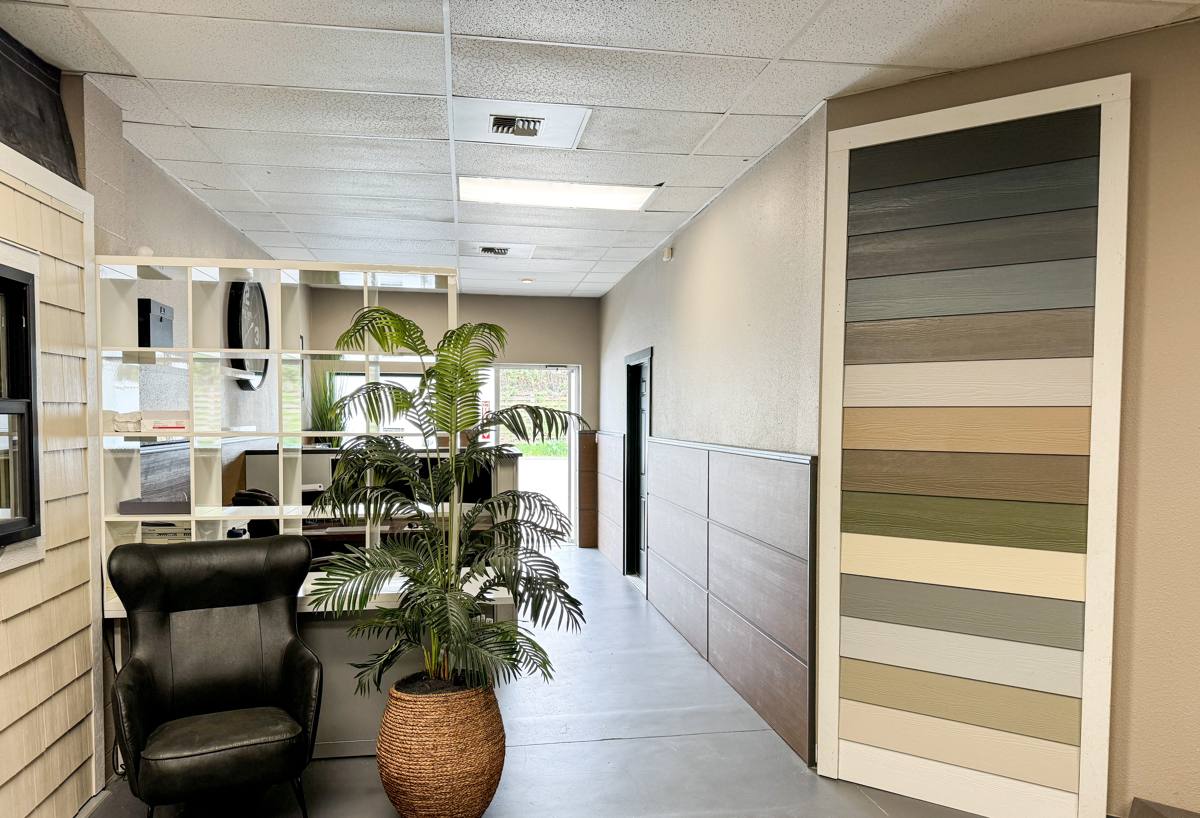
James Hardie's HardiePlank and HardiePanel lines are non-combustible, dimensionally stable, and factory-finished with ColorPlus technology, which means the color is baked on and warrantied rather than field-applied and left to weather. That matters here specifically because repainting siding on a home surrounded by trees and shade, in a climate where paint has a short dry window, is neither cheap nor easy to schedule reliably.
| Factor | James Hardie Fiber Cement | Vinyl | Cedar / Untreated Wood | Engineered Wood (e.g. LP SmartSide) |
|---|---|---|---|---|
| Moisture behavior | Doesn't rot; engineered for wet climates | Doesn't absorb water, but relies entirely on drainage gaps | Absorbs moisture; prone to rot without diligent upkeep | Wood-based core; vulnerable if edges/cuts aren't sealed |
| Finish maintenance | Factory ColorPlus finish, long repaint interval | Color molded in, but fades and can't be easily patched | Needs regular staining or painting | Needs painted finish maintained over time |
| Fire resistance | Non-combustible | Combustible, can melt/deform | Combustible | Combustible (wood-based) |
| Typical lifespan when installed to spec | Multi-decade, strong transferable warranty | Varies widely, shorter practical life in wet climates | Shorter without consistent maintenance | Shorter than fiber cement in high-moisture regions |
None of these alternative products are without merit in the right application. But for the moisture load Redmond homes deal with every year, we settled on the product line that lets us stand behind the installation for the long term.
Our Installation Process
The process is the same discipline whether the project is a full re-side or a section repair — the scale changes, the standards don't.
- Assessment: We inspect the existing siding, sheathing, and any visible trim or window damage to understand what's underneath before we quote the job.
- Tear-off and sheathing check: Old siding comes off and we evaluate the sheathing for hidden moisture damage — this is where problems from a prior bad install often surface.
- Weather barrier and flashing: A new WRB goes on, integrated with flashing at every penetration, window, door, and roofline intersection.
- Hardie installation: Panels or planks are installed to manufacturer fastening and clearance specifications, with attention to butt joints and corners.
- Caulking and finish detail: Joints and trim intersections are sealed with the correct products so the factory finish isn't compromised.
- Cleanup and walkthrough: Site cleanup and a final walkthrough so you know exactly what was done and what to expect going forward.
Signs a Redmond Home Needs New Siding
Because moisture damage in this climate often develops behind the siding before it's visible on the surface, it's worth knowing the early warning signs rather than waiting for obvious failure.
- Persistent moss, algae, or dark staining that returns quickly after cleaning
- Paint that's peeling, bubbling, or won't hold a fresh coat
- Soft or spongy spots when you press on siding, especially near the bottom edge or trim
- Visible warping, cupping, or gaps opening up between boards
- Cracking or chipping, particularly around nail heads or joints
- A noticeable rise in heating bills, which can point to a compromised weather barrier
- Rot or discoloration at corners, window trim, or anywhere siding meets a roofline
Why a Crew That Already Works in Redmond Matters
Redmond's mix of established neighborhoods and newer developments means every job comes with its own variables — some homes have mature tree canopy that keeps walls shaded and slow to dry, others sit in more open, newer subdivisions with different sun and wind exposure. A crew that regularly works in King County knows how to schedule around the region's rain windows, how local building departments handle permitting for siding replacement, and what moisture patterns to expect based on a home's orientation and surroundings. That familiarity shows up in fewer surprises mid-project and a tighter, more weather-appropriate installation.
Cost Factors for Redmond Siding Installation
Every home is different, but the price of a siding installation is driven by a consistent set of factors. We give exact numbers only after a walkthrough, but here's what typically moves the estimate.
| Factor | Why It Affects Cost |
|---|---|
| Home size and number of stories | More surface area and access complexity (ladders, lifts) increase labor time |
| Tear-off vs. install over existing sheathing | Removing old siding and inspecting/repairing sheathing adds labor but is often necessary for a sound install |
| Hidden moisture or rot repair | Damaged sheathing or framing found during tear-off needs to be addressed before new siding goes on |
| Trim, corners, and architectural detail | Homes with more windows, dormers, or trim work take more precision and time |
| Product line and profile selected | Different HardiePlank and HardiePanel profiles and ColorPlus color options carry different material costs |
| Site access | Tight lots, tree cover, or limited staging space can add time and equipment needs |
Caring for Hardie Siding After Installation
Fiber cement is low-maintenance compared to wood, but "low-maintenance" doesn't mean "no maintenance" in a climate that grows moss on almost anything left damp and shaded. A yearly rinse-down (a garden hose is usually enough — avoid high-pressure washing directly into joints) keeps organic buildup from taking hold. Keep gutters clear and downspouts directed away from the wall so water isn't running down the same section of siding repeatedly. Check caulking at trim and joints periodically, since caulk is the one component that wears out well before the siding itself does. Beyond that, ColorPlus finishes are built to go a long time without repainting, which is one less maintenance cycle to manage through the wet season.
If your Redmond home's siding is showing its age, or you're planning ahead of a repaint you'd rather not do again in a few years, we're happy to take a look and walk you through what correct installation looks like for your specific home. The estimate is free, there's no pressure, and you'll get a straight answer about what your siding actually needs.