 King County
 Siding in Redmond: What Local Homes Are Up Against
Redmond sits in the Sammamish River valley, ringed by tree cover and close enough to Lake Sammamish and Lake Washington that humidity rarely lets up for long. That geography is part of why the city is a good place to live and a hard place to keep exterior siding looking sharp for twenty-plus years. Between the tree canopy in many established neighborhoods, the tech-driven growth that's added a lot of newer construction alongside older homes, and a wet season that runs long even by King County standards, siding here works harder than it does in drier parts of the country.
We install and repair siding, roofing, windows, and decks for homeowners throughout Redmond and the surrounding King County area. This page covers what the local climate actually does to exterior siding, how we approach projects in this area, and why we've standardized on one siding product rather than offering a menu of options.
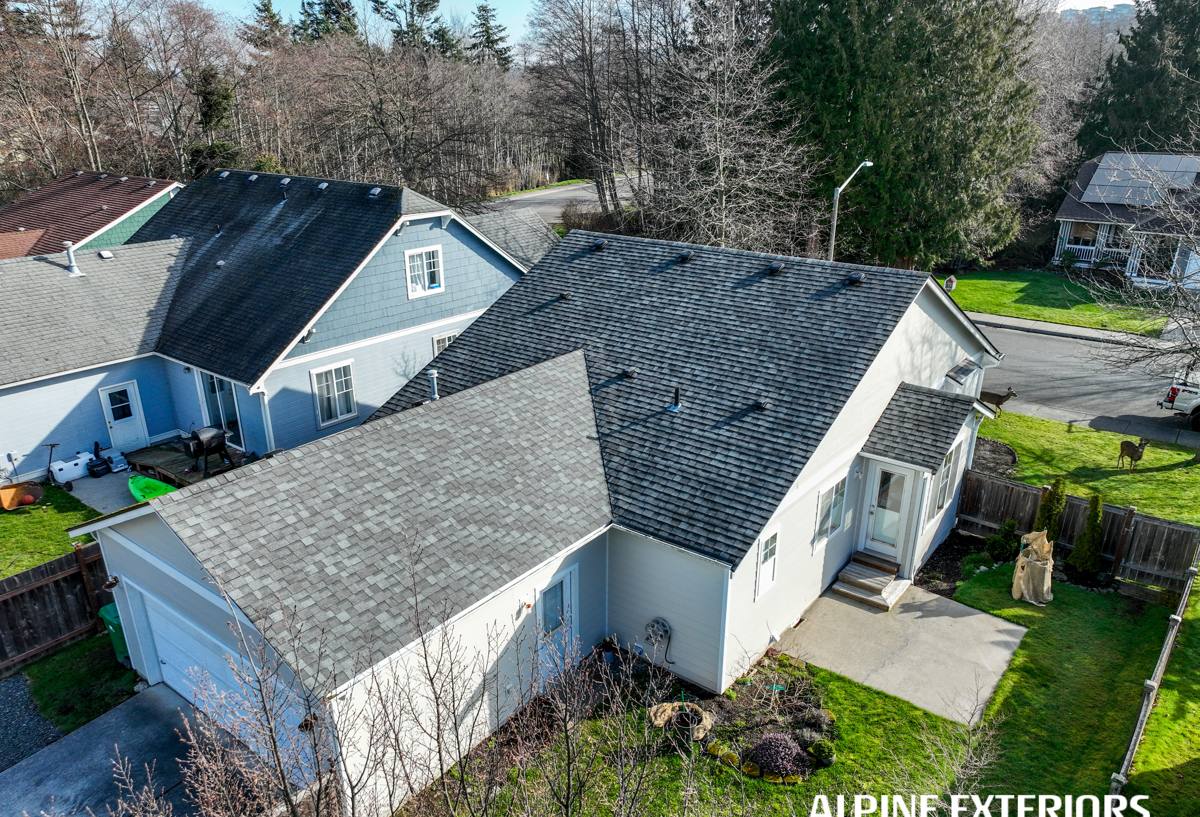
The Climate Factor: Rain, Shade, and Moss in the Sammamish Valley
Three things define exterior wear in Redmond, and they compound each other:
Driving rain and long wet stretches
King County's wet season isn't just frequent rain — it's sustained moisture exposure over weeks and months. Siding seams, butt joints, and any point where water can get behind the cladding are under near-constant pressure during fall and winter. Materials that swell, wick moisture, or aren't properly sealed at the joints start showing problems in years, not decades.
Shade from mature tree canopy
A lot of Redmond's residential streets, especially in older, established sections of the city, have significant tree cover. That's a real asset for a neighborhood, but it also means siding on shaded walls dries out slower after rain, and gets less direct sun and airflow to help it stay dry. Shaded, north-facing walls are consistently where we see the earliest signs of moisture-related wear.
A long moss and algae season
Moisture plus shade equals moss, algae, and mildew growth on exterior surfaces for a good chunk of the year — not just on roofs, but on siding too, particularly at the bottom courses near grade and anywhere water sheets down from a roofline or gutter. Siding that absorbs moisture gives moss something to root into over time; siding that stays dimensionally stable and holds a factory finish handles that pressure with a lot less maintenance.
Why We Install Only James Hardie Fiber Cement
We made a deliberate decision to install one siding system — James Hardie fiber cement — rather than offering vinyl, LP SmartSide, or other fiber cement brands as interchangeable options. That's not a marketing angle; it's because of what we've seen play out over years of exterior work in this exact climate.
Vinyl siding is affordable and low-maintenance in the sense that it doesn't need painting, but it's a petroleum-based product that expands and contracts with temperature swings, can crack in cold snaps, and doesn't offer the same fire resistance or impact durability as fiber cement. Engineered wood products like LP SmartSide perform reasonably well when installation and maintenance are done exactly to spec, but they're wood-based, which means the moisture sensitivity that defines a Pacific Northwest wet season is a real ongoing risk if caulking, flashing, or paint maintenance ever lapses. Cedar and primed spruce look great on day one but require a maintenance commitment — refinishing, caulking, moisture monitoring — that most homeowners underestimate until they're a decade in.
James Hardie fiber cement is non-combustible, holds a factory-applied ColorPlus finish that resists fading far longer than field-applied paint, and is engineered specifically for climate zones like ours through Hardie's HZ5 product line, built for regions with heavier moisture exposure. It doesn't rot, it doesn't feed moss the way wood-based products can, and it comes with a strong transferable warranty. For a climate that punishes any weak point in an exterior over enough winters, we think it's the right call — and it's the only siding system we put on homes.
What a Hardie Siding Project Looks Like in Redmond
Every project starts with an actual look at the house, not a generic estimate. A few things we're specifically checking for on Redmond homes:
- Condition of the existing weather barrier and whether it needs to be replaced as part of the job
- Signs of moisture intrusion behind current siding, especially on shaded or north-facing walls
- Flashing and trim detail around windows, doors, and rooflines — the places water actually gets in
- Grade and drainage near the foundation, since splash-back is a common source of bottom-course damage
- Whether the home's existing siding profile (lap, shingle, panel) should be matched or if there's a reason to change it
From there, installation follows Hardie's published specifications for fastening, clearances, and joint treatment — details that matter more in a wet climate than they would somewhere dry, since a shortcut on flashing or gapping is exactly the kind of thing that turns into a moisture problem two or three winters later.
Beyond Siding: Roofing, Windows, and Decks for Redmond Homes
Siding doesn't work in isolation. We also handle roofing, windows, and decks, because the same moisture and shade issues that affect siding show up on those systems too, and they all interact with each other:
- Roofing: A roof shedding water improperly, or with failing flashing at valleys and penetrations, sends water down onto siding that then has to deal with it. Roof and siding condition are worth evaluating together.
- Windows: Window flashing integrates directly with siding installation. Old or poorly flashed windows are one of the most common hidden sources of moisture damage we find when we open up a wall.
- Decks: Ledger board connections and any deck attached to the house need proper flashing where they meet the siding — a common trouble spot on older homes that predates current building practices.
If you're already planning a siding project, it's worth having us look at the roofline, window flashing, and any attached deck structures at the same time, since problems in one system often explain damage in another.
Comparing Siding Materials for This Climate
| Factor | Vinyl | Wood / Engineered Wood | James Hardie Fiber Cement |
|---|---|---|---|
| Moisture behavior in wet climates | Doesn't absorb, but can trap moisture behind it | Absorbs moisture; needs consistent maintenance | Engineered for moisture resistance (HZ5 line) |
| Fire resistance | Combustible | Combustible | Non-combustible |
| Finish longevity | Can fade; color is in the material | Field-applied paint needs recoating | Factory ColorPlus finish, long fade resistance |
| Moss/algae resistance over time | Moderate | Lower if maintenance lapses | Higher when properly maintained |
| Typical maintenance burden | Low, but limited repair options | Higher — recurring paint/caulk cycle | Low relative to wood, periodic caulk/paint checks |
| Warranty structure | Varies by manufacturer | Varies, often shorter | Long, transferable manufacturer warranty |
This is a general comparison, not a claim that any of these products fail outright — plenty of homes carry each of them without incident. It's simply the reasoning behind why we chose to specialize in one system rather than install all of them.
Why a Local King County Crew Matters
Siding installation is detail work, and the details that matter change with the climate. A crew that works throughout King County sees the same conditions repeat across neighborhoods — the same shaded-wall moisture patterns, the same moss buildup near grade, the same flashing failures around older windows — and that repetition is what makes an installer good at catching problems before they become bigger ones.
A local crew also means someone who's easy to reach if a question comes up after the job is done, who knows what King County permitting and inspection actually looks like, and who isn't guessing at how a product will hold up here because they've watched it hold up here, on real houses, through real winters.
Signs Your Redmond Home Needs New Siding
Some signs are obvious; others take a closer look. Worth checking for:
- Visible cracking, warping, or bubbling on siding panels, especially on shaded walls
- Soft spots when you press on siding near the bottom courses or below windows
- Moss or dark staining that keeps returning even after cleaning
- Peeling or chalky paint that doesn't hold a fresh coat
- Rising energy bills that might point to a compromised weather barrier
- Visible gaps, loose panels, or nail pops around window and door trim
None of these automatically mean a full replacement is needed — sometimes it's a repair or a flashing fix. That's worth figuring out before assuming the whole exterior needs to come off.
Getting an Estimate
If you're seeing any of the signs above, or you're just planning ahead for a home in Redmond or elsewhere in King County, we're happy to take a look and give you a straight answer — repair, partial replacement, or full re-side, along with an honest read on your roof, windows, or deck if those come up during the visit. There's a free, no-pressure estimate form below whenever you're ready.