 King County
 New-Construction Windows Are a Different Job Than a Replacement
Installing windows during a new build is not the same trade as swapping out an old window in an existing wall. On a replacement, the opening already exists and the job is mostly about fitting a new unit into a finished wall. On new construction, the window goes in at the framing stage — before siding, before most of the flashing is visible, and before anyone can see what's happening behind the wall once it's closed up. That means the installer is making decisions that get buried for the life of the house: how the window ties into the weather-resistive barrier, how water is directed away from the rough opening, and how the whole assembly will behave the first time a real Pacific Northwest storm hits it sideways.
For builders and homeowners in Redmond, this is the stage where a window either becomes a long-term non-issue or a slow, hidden problem. There's no opening it back up in six months to check the work. It has to be right the first time, which is why we treat new-construction window installs as their own discipline rather than a smaller version of a retrofit job.
What Redmond's Climate Actually Asks of a New Window
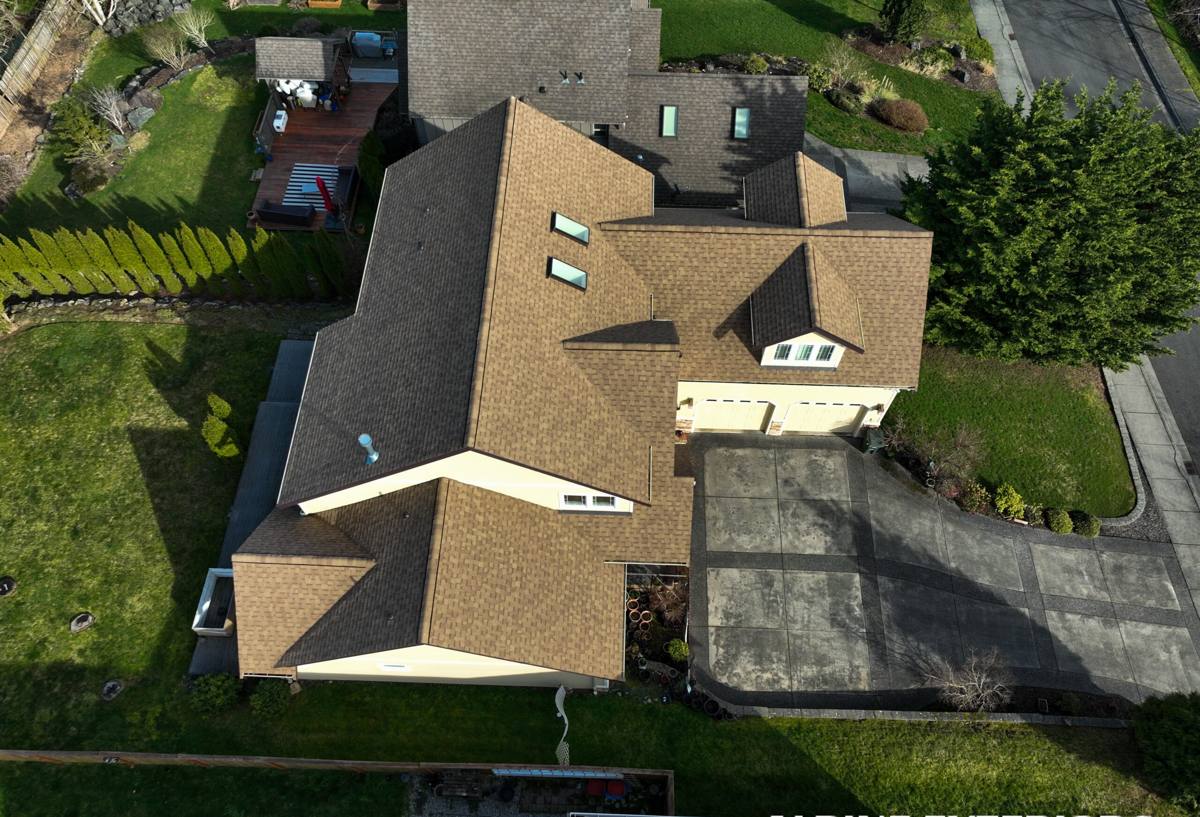
King County's marine-influenced climate is wetter and darker for longer stretches than most of the country, and Redmond gets its full share of it. Homes here go through months of low-intensity rain punctuated by wind-driven storms that push water sideways into wall assemblies rather than straight down. That kind of driving rain finds any gap in flashing or sealant that a drier climate would never expose. Add in the long stretch of shaded, damp weather that lets moss and algae take hold on north-facing walls and rooflines, and you've got a building envelope that stays wet longer than it dries — which is exactly the condition that turns a small installation shortcut into a rot problem years later.
Across the wider county, especially in neighborhoods closer to the Sound, salt-laden air is also a factor in how fast exposed fasteners, hardware, and sealants break down. Even where a home sits further inland, that same marine air mass moves through the region and carries moisture-related wear with it. None of this means new windows need to be exotic or over-engineered — it means the ordinary details (flashing sequence, drainage path, fastener choice) have to be done correctly every time, because the climate here doesn't forgive skipped steps the way a drier region might.
Flashing and Drainage: The Part No One Sees Again
Sill Pan Flashing
A sloped, sealed sill pan under the window is non-negotiable on a new build in this climate. It gives any water that gets past the window a way out instead of a place to collect. Skipping it, or installing a flat sill pan without slope, is one of the most common shortcuts we see corrected on new construction — and one of the hardest to catch once siding is on.
Head Flashing and the Weather-Resistive Barrier
The head flashing has to be integrated into the housewrap in the right shingle-lap order — WRB, then flashing, then the next course of WRB over the top — so water sheds down and over the window, never behind it. Getting this sequence backward is invisible from the outside but turns the top of every window into a slow leak point during driving rain.
Sealant Joints — Used Correctly, Not Everywhere
New-construction windows should not be fully caulked around every edge. The bottom of the window needs to stay open as a drainage path; sealing it shut traps water inside the wall instead of letting it escape. Knowing where to seal and where to leave a gap is a basic detail that gets missed more often than people expect.
Choosing a Frame Material for a New Build
New construction gives you a real choice of frame material, since you're not constrained by an existing opening. Each option carries different trade-offs for a King County climate:
| Frame Material | Moisture Behavior | Maintenance | Typical Cost Tier |
|---|---|---|---|
| Vinyl | Won't rot; expands/contracts with temperature swings | Low — occasional cleaning | Lower |
| Fiberglass | Very stable, minimal expansion, holds paint/finish well | Low | Mid to upper |
| Wood interior / clad exterior | Attractive interior wood, but exterior cladding must be fully sealed at every joint | Higher — depends on joint integrity over time | Upper |
| Aluminum | Durable but conducts cold and can condense in this climate without a thermal break | Low | Varies |
We don't push one material as universally "best" — we walk through what the builder's design calls for, the home's exposure, and the maintenance appetite of whoever will own the house, then explain the honest trade-offs rather than a sales pitch.
Meeting Washington's Energy Code on a New Build
Washington's energy code sets minimum U-factor requirements for window assemblies, and on new construction that number is usually baked into the builder's overall energy compliance path for the house — sometimes traded off against wall insulation or other measures. As the window installer, our job is to make sure the units specified actually match what the plans call for, and to flag it early if a substitution would put the whole compliance package at risk. Double-pane, low-E glazing is standard on most new King County builds; triple-pane comes up on homes targeting higher performance or on elevations with heavy west or south sun exposure, where solar heat gain matters as much as heat loss.
This is one area where catching a mismatch before installation saves everyone a headache — swapping windows after they're set in a wall is a much bigger job than confirming the spec sheet against the energy calculations up front.
Our New-Construction Installation Process
The sequence matters as much as the individual steps. Here's the order we follow on a Redmond new build:
- Verify rough openings against the window schedule before a single unit arrives on site
- Dry-fit each window to confirm level, plumb, and square before any fastening
- Install sloped sill pan flashing with a sealed, continuous drainage path
- Set the window and fasten through the nailing fin per manufacturer spacing
- Integrate head and jamb flashing into the weather-resistive barrier in proper shingle-lap order
- Insulate the shim space with low-expansion foam, avoiding foam that can bow the frame
- Leave the designed drainage gap open at the sill — never fully caulked shut
- Walk the openings with the builder or site super before siding closes the wall
That last step — the walk-through before the wall closes — is where a lot of problems get caught for free. Once siding goes on, every one of those details becomes permanent.
Mistakes We Catch Before They Get Buried
On new construction, most window problems trace back to the same handful of shortcuts: a flat or missing sill pan, housewrap lapped in the wrong direction over the flashing, fully caulked sills that trap water, or foam gone in so aggressively it bows the frame out of square. None of these show up on move-in day. They show up two, five, or ten winters later as a soft spot in the drywall or a stain under a sill — usually right after a stretch of the driving rain this region gets every fall and winter. Catching these at the framing stage, while the wall is still open, is the entire value of having an experienced crew on the install rather than treating it as a quick add-on to the framing schedule.
Why a Redmond-Based Crew Is Worth Having on the Job
A crew that already works around Redmond and the rest of King County has seen how the same window detail performs differently depending on tree cover, wind exposure, and how sheltered or exposed a given lot is — the kind of site-specific judgment that only comes from doing this work locally, year after year, through the same wet seasons the house will actually face. That local experience also means faster communication with builders, general contractors, and inspectors who are used to how the county's permitting and inspection process runs, and a crew that's easy to reach if a question comes up on year three instead of just year one.
For homeowners working directly with a builder, it also means having someone independent from the framing crew whose job is specifically to get the window details right — not just fast.
Get a Local, No-Pressure Estimate
If you're building in Redmond or elsewhere in King County and want a straight answer on window scope, materials, or timing for your project, we're happy to take a look and walk through it with you. There's a free estimate form below — no pressure, just an honest assessment from a crew that installs windows in this climate for a living.