 King County
 Bellevue Homes Face a Specific Kind of Weather Wear
Bellevue sits on the east side of Lake Washington, close enough to Puget Sound that moisture-laden marine air is a year-round presence, not just a winter visitor. Between the Cascade foothills to the east and the water to the west, the city catches long stretches of driving rain from fall through spring, followed by a moss season that can run from October well into April in shaded, tree-heavy neighborhoods. None of this is unusual for King County, but it adds up differently on a house than it does on, say, a home east of the mountains. Siding here isn't just cosmetic. It's the layer standing between your framing and a climate that stays damp for months at a stretch.
Homes tucked under mature Douglas fir and cedar canopy — common in many established Bellevue neighborhoods — deal with extra shade, slower drying times, and more organic debris landing on exterior surfaces. That combination is exactly what moss, algae, and mildew need to take hold. Add in wind-driven rain during Pacific storm systems, and any weak point in a siding system — a poor seam, an under-flashed window, a material that swells when wet — gets found out eventually.
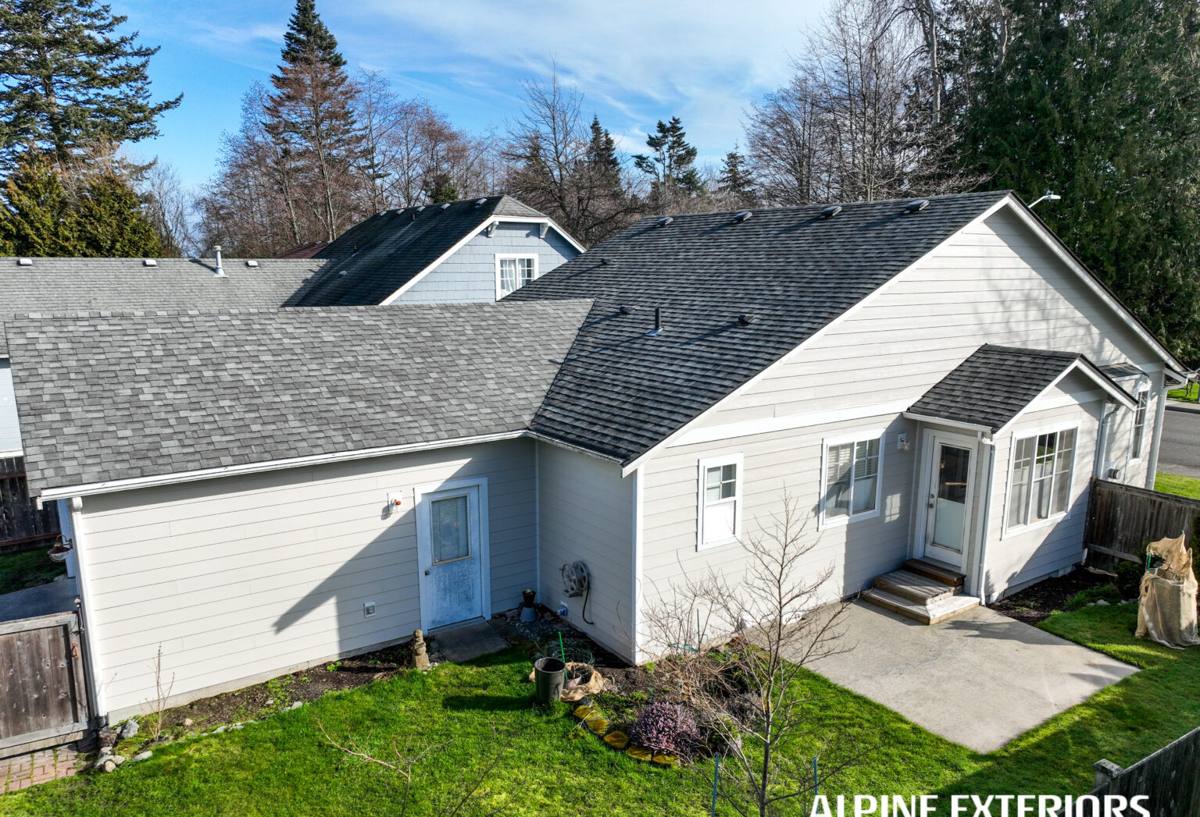
What We See Go Wrong on Bellevue Exteriors
Moisture Intrusion at Seams and Penetrations
Most siding failures we're called out to inspect in this area don't start as material failures — they start as installation or flashing failures. Water finds a gap around a window, a hose bib, a light fixture, or a poorly lapped seam, and it works its way behind the siding where it can sit against sheathing for weeks without drying. In a climate with this much sustained wet weather, that's a slow-motion problem that eventually shows up as soft trim, staining, or worse.
Moss and Algae Buildup
On shaded north- and west-facing walls, moss and algae growth is one of the most common complaints we hear from Bellevue homeowners. It's not just cosmetic — sustained moisture held against a wall by moss growth accelerates whatever degradation process is already happening underneath.
Material Fatigue on Older Products
A lot of Eastside homes built in the 1980s through 2000s were sided with materials that simply weren't engineered for this many wet-dry cycles per year — some wood composite products, older vinyl, or lower-grade primed wood trim. Over fifteen to twenty-five years of Puget Sound weather, those products tend to show their age through swelling, delamination, or paint failure well before the home itself is due for major work.
Why We Install James Hardie Fiber Cement — and Nothing Else
We made a decision as a company to install James Hardie fiber cement siding exclusively. We don't install LP SmartSide, vinyl, Cemplank, Allura, primed spruce, or cedar. That's not a marketing position — it's a standard we hold because of what we've seen play out on real homes in this climate over time.
Fiber cement is a mix of cement, sand, and cellulose fibers, engineered specifically to resist the freeze-thaw and wet-dry cycling that's routine in King County. It doesn't absorb water the way wood-based composite products can, and it doesn't expand and contract with humidity the way vinyl does. James Hardie also engineers regional product lines — their HZ5 line, for example, is built for climates like ours with more rain and moisture exposure, rather than a one-size-fits-all approach.
The ColorPlus factory finish is another piece of the decision. It's baked on in a controlled environment rather than field-applied, which means better adhesion and color consistency over time, and touch-up product is available to match rather than requiring a full repaint. Combined with a strong transferable warranty, that's a package we're comfortable standing behind on a Bellevue roofline for decades, not just through the first few wet seasons.
We're upfront that other products have real strengths — vinyl is inexpensive and low-maintenance in mild climates, engineered wood products can look great when new, and cedar has a natural appeal a lot of homeowners love. But when we weigh long-term moisture performance, maintenance burden, and how a product ages against Puget Sound weather specifically, fiber cement is what we're willing to put our name on.
| Factor | What It Affects | Why It Matters in Bellevue |
|---|---|---|
| Home size and elevation count | Total material and labor | Multi-story homes and complex rooflines add scaffolding and flashing detail |
| Existing siding removal and sheathing condition | Prep work scope | Long-term moisture exposure sometimes means sheathing repair before new siding goes on |
| Trim and detail level | Labor hours | Craftsman and traditional Eastside architectural styles often call for more trim work |
| Product line and profile | Material cost | HZ5 panels, lap siding, and shingle-style profiles are priced differently |
| Access and site conditions | Labor efficiency | Tree cover, slope, and tight lot lines are common on established Bellevue lots |
Our Siding Installation Process
Inspection and Assessment
Every job starts with a real look at the existing exterior — not just the siding itself, but what's happening at the flashing, the window and door penetrations, and anywhere moisture has historically had a path in. On homes with tree cover or a history of moss buildup, we pay close attention to what's underneath before quoting anything.
Removal and Sheathing Repair
Where old siding comes off, we check the sheathing and framing underneath. If there's rot or moisture damage from years of hidden intrusion, that gets addressed before new siding goes up — covering damaged sheathing with new siding just seals the problem in.
Weather Barrier and Flashing
Correct installation of the weather-resistive barrier and flashing at every penetration is where most long-term siding performance is actually decided, more than the siding material itself. This is also where a lot of lower-bid contractors cut corners, and it's the step we're most careful about.
Hardie Panel Installation
James Hardie has specific installation specifications — fastening patterns, clearances, caulking requirements — that have to be followed to keep the warranty valid and to get the performance the product is engineered for. We install to spec, not to whatever's fastest.
Full Exterior Protection: Roofing, Windows, and Decks
Siding doesn't work in isolation. A roof with failing flashing, windows that leak at the frame, or a deck ledger board that's trapping moisture against the house all undermine even a perfect siding job. We handle roofing, window replacement, and decks alongside siding so the whole exterior envelope gets looked at together, rather than treating each component as a separate problem with a separate contractor. For a lot of Bellevue homes — especially ones with some age on them — a siding project is a natural point to also address a roof nearing the end of its service life or windows that have been underperforming for years.
Why a Local King County Crew Matters
A contractor who works this area regularly knows what Eastside weather actually does to a house over time — not in the abstract, but from having pulled off enough old siding to see it firsthand. Local crews also understand permitting expectations in King County jurisdictions, typical lot and access constraints in established neighborhoods, and how HOA design guidelines common in parts of Bellevue tend to run. That local familiarity translates into fewer surprises mid-project and a scope of work that's realistic from the first estimate.
Maintenance and What to Watch For
- Rinse siding annually to remove pollen, dust, and organic debris before it turns into a growth medium for moss or algae
- Trim back tree limbs and shrubs that keep siding shaded and slow to dry after rain
- Inspect caulking around windows, doors, and penetrations yearly and re-caulk where it's cracked or pulled away
- Watch for soft spots, bubbling paint, or staining at the base of walls — early signs of trapped moisture
- Keep gutters clear so overflow isn't running down the siding face during heavy storms
- Address moss on siding promptly rather than letting it establish and hold moisture against the wall
Getting Started
If you're noticing moss buildup, soft trim, fading, or you're just planning ahead for a home that's due for new siding, we're happy to take a look and give you an honest read on what's going on and what it would take to fix it right. If you'd like a free, no-pressure estimate for your Bellevue home, the form below is the easiest way to get started — we'll walk the exterior with you and lay out real options, not a sales pitch.