 King County
 Bellevue's Climate Is Harder on Siding Than It Looks
Bellevue sits close enough to Puget Sound and Lake Washington that homes here deal with a specific combination of stresses: salt-tinged marine air moving in off the water, long stretches of driving rain through fall and winter, and a moss season that can run six months or more on shaded, north-facing walls. None of these on their own would wreck a siding system quickly. Together, over years, they find every weak point — a gap in caulking, an unprimed cut edge, a nail that backed out, a spot where two panels were never quite sealed right.
Siding repair in King County isn't just cosmetic patchwork. Done correctly, it's about restoring the wall's ability to shed water and resist moisture intrusion before a small problem becomes a rot problem behind the cladding. Done poorly, a repair can trap moisture in exactly the spot it was supposed to fix.
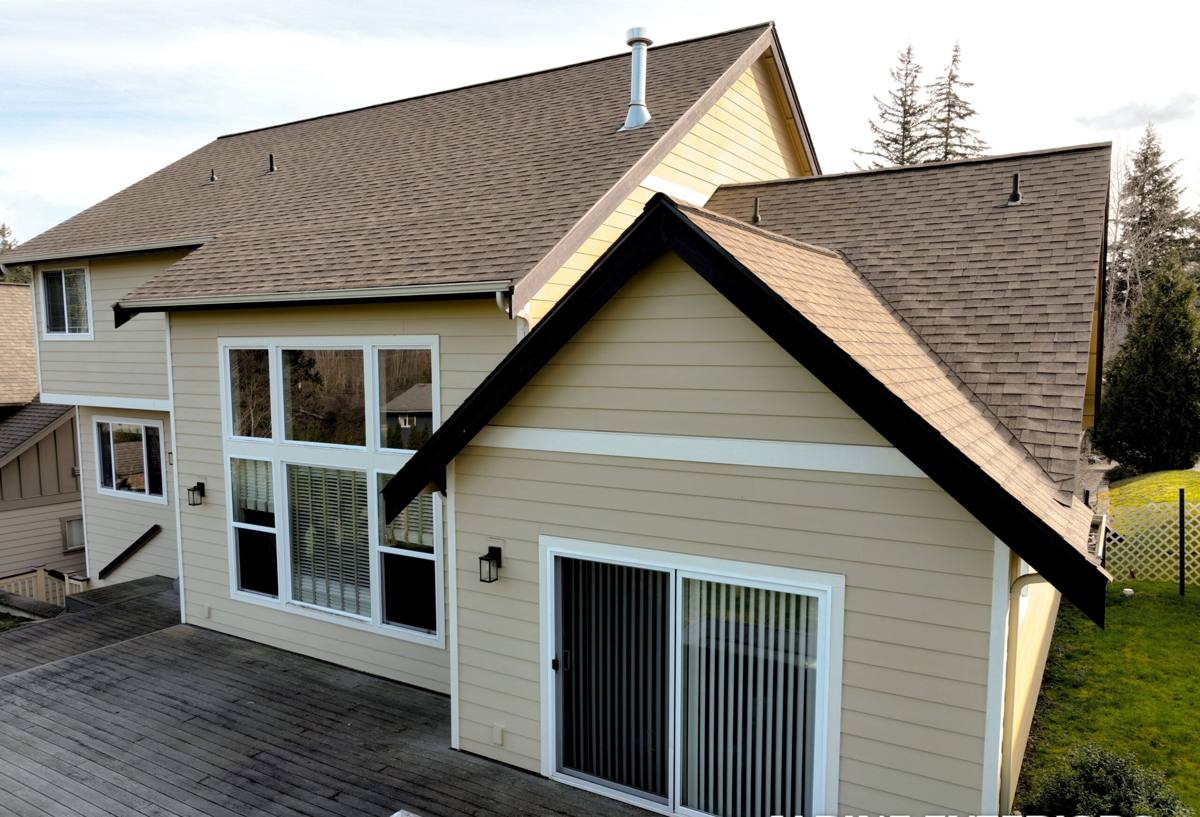
Signs a Bellevue Home Needs Siding Repair
Most siding damage starts small and is easy to miss unless you're looking for it. Walk your exterior a couple times a year — especially after a hard winter — and check for these:
- Soft or spongy spots when you press on the siding, especially near the bottom courses and around window trim
- Visible cracking, splitting, or buckled panels, particularly on walls that catch the most wind-driven rain
- Moss or persistent green/black staining that keeps coming back after cleaning, usually on shaded north- and west-facing walls
- Peeling or bubbling paint, which often signals moisture working its way out from behind the siding rather than a paint quality issue
- Gaps opening up at seams, corners, or where siding meets trim, flashing, or the foundation
- Small holes or pest damage, which give water a direct path behind the cladding
- Warping or separation at butt joints, common on lower-grade wood and composite products after repeated wet-dry cycles
Any one of these on its own might be minor. Several together, or damage that keeps reappearing in the same spot, usually means water has already found a way behind the siding and the repair needs to address the cause, not just the symptom.
What a Correct Repair Actually Involves
It Starts Behind the Siding, Not On It
A repair that only replaces the visible damaged piece and skips everything underneath is a temporary fix. Before any new material goes up, the area needs to come off far enough to check the water-resistive barrier, flashing, and sheathing underneath. If there's soft or discolored sheathing, that gets addressed first — patching over rotten wood just relocates the problem a few months down the road.
Matching Existing Material
What the correct approach is depends heavily on what's already on the house:
- Vinyl siding can often be spot-repaired by unlocking and replacing individual courses, but color-matching older, sun-faded vinyl is difficult and panels can become brittle with age, making clean removal harder without cracking neighboring pieces.
- Wood and cedar siding repairs require careful attention to back-priming and sealing all new cut edges — the single most common reason wood repairs fail early is an unsealed edge left exposed to Bellevue's rain.
- LP SmartSide and similar engineered wood products are moisture-sensitive at cut edges and seams by design; repairs need factory-sealed edges and correct caulking or the repaired section can swell again quickly.
- Fiber cement siding (what we install as our standard product) holds paint and color longer and doesn't swell or rot, which is part of why we've standardized on it for full replacement work.
For straightforward patch repairs, we work with whatever is already on the home. Where a wall has widespread failure rather than isolated damage, we'll tell you honestly when patching stops making sense.
Repair vs. Replacement: How We Make the Call
Not every damaged wall needs full replacement, and not every "repair" is worth doing. Here's the general framework we use when evaluating a Bellevue home:
| Situation | Usual Recommendation | Why |
|---|---|---|
| Isolated damage, one or two panels, sound sheathing underneath | Targeted repair | Cost-effective and low-disruption when the problem hasn't spread |
| Recurring moss/moisture staining on the same wall every year | Repair plus a look at grading, gutters, or ventilation | The siding may be a symptom of a drainage or airflow issue, not the root cause |
| Soft sheathing found behind more than a small area | Section or full-wall replacement | Patching over compromised sheathing doesn't stop the rot, it hides it |
| Siding is 20+ years old with widespread fading, warping, or brittleness | Full replacement | Repeated repairs on aging material cost more over time than one correct replacement |
| Home has had multiple past repairs in different spots | Full replacement evaluation | A pattern of failures usually points to a systemic moisture or installation issue |
We'd rather tell a homeowner a $600 repair will hold for years than sell a full replacement that isn't needed yet — and we'll also tell you plainly when a repair is a short-term patch on a longer-term problem.
Our Repair Process
1. On-Site Assessment
We look at the full elevation, not just the spot you called about. Damage on one wall often has a related cause — a clogged gutter, missing kick-out flashing, a sprinkler head hitting the siding — that's worth catching at the same visit.
2. Removal and Inspection
Affected siding comes off carefully to check the barrier and sheathing behind it. This is the step that separates a repair that lasts from one that doesn't.
3. Addressing the Cause
If we find damaged sheathing, failed flashing, or a moisture path, that gets corrected before anything new goes back on.
4. Repair or Replace the Section
Matching material goes in where a true repair makes sense; where the surrounding material is too degraded to match reliably, we'll discuss replacing the full course or wall section with James Hardie fiber cement instead of chasing a color and profile match that won't hold up.
5. Seal, Paint, and Final Check
All new seams, edges, and joints get properly sealed and finished to match, and we walk the repair with you before we consider the job done.
Why Hire a Crew That Already Works in Bellevue
Siding repair is regional work. A crew that mostly works drier climates can miss the details that matter here — how far to hold siding off grade given King County's rain patterns, which walls in a given neighborhood tend to hold moss longest, how much clearance to leave for expansion given our temperature swings. A crew that repairs siding across Bellevue and the rest of King County season after season has already seen how different products and installation shortcuts hold up against this specific climate, not a generic one.
There's also a practical local advantage: faster response for an assessment, and a crew that isn't guessing at typical King County permitting or code requirements when a repair crosses into larger-scope work.
When Repair Turns Into a Replacement Conversation
Sometimes an inspection for a "small repair" turns up enough underlying damage that patching isn't the responsible recommendation anymore. When that happens, we install James Hardie fiber cement siding — it's the only product we install for full replacement work, and it's a deliberate standard rather than a default. Hardie's fiber cement doesn't rot, swells far less than wood-based products in wet conditions, is non-combustible, and comes with a factory-applied ColorPlus finish that holds color far longer than field-applied paint. It also carries a strong transferable warranty, which matters if you ever sell the home. We won't push a full Hardie replacement on a wall that just needs an honest repair — but if your home is heading toward that decision, it's worth knowing what we'd recommend and why.
Cost Factors for Bellevue Siding Repair
| Factor | How It Affects Cost |
|---|---|
| Extent of damage | A single-panel patch costs far less than multi-wall or whole-section work |
| Sheathing condition | Rotted sheathing behind the siding adds material and labor beyond the visible repair |
| Existing material | Matching older or discontinued vinyl/wood profiles can add time and cost versus a straightforward swap |
| Access and height | Second-story or steep-roofline walls require more setup and time |
| Root cause work | Fixing flashing, gutters, or grading alongside the repair adds cost but prevents repeat damage |
We give straightforward, itemized estimates so you can see what's a repair cost versus what's addressing the underlying cause.
If you're noticing damage, staining, or soft spots on your Bellevue home's siding, we're happy to take a look and give you an honest read on whether it's a repair or something bigger — no pressure either way. Reach out below for a free estimate.