 King County
 Why the Finish Matters as Much as the Siding
Most homeowners spend their planning energy on the siding material itself and treat color as an afterthought — something you pick off a chip at the end. In King County, that's backwards. Our weather is hard on exterior finishes. Long stretches of driving rain off the Sound, a moss and mildew season that can run eight months a year in shaded neighborhoods, and salt-laden air anywhere near Elliott Bay, the Duwamish, or the Sound itself all attack paint film before they attack the substrate underneath it. If the finish fails first — chalking, fading, peeling at the laps — you're repainting a house that otherwise has decades of life left in the siding board. That's the problem James Hardie's ColorPlus Technology was built to solve, and it's why color selection on a Hardie project is a real technical decision, not just a design one.
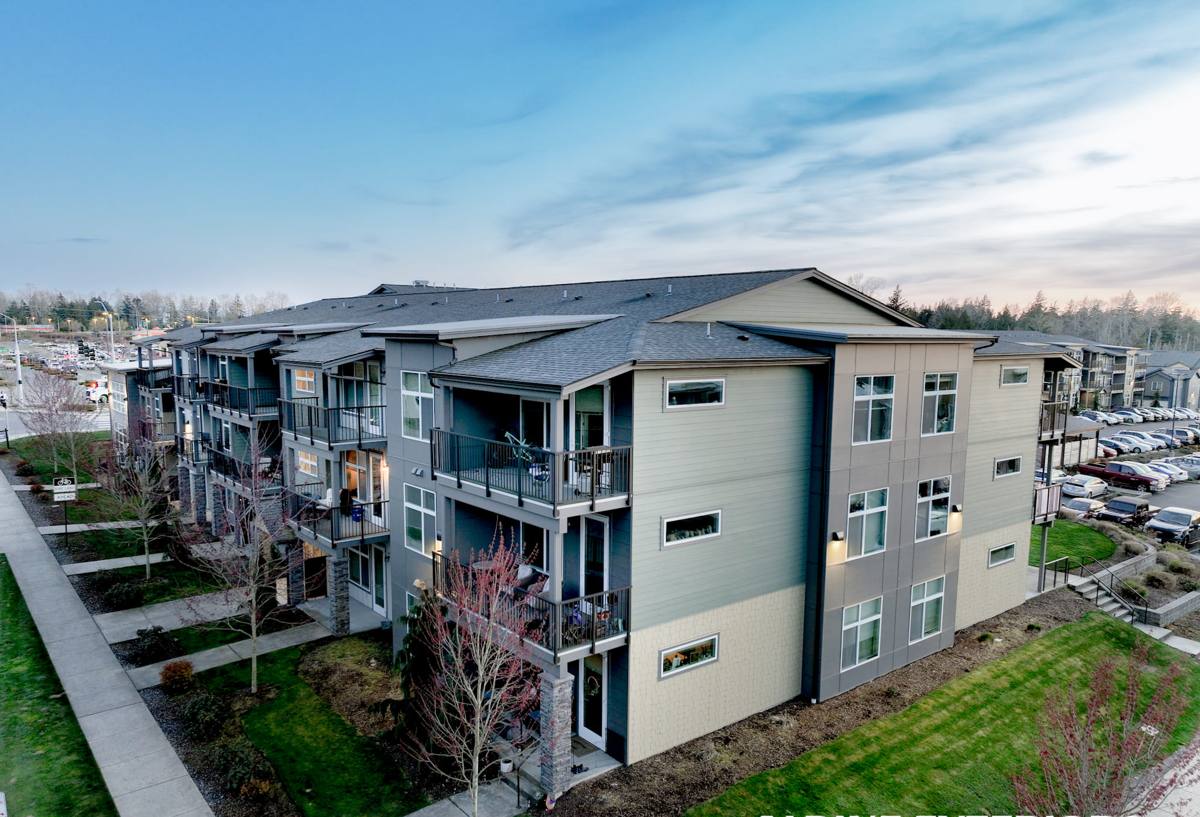
What ColorPlus Technology Actually Is
ColorPlus is a factory-applied, multi-coat finish baked onto the fiber cement board before it ever reaches your house. It's not a can of exterior latex rolled on after installation — it's a controlled industrial process: primer, color coat, and a UV-cured topcoat applied under consistent temperature and humidity, then cured in ovens rather than air-dried on a wall in the rain. That process produces a bond and a coverage consistency that's very difficult to replicate with a paint sprayer on a jobsite, especially in a region where you're fighting moisture and temperature swings during the install season.
What This Means for Upkeep
Because the color is baked in rather than brushed on, ColorPlus boards resist fading, chipping, and cracking longer than field-applied paint, and touch-up is done with a color-matched touch-up kit rather than a full repaint. For a homeowner, the practical effect is that you're not budgeting for a repaint cycle every 7-10 years the way you would with primed wood or field-painted fiber cement.
HZ10 Engineering for the Pacific Northwest
James Hardie builds its boards to regional moisture and freeze-thaw profiles, and King County falls in the HZ10 zone — the engineering spec built for the wetter, milder climates of the Pacific Northwest. The board formulation is matched to sustained damp exposure rather than the swings a Southwest or Midwest zone would see. That matters for color performance too: a finish system engineered around this region's UV and moisture load behaves differently than a generic national spec, which is one reason we don't treat "just get fiber cement" as good enough — the zone-specific engineering is part of the value.
The ColorPlus Palette
Hardie organizes its ColorPlus offering into a handful of curated collections rather than an overwhelming open-ended paint deck. Broadly, you're choosing from:
- Neutral and traditional tones — grays, warm whites, tans — that read well against King County's evergreen backdrop and don't fight with the region's muted light for most of the year.
- Deeper statement colors — navy, charcoal, deep green — often used on a single elevation, gable, or as an accent against a lighter field color.
- Trim and accent shades designed to pair with the field colors, so soffits, fascia, and trim boards come from the same engineered system rather than being guessed at with a separate paint brand.
The point of the curated palette isn't to limit you — it's that every color in it has already been engineered and tested as part of the ColorPlus system, including fade resistance and UV performance specific to that pigment load. A custom field-mixed color loses that guarantee.
Dark Colors and Heat Behavior
Dark colors absorb more solar heat, which can affect how a board expands and contracts and how a home's siding performs over decades in direct southern or western exposure. Hardie's engineering accounts for this in its approved palette, which is one more reason to choose from the tested ColorPlus lineup rather than a custom off-palette match — you're getting a color that's been validated against the board itself, not just against a swatch.
Climate Factors That Should Influence Your Color Choice in King County
A few regional realities are worth weighing before you settle on a color:
Moss and Algae Staining
Shaded, north-facing walls and homes tucked under mature evergreen canopy — common across King County, from wooded lots in Sammamish and Issaquah to the older tree-lined streets of Seattle and Renton — are prone to moss and green algae staining over time. Lighter, flatter colors tend to show this staining faster and more visibly than mid-tone or textured darker colors. It doesn't mean avoid light colors; it means know your lot's shade pattern before you commit.
Salt Air Near the Sound
Homes closer to Puget Sound, Lake Washington's exposed shorelines, or areas with regular salt-laden wind see faster wear on lesser finishes. ColorPlus's baked-on coating is more resistant to this than field paint, but it's still worth factoring proximity to water into your color and maintenance planning — darker, matte finishes can show mineral residue differently than glossier light tones.
The Long Gray Season
King County gets a lot of flat, overcast light for a lot of the year. Colors that look great under a bright showroom light or in a sunnier climate's marketing photos can read differently under our typical diffuse gray sky — often flatter and cooler. Seeing an actual board sample outside, on an overcast day, near your own home's rooflines and landscaping, tells you more than any brochure.
ColorPlus vs. Field-Applied Paint
| Factor | ColorPlus Factory Finish | Field-Applied Paint |
|---|---|---|
| Application environment | Controlled factory, consistent cure | Jobsite conditions — weather-dependent |
| Coverage consistency | Uniform multi-coat process | Varies by crew, weather, humidity |
| Fade resistance | Engineered and tested per color | Depends on paint brand and application |
| Touch-up | Color-matched touch-up kit | Full repaint typically needed sooner |
| Warranty | Separate finish warranty from Hardie | Paint manufacturer or contractor warranty, if any |
| Repaint cycle | Extended — often well beyond a decade | Typically every 7-10 years |
Warranty Structure
ColorPlus siding carries a finish warranty that's separate from — and layered on top of — Hardie's product warranty on the board itself. That's a meaningful distinction: you're covered both for the fiber cement substrate and for the factory finish's performance, and that coverage is transferable if you sell the home within the warranty period, which is a real selling point in a competitive King County resale market. Field-painted siding, by contrast, typically only carries whatever warranty the paint manufacturer or your painting contractor offers — usually shorter, and not tied to the siding system itself.
Trim, Accents, and Multi-Color Elevations
A lot of King County homes — particularly newer builds in Sammamish, Bothell, and Redmond, and remodeled older homes in Seattle's craftsman-heavy neighborhoods — use a two- or three-color scheme: a field color, a contrasting trim color, and sometimes an accent on a gable or entry feature. Because Hardie's trim boards and accent panels are engineered as part of the same ColorPlus system, the colors are formulated to be complementary and to weather at a matched rate. Mixing a Hardie field color with a non-Hardie trim product means you lose that matched aging — one element will visibly outlast or out-fade the other.
HOA and Neighborhood Considerations
Many King County subdivisions and planned communities have HOA architectural guidelines that restrict siding colors to an approved list. Before finalizing a color, check your HOA's covenants — most name specific manufacturer color families, and Hardie's ColorPlus lineup is widely represented in these approved lists precisely because it's a known, stable, long-term product. Confirming this early avoids a costly reselection after materials are ordered.
A Practical Checklist for Choosing Your Color
- View physical ColorPlus samples outdoors, on an overcast day, against your own roof and trim
- Check your HOA covenants or neighborhood guidelines before finalizing
- Consider your lot's shade pattern and moss/algae exposure
- Factor in proximity to water and salt air if applicable
- Choose trim and accent colors from the same ColorPlus system, not a mismatched brand
- Ask your contractor to confirm the finish warranty terms in writing
- Think resale — neutral, well-reviewed tones tend to hold broader buyer appeal in this market
Getting It Right the First Time
Color is one of the few siding decisions that's expensive to undo. Once boards are installed, changing your mind means a full repaint at best, or a re-side at worst. Taking the time to view real samples on your own home, understand how the ColorPlus system performs against King County's specific mix of rain, moss, and salt air, and confirm your HOA requirements up front saves a lot of regret later. We only install James Hardie for this reason — the engineering, the finish system, and the warranty structure are all designed to work together, and that consistency is what lets us stand behind the result for years after the crew leaves.
If you're planning a siding project and want to see ColorPlus samples against your own home, we're happy to come out for a free, no-pressure estimate and walk the options with you in person.