 King County
 Shoreline's Climate Is Harder on Siding Than Most Homeowners Realize
Shoreline sits right along Puget Sound, and that location shapes almost everything about how a house ages here. Homes closer to the water pick up salt-laden air that works its way into fastener heads, trim joints, and any spot where paint or caulking has started to fail. Move a few blocks inland and the salt exposure drops off, but the rain does not — Shoreline gets the same steady, driving rain common across King County, where storms roll in off the Sound and soak the same wall assemblies for days at a time rather than a quick downpour and clear skies.
Add in the region's long, cool, damp stretch from fall through spring, and you get ideal conditions for moss, algae, and mildew to take hold on anything with texture or shade. North-facing walls and areas under mature tree cover — common in Shoreline's older, well-established neighborhoods — are usually the first places we find it. None of this means Shoreline homes are doomed to constant siding problems. It means the siding material and the installation details matter more here than they would in a drier climate, and that's the lens we look through on every job.
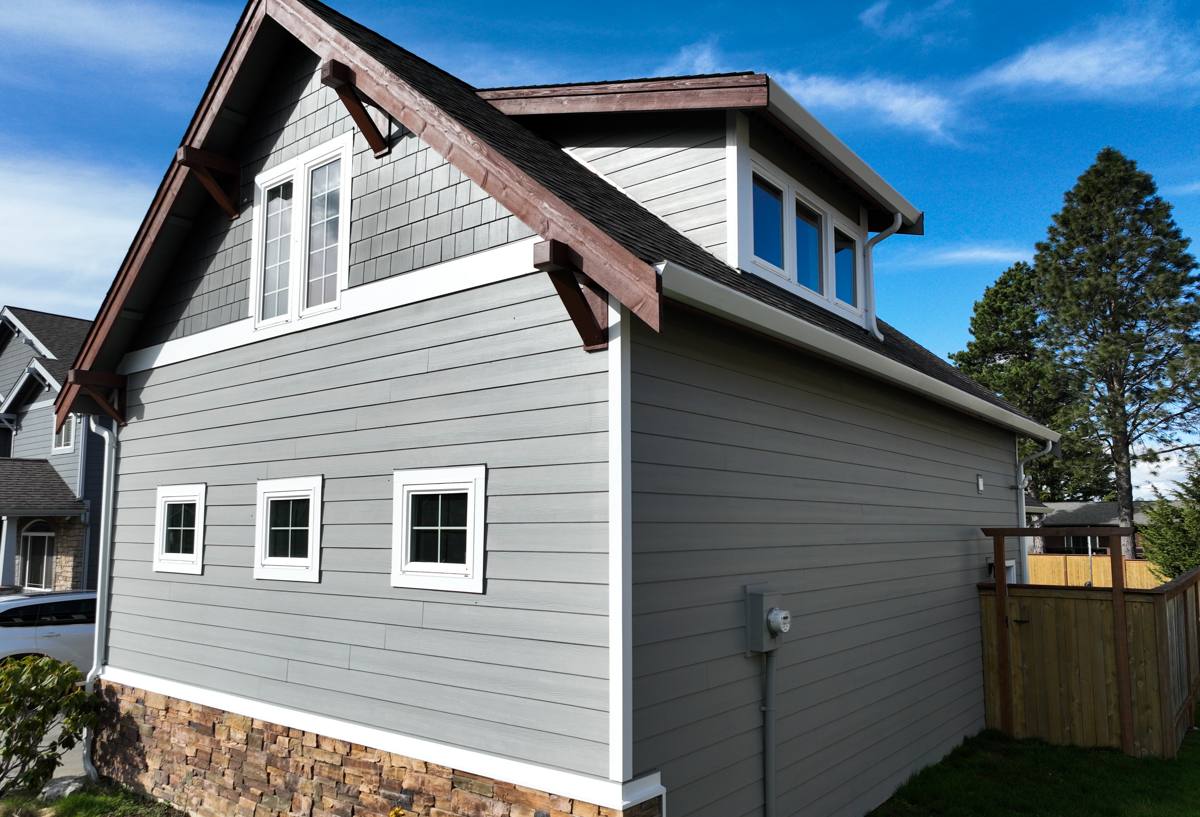
What We See on Siding Inspections Around Shoreline
Moisture Intrusion at Joints and Trim
Most siding failures we find don't start in the middle of a wall — they start at the seams. Butt joints, window and door trim, and anywhere two materials meet are where water finds a way in if caulking has shrunk or paint has worn thin. Once moisture gets behind the siding, it can sit there for a long time in a marine climate like ours, because the air rarely gets dry enough to help wood sheathing or siding dry back out on its own.
Moss and Organic Growth
Shoreline's tree canopy and Sound-adjacent humidity make moss and algae a near-annual maintenance issue for a lot of homes, especially on shaded elevations and anywhere gutters overflow onto the wall below. On some siding types, moss buildup does more than look bad — it holds moisture against the surface and accelerates rot or coating failure underneath.
Wear on Older Wood and Composite Siding
A fair number of homes in this area still have original wood siding, older engineered wood products, or aging vinyl that's showing its age — warping, fading, or soft spots near the bottom courses where splash-back and standing moisture do the most damage over time. When we inspect a home, we're checking all of this against what the wall assembly can realistically hold up to for the next 20-plus years, not just what it looks like today.
Why We Install Only James Hardie Fiber Cement Siding
We made a deliberate decision as a company to install one siding system — James Hardie fiber cement — rather than offering a menu of vinyl, engineered wood, or other fiber cement brands. That's not a marketing position; it's a standard we hold because of what we've seen play out on real homes over time, particularly in a wet, moss-prone climate like King County's.
Vinyl siding is inexpensive and low-maintenance in mild weather, but it's a petroleum-based product that expands and contracts with temperature swings, can crack in impacts, and offers limited ability to manage moisture at seams — it's designed to shed water, not to breathe if water gets behind it. Engineered wood products (LP SmartSide and similar) have improved over the years, but they're still wood-based at the core, which means they carry more risk of swelling, edge deterioration, and moisture-related failure if caulking, flashing, or paint maintenance falls behind — a real concern in a region where things stay damp for months at a stretch. Other fiber cement brands (Cemplank, Allura) compete more directly with Hardie on paper, and we don't have a specific complaint about them — we simply standardized on one manufacturer so our crews master one install system, one set of details, and one warranty structure rather than spreading expertise across several.
James Hardie is non-combustible fiber cement, engineered in HZ5 and HZ10 product lines specifically for climates with sustained moisture exposure like the Pacific Northwest. Its ColorPlus factory finish is baked on under controlled conditions, which holds color and resists fading and chipping far better than field-applied paint — a meaningful advantage where UV exposure is lower but moisture exposure is high. It carries a strong transferable limited warranty on both the substrate and the finish when installed to Hardie's specifications, which matters to homeowners planning to sell down the road. None of this makes Hardie maintenance-free, and it isn't the cheapest option on day one — but for the way homes actually age in Shoreline's climate, it's the product we're willing to put our name behind.
Siding Material Comparison for Puget Sound Homes
| Factor | James Hardie Fiber Cement | Vinyl | Engineered Wood (e.g. LP SmartSide) |
|---|---|---|---|
| Moisture resistance | Excellent — cement-based, doesn't swell or rot | Good on the face, poor at compromised seams | Fair — wood core vulnerable if seals fail |
| Fire resistance | Non-combustible | Melts/deforms under heat | Combustible (treated, but wood-based) |
| Finish durability | Factory ColorPlus finish, long fade resistance | Color molded in, can fade/chalk over time | Field-painted, needs repainting on a cycle |
| Moss/algae resistance | Good with normal cleaning | Good, but growth shows readily on texture | Fair — growth can hold moisture against wood |
| Typical lifespan (installed to spec) | 30+ years | 20-30 years | 15-25 years |
| Upfront cost | Higher | Lowest | Mid-range |
Our Process for a Shoreline Siding Project
Inspection and Assessment
We start by walking the entire exterior, not just the elevation the homeowner is worried about. In a marine climate, problems on a shaded north wall or behind an overgrown hedge often go unnoticed for years, so we check every side, along with trim, flashing, and areas around windows and doors where leaks typically originate.
Scope and Plan
Depending on what we find, the scope might be a repair of a localized problem area, a re-side of one or two elevations, or a full replacement. We're upfront about which approach actually solves the underlying issue versus which one just covers it up.
Installation to Manufacturer Spec
James Hardie siding performs the way it's rated to perform only when it's installed correctly — proper clearances above grade and roof lines, correct fastener placement, and properly flashed and sealed joints and penetrations. This is where a lot of the long-term moisture problems we're called out to fix elsewhere originated: not a bad product, but an installation that skipped a detail that matters in a wet climate.
Final Walkthrough
We review the finished work with the homeowner, including basic care — what to check seasonally and how to keep moss from getting a foothold — so the siding holds up the way it's designed to.
Beyond Siding: Roofing, Windows, and Decks
Siding doesn't work in isolation — it's one part of an exterior envelope that has to work together to keep water out. We also handle roofing, window replacement, and decks, which matters in a climate like this because a roof leak, a failed window seal, or a rotting deck ledger can all show up as a siding problem if you only look at the wall. Having one crew that understands how these systems interact means fewer callbacks and fewer things falling through the cracks between separate contractors.
Signs Your Shoreline Home May Need Siding Attention
- Visible moss, algae, or dark streaking on shaded or north-facing walls
- Soft, spongy, or bubbling siding, especially near the bottom courses or under windows
- Peeling or bubbling paint that keeps coming back in the same spots
- Gaps, cracks, or missing caulk at trim, corners, and window/door edges
- Visible warping or buckling panels, common on older wood or vinyl siding
- Musty smells or visible staining on interior walls that back up to exterior siding
- Rising energy bills that may point to compromised insulation behind failing siding
Why a Local Crew Matters
A lot of siding problems in this region come down to details that only make sense once you've worked on enough Puget Sound-area homes: how much clearance to leave above grade given our rain patterns, where moss tends to establish first, and how King County's building and permitting expectations apply to exterior work. A crew that works this area regularly also understands the practical side — navigating Shoreline's residential streets, working around mature landscaping, and scheduling around our wetter months so the work isn't fighting the weather the whole time.
Get a Straightforward Look at Your Siding
If you're noticing moss buildup, soft spots, or siding that's just looking tired, it's worth getting an honest assessment before small problems turn into bigger repairs. We're happy to walk your property, tell you what we actually see, and lay out your options — no pressure, no hard sell. Use the form below to request a free estimate for your Shoreline home.