 King County
 Siding Built for West Seattle's Weather
West Seattle sits close to Puget Sound, which means homes there deal with a slightly different mix of weather stress than houses further inland in King County. You get salt-laden air coming off the water, driving rain that hits siding at an angle instead of straight down, and long stretches of overcast, damp weather that keep exterior surfaces wet for days at a time. None of that is dramatic on any single day, but it adds up year after year, and it shows up first on the siding, trim, and anywhere water can find a way behind the exterior skin of the house.
We're a local exterior contractor working across King County, and West Seattle is part of our regular service area — not a place we drive to once and never see again. That matters more than it sounds like it should, because exterior work here isn't generic. A house two blocks from the water needs different attention to flashing and caulking than a house up on a ridge with more wind exposure and less direct salt spray. Knowing the difference comes from working the area repeatedly, not from a one-size-fits-all install manual.
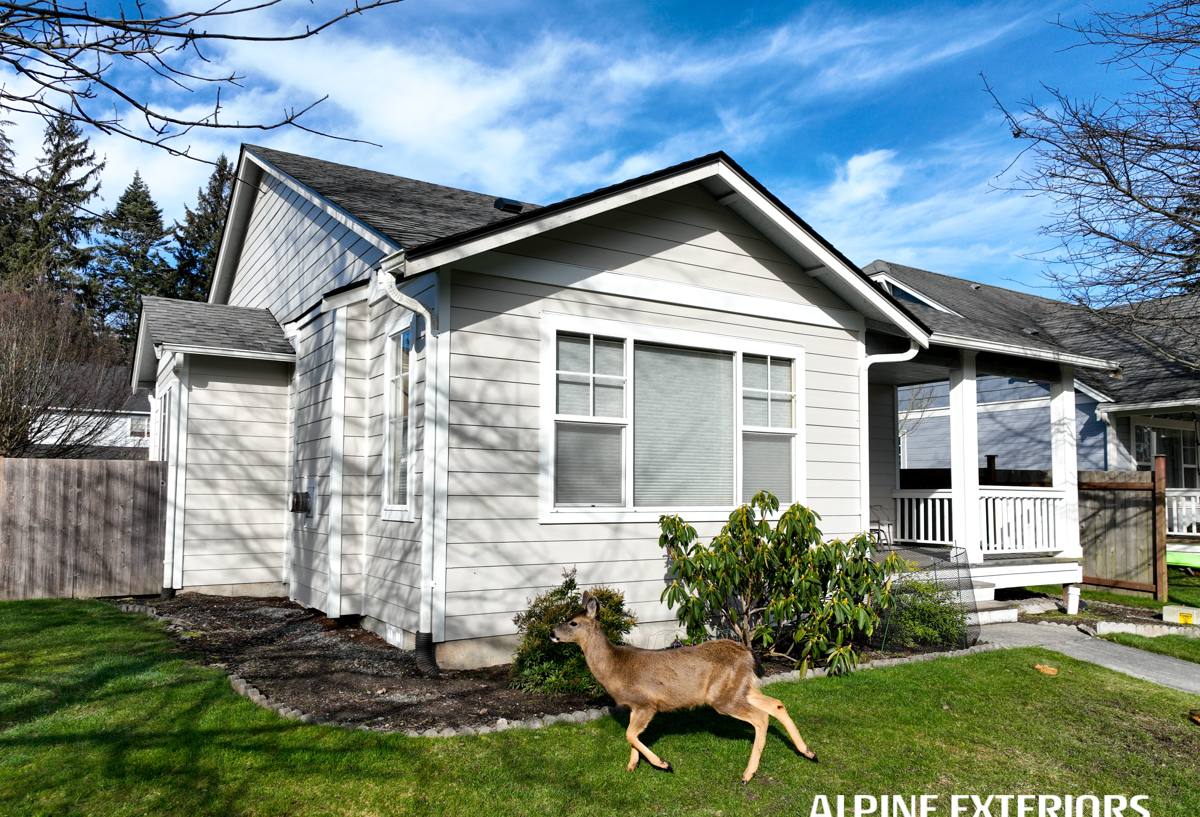
What West Seattle Homes Tend to Face
Salt Air and Coastal Exposure
Proximity to the Sound means airborne salt and moisture reach exterior surfaces even when it isn't raining. Over time, that accelerates corrosion on unprotected fasteners, fades certain finishes faster than they'd fade inland, and speeds up the breakdown of siding materials that aren't built to handle a marine-adjacent climate. This is one of the reasons material choice matters as much as installation quality — a product that holds up fine in a dry climate can perform very differently here.
Driving Rain
Storms moving in off the water often bring wind-driven rain that hits walls at an angle rather than falling straight down. That kind of rain finds weak points that vertical rain never would — poorly lapped siding, gaps around trim, undersized flashing, caulk joints that were never meant to be a primary water barrier. A house can look fine from the street and still be taking on moisture behind the siding if those details weren't handled correctly the first time.
Moss and Prolonged Dampness
Like most of western Washington, West Seattle gets a long stretch of the year where surfaces simply don't dry out fast between rain events. Shaded north-facing walls, areas under tree cover, and roof valleys are the first places moss and algae take hold. On siding, sustained dampness is what breaks down materials that depend on paint film or factory coatings to stay sealed — once moisture gets past that layer and into the substrate, the clock starts on rot, swelling, and eventually replacement.
Why We Only Install James Hardie Fiber Cement
We made a decision as a company to install James Hardie fiber cement siding exclusively — not vinyl, not LP SmartSide, not Cemplank, not Allura, not primed spruce or cedar. That's not a marketing angle. It's a standard we hold ourselves to because of what we've seen happen to other materials in exactly the kind of climate West Seattle sits in.
What Other Materials Get Right
To be fair, the alternatives aren't bad products in every situation. Vinyl is inexpensive and low-maintenance in dry climates. Engineered wood products like LP SmartSide have real strengths in cost and workability. Cedar has genuine visual appeal and a long tradition in the Pacific Northwest. We're not going to pretend those products have no merit — they do, in the right application.
Why We Don't Install Them Here
The trade-offs are what changed our minds. Vinyl can warp and become brittle with temperature swings and doesn't hold up well to sustained damp exposure at seams. Engineered wood products are wood-based at their core, which means they're more sensitive to moisture intrusion than fiber cement if installation isn't flawless — and any lapse in caulking or flashing becomes a bigger long-term liability. Primed spruce and cedar both require an ongoing maintenance commitment — repainting, resealing, staying ahead of moisture — that most homeowners underestimate when they first choose the material. In a climate that gives you salt air, driving rain, and a moss season that runs half the year, those maintenance gaps get exploited fast.
Why James Hardie
James Hardie fiber cement is non-combustible, dimensionally stable, and doesn't absorb and swell with moisture the way wood-based products can. The ColorPlus factory finish is baked on under controlled conditions, which gives more consistent, longer-lasting color than field-applied paint, and Hardie's HZ5 product line is engineered specifically for climates like ours — freeze-thaw cycling, sustained moisture, and coastal exposure. It also carries a strong transferable warranty, which matters if you ever sell the house. None of that guarantees a flawless install by itself — installation quality still does most of the work — but starting with a material engineered for this climate takes one major variable off the table.
How Our Exterior Services Work in West Seattle
We handle siding, roofing, windows, and decks, and in a neighborhood like West Seattle those trades overlap more than people expect. Water that gets behind failing siding often traces back to a roof-to-wall transition, a window flashing detail, or a deck ledger board that was never properly sealed against the house. Treating those as one system, rather than four separate contractors who never talk to each other, is a big part of why exterior problems get caught and fixed instead of patched and revisited.
Siding Installation and Repair
For full siding replacement, that means proper water-resistive barrier installation, correct flashing at every penetration and transition, and Hardie panels or lap siding installed to the manufacturer's specifications — fastener spacing, clearances, and joint treatment all matter more than most homeowners realize. For repair work, it means identifying whether damage is cosmetic or a sign of moisture getting past the siding into the wall assembly, because those two problems get fixed very differently.
Roofing
Roof condition and siding condition are connected — a roof that's shedding water poorly at the eaves or valleys puts extra load on the siding and trim below it. We look at both when we're on a property, because recommending siding work while ignoring a roofing issue that's actively causing the damage doesn't serve the homeowner.
Windows and Decks
Window replacement and re-flashing is often bundled with siding work, since removing old siding exposes window flashing that's easier to correct while the wall is already open. Decks face their own version of the same moisture challenge — ledger connections, joist protection, and material choice all need to account for a climate that stays damp for long stretches of the year.
Cost Factors for Exterior Work in This Area
Every property is different, but a few factors consistently move the price on siding, roofing, window, and deck projects in this part of King County.
| Factor | Why It Matters Locally |
|---|---|
| House size and wall complexity | More corners, dormers, and transitions mean more flashing detail and labor time |
| Extent of moisture damage | Hidden rot behind old siding or trim adds repair scope once walls are opened |
| Access and site conditions | Lot slope, tree cover, and proximity to neighboring structures affect staging and scaffolding |
| Material selection | Hardie panel vs. lap siding, trim profiles, and ColorPlus color selection all carry different costs |
| Roof and window condition | Related repairs found during a siding project can be bundled to save on mobilization costs |
Why a Local Crew Matters
Exterior contractors who don't regularly work a given area tend to apply a generic playbook — the same flashing details, the same material recommendations, regardless of whether the house sits three blocks from Puget Sound or twenty miles inland. A crew that works King County consistently learns which details actually matter in this climate: where driving rain concentrates, which orientations hold moss longest, which older homes are more likely to have hidden moisture damage behind original siding. That local knowledge shows up in fewer callbacks and fewer surprises once a project is underway.
It also means someone answers the phone if a question comes up after the work is done — not a call center, not a subcontractor who's moved on to another state. For exterior work that's meant to last decades, that continuity is worth something.
What to Ask Before Hiring an Exterior Contractor
- Are they licensed and insured to work in Washington State, and can they provide proof?
- Do they install to the manufacturer's written specifications, including fastener placement and flashing details?
- Will they put the scope of work, materials, and warranty terms in writing before starting?
- Do they have experience with the specific challenges of coastal or damp-climate exposure?
- Can they explain why they recommend one siding material over another, beyond price?
- Do they carry a manufacturer-backed warranty, and is it transferable if you sell the home?
Get an Estimate
If you're dealing with siding that's showing its age, moss buildup that keeps coming back, or you're just planning ahead for exterior work, we're happy to take a look and give you an honest assessment — no pressure, no obligation. Fill out the form below to request a free estimate for your West Seattle property.