 King County
 West Seattle's Climate Is Tougher on Windows Than People Realize
West Seattle sits right on the water, and that location cuts both ways. The views are part of why people love living here, but the same exposure to Puget Sound brings a steady mix of salt-laden air, wind-driven rain, and a long, damp moss season that most inland King County neighborhoods don't deal with to the same degree. Salt air is corrosive to certain hardware and finishes over time. Driving rain, especially from southwest storms, pushes water sideways into gaps and seams that would stay dry in a calmer climate. And the extended wet season means any window that isn't sealing and draining correctly gets many more months a year to develop rot, mold, or fogged glass than it would somewhere drier.
None of this means West Seattle homes need exotic materials or gimmicks. It means the basics — flashing, sealants, frame material, and installation technique — have to be done right, because there's very little margin for shortcuts here. A window that's "good enough" in a sheltered inland yard can fail years early on a windward wall a few blocks from the Sound.
What "Custom" Actually Means for a Window Job
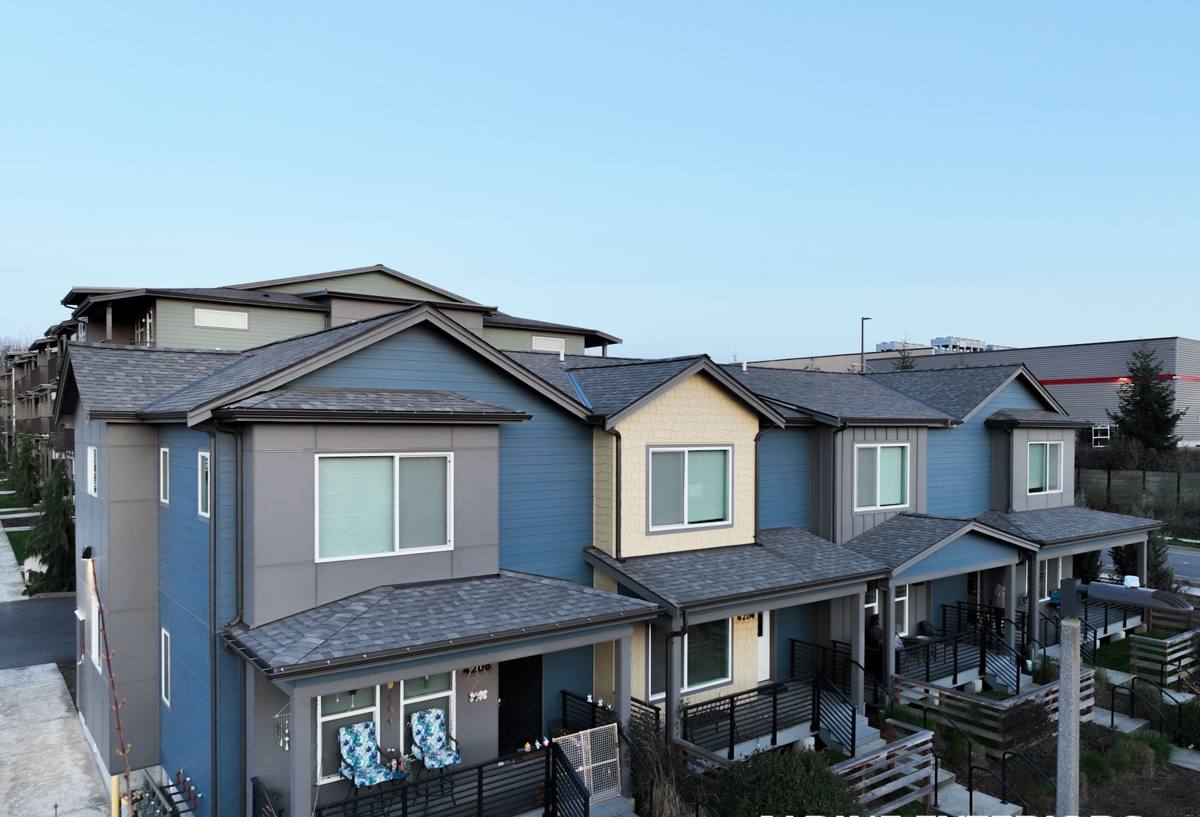
Custom windows don't have to mean unusual shapes or premium upgrades, though we do plenty of that too. In practice, "custom" mostly means the window is built and fitted to your specific opening, your home's era, and how that wall actually performs in weather — not pulled off a shelf in a standard size and forced to fit.
That matters a lot in West Seattle, where housing stock ranges from older craftsman and bungalow-era homes to mid-century builds and newer construction. Older homes often have openings that have shifted slightly over decades of settling, non-standard trim details, or original wood framing that needs to be evaluated before anything gets ordered. A generic size can leave gaps that get packed with extra sealant and hope — which is exactly the kind of shortcut that shows up as a leak two or three winters later.
Custom Sizing vs. Standard Sizing
We measure every opening on site rather than assuming a catalog size will work. If a home has been re-sided, re-framed, or settled over the years, actual openings are rarely perfectly square or a stock dimension. Custom-built units close that gap without relying on shims and caulk to make up the difference.
Signs Your Current Windows Are Losing the Fight
Most homeowners don't think about their windows until something is obviously wrong, but there are earlier warning signs worth catching first.
- Fogging or a hazy film between panes of double-pane glass (a sign the seal has failed and the insulating gas has leaked out)
- Soft, discolored, or spongy wood on the interior or exterior sill and casing
- Visible moss, algae, or dark streaking building up on the frame or sill, especially on north- and west-facing walls
- Drafts you can feel with a hand near the frame on a windy day
- Windows that are difficult to open, close, or lock — often a sign the frame has shifted or swollen
- Paint that keeps peeling or bubbling on wood trim no matter how often it's repainted
- Noticeably higher heating bills compared to similar-sized homes nearby
Any one of these on its own isn't necessarily an emergency. Several together, especially combined with visible moss or staining, usually means water is getting past the seal and it's time for a real inspection rather than another round of caulk.
Choosing a Frame Material for a Marine Climate
There's no single "best" window material for every home — it depends on your home's style, budget, and how exposed the wall is to weather. Here's how the common options generally hold up in a salt-air, high-rainfall setting like West Seattle.
| Frame Material | Salt Air / Moisture Resistance | Maintenance | Typical Lifespan |
|---|---|---|---|
| Vinyl | Good — won't rust or rot, resists salt corrosion well | Low; occasional cleaning | 20–30+ years |
| Fiberglass | Very good — dimensionally stable, holds up well to moisture and temperature swings | Low | 30+ years |
| Wood (clad or unclad) | Fair to good depending on cladding; unclad wood needs diligent upkeep near the water | Higher — repainting, sealing, monitoring for rot | Varies widely with maintenance |
| Aluminum | Prone to corrosion in salt air unless properly coated; also a poor insulator | Moderate | Varies; coating and hardware are the weak points |
We don't push one material on every homeowner. What we will do is tell you honestly when a material is a poor match for a specific wall — for example, unclad wood on a wide-open, west-facing elevation that takes rain and salt spray directly is a much higher-maintenance choice than the same wood window on a sheltered, covered porch wall. That's a maintenance and moisture-behavior tradeoff, not a knock on wood as a material.
Glass: Double-Pane vs. Triple-Pane
Most West Seattle homes do very well with a quality double-pane, low-E insulated glass unit. Triple-pane adds cost and weight and makes the most sense where noise reduction is a priority (busy streets, near the bridge corridor) or where a wall gets extreme wind exposure. We'll talk through whether the upgrade is worth it for your specific situation rather than defaulting to the more expensive option.
Full-Frame Replacement vs. Insert Replacement
This is one of the most important decisions in any window project, and it's driven by the condition of your existing frame — not personal preference.
| Factor | Insert (Pocket) Replacement | Full-Frame Replacement |
|---|---|---|
| When it's appropriate | Existing frame is sound, square, and dry | Frame has rot, water damage, or is out of square |
| Exterior trim disturbed | Minimal | Yes — trim and sometimes siding are removed |
| Access to check for hidden damage | Limited | Full — hidden rot or moisture gets found and fixed |
| Relative cost | Generally lower | Generally higher |
| Best fit for older, weather-exposed walls | Only if frame tests sound | Often the safer choice |
Inserts are a legitimate, cost-effective option when the existing frame is genuinely in good shape. The risk is installing an insert into a frame that already has hidden rot behind the trim — it looks fine on installation day and fails within a couple of seasons. On exposed, weather-beaten walls in particular, we'll recommend opening things up rather than covering a problem back over.
How Our Process Works
- On-site assessment. We inspect existing frames, sills, and surrounding siding for hidden moisture or rot, not just the glass itself.
- Honest recommendation. We tell you whether insert or full-frame replacement fits your situation, and which materials make sense for that specific wall's exposure.
- Accurate measurement and ordering. Every opening is measured on site so the unit fits correctly rather than being forced.
- Proper flashing and sealing. This is the step that determines whether a window survives West Seattle winters — flashing tape, sill pans, and sealant placement matter more than the window brand.
- Finish work. Interior and exterior trim is reinstalled and finished to match, and the work area is cleaned up.
- Final walkthrough. We check operation, sealing, and finish with you before calling the job done.
Why Local Experience Matters for This Job
Window installation looks similar on paper anywhere in King County, but the details that actually prevent leaks — flashing sequence, sealant choice, how much clearance to leave for drainage — need to account for how much wind-driven rain and moisture a wall actually sees. A crew that regularly works West Seattle's waterfront-exposed streets has seen firsthand which details fail first in this specific climate, versus a crew whose experience is mostly in drier, more sheltered parts of the county. That local pattern recognition is hard to replace with a manufacturer's install manual alone.
Keeping New Windows Performing Long-Term
A correctly installed window still benefits from basic upkeep in this climate:
- Rinse accumulated salt film and grime off frames and glass a couple of times a year, especially on wind-exposed elevations
- Keep gutters and nearby drainage clear so water isn't sheeting down across window heads
- Check and clear any moss or debris building up on sills before it holds moisture against the frame
- Operate locks and hardware periodically so they don't seize, and address stiffness early
- Have caulking and sealant lines inspected every few years — sealant is a wear item, not a lifetime guarantee
None of this is a big time investment, but skipping it is how a well-installed window ends up with the same moisture problems as a poorly installed one, just a few years later.
Get a Straightforward Assessment
If you're dealing with drafty, foggy, or hard-to-operate windows, or you're planning ahead before the next wet season sets in, we're happy to take a look and give you an honest read on what your home actually needs. There's no pressure and no pushy upsell — just a clear assessment and a free estimate using the form below.