 King County
 Siding That Holds Up in Kent
Kent sits in the Green River Valley, tucked between the hills of King County and the industrial and residential growth that has reshaped this part of the Puget Sound region over the last few decades. Homes here run the gamut from older ramblers and split-levels built in the 1960s and 70s to newer construction in developments pushing up into the East Hill and Scenic Hill areas. What almost all of them share is exposure to the same weather pattern: long, wet winters, a short dry season, and the kind of persistent damp that doesn't show up as a single storm event but as a slow, cumulative wear on whatever is covering the exterior walls.
We've been doing siding, roofing, windows, and decks across King County long enough to know that the material choice on a Kent home matters more than most homeowners realize until something starts failing. That's why we install James Hardie fiber cement siding exclusively. Not because it's the only decent product on the market, but because after years of tear-offs and repair calls, it's the one we're willing to put our name behind in this climate.
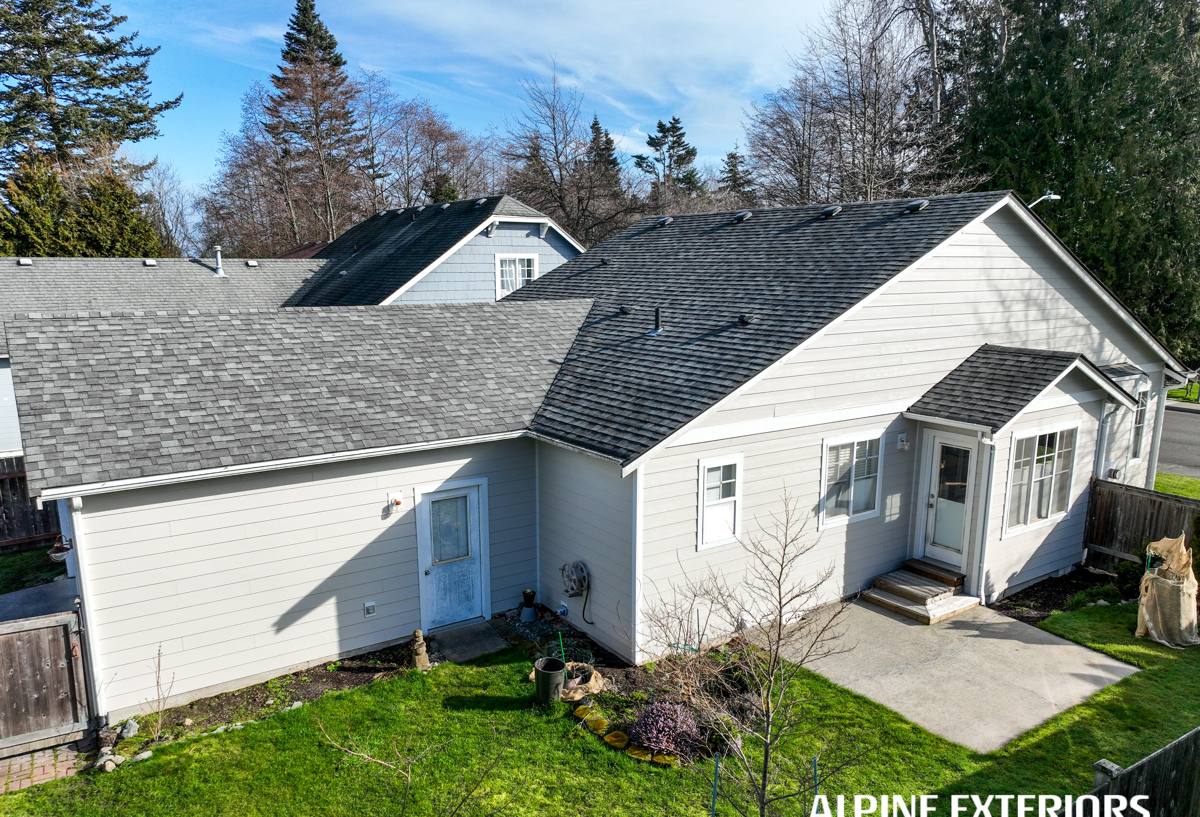
What King County Weather Does to a House
The regional climate here is defined by moisture more than temperature. Puget Sound's marine air keeps things mild, but it also means humidity rarely lets up, rain falls in long soaking spells rather than short bursts, and surfaces stay damp for days at a time. A few specific effects show up again and again on homes we inspect in Kent and the surrounding valley:
- Driving rain intrusion — wind-driven rain finds its way behind poorly flashed siding, especially around windows, corners, and butt joints.
- Moss and algae growth — shaded north- and east-facing walls, especially near mature trees, stay damp long enough for moss and mildew to take hold on porous or wood-based siding.
- Slow moisture wicking — materials that absorb water at cut edges or fastener points swell, cup, or delaminate over several seasons, often invisibly until paint starts failing.
- UV and salt-tinged marine air — even away from the immediate shoreline, Puget Sound's marine airflow carries enough moisture and mineral content to accelerate finish breakdown on lower-grade coatings.
None of this is unique to Kent, but it's more pronounced here than in drier parts of the country, and it's a big part of why national siding trends (particularly vinyl and lower-grade composite products) don't perform the same way in King County as they might in a dry climate.
Why We Standardized on James Hardie
James Hardie fiber cement is engineered specifically for climate zones like ours — the company even makes an HZ5 product line formulated for harsher freeze-thaw and moisture regions, and a standard HZ10 line for milder marine climates like the Pacific Northwest. Fiber cement doesn't absorb water the way wood-based products do, it doesn't support rot, and it holds paint and factory finish far longer than most alternatives because the substrate itself is dimensionally stable. Combined with the ColorPlus factory finish (baked-on color that doesn't rely on field-applied paint holding up against King County's damp cycle), it's a product we can install and stand behind for the long haul.
Why We Don't Install Everything on the Market
We get asked fairly often why we don't offer vinyl, LP SmartSide, or some of the other fiber cement competitors like Cemplank or Allura. The honest answer is that we made a call, based on years of repair and replacement work in this exact climate, that those products carry trade-offs we're not willing to install and then walk away from.
| Product | Why homeowners consider it | Trade-off in King County's climate |
|---|---|---|
| Vinyl siding | Lower upfront cost, low maintenance marketing | Expands/contracts with temperature swings, can warp, doesn't hold up as well against sustained wind-driven rain at seams |
| LP SmartSide | Engineered wood, competitive pricing | Wood-strand substrate is more moisture-sensitive at cut edges and requires precise installation and caulking to avoid swelling |
| Cedar / primed spruce | Natural look, traditional appeal | Needs ongoing maintenance and refinishing to resist rot and moss in a climate this damp |
| Other fiber cement brands | Similar material category to Hardie, sometimes lower cost | Different formulation and warranty structure; we haven't found the long-term track record or factory finish to match Hardie in our own field experience |
This isn't about disparaging any of these products across the board — some have legitimate uses in other climates or budgets. It's about what we've seen hold up on King County homes over time, and what we're comfortable warrantying our own workmanship against.
How We Approach a Kent Siding Job
Inspection First
Every project starts with a real look at what's happening underneath the existing siding, not just the surface. In a valley climate like Kent's, moisture problems often start at flashing details, window transitions, and lower wall sections where splash-back from grade level or a deck keeps the wall damp longer than the rest of the house.
Correct Installation Matters More Than the Product
Fiber cement performs the way it's supposed to only when it's installed to manufacturer spec — proper clearances, correct fastening, sealed joints, and flashing that actually sheds water instead of trapping it. A lot of the failures we get called out to inspect on Hardie siding installed by other crews trace back to installation shortcuts, not the material itself. That's a big part of why local, experienced crews matter more than the brand name on the product.
Roofing, Windows, and Decks Work Together
Siding doesn't fail in isolation. A roof that's shedding water onto a wall, a window that isn't flashed correctly, or a deck ledger board holding moisture against the house all put stress on the siding around them. Since we handle all four trades, we look at the whole exterior envelope rather than treating siding as a standalone project — which matters a lot in a climate where water management is the whole ballgame.
What a Siding Project Typically Involves
- On-site inspection and moisture check of existing siding, trim, and flashing
- Discussion of Hardie product line, plank profile, and ColorPlus color options suited to the home
- Removal of old siding and inspection of the sheathing and weather barrier underneath
- Repair of any rot, damaged sheathing, or improper flashing found during tear-off
- Installation of new weather-resistive barrier where needed, then Hardie siding to spec
- Final trim, caulking, and cleanup
Cost Factors Homeowners Should Understand
We don't publish blanket prices because every Kent home is different, but the real cost drivers on most projects are consistent:
| Factor | Why it affects cost |
|---|---|
| Tear-off condition | Rot or moisture damage found under old siding adds repair time before new siding goes up |
| Home size and complexity | Multiple stories, dormers, and detailed trim take more labor than a simple rectangular footprint |
| Siding profile and color | Lap width, shingle-style panels, and certain ColorPlus finishes vary in material cost |
| Access | Steep lots, tight side yards, or limited driveway access common in some Kent neighborhoods can affect setup and scaffolding time |
A Practical Checklist Before You Hire
- Ask what siding brand and product line the contractor installs, and why
- Confirm they carry current WA state contractor licensing and insurance
- Ask how they handle moisture or rot found during tear-off (and get it in writing)
- Get specifics on flashing and installation details, not just "we install Hardie"
- Ask about warranty coverage — both manufacturer and workmanship
- Check that the crew doing the work is local and familiar with King County's climate demands
Why a Local Crew Matters in Kent
A contractor who works across King County day in and day out knows which details actually matter here — where moss builds up fastest, which wall orientations take the worst of the driving rain, and how the valley's damp air behaves differently than the drier climates a lot of national siding products are engineered for. That local knowledge shows up in the small decisions on a job: where to add extra flashing, how to detail a window transition, which side of the house needs the most attention. It's not something you can get from a crew passing through on a regional contract.
If you're weighing a siding, roofing, window, or deck project on your Kent home, we're happy to come take a look and give you a straightforward assessment — no pressure, no inflated claims, just an honest read on what your home needs and what it would take to do it right. Request a free estimate below and we'll get back to you.