 King County
 Why Kent Homes Need Siding Built for This Climate
Kent sits in the Green River Valley, tucked between the hills of King County and the broader reach of the Puget Sound lowlands. That location means homes here take on a steady diet of rain, damp air, and long stretches without much direct sun — the kind of weather pattern that doesn't destroy siding overnight, but wears down anything that isn't built or installed to handle it. Over years, moisture finds the gaps most homeowners never think to check: behind trim, under lap joints, around window flashing. When it gets in and stays in, that's when real damage starts.
This page is about one thing: installing James Hardie fiber cement siding correctly on Kent homes, for this specific climate. Not a general pitch, not a rundown of every siding product on the market — just what Kent homeowners actually need to know before they replace their siding.
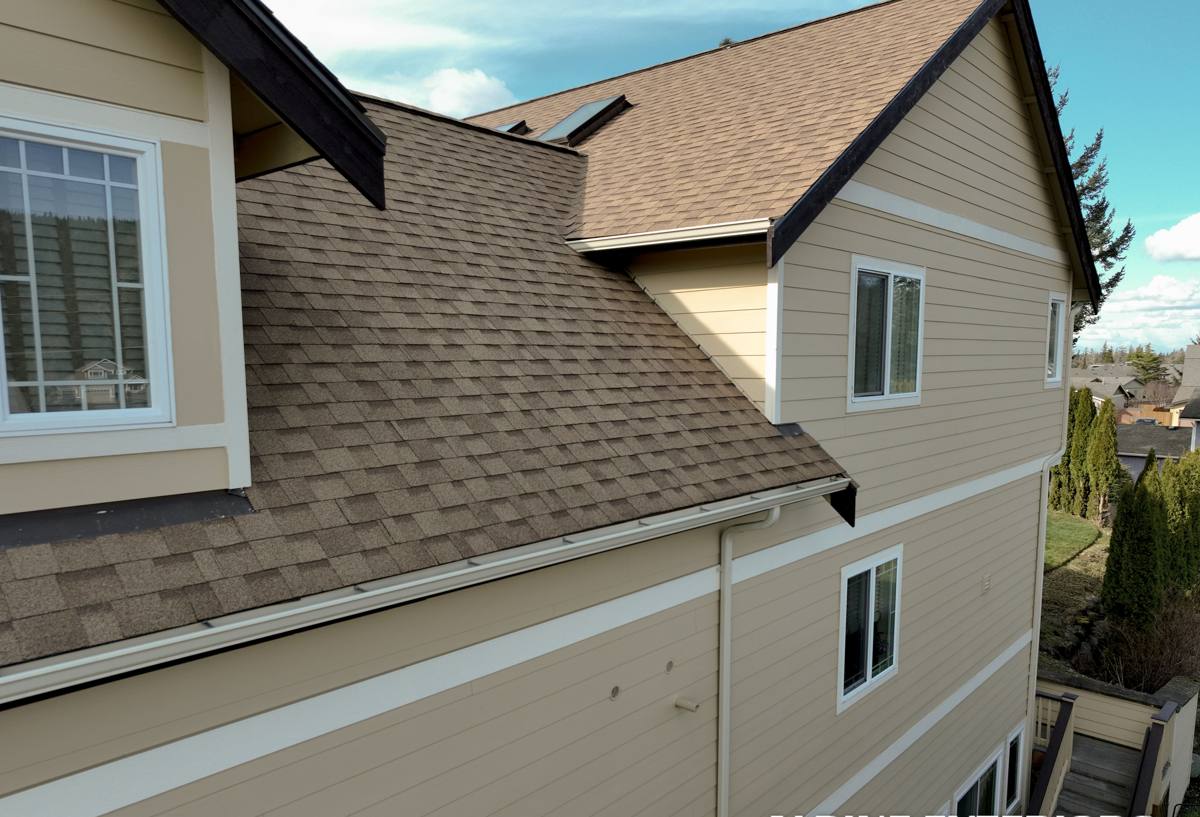
What King County Weather Actually Does to Exterior Walls
Rain and Moisture Cycling
King County doesn't get dramatic storms as much as it gets persistent, low-intensity rain across many months of the year. That matters more than people expect, because siding failure is rarely about one big weather event — it's about repeated wetting and drying cycles that stress seams, caulk lines, and fasteners over time. Combine that with the salt-tinged, moisture-heavy air common across the Sound region, and any weak point in a siding system — a poorly flashed window, a butt joint that wasn't sealed right — becomes a slow leak instead of an obvious one.
Moss and Organic Growth
Western Washington's long moss season is real, and it's not just a roof problem. Siding that stays damp in shaded areas — north-facing walls, spots under overhangs, areas close to landscaping — grows algae and moss just like a roof does. On some materials that means ongoing staining and softening. On others it's mostly cosmetic. Which category your siding falls into depends heavily on the material itself.
Temperature Swings and UV
Kent doesn't see extreme heat, but summer UV exposure combined with winter damp still puts real stress on paint finishes and caulking. Materials that rely on field-applied paint tend to show fading, chalking, and cracking unevenly across a home depending on sun exposure — south and west walls first, usually within a handful of years.
Why We Install Only James Hardie Siding in Kent
We made a deliberate decision as a company: we install James Hardie fiber cement siding, and nothing else. Not vinyl, not LP SmartSide, not Cemplank or Allura, not primed spruce or cedar. That's not a marketing angle — it's a standard we hold because of what we've seen play out on homes in this exact climate over time.
Vinyl siding is affordable and low-maintenance in the sense that it doesn't need paint, but it expands and contracts with temperature and can warp or crack over the decades, and it can't be repainted to refresh a home's look. Wood siding — cedar, primed spruce — looks great new, but in a climate this wet it demands a maintenance schedule most homeowners don't stick to: recoating, caulk checks, moisture monitoring. Skip a cycle or two and rot sets in. Other fiber cement brands compete on price but don't carry the same factory-finish warranty structure or the specific engineering Hardie has done for wet marine climates.
James Hardie's case for this region comes down to a few concrete things: the material itself is non-combustible fiber cement, so it doesn't share wood's vulnerability to rot and pest damage; its ColorPlus finish is baked on at the factory rather than field-applied, which holds color and resists fading far longer than site-applied paint; and Hardie engineers specific product formulations — its HZ5 line — for climates like ours, built around moisture exposure rather than a one-size-fits-all product. That combination is why we standardized on it rather than offering a menu of options.
James Hardie Product Lines That Fit Kent Homes
Not every Hardie product is right for every part of a house. Matching the right line to the right application is part of doing the job correctly, not just picking whatever's in stock.
| Product Line | Typical Use | Why It Fits Kent's Climate |
|---|---|---|
| HardiePlank Lap Siding | Primary wall cladding | Most common choice; factory ColorPlus finish resists the fading and moisture staining common on shaded, damp walls |
| HardiePanel Vertical Siding | Modern facades, accent walls, gable ends | Fewer horizontal seams than lap siding, which means fewer joints for water to work into over time |
| HardieShingle | Accent gables, dormers | Gives a traditional shingle look without the moisture absorption and moss vulnerability of real wood shingles |
| HardieTrim | Corners, fascia, window/door trim | Pairs with the siding field so trim and field expand and weather at the same rate, keeping seams tight |
What a Correct James Hardie Installation Involves
Hardie siding is only as good as the installation underneath it. A rushed or careless install can undercut everything the product is engineered to do, and in a climate like Kent's, installation mistakes show up faster than they would somewhere dry.
Flashing and Weather Barrier Details
Every window, door, and roofline intersection needs proper flashing and a continuous weather-resistant barrier behind the siding. This is the part of the job nobody sees once it's finished — and it's also the part that determines whether water gets managed or trapped.
Clearances and Fastening
Hardie specifies exact clearances from grade, roof lines, and decks, along with specific fastener types and spacing. Cutting corners here — fastening too tight, ignoring ground clearance — is a common cause of long-term moisture problems that have nothing to do with the material itself.
Joint and Seam Treatment
Butt joints, corners, and penetrations (hose bibs, vents, light fixtures) all need to be sealed and detailed correctly. In a region with this much sustained moisture, a poorly sealed joint is exactly where staining, softening, and eventually rot behind the siding will start.
- Continuous weather-resistant barrier installed and lapped correctly before any siding goes up
- Proper flashing at every window, door, and roof intersection
- Manufacturer-specified clearances maintained from grade, decks, and roofing
- Correct fastener type, spacing, and depth — not just "close enough"
- All joints, corners, and penetrations sealed with compatible sealant
- ColorPlus finish touch-ups done with Hardie-approved products, not generic paint
Our Process, Start to Finish
Homeowners in Kent generally want to know two things: what's going to happen to their house, and how long it's going to take. Here's the shape of a typical project.
- Inspection and estimate — we look at existing siding, sheathing condition, and problem areas (moss growth, soft spots, past water intrusion) before quoting anything.
- Tear-off and sheathing check — once old siding is off, we inspect the sheathing underneath for hidden rot or damage before covering it back up.
- Weather barrier and flashing — this is the layer that does the real work of keeping water out; we don't skip steps here to save time.
- Hardie installation — panels or planks go up to manufacturer spec, with attention to clearances, fastening, and joint treatment.
- Trim, caulking, and finish detail — corners, trim boards, and touch-up work get finished to match the ColorPlus finish.
- Final walkthrough — we go over the completed work with the homeowner before calling the job done.
Signs Your Kent Home's Siding Needs Attention
Some warning signs are obvious; others hide in plain sight for years. Worth checking for:
- Persistent moss or dark staining on shaded or north-facing walls
- Soft, spongy spots when you press on wood or composite siding
- Paint that's peeling, bubbling, or chalking heavily on sun-exposed walls
- Cracked or missing caulk at joints, corners, and trim
- Visible warping, buckling, or gaps between siding panels
- Musty smell or discoloration on interior walls near exterior siding
- Siding that's more than 20–25 years old and hasn't been reassessed recently
What Affects the Cost of a Hardie Siding Project in Kent
Every home is different, so we don't quote broad numbers without seeing the house — but these are the factors that consistently move the price up or down.
| Factor | Why It Matters |
|---|---|
| Home size and wall complexity | More square footage and more corners, gables, and trim details mean more labor and material |
| Condition of existing sheathing | Hidden rot found during tear-off adds repair work before new siding can go on |
| Product line mix | Lap siding, panel siding, shingle accents, and trim carry different material costs |
| Color and finish choice | Standard ColorPlus colors versus custom or premium finishes affect material pricing |
| Access and site conditions | Tight lots, multi-story walls, or landscaping obstacles affect labor time |
| Tear-off vs. overlay | Full removal of old siding costs more upfront but avoids covering up hidden problems |
Why Hiring a Crew That Already Works in Kent Matters
Siding installation isn't identical everywhere in the country, and it isn't even identical everywhere in King County. A crew that regularly works Kent homes already knows the practical realities: how local moisture and moss patterns behave on north- and shade-facing walls, what sheathing conditions tend to look like in homes of different ages in this area, and how to sequence a job around the region's rain patterns instead of getting caught mid-project by a wet week.
There's also a simpler advantage: a local crew has to stand behind its work in the same community it lives and drives through. That's a different incentive structure than an out-of-area outfit that installs and moves on. For a material like James Hardie, where the manufacturer's warranty depends partly on correct installation, working with a crew that installs Hardie specifically — and only Hardie — day in and day out is part of what protects that warranty in practice, not just on paper.
Get a Straight Answer About Your Siding
If your Kent home's siding is showing its age, or you just want an honest read on its condition before deciding anything, we're glad to take a look. Request a free, no-pressure estimate below and we'll walk the exterior with you and tell you what we actually see — no upsell, no scare tactics.