 King County
 Siding in Fremont: What the Climate Actually Demands
Fremont sits close to the water, tucked along the Lake Union Ship Canal in the heart of King County, and that proximity shapes what happens to exterior siding here more than most homeowners realize. Between the moisture coming off the water, the tree canopy that shades much of the neighborhood, and a wet season that can stretch for months, Fremont homes take a steady, low-grade beating that's easy to underestimate until you're scraping moss off a north wall for the third year running.
This isn't a page about scare tactics. It's a straightforward look at what siding in this part of King County has to deal with, how we approach siding, roofing, windows, and decks as one connected exterior system, and why our company made the decision years ago to install only James Hardie fiber cement — nothing else.
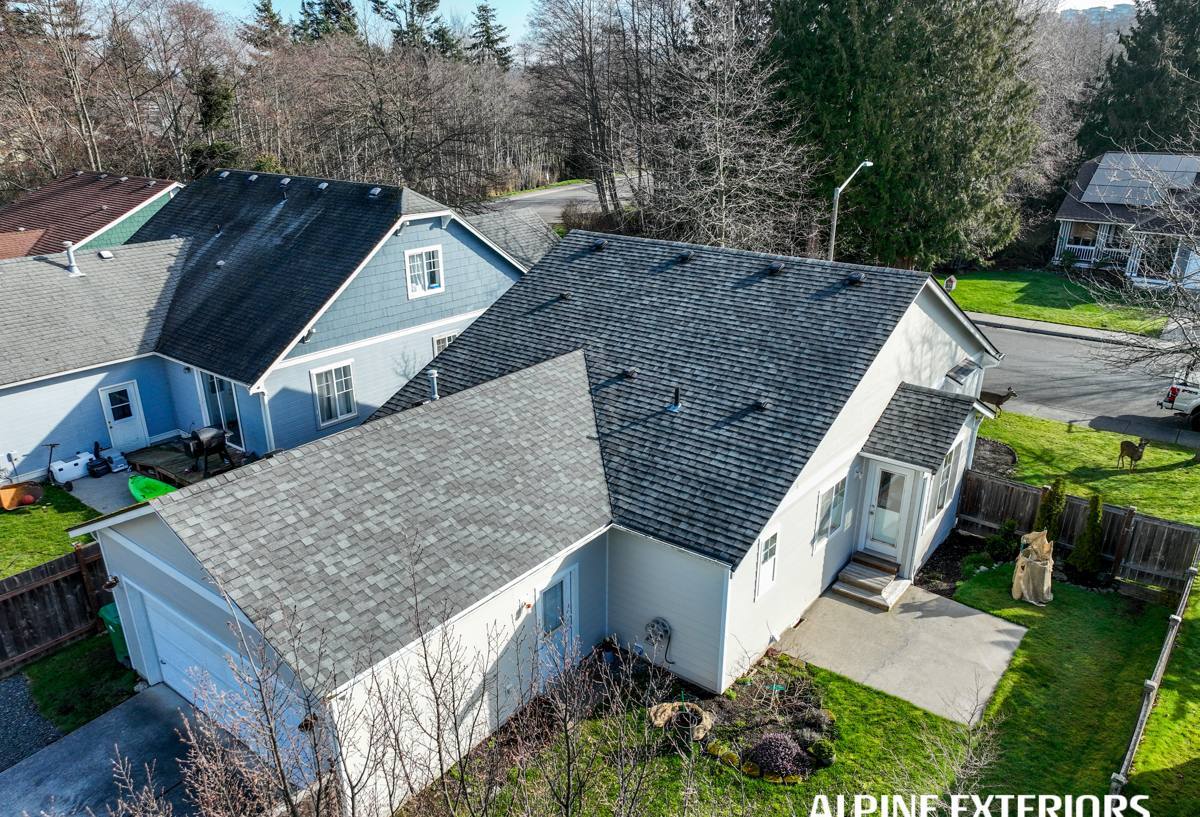
Why Fremont Homes Show Wear in Specific Ways
Salt Air and Driving Rain
Homes closer to the water pick up a fine film of salt-laden moisture that settles on painted and unpainted surfaces alike. Combined with wind-driven rain off Puget Sound weather systems, siding on the water-facing and weather-facing walls of a home takes on moisture at a rate that inland King County properties simply don't experience. Over time, that moisture cycle — wet, dry, wet again — is what breaks down paint film, swells wood fiber, and works caulking loose at joints and trim.
The Long Moss Season
King County's wet season runs long, and Fremont's mix of mature trees and close-set lots means a lot of siding never gets a full afternoon of direct sun, even in summer. Shaded, damp siding is exactly the environment moss and algae need to take hold. Once moss establishes itself on a wall, it holds moisture against the surface even longer, which accelerates whatever degradation was already happening underneath.
What This Means Practically
None of this means Fremont is a uniquely harsh place to own a home — it means the exterior envelope needs to be matched to the actual conditions instead of whatever's cheapest at the yard. That's the lens we bring to every estimate in this neighborhood.
Why We Only Install James Hardie Fiber Cement
We get asked regularly why we don't offer vinyl, LP SmartSide, or other engineered wood options, since they're common enough elsewhere in King County. The honest answer is that we looked at how those products perform over a full Pacific Northwest wet season, year after year, and decided we didn't want our name on the installation when the maintenance bill came due for the homeowner.
- Vinyl can warp and fade in temperature swings, and its seams and J-channels give moisture a path behind the panel in a climate that stays wet for months at a stretch.
- Engineered wood products (like LP SmartSide) use a wood-strand core, which means the long-term performance depends entirely on the wood staying sealed at every cut edge, nail penetration, and joint — a hard standard to guarantee over decades of Fremont rain.
- Cedar and primed spruce look great when new but require a repainting and caulking schedule that most homeowners underestimate, especially on shaded, moisture-prone walls.
James Hardie fiber cement is non-combustible, doesn't swell or rot the way wood-based products can, and holds a factory-applied ColorPlus finish that's baked on rather than field-painted — which matters a great deal in a climate where field-applied paint has a shorter useful life. It's not the cheapest option on the market, and we're upfront about that. It's the one we're comfortable standing behind.
The HZ5 Product Line: Engineered for This Exact Climate
James Hardie makes different formulations of its fiber cement siding calibrated to different climate zones across the country. For King County and the broader Pacific Northwest, that means the HZ5 line, engineered specifically for regions with sustained moisture exposure rather than freeze-thaw cycling. The difference isn't cosmetic — it's in the cement formulation itself, aimed at the kind of damp-but-mild weather pattern Fremont sees for a large part of the year.
Choosing the right climate-engineered product line is one of the reasons we don't treat siding as a one-size-fits-all material. A product built for Arizona heat or Minnesota freeze-thaw isn't the same product, even under the same brand name, as what we install here.
Siding Is Only Part of the Envelope
We work on siding, roofing, windows, and decks because on a home in a wet climate, those four systems function together, not separately. A roof with degraded flashing will feed water down behind siding no matter how good that siding is. Windows with failed seals push moisture into wall cavities from the inside out. A deck attached to the house creates a ledger connection that, if flashed poorly, becomes a chronic leak point behind the siding right above it.
When we look at a Fremont home, we're looking at the whole envelope, not just the wall cladding, because siding failures often start as a roofing or window problem that simply shows up on the siding first.
Common Cross-System Issues We Look For
| Symptom on Siding | Frequent Root Cause |
|---|---|
| Staining or bubbling below a window | Failed window flashing or worn caulking at the head flashing |
| Dark streaking near the roofline | Undersized or clogged gutters overflowing onto the wall |
| Soft or discolored siding near a deck ledger | Poor flashing where the deck attaches to the house |
| Persistent moss on one wall only | Lack of sun exposure combined with a moisture source (roof, gutter, or grading) |
What Correct Installation Actually Involves
Fiber cement siding performs the way it's rated to only when it's installed to manufacturer specification. In our experience, most siding complaints that get blamed on the "product" are actually installation shortcuts — gaps skipped, fasteners placed wrong, or flashing details rushed to save labor time.
What We Check On Every Job
- Proper clearance between siding and grade, decks, roof surfaces, and other transitions so water has somewhere to go
- Correct fastener placement and spacing per the Hardie installation manual, not generic carpentry practice
- Rain-screen or drainage plane detailing appropriate to the wall assembly, especially on shaded or water-facing elevations
- Factory-cut and factory-primed edges wherever possible, with field-cut edges properly sealed
- Flashing integration at every window, door, roofline, and deck ledger — not just caulk over a gap
- Joint and butt seam treatment that accounts for expansion without creating a moisture trap
This is also where a crew's daily familiarity with King County conditions matters. A framing crew that mostly works drier inland regions may not instinctively over-build the drainage details the way a crew that works water-adjacent neighborhoods like Fremont every week will.
What Affects Cost on a Fremont Siding Project
We don't publish fixed prices because every home is different, but the factors that actually move a bid up or down are consistent. Broad ranges only — every project gets a walk-through before we quote a number.
| Factor | Why It Matters Here |
|---|---|
| Existing siding removal | Older siding on shaded, moist walls is more likely to have hidden sheathing damage that needs repair before new siding goes on |
| Home elevation exposure | Water-facing and shaded walls often need more careful flashing and drainage detailing, which affects labor time |
| Trim and detail complexity | Fremont's mix of older and architecturally detailed homes can mean more corners, trim boards, and transitions |
| Access and lot conditions | Tighter lots and mature landscaping can add setup and staging time |
| Combined scope | Bundling siding with roofing, window, or deck work can reduce overlap and duplicate mobilization costs |
Why a Local Crew Matters More Than It Sounds Like It Should
Anyone can install siding on a dry day. What separates a good exterior job in this part of King County is judgment built from seeing the same failure patterns repeatedly — the same wall orientations that grow moss, the same deck ledger connections that leak, the same gutter-overflow staining. A crew that works this region regularly builds those instincts into how they flash, gap, and sequence a job before problems ever show up.
We're not the crew for every homeowner, and we say that honestly — if you want vinyl or LP SmartSide, we're not the right fit, and we'll tell you that up front rather than talk you out of a decision that's genuinely yours to make. But if you're deciding on fiber cement siding for a home that has to hold up to salt air, driving rain, and a long moss season, this is exactly the kind of climate James Hardie was engineered for, and exactly the kind of installation work we've built our process around.
Maintenance Expectations Once It's Installed
Even the right product needs some ongoing attention in this climate. Fiber cement with a factory ColorPlus finish needs far less than wood or repainted surfaces, but it's not zero-maintenance.
- Periodic gentle washing to keep moss and algae from establishing, especially on shaded elevations
- Keeping gutters clear so overflow doesn't run down the wall face
- Re-caulking at trim joints on the manufacturer's recommended schedule, not just when it looks cracked
- Watching deck ledger and window flashing areas during your own seasonal walk-arounds
If you're weighing a siding replacement, roof, window, or deck project on a Fremont home, we're glad to walk the property, look at what the climate has already done to the current exterior, and put together a straightforward, no-pressure estimate — no obligation either way.