 King County
 Siding Installation in Fremont: Built for This Specific Climate
Fremont sits close to water on more than one side, and that matters more than most homeowners realize when it comes to siding. Between the salt-tinged air moving off Puget Sound and Lake Union, the driving rain that comes sideways off a southwest wind, and a moss season that can run eight or nine months out of the year in the shade of mature trees, the exterior of a Fremont home works harder than the exterior of a house in a drier, inland part of King County. Siding here isn't just cosmetic. It's the first and most consistent line of defense against moisture that never fully stops, and it needs to be installed with that reality in mind from the first piece of house wrap to the last bead of caulk.
This page is specifically about siding installation for Fremont properties — not siding in general. The housing stock, the microclimate, and the failure patterns we see on tear-offs in this part of King County are specific enough that they deserve their own explanation.
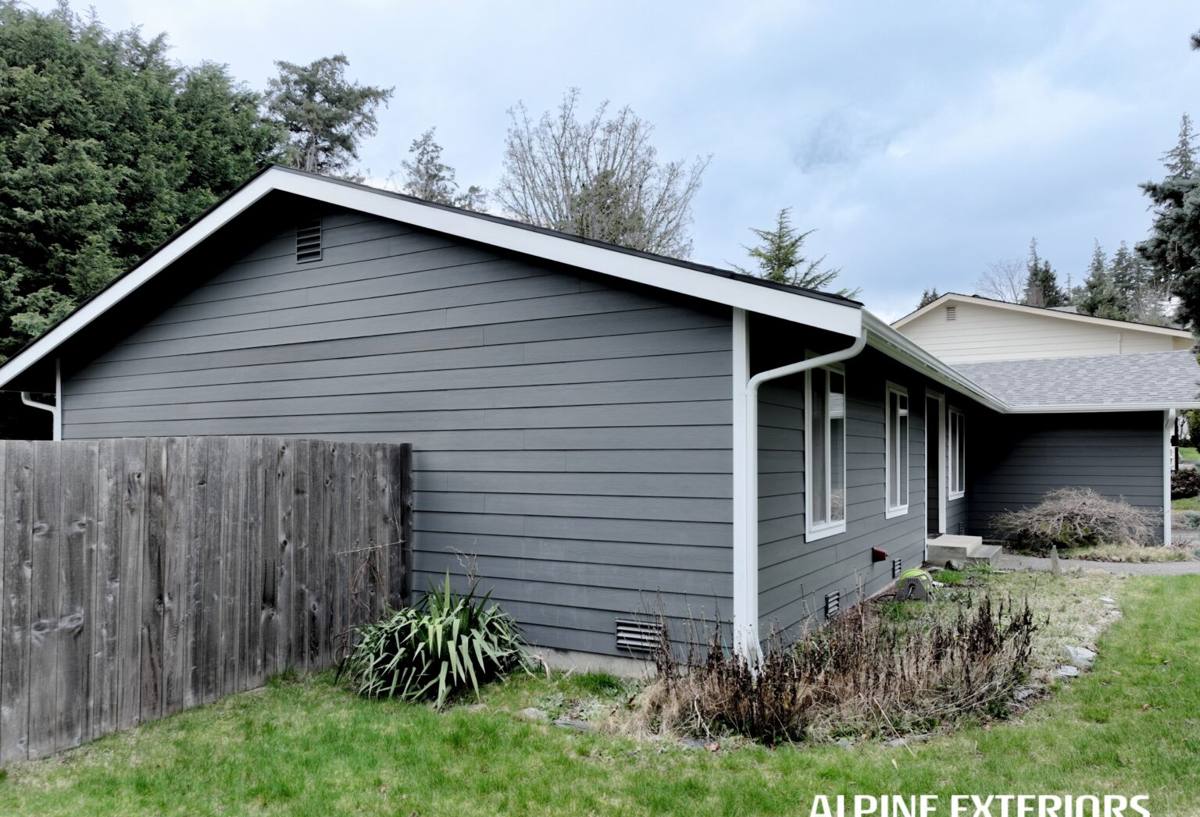
What Fremont Homes Actually Need From Their Siding
Fremont's housing stock is a mix — early-1900s bungalows and Craftsman-era homes near the core of the neighborhood, mid-century infill, and newer construction on lots that got redeveloped over the last couple of decades. What almost all of them share is exposure to sustained damp conditions rather than short, hard storms. That changes what "good siding" means here:
- Moisture cycling resistance — siding that swells, cups, or delaminates when it absorbs and releases water repeatedly over a wet winter
- A real drainage plane — a way for any water that gets behind the siding to get back out, rather than sitting against the sheathing
- Finish stability in low light — many Fremont lots have mature tree cover, which means siding stays damp longer after rain and gets less direct sun to dry it out
- Resistance to moss and algae staining, which is as much a maintenance and appearance issue as it is a structural one
Older homes in particular often have siding that was never designed for a 60-plus year service life in this climate — old wood siding, or a first-generation vinyl or fiber cement product installed without a proper rainscreen. When we tear that off, we frequently find the real story isn't the siding itself, it's what happened underneath it for years without anyone knowing.
Salt Air's Role, Even a Few Miles From the Water
Fremont isn't oceanfront, but it's close enough to Puget Sound and the ship canal that airborne salt and moisture are a real factor, especially on north- and west-facing walls. Salt-laden moisture accelerates corrosion on fasteners and trim metal, and it keeps painted and coated surfaces damp longer than they'd stay in a drier part of the county. Siding and the fasteners that hold it need to be rated for that kind of exposure, not just "exterior grade" in a generic sense.
Why We Install Only James Hardie Fiber Cement — Nothing Else
King County Siding made a deliberate decision to install one product family: James Hardie fiber cement. We don't offer vinyl, LP SmartSide, Cemplank, Allura, or primed wood as alternatives, and that's worth explaining rather than just stating.
Fiber cement is non-combustible, which matters in a region where wildfire smoke and ember exposure have become a more regular late-summer concern even west of the Cascades. It doesn't feed moisture into the wall the way engineered wood products can if a seam fails, and it doesn't soften, warp, or become brittle the way vinyl can with age and UV exposure. James Hardie's ColorPlus factory finish is baked on under controlled conditions, which gives it a more consistent, fade-resistant finish than field-applied paint — something that matters a lot in a neighborhood with as much tree shade and lingering dampness as Fremont has, where field-painted surfaces take longer to cure and are more prone to mildew streaking in year one.
Hardie also builds region-specific product engineering into its HZ5 line, which is formulated for climates with high moisture exposure — exactly the profile of western Washington. That's not marketing language we're repeating; it's the actual reason we standardized on it instead of a general-purpose fiber cement product.
What This Means in Practice
When we say "James Hardie only," we mean it covers the plank or panel product, the trim, and in most cases the soffit as well, so the whole exterior envelope is behaving the same way under moisture and temperature swings. Mixing a Hardie field with a different manufacturer's trim is a common shortcut we won't take, because the two products don't always expand, contract, or age the same way, and that mismatch is where premature caulk failure and staining tends to show up first.
What a Correct Siding Installation Actually Involves
The siding itself is the visible 10% of the job. The other 90% is what happens between the sheathing and the finished plank, and it's where almost every siding failure we get called out to investigate actually starts.
The Layers That Matter
- Sheathing inspection and repair — any rot, delamination, or soft spots found during tear-off get addressed before anything new goes up. Covering a problem is not an option we offer.
- Weather-resistive barrier (WRB) — a properly lapped, taped, and sealed barrier that manages bulk water, installed shingle-fashion so gravity works with it, not against it.
- Flashing at every penetration — windows, doors, hose bibs, vents, and deck ledgers all need site-specific flashing, not just a bead of sealant. This is the single most common shortcut we find on older Fremont homes.
- A drainage gap or rainscreen — a small air space behind the siding lets any incidental moisture drain and lets the wall assembly dry out between rain events, which in a climate like Fremont's happens far more often than in drier parts of the county.
- Correct fastening — James Hardie specifies fastener type, spacing, and embedment depth for a reason; over- or under-driven nails are a leading cause of cracking and callback repairs.
- Joint and trim detailing — proper caulking at butt joints and trim, using products rated for the specific gap and movement expected, not just "paintable caulk" from a big-box shelf.
Skip any one of these and the siding can look fine for a season or two before problems show up — which is exactly why so many moisture issues in this area go unnoticed until a wall is opened up for something else.
Our Process for a Fremont Siding Installation
We run the same disciplined process on every home, adjusted for what we find once the old siding comes off:
- On-site evaluation — we look at existing siding, trim, window flashing, and any visible signs of past moisture intrusion before giving you a scope of work.
- Tear-off and sheathing assessment — old siding comes off in sections so we can evaluate the wall as we go rather than guessing from the outside.
- Repair before recover — any damaged sheathing, framing, or trim gets repaired and documented before the new assembly goes on.
- WRB and flashing installation — a new weather-resistive barrier and flashing package sized to the specific wall and openings.
- James Hardie installation to manufacturer spec — correct fastening, gapping, and joint treatment throughout, including trim and soffit where applicable.
- Final detailing and walkthrough — caulking, touch-up, and a walkthrough so you understand what was done and why.
Because of the amount of rain Fremont sees across fall, winter, and spring, we also pay close attention to scheduling — sequencing work so that open wall sections aren't left exposed longer than necessary, and building in realistic weather contingency rather than rushing a step to hit a date.
Comparing Siding Materials for a Marine Climate Like Fremont's
We get asked fairly often why we don't offer a lower-cost alternative alongside Hardie. This is the honest comparison, based on how these materials actually perform in a wet, shaded, salt-air-influenced climate — not on brand marketing from any manufacturer.
| Material | Moisture Behavior | Maintenance in Fremont's Climate | Fire Resistance |
|---|---|---|---|
| James Hardie fiber cement | Dimensionally stable; does not swell or rot when properly installed | Occasional wash to manage moss/algae; factory finish resists fading | Non-combustible |
| Vinyl siding | Doesn't rot, but can warp, buckle, or become brittle with age and UV/temperature cycling | Low, but limited repair options if a panel cracks; color can't be refreshed | Combustible; can melt or deform near heat sources |
| Cedar/wood siding | Absorbs and releases moisture continuously; prone to rot in shaded, damp areas without diligent upkeep | High — regular refinishing, caulking, and moisture monitoring required | Combustible |
| LP SmartSide (engineered wood) | Treated to resist moisture, but seams and cut edges are vulnerable if not field-sealed correctly | Moderate; relies heavily on installation quality and ongoing seam maintenance | Combustible |
None of these alternative products are inherently "bad" — they each have a place. Our position is simply that for a climate that stays wet as long as Fremont's does, the moisture-cycling and maintenance trade-offs of the alternatives outweigh their upfront cost advantage, and that's why we standardized on one product we can install and stand behind consistently.
What Drives the Scope and Cost of a Fremont Siding Job
Every home is different, but the factors that most often change the size and cost of a siding project in this neighborhood are consistent:
| Factor | Why It Matters |
|---|---|
| Extent of hidden moisture damage | Sheathing or framing repairs found during tear-off add scope that can't be accurately quoted until the old siding is off |
| Home height and access | Multi-story homes and tight side yards common in Fremont's denser blocks require more scaffolding and staging time |
| Trim and architectural detail | Craftsman-era trim details and window casings take more labor to flash and finish correctly than a simple modern elevation |
| Existing siding type | Removing old wood or a prior fiber cement product is more labor-intensive than removing vinyl |
| Soffit and fascia condition | Moss and moisture damage often shows up at the roofline first, and can extend scope beyond the wall siding itself |
Signs a Fremont Home Needs New Siding
Because moisture problems in this climate develop slowly, the signs are often subtle before they become serious. Worth checking for:
- Persistent moss or dark streaking that comes back within weeks of being cleaned
- Soft or spongy spots when you press on the siding, especially near the bottom courses or under windows
- Visible gaps, cracking, or separation at butt joints and corners
- Peeling or bubbling paint on wood or older composite siding
- Rising energy bills without another clear explanation, which can point to a compromised weather barrier
- Warping, cupping, or a wavy appearance across a wall section
- Water stains on interior walls near exterior corners after heavy rain
Any one of these on its own isn't necessarily an emergency, but a few together are a reasonable signal that it's time for a real inspection rather than a spot repair.
Why Hiring a Crew That Already Works in Fremont Matters
Siding installation isn't just a product — it's a set of judgment calls made on-site, and those calls are better when a crew already understands the neighborhood. A crew that regularly works Fremont knows what King County's permitting and inspection process looks like for exterior work, has a realistic sense of how tree cover and lot orientation affect drying time on a given wall, and has seen firsthand what happens to trim and flashing details on this specific era of housing stock when they're done wrong. That familiarity shows up in fewer surprises during tear-off and a more accurate scope from the first walkthrough, rather than change orders discovered mid-project.
It also matters for something less obvious: scheduling around King County's wet season realistically, rather than promising a timeline that only works in a dry summer stretch.
If you're considering new siding for a Fremont home, we're glad to come take a look and give you a straightforward, no-pressure estimate — including an honest read on what we find once we can see the wall underneath. Use the form below to get started.