 King County
 Renton's Climate Is Harder on Siding Than Most Homeowners Realize
Renton sits in the Puget Sound lowlands, and that geography shapes everything about how a house ages here. Marine air moves through the region for most of the year, carrying moisture that settles into wood grain, seams, and fastener holes long before it ever looks like a problem on the surface. Add King County's long, wet fall-through-spring stretch — months of steady, low-intensity rain rather than short storms — and you get siding systems that stay damp far longer than manufacturers in drier climates ever designed for.
Then there's moss. Renton's tree cover, cloud cover, and humidity combine to create a moss season that can run half the year on north-facing walls, under eaves, and anywhere sun doesn't reach. Moss isn't just cosmetic — it holds moisture against the siding surface, and on materials that aren't built to shrug that off, it accelerates rot, paint failure, and board delamination from the inside out.
None of this means Renton is an unusually harsh place to own a home. It means the exterior products that work fine in Arizona or even parts of the Midwest are frequently the wrong call here, and a contractor who doesn't work King County roofs and walls every week won't necessarily know that.
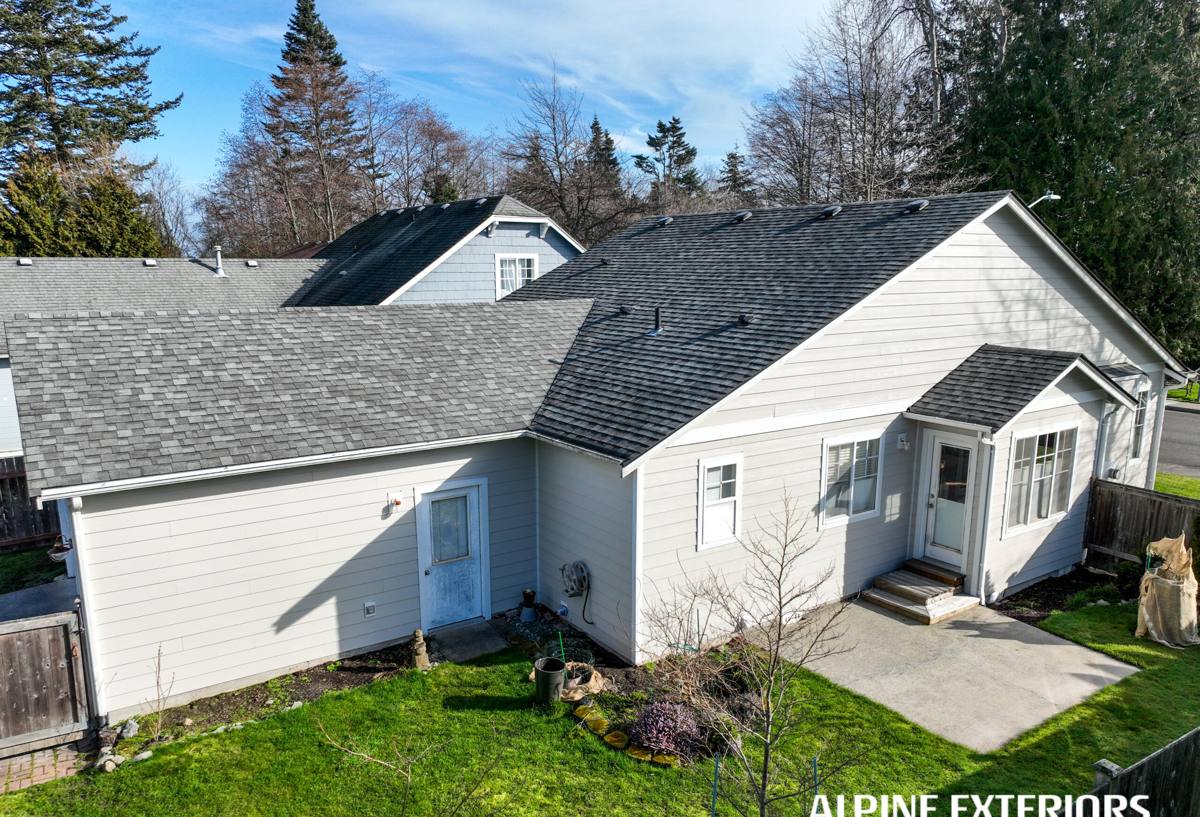
Why a Local Crew Matters More Than It Sounds Like It Should
Every jurisdiction in King County handles permitting, inspection, and code enforcement a little differently, and Renton is no exception. A crew that pulls permits here regularly knows what the inspectors actually check, how drainage plane and weather-resistive barrier details get evaluated, and where the common failure points are on homes built in this area's typical eras of construction.
Local experience also means knowing which sides of a house take the worst weathering. In Renton, that's usually the north and west exposures — shaded enough to stay damp, exposed enough to catch the prevailing rain. A crew that's worked hundreds of King County homes plans flashing, starter strips, and ventilation details around that reality instead of applying a generic installation and hoping it holds.
What We Actually Do
We're a full exterior contractor — siding, roofing, windows, and decks — which matters more than it might seem. Siding failures are frequently roofing or flashing failures in disguise, and window installations that don't integrate cleanly with the siding system are one of the most common sources of hidden water intrusion we find when we open up a wall. Handling all four trades means the details get coordinated instead of handed off between separate companies who never talk to each other.
Why We Install Only James Hardie Fiber Cement
We made a deliberate decision to standardize on James Hardie siding and stop installing several other products homeowners still ask about. That's not a marketing position — it's a professional standard built around what actually performs over a 20-, 30-, 40-year timeline in a climate like Renton's.
James Hardie fiber cement is non-combustible, dimensionally stable in wet-dry cycling, and finished at the factory with ColorPlus Technology — a baked-on finish that resists the fading and peeling that field-applied paint jobs eventually suffer under Northwest UV and moisture cycling. Hardie also engineers regional product lines (its HZ5 formulation is built for exactly the climate zone Renton sits in), which means the product arrives already matched to what this weather does to a house, rather than a one-size-fits-all national spec.
The company backs it with a strong transferable limited warranty, and because installation requirements are well-documented and widely trained across the industry, a correctly installed Hardie system has a long, well-established track record. That combination — material performance, factory finish, climate-specific engineering, and warranty strength — is why it's the only siding brand we put on homes.
What We Won't Install, and Why
We get asked about vinyl, LP SmartSide, Cemplank, Allura, and primed cedar or spruce regularly, and each has a legitimate place in the market — we just don't think any of them is the right long-term call for this climate, and we'd rather say so than install something we don't stand behind.
- Vinyl siding is inexpensive and low-maintenance in the sense that it doesn't need painting, but it's a thin, flexible material that can warp in direct sun exposure and doesn't offer the impact resistance or fire rating of fiber cement. It also can't be repainted to change a home's look later without specialty products.
- LP SmartSide is an engineered wood product with real strengths, but wood-based substrates are inherently more moisture-sensitive than fiber cement, and moisture is exactly what Renton's climate delivers in volume for most of the year.
- Cemplank and Allura are also fiber cement products and perform reasonably as a category, but we standardized on one manufacturer so our crews install one system to one spec, with one warranty structure and one factory finish standard, rather than juggling multiple product lines with different installation quirks.
- Primed cedar or spruce siding looks excellent and has real appeal, but bare or primed wood requires an ongoing maintenance commitment — recoating, caulking, and moisture monitoring — that most homeowners underestimate until the paint starts failing in year four or five.
Siding Material Comparison
| Material | Moisture Behavior in Wet Climates | Factory Finish | Typical Maintenance |
|---|---|---|---|
| James Hardie fiber cement | Dimensionally stable, engineered for regional moisture exposure | ColorPlus baked-on finish | Periodic washing, occasional caulk checks |
| Vinyl | Doesn't absorb water but can warp/gap over time | Color molded through, can't be easily repainted | Washing, panel replacement if cracked |
| LP SmartSide (engineered wood) | More moisture-sensitive substrate than fiber cement | Factory-primed, needs top coat | Repainting and moisture monitoring |
| Cedar / spruce | Absorbs moisture, needs consistent sealing | Usually primed only, not fully finished | Regular recoating and caulk maintenance |
What the Installation Process Involves
Correct fiber cement installation is more particular than most homeowners expect, which is part of why we're selective about crews and training. It starts with removing the old cladding and inspecting the sheathing and weather-resistive barrier underneath — this is often the first time hidden moisture damage from a prior installation surfaces, and it has to be addressed before anything new goes up.
From there, proper flashing at windows, doors, and roof-to-wall transitions gets installed or corrected, since these are the intersections where water intrusion actually happens on most homes. Hardie panels and lap siding are then installed to manufacturer fastening and clearance specifications — correct nailing patterns, proper gaps at the ground and trim, and the right sealants at joints. Skipping or rushing these details is exactly how a good product ends up with a bad reputation.
Cost Factors for a Renton Siding Project
| Factor | Why It Matters Here |
|---|---|
| Extent of hidden moisture or rot damage | Common on older homes given years of wet-season exposure; affects sheathing repair scope |
| Home size and wall complexity | Multiple gables, dormers, and cutouts increase labor and flashing detail work |
| Siding profile and finish selection | Lap siding, panel systems, and trim combinations vary in material and labor cost |
| Existing trim, window, and flashing condition | Integration at these points is where most future leaks originate if not done correctly |
| Access and site conditions | Slopes, tight side yards, and mature landscaping common in Renton neighborhoods affect staging and labor time |
We provide detailed, itemized estimates on-site rather than ballpark figures over the phone, since so much depends on what's actually underneath the existing siding.
Roofing, Windows, and Decks: How They Tie Into Siding Performance
A siding replacement is a good time to evaluate the rest of the exterior envelope, because these systems don't function independently. A roof nearing the end of its service life, or with deteriorating flashing at the wall line, will undermine even a perfectly installed siding job. Aging windows are a frequent source of water intrusion at the exact seams where new siding gets tied in, and decks attached to the house create their own set of flashing and ledger-board details that affect the wall behind them.
Because we handle all four trades, we look at the whole envelope during an estimate rather than quoting siding in isolation and leaving a homeowner to discover an unrelated roofing or window problem later.
Maintaining Hardie Siding in a Renton Climate
- Rinse siding periodically to remove pollen, moss spores, and general grime buildup, especially on shaded north-facing walls
- Inspect caulking at trim, window, and door junctions annually and recaulk any cracked or separated seams
- Keep gutters clear so overflow doesn't run down the siding face or pool at the base of walls
- Trim back vegetation and tree limbs that keep sections of the wall shaded and damp, since that's where moss establishes fastest
- Watch for any soft spots, staining, or paint failure near ground level, which can indicate splashback or grading issues rather than a siding defect
- Have flashing at roof-to-wall intersections checked when the roof is serviced, since that's a shared point of failure between the two systems
Choosing a Contractor for This Kind of Work
Because siding failures are often invisible until they're advanced, the contractor you choose matters as much as the material. Ask specifically about King County licensing and insurance, request to see how they detail flashing at windows and rooflines, and ask which siding brands they install and why — a contractor who's thought carefully about that question, rather than installing whatever the homeowner asks for, is generally the one paying attention to the details that matter over the life of the house.
If you're considering a siding, roofing, window, or deck project in Renton or elsewhere in King County, we're happy to walk the property, look at what's actually going on with your current exterior, and put together a straightforward, no-pressure estimate — no obligation, just an honest look at what your home needs.