 King County
 Why Renton Homes Need Windows Built for This Climate
Renton sits low in the Lake Washington and Cedar River valley, close enough to Puget Sound that the air rarely stays dry for long. Most of the year, homes here deal with driving rain coming in sideways off the water, long stretches of gray humidity, and a moss season that can run from early fall well into spring. That combination is hard on windows in ways homeowners in drier climates never have to think about.
Salt-tinged marine air moving up through the Sound corridor speeds up corrosion on hardware, hinges, and cheap fasteners. Constant dampness gives moss and algae a foothold on sills, tracks, and exterior trim, where it holds moisture against wood and vinyl far longer than a quick rain event would on its own. Add in King County's freeze-thaw swings during cold snaps, and any window with a weak seal or poor flashing is going to show it — fogged glass, soft wood, sticking sashes, or a slow leak that shows up as a stain on the interior wall months later.
None of that means Renton is a uniquely brutal place to own windows. It means the products and the installation both have to account for sustained moisture exposure, not just an occasional storm. That's the standard we build every custom window job around.
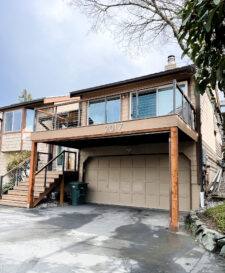
What "Custom" Actually Means for a Renton Home
Custom doesn't mean fancy — it means the window is built to fit an opening, a style, or a functional need that a stock size can't solve correctly. In practice, that covers a lot of ground in this area.
Older Homes With Non-Standard Openings
Renton has a good mix of older housing stock, including many homes built in the decades after World War II. Openings in these houses were often framed to the carpenter's measurements, not a modern manufacturer's standard sizes. Forcing a stock window into a slightly-off opening usually means shimming gaps, compromising the flashing, or trimming the frame in ways that weaken it. A properly measured custom unit avoids all of that.
Additions and Room Conversions
Sunrooms, converted garages, and bump-out additions frequently need windows sized to a specific rough opening that has no equivalent on a shelf. We measure and order to that exact opening rather than making the room fit the window.
Shape, Style, and View Considerations
Homes with lake or valley views often benefit from larger fixed units, picture windows, or combinations of operable and fixed sashes that a standard product line doesn't offer in one piece. Custom sizing lets you maximize glass area without stacking multiple stock units together, which multiplies the number of seams — and seams are where leaks start.
Comparing Window Materials for a Wet, Mossy Climate
Material choice matters more here than in a dry climate, because every option behaves differently once it's exposed to years of standing moisture, condensation, and gray-sky humidity.
| Material | Moisture Resistance | Maintenance | Typical Lifespan |
|---|---|---|---|
| Vinyl | Very good — won't rot or corrode | Low; occasional track and weep-hole cleaning | Long, but seals and hardware are the wear points |
| Fiberglass | Excellent; dimensionally stable in wet-dry cycles | Low | Long, holds up well to repeated moisture exposure |
| Wood-Clad | Good if the cladding and seals stay intact | Higher; cladding seams and interior wood need periodic checks | Long with upkeep, shorter if moisture gets behind the clad |
| Aluminum | Fair; prone to condensation and thermal transfer | Moderate; watch for corrosion near marine air | Moderate |
We don't push one material as universally "best." A wood-clad window can look great and perform well for decades, but only if the cladding and flashing details are done right — if moisture gets behind the cladding in a climate like this, it can sit there unnoticed. Vinyl and fiberglass tend to be the lower-maintenance choice for homeowners who don't want to inspect seals every year, which is why we lean toward them for most standard replacements, while reserving wood-clad for homeowners who specifically want that look and are willing to keep up with it.
Signs Your Current Windows Are Already Losing the Fight
Window failure in this climate is usually gradual, not sudden. A quick walk around the house can catch problems before they turn into a rot repair.
- Fogging or a hazy film between panes of double-glazed glass (a sign the seal has failed)
- Visible moss, algae, or dark staining building up in the tracks, sills, or exterior trim
- Sashes that stick, drag, or won't latch fully closed anymore
- Soft or spongy wood at the bottom corners of the frame or sill
- Peeling paint or bubbling on the interior sill, which often points to trapped moisture
- A noticeable draft near the frame during windy, rainy weather
- Condensation forming on the inside of the glass regularly, even with normal indoor humidity
Any one of these on its own isn't an emergency. Several of them together, especially on windows facing the prevailing weather, usually mean the window and its flashing are due for a real look.
What a Correct Installation Actually Involves
The window unit itself is only part of the job. In a climate that sees this much sustained rain, how the window is installed matters as much as what's installed.
Flashing and Water Management
Every opening needs flashing that directs water down and out, never behind the siding or into the framing. That means correctly lapped house wrap, sill pan flashing under the window, and head flashing above it, installed in the right order so water always sheds outward. Skipping or rushing this step is the single most common cause of hidden rot behind a window that "looks fine" from outside.
Insulation and Air Sealing
Gaps around the frame need to be filled with a low-expansion foam or backer rod and sealant designed for window installation, not packed with fiberglass that can hold moisture. Done correctly, this stops both drafts and the kind of condensation that forms when warm indoor air meets a cold, poorly sealed frame.
Trim, Caulking, and Finish Work
Exterior caulking has to be a compatible, paintable, exterior-grade sealant applied to clean, dry surfaces — caulk applied over old failed sealant or damp wood won't hold. Interior trim gets reset cleanly, and any disturbed siding or trim is reinstalled so the whole assembly sheds water the way it did (or should have) originally.
Our Process
- Assessment and measurement. We look at the existing openings, check for any hidden moisture or rot, and take precise measurements for custom sizing where needed.
- Product selection. We walk through material, style, and performance options based on your home, budget, and how that opening faces the weather.
- Removal and prep. Old units come out carefully, and we inspect the framing and sheathing underneath before anything new goes in — this is where hidden rot, if any, gets caught.
- Installation and flashing. New windows go in level, plumb, and properly flashed, with air sealing done to code.
- Finish, cleanup, and walkthrough. Trim is finished, the site is cleaned up, and we walk you through the new windows and how to maintain them.
Permits and Code Considerations
Window replacements in Renton generally fall under the city's own building permit process, separate from unincorporated King County, so it matters that whoever pulls your permit knows which jurisdiction your address falls under. Two code areas come up often on window projects:
Egress requirements — bedroom windows below a certain size or configuration may need to meet specific opening dimensions for emergency exit, especially if you're changing the size or type of window during replacement.
Energy code — Washington's energy code sets minimum performance standards (U-factor and solar heat gain) for replacement windows, which affects which products qualify for a straightforward permit versus additional documentation.
A contractor familiar with Renton's permitting process can flag these issues before ordering product, not after installation when a fix means reordering.
Why Hiring a Crew That Already Works Renton Matters
A lot of window problems in this region trace back to installation that wasn't adapted to local conditions — a flashing detail that works fine in a dry climate but fails here, or a sealant that wasn't rated for sustained damp exposure. A crew that regularly works Renton and the surrounding King County area has already seen how the housing stock here was built, what the moss and moisture do to different products over time, and which permit office to call.
That local track record also means we're not guessing at how a product will hold up five or ten years out — we've seen the maintenance calls, or the lack of them, from work done the right way the first time.
Cost Factors to Expect
Every window project is different, but a few factors consistently drive the price on custom window work in this area:
- Number of windows and whether they're standard or custom-sized
- Material choice (vinyl and fiberglass generally cost less than wood-clad)
- Condition of the existing framing — hidden rot repair adds cost and time
- Accessibility (second-story or hard-to-reach openings take more labor)
- Whether older paint or building materials require special handling during removal
- Permit requirements tied to egress or energy code changes
We give straightforward, itemized quotes so you can see exactly what's driving the number, rather than a flat per-window price that hides what's actually being done.
If you're dealing with drafty, foggy, or moss-lined windows, or you're planning an addition that needs openings built to spec, we're happy to take a look and put together a free, no-pressure estimate. There's a form below to get started.