 King County
 Roofing on Queen Anne's Hill Is Its Own Challenge
Queen Anne sits high above the rest of Seattle, and that elevation cuts both ways. The views are part of what makes the neighborhood what it is, but that same exposure means homes up here take more wind, more driving rain off Puget Sound, and more salt-laden air than houses tucked into a sheltered valley elsewhere in King County. A roof on Queen Anne Hill is doing a harder job than a roof a few miles inland, even if the two houses look nearly identical from the street.
Add in the neighborhood's older housing stock — a lot of Craftsman, Tudor, and early-to-mid-century homes with steeper pitches and more roof lines than a typical newer build — and you've got a combination that punishes a roof installed with shortcuts. We've worked enough roofs on this hill to know what actually fails here first, and it usually isn't the field of the roof. It's the details: flashing, ventilation, and the transitions where two roof planes meet.
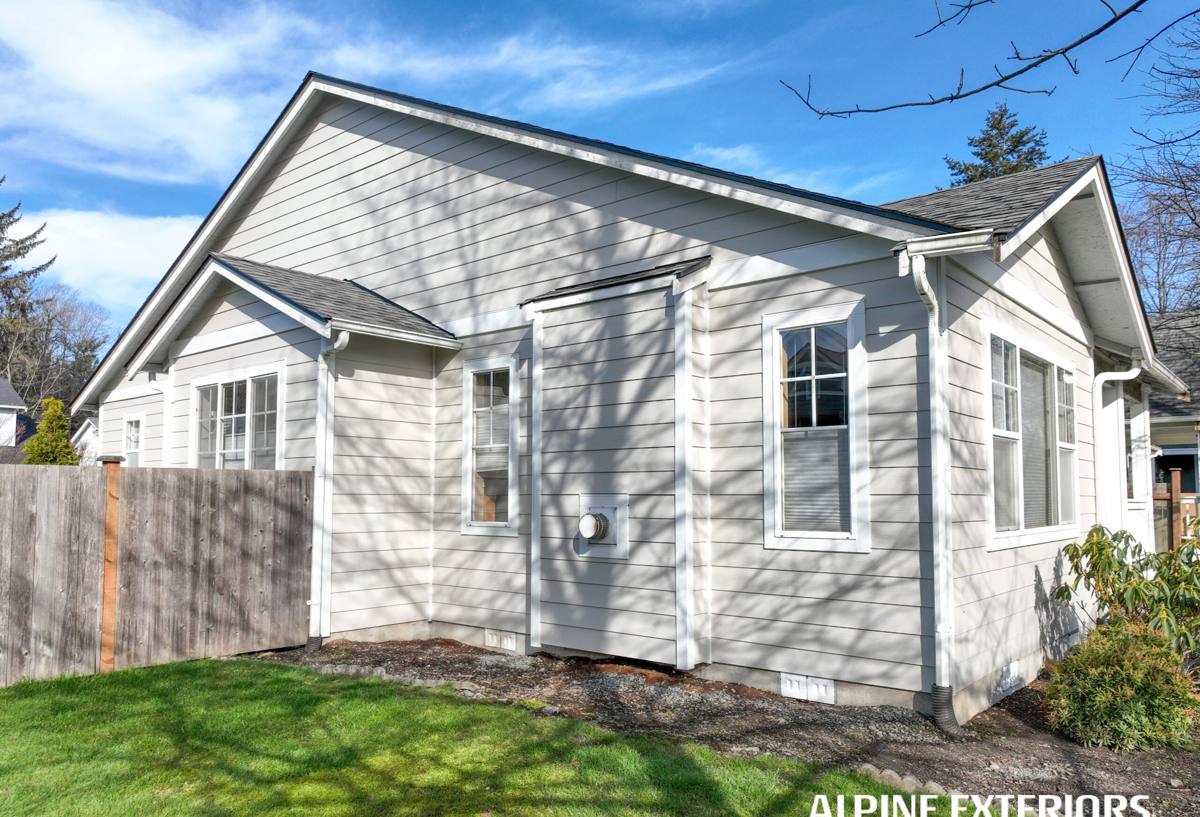
What This Climate Does to a Roof Over Time
Three things drive most of the roofing calls we get from Queen Anne homeowners:
- Salt air corrosion — proximity to Puget Sound means airborne salt accelerates rust on exposed fasteners, cheap flashing, and low-grade metal valleys long before the shingles themselves wear out.
- Driving rain — wind off the water doesn't just fall straight down, it pushes rain sideways and up under shingle tabs and around vents, which is exactly where weak flashing and thin underlayment show their limits.
- Long moss season — mild, wet winters and shaded north-facing slopes give moss months to establish itself, and moss holds moisture against the roof surface far longer than open air ever would.
None of these are dramatic, single-event problems. They're slow ones. A roof that isn't built for this specific climate doesn't fail in a storm — it fails quietly over five or ten years, as moisture works into places it shouldn't be.
Signs a Queen Anne Roof Needs Replacement, Not Another Repair
Not every roofing problem calls for a full tear-off. But there's a point where patching stops making financial sense. We look at a combination of factors, not just age:
- Shingles that are curling, cupping, or losing granules across large sections rather than one isolated spot
- Repeated leaks in different locations rather than the same recurring spot
- Visible sagging in the roof deck, which points to underlying structural moisture damage
- Heavy, persistent moss growth that keeps returning after cleaning
- A roof approaching or past the manufacturer's expected service life for its material and this climate
If a roof is showing two or more of these at once, a new installation is almost always the more honest recommendation — both for your budget over time and for what's actually happening under the surface.
What a Correct New Roof Installation Actually Involves
A new roof is more than shingles nailed to plywood. Done right, it's a system, and every layer matters for a home in this climate:
Tear-off and deck inspection
We remove the old roofing down to the deck rather than installing over it. That's the only way to actually see the condition of the sheathing underneath — soft spots, rot, or old damage from a slow leak don't show up until the old layer is gone.
Underlayment
Given how much wind-driven rain this hill sees, we don't treat underlayment as an afterthought. Ice-and-water shield at eaves, valleys, and penetrations, with synthetic underlayment across the field, gives the deck a real second line of defense if wind ever pushes water under the surface layer.
Flashing
This is where most premature roof failures actually start. Chimneys, skylights, sidewalls, and valleys all need properly formed and sealed flashing — not caulk standing in for metal. Given the salt air here, we favor corrosion-resistant flashing materials over anything that will pit and rust within a decade.
Ventilation
A roof deck that can't breathe traps moisture, which shortens the life of everything above it. Balanced intake and exhaust ventilation is part of a correct installation, not an upsell.
Choosing a Roofing Material for This Climate
There's no single "best" roofing material — the right choice depends on your home's pitch, your budget, and how much long-term maintenance you want to take on. Here's how the common options stack up for a hilltop, coastal-influenced climate like Queen Anne's:
| Material | Performance in Salt Air & Driving Rain | Moss Resistance | Typical Cost Position |
|---|---|---|---|
| Architectural asphalt shingle | Good, with proper flashing and underlayment | Moderate — benefits from algae/moss-resistant granules | Moderate |
| Standing seam metal | Very good if properly coated fasteners and finish are used | Very good — sheds moisture quickly | Higher |
| Cedar shake | Requires regular maintenance in this moisture level | Poor without diligent upkeep | Higher, plus ongoing maintenance cost |
| Synthetic/composite shingle | Good, engineered for wind and moisture resistance | Good | Moderate to higher |
We're honest with homeowners about trade-offs rather than pushing one product. Cedar shake, for example, can look great on the right style of home, but it demands a maintenance commitment that not every homeowner wants to take on given how long moss season runs here. Metal costs more up front but asks very little of you over the decades that follow. Asphalt, especially a quality architectural shingle with algae-resistant granules, remains the most common choice for a reason — it balances cost, appearance, and performance well when it's installed correctly.
Our Installation Process
- On-site inspection and estimate — we look at your existing roof, attic ventilation, and any problem areas before recommending anything.
- Material selection — we walk through the options above based on your home's style, budget, and how much upkeep you want going forward.
- Scheduling around weather — we plan installation windows with King County's wet season in mind, not against it.
- Tear-off and deck repair — old roofing removed, deck inspected, any damaged sheathing replaced.
- Underlayment, flashing, and material installation — installed in the sequence that actually keeps water out, not just the sequence that's fastest.
- Ventilation check — intake and exhaust confirmed balanced for the attic space.
- Final walkthrough — we review the completed roof with you and answer questions before we consider the job done.
Why Local Experience on Queen Anne Specifically Matters
Queen Anne isn't an easy neighborhood to work logistically. Steep streets, narrow lots, limited parking, and older homes with roof geometries that don't match a modern tract-house template all add friction that a crew unfamiliar with the area hasn't accounted for. A contractor who regularly works this hill knows how to stage equipment on a steep driveway, how to protect mature landscaping that's been there for decades, and how to sequence a tear-off so a sudden Puget Sound squall doesn't catch an open roof deck by surprise.
Some older homes in the neighborhood also fall within design review or historic considerations depending on their specific location — if that applies to your property, it's worth confirming with King County or City of Seattle permitting before work begins. We factor that into scheduling rather than treating it as a surprise mid-project.
Moss and Long-Term Roof Health
A new roof isn't the end of the moss conversation — it's the start of managing it correctly. Moss-resistant shingle granules, adequate ventilation, and keeping overhanging branches trimmed back all reduce how aggressively moss establishes itself. We're glad to talk through a simple annual maintenance routine as part of your installation, because a roof that's protected against moss from day one needs far less intervention five years down the road than one that wasn't.
What to Ask Before You Hire a Roofing Contractor
Whether you go with us or anyone else, a homeowner in King County should be asking these questions before signing anything:
- Are you licensed and bonded to work in Washington State, and can you provide proof?
- Do you carry liability insurance and workers' compensation coverage?
- Will you provide a written estimate that breaks down materials, labor, and disposal separately?
- What underlayment and flashing materials are included, not just the visible shingle or panel?
- How do you handle unexpected deck damage found after tear-off?
- What warranty covers workmanship, separate from the manufacturer's material warranty?
- Do you have experience working steep-pitch, older homes similar to mine specifically in this area?
Warranty and What Comes After Installation
A new roof should come with two separate warranties: the manufacturer's warranty on the material itself, and a workmanship warranty from the contractor who installed it. Both matter — a great shingle installed poorly will still leak, and a well-installed roof is only as good as the material underneath it. We go over both in plain terms before work starts, so you know exactly what's covered and for how long.
If your Queen Anne home is due for a new roof, we're happy to take a look and give you a straightforward assessment — no pressure, no sales script. Reach out using the form below to schedule a free estimate.