 King County
 Board & Batten Siding in Kirkland: Built for the Look and the Weather
Board and batten has become one of the most requested siding styles in Kirkland over the past several years, and it's easy to see why. The vertical lines read as modern farmhouse, Craftsman, or Pacific Northwest contemporary depending on the trim and color choices around it, and it pairs well with the mix of architectural styles you see on Kirkland's lake-adjacent streets and wooded hillside lots. But board and batten is not a style you can install the same way everywhere in the country. The way the panels, battens, and flashing come together determines whether this siding holds up through decades of King County winters or turns into a moisture problem behind an attractive facade.
This page focuses specifically on board and batten siding done right for Kirkland homes — what the local climate demands, what a correct installation actually involves, and why the details matter more here than in drier parts of the country.
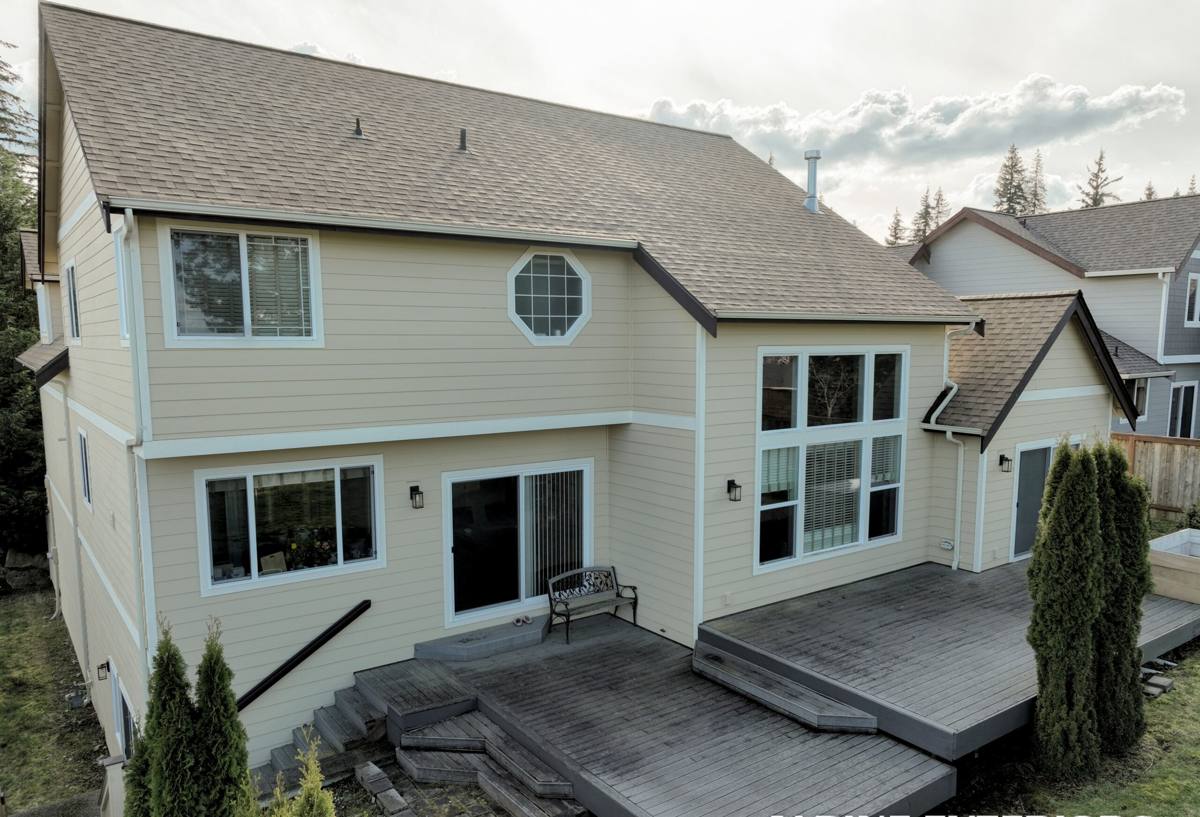
What Kirkland's Climate Actually Does to Board & Batten Siding
Kirkland sits in a marine climate zone, and the weather patterns that move in off Puget Sound bring long stretches of steady, driving rain, high ambient humidity, and short, low-angle winter sun that struggles to dry out shaded wall sections. Add in the mature tree canopy common on many Kirkland lots and around Lake Washington, and you get walls that can stay damp for days at a time during the wet months. Board and batten siding is more vulnerable to this than flat lap siding for one simple reason: it has more vertical seams, more butt joints, and more places where water can find its way behind the cladding if the assembly wasn't built correctly.
Moisture Management Behind the Battens
Every board and batten wall needs a plan for the water that inevitably gets past the surface layer — through wind-driven rain, capillary action at joints, or simple condensation. That plan is a drainage gap (a rainscreen), a correctly lapped weather-resistive barrier, and flashing at every horizontal transition: window heads, decks, roof-to-wall intersections, and the base of the wall. In a drier climate, a builder can sometimes get away with skipping or shortcutting these details for years before problems show up. In King County's wet season, shortcuts show up fast — usually as staining, soft spots, or paint failure within a few winters.
A Long Moss and Algae Season
Shaded, damp wall surfaces in Kirkland can stay wet long enough to grow moss and algae for much of the year, not just a few weeks in spring. On board and batten, the horizontal ledges created by battens and trim give moss and algae extra surfaces to establish on, especially on north-facing walls or elevations shaded by trees. A siding material's factory finish and its ability to shed water quickly make a real difference in how much of that growth you deal with between cleanings.
Why We Install Board & Batten in James Hardie Fiber Cement — and Nothing Else
We only install James Hardie fiber cement siding, including for board and batten profiles. That's a deliberate professional standard, not a default. Traditional wood board and batten has real appeal, but solid wood boards and battens expand, contract, cup, and check with seasonal moisture swings, and in a climate as wet as ours, that movement opens gaps at the joints and shortens the paint cycle considerably. Vinyl board and batten is lower maintenance in some respects, but it's a thinner, more flexible material that can show waviness in direct sun exposure and doesn't hold paint if a homeowner ever wants to change the color down the road.
The HZ5 Engineering Behind the Panels We Use
James Hardie manufactures its siding in different formulations for different climate zones, and the HZ5 line is engineered for regions like ours that see extended wet seasons and moderate temperature swings rather than extreme heat or desert dryness. For board and batten, that means fiber cement panels and battens that resist swelling, don't support rot, and hold their factory-applied ColorPlus finish through repeated wet-dry cycles far longer than raw wood siding does under the same conditions.
What This Means for a Kirkland Homeowner
In practical terms, choosing Hardie fiber cement for a board and batten project means the material itself isn't the weak link. It won't rot, it's non-combustible, and it's dimensionally stable enough that the joints we detail today should still look tight in fifteen years. The performance of the job then comes down almost entirely to installation quality — which is where a lot of board and batten projects go wrong, regardless of what material sits on the wall.
What a Correct Board & Batten Installation Involves
Board and batten is more installation-sensitive than standard lap siding because there are more fasteners, more seams, and more opportunities for a crew to cut a corner that won't show up as a problem until a few rainy seasons later. A correct install includes a drainage gap behind the panels, correctly spaced and back-primed cut edges, batten spacing and fastening that follows the manufacturer's engineering, and flashing integrated with the weather-resistive barrier at every penetration and horizontal transition, not just caulked over the top.
| Material | Moisture Resistance | Maintenance Needs | Fire Resistance | Typical Lifespan |
|---|---|---|---|---|
| Solid Wood | Prone to swelling, cupping, and rot without diligent upkeep | Frequent repainting and caulk inspection | Combustible | Variable; often 10-20 years before major repair |
| Vinyl | Doesn't rot, but seams and fasteners can allow water intrusion | Low, but color fades and can't be painted long-term | Combustible | 20-30 years, shorter with sun and heat exposure |
| James Hardie Fiber Cement | Engineered for wet climates, resists swelling and rot | Occasional wash and repaint cycle much longer than wood | Non-combustible | 30+ years with correct installation |
Our Process for Kirkland Board & Batten Projects
We start with an on-site assessment that looks specifically at the elevations most exposed to weather and shade on your property, since a Kirkland home near the lake or under mature trees often needs different attention on different sides of the house. From there, our process covers the same fundamentals on every job: verifying or replacing the weather-resistive barrier, building in a proper drainage gap, flashing every transition before a single panel goes up, and following James Hardie's fastening and spacing specifications for the HZ5 climate zone rather than a generic install pattern.
Before we consider a job finished, we walk the property with the homeowner to review the joints, trim, and caulking lines, since board and batten's visual appeal lives or dies on straight, consistent reveals.
What to Look For in Any Board & Batten Quote
- A written drainage gap and weather-resistive barrier detail, not just "siding installed to code"
- Flashing called out explicitly at windows, doors, decks, and roof-to-wall intersections
- Fastener type and spacing that matches the manufacturer's engineering for panel and batten profiles
- A clear plan for cut-edge treatment on any field-cut fiber cement
- A firm answer on who is responsible for warranty coverage — the installer, the manufacturer, or both
Design Options That Work Well in Kirkland
James Hardie's board and batten panels come in a range of reveals and can be finished in ColorPlus factory colors that hold up better in our climate than field-applied paint, since the finish is baked on and warranted separately from the substrate. Many Kirkland homeowners pair board and batten as an accent — on a gable, entry feature, or upper story — with horizontal lap siding on the rest of the home, which keeps the cost focused on the areas with the most visual impact while still getting the durability benefit where it's used. Darker colors read well against the region's greenery and cloud cover, though any color holds up equally well from a performance standpoint since the protection comes from the finish system, not the shade.
Why a Crew That Already Works in Kirkland Matters
Board and batten installed to spec in a dry climate and board and batten installed to spec for King County are not quite the same job. A crew that regularly works Kirkland properties already accounts for things like tree-shaded elevations that need extra drying time before panels go up, the region's permitting expectations, and how wind-driven rain off Lake Washington behaves against different wall orientations. That local familiarity shows up in small decisions — where to add extra flashing, which elevations need a wider drainage gap, when a job should pause for weather — that a crew unfamiliar with the area might not think to make.
Maintenance and Longevity After Installation
One of the practical advantages of fiber cement board and batten is how little ongoing work it asks for compared to wood. An occasional gentle wash to keep moss and algae from establishing, a visual check of caulking at joints and trim every year or two, and prompt attention to any impact damage are really the extent of it. Because the ColorPlus finish is factory-applied and warranted, most homeowners go many years without needing to repaint at all, which is a meaningful difference from wood board and batten's repainting cycle in a climate this wet.
If you're weighing board and batten siding for a home in Kirkland, we're happy to take a look at your property and walk you through what a correct installation would involve for your specific elevations and exposure. Fill out the form below for a free, no-pressure estimate.