 King County
 Issaquah's Climate Is Harder on Siding Than It Looks
Issaquah sits where the Sammamish Valley meets the foothills of Cougar, Squak, and Tiger Mountain, and that setting shapes what siding has to survive here. Mature tree cover, valley shade, and higher local rainfall than much of the Eastside mean exterior walls in this part of King County spend more of the year damp than dry. Add the region's long, wet winters and the moist marine-influenced air that moves through the Puget Sound lowlands, and you get a climate that is genuinely tough on any wall covering that isn't built and installed to handle sustained moisture exposure.
That is the backdrop for almost every siding repair call we get in Issaquah. Homeowners rarely call because siding looks a little worn — they call because a specific area is failing: a discolored patch below a gutter, a soft spot near a downspout, or a section that never quite dries out between storms. Understanding why those spots form is the first step in repairing them correctly instead of just covering them up.
Shade, Slope, and Slow-Drying Walls
Homes tucked against tree lines or built into sloped lots — common throughout Issaquah — often have north- and east-facing walls that get very little direct sun. Without sun exposure to help walls dry out between rain events, moisture lingers in seams, at butt joints, and behind poorly flashed trim. Over time, that slow-drying cycle is what drives moss growth, coating breakdown, and eventually rot in siding that isn't rated or installed for prolonged dampness.
Driving Rain and Wind-Driven Moisture
Storms moving through the valley don't just drop rain straight down — wind pushes it sideways into wall assemblies, especially on exposed gables and upper stories. Wind-driven rain finds every gap in flashing, caulking, and butt joints that isn't sealed correctly. A repair that only addresses the visible damage without correcting the water path behind it will fail again in the same spot within a season or two.
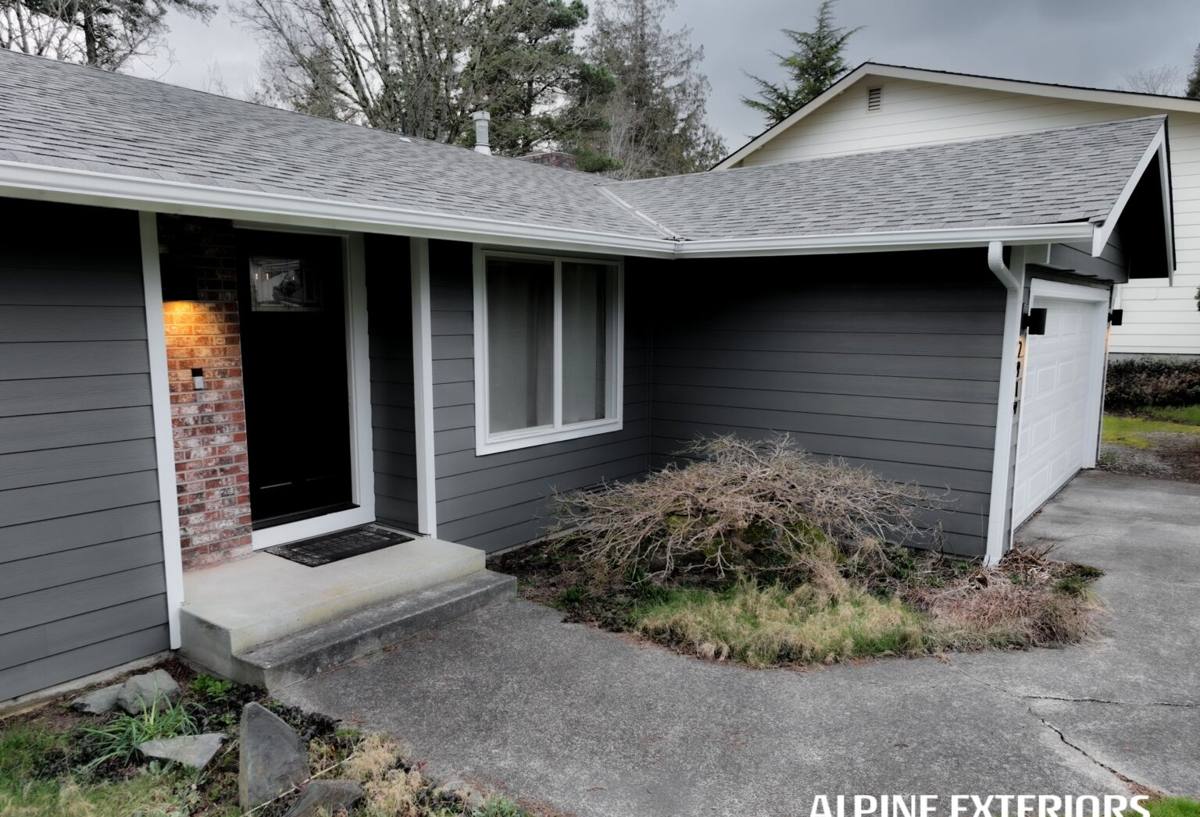
Signs Your Issaquah Home Needs Siding Repair
Most siding problems give warning signs well before they become structural. Catching them early keeps a repair small and affordable instead of turning into a section replacement.
- Dark green or black staining that keeps returning after cleaning, especially in shaded corners
- Soft, spongy, or bubbling areas when you press on the siding, particularly near the bottom courses
- Visible gaps, cracks, or separation at seams, corners, and window or door trim
- Paint or finish that is peeling, chalking, or bubbling in a localized area rather than uniformly across the wall
- Warping, bowing, or siding that no longer sits flat against the wall
- A musty smell near an exterior wall, or moisture showing up on the interior side of that wall
- Small holes, chew marks, or nesting activity from insects or birds behind loose panels
Any one of these on its own may be a small fix. Several appearing together, especially clustered around one section of wall, usually points to a water intrusion problem that needs to be traced back to its source before any new siding goes up.
What a Correct Siding Repair Actually Involves
Diagnosing the Cause, Not Just Patching the Symptom
Replacing a damaged board without figuring out why it failed is the single biggest reason siding repairs don't hold up. Before we touch a panel, we look at the flashing above it, the caulking around it, the grading and drainage below it, and whether the original installation left any gaps for water to get behind the siding in the first place. A repair that doesn't fix the underlying water path is a repair that will need to be done again.
This matters even more on homes with shaded, slow-drying walls, which describes a large share of Issaquah properties. If the moisture source isn't corrected, new siding installed over the same conditions will show the same staining and softening within a couple of wet seasons.
Matching Material, Profile, and Finish
A patched section that doesn't match the surrounding siding in profile, reveal, or color sticks out and can also create new water entry points if the seams aren't detailed correctly. On homes with factory-finished fiber cement, matching the finish means understanding how that manufacturer's ColorPlus or paint system ages, so the repaired section blends in rather than looking like an obvious patch. We also check that any replaced boards, trim, and fasteners meet the same moisture and fire performance as what's already on the wall, so the repair doesn't quietly downgrade the wall assembly.
Repair or Replace? How We Help You Decide
Not every damaged section justifies a full re-side, and not every repair is worth doing if the underlying siding is near the end of its service life. We walk homeowners through the same factors we use internally:
| Factor | Leans Toward Repair | Leans Toward Replacement |
|---|---|---|
| Extent of damage | Isolated to one or two sections | Spread across multiple walls or elevations |
| Underlying material condition | Sound, dry substrate nearby | Rot or moisture found beyond the visible area |
| Age of existing siding | Well within its expected service life | Original siding already near end of life |
| Cause of damage | Identifiable, correctable (flashing, caulk, grading) | Systemic issue affecting the whole installation |
| Material match | Matching material/finish available | Discontinued product, poor color/profile match |
When the damage is contained and traceable to a fixable cause, a targeted repair is the honest recommendation — we're not going to push a full re-side on a home that doesn't need one. When the damage points to a wider moisture problem or the existing siding is aging out, we'll say so plainly and explain why a section-by-section patch job would just be spending money to delay the real fix.
Why We Repair and Rebuild Using James Hardie Fiber Cement Only
When a repair calls for new siding material — whether it's a few boards or a full elevation — we use James Hardie fiber cement exclusively. We don't install or patch with vinyl, LP SmartSide, Cemplank, Allura, or primed wood siding, and in a climate like Issaquah's that decision comes directly from how those materials handle sustained moisture and shade.
Fiber cement doesn't absorb water the way wood-based products can, and it won't support the kind of rot that shows up in shaded, slow-drying wall sections around here. James Hardie's HZ product lines are engineered specifically for climate zones like ours, its ColorPlus factory finish is baked on rather than field-applied (which matters a lot for long-term color match on future repairs), and it's backed by a strong transferable warranty. It's also non-combustible, which matters given how close many Issaquah properties sit to forested slopes. We standardized on it because it holds up to exactly the conditions that cause most of the repair calls we get — we'd rather install one product correctly than juggle several that each come with their own maintenance compromises.
Our Siding Repair Process for Issaquah Homes
- On-site inspection: We assess the visible damage, check for moisture behind the wall, and inspect flashing, caulking, and drainage around the affected area.
- Honest diagnosis: We explain what caused the damage and whether it's isolated or points to a larger issue, before recommending any scope of work.
- Clear scope and estimate: You get a written explanation of what needs to be repaired, what's causing it, and what it will cost — no vague line items.
- Correct water management first: Flashing, house wrap, and caulking are corrected before any new siding goes on, so the repair actually addresses the cause.
- Matched material installation: New James Hardie boards or panels are cut, fastened, and finished to match the existing siding's profile and reveal.
- Final walkthrough: We review the completed repair with you and point out anything worth watching, such as nearby areas to monitor during the next wet season.
Keeping Repaired Siding Free of Moss and Moisture
A good repair should last, but a few habits from the homeowner side extend that life considerably, especially with Issaquah's long moss season:
- Trim back branches and vegetation that shade siding or hold moisture against the wall
- Keep gutters clear so overflow doesn't run directly down a wall section
- Rinse moss and algae off siding gently at least once a year rather than letting it build up and hold moisture
- Check caulking at trim, corners, and penetrations annually and re-seal as it ages
- Watch grading near the foundation so water drains away from the wall rather than pooling against it
What Siding Repair Costs Depend On
Every repair is different, but the same handful of factors drive cost on most Issaquah jobs: how many sections need replacement, whether the underlying sheathing or framing was affected by moisture, how much flashing and trim work is required to fix the water path, access and height of the affected wall, and how closely the replacement material needs to match existing siding. A single-board patch on an accessible wall is a modest job; a multi-section repair that requires re-flashing and sheathing repair behind it is a larger scope. We give you the real number after inspecting the damage, not a phone-quote guess.
Why It Matters to Hire a Crew That Already Works in Issaquah
Siding repair done by someone unfamiliar with local conditions tends to treat every job the same way, patching what's visible without accounting for how shade, slope, and King County's rain patterns actually move water around a wall. A crew that regularly works Issaquah homes recognizes the difference between cosmetic staining and an active moisture problem, knows which wall orientations and lot configurations tend to need extra attention, and understands local permitting and inspection expectations. That local pattern recognition is often the difference between a repair that lasts and one that reappears the following winter.
If you've got a section of siding that's staining, softening, or pulling away from the wall, we're happy to take a look and give you a straight answer on what's causing it. Reach out for a free, no-pressure estimate — we'll tell you honestly whether it's a repair or something bigger, and what it would take to fix it right.