 King County
 Building Decks for Bothell's Wet, Shaded Conditions
Bothell sits in one of the greener, more tree-covered pockets of King County, and that's exactly why decks here take a different kind of beating than decks in drier climates. Mature tree canopy along the Sammamish River valley and the surrounding hillsides means shade lingers on a lot of properties well into the afternoon, and shade plus moisture is the recipe for moss, algae, and slow wood decay. Add in the long stretch of driving rain that defines a typical Puget Sound fall through spring, and you have conditions that will find every weak point in a deck's construction within a few wet seasons.
Across the wider King County corridor, from lakefront and shoreline neighborhoods where salt-laden air accelerates corrosion on fasteners and hardware, to inland communities like Bothell where the bigger enemy is standing moisture and shade, the underlying lesson is the same: a deck built to a generic national spec will underperform here. A deck built with this region's actual weather in mind — proper drainage, the right fastener metallurgy, and materials chosen for a long moss season rather than a dry one — will simply last longer and need less babying.
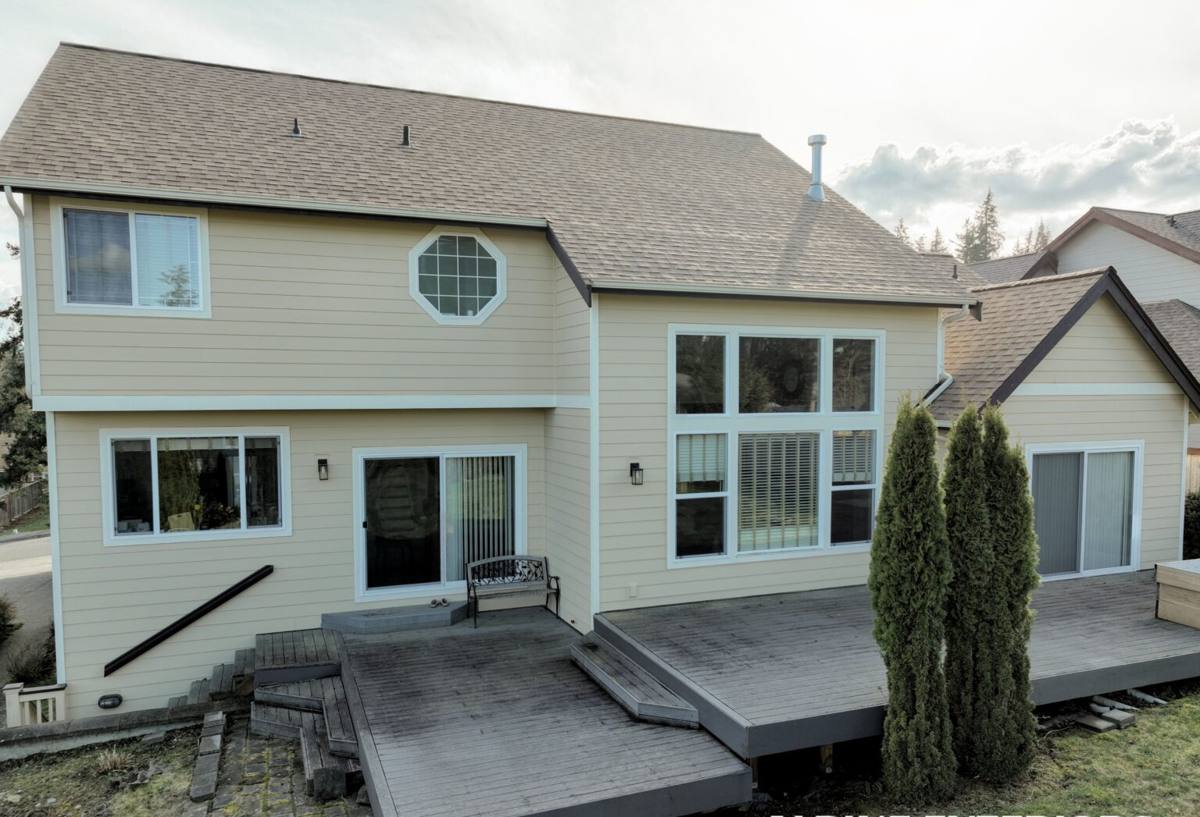
What a Correctly Built Deck Requires in This Climate
A deck that holds up in Bothell isn't about using more material, it's about using the right material in the right places and detailing the connections so water never sits where it can do damage. There are a handful of details that separate a deck that looks fine for five years from one that's still solid at twenty-five.
Framing and Structure
The framing is the part nobody sees once the decking goes down, which is exactly why it's the part most likely to get shortcut. Pressure-treated joists and beams need to be sized for the actual span and load, not just "close enough," and every ledger board attachment to the house needs proper flashing that sheds water away from the rim joist rather than trapping it against the siding. In a climate that sees this much rain, ledger flashing mistakes are one of the most common causes of hidden rot behind a deck — the kind of damage that doesn't show up until the siding or framing has already been compromised.
Footings and Ground Contact
Footings need to be poured to the frost and bearing depth required for the soil conditions on the lot, not eyeballed. Post bases should hold posts up off the concrete so end grain never sits in standing water, and any wood in ground contact needs the correct treatment rating for that exposure. Skipping this step is invisible on installation day and expensive to fix later, since it usually means partially rebuilding the deck.
Fasteners and Hardware
Cheap fasteners are one of the fastest ways a deck starts looking bad. In this region's damp, sometimes salt-influenced air, standard zinc-coated screws and nails corrode faster than they should, leaving rust streaks down the decking and weakening the connection over time. Stainless steel or high-quality hot-dip galvanized fasteners and structural hardware cost more up front and are worth it on every deck we build.
Choosing a Decking Material That Fits Bothell's Weather
There's no single "best" decking material — there's a best material for your budget, your maintenance appetite, and how much shade and rain your specific yard sees. Here's how the common options compare for a shaded, wet King County lot.
| Material | How It Handles Moss & Moisture | Maintenance | Typical Lifespan Here |
|---|---|---|---|
| Cedar | Naturally rot-resistant but still needs sealing to shed water; can stay damp in heavy shade | Annual cleaning and re-staining or sealing | 15-20 years with upkeep |
| Pressure-treated pine | Treated for rot resistance; grain can trap moisture if not sealed | Regular sealing, moss removal in shaded areas | 15-20 years with upkeep |
| Composite decking | Doesn't absorb water like wood, but surface algae and moss can still grow if never cleaned | Periodic washing, no staining or sealing | 25-30+ years |
| PVC decking | Fully synthetic, least prone to moisture absorption | Occasional washing | 25-30+ years |
We install all of the above and will walk through the honest trade-offs for your specific yard rather than pushing whichever product has the best margin. A heavily shaded, low-airflow spot under mature trees is a place where we'll usually steer a homeowner toward composite or PVC, simply because wood in that microclimate needs more attention than most people want to give it. A sunnier, more exposed deck can do very well in cedar or treated wood if it's sealed and cleaned on schedule.
Moss, Mildew, and Drainage — Where Most Deck Problems Start
Moss on a deck surface isn't just a cosmetic issue — it holds moisture against the boards and turns the deck slick and dangerous underfoot, especially on stairs. The long moss season that comes with our shaded, wet winters means a deck's drainage design matters as much as the material choice.
Board spacing, deck orientation, and gaps around posts and framing all affect how quickly water leaves the surface after a storm. A deck built tight against a fence or hedge with poor airflow will stay damp far longer than one with a few extra inches of clearance and open sightlines for air movement. Where a covered deck or one built under heavy tree cover just won't get enough sun to dry out on its own, we design in drainage gaps and slope the surface slightly so water actually moves off the deck instead of pooling.
Permits and Code Considerations in King County
Most decks that are attached to the house, elevated above a certain height, or built with guardrails require a building permit, and requirements can vary depending on the specifics of the property and jurisdiction. Guardrail height, baluster spacing, stair rise and run, and footing depth are all governed by code, and getting these wrong isn't just a compliance problem — it's a safety problem, particularly on a raised deck.
We handle the permitting conversation as part of the process rather than leaving a homeowner to figure it out, and we build to the code requirements that apply to your specific project rather than guessing. If you're unsure whether your planned deck needs a permit, that's a question worth asking before any lumber is ordered, not after.
Our Process for a Bothell Deck Project
Every deck we build goes through the same core steps, adjusted for the site conditions we find once we're actually out on the property.
- On-site evaluation of the ground, drainage, sun/shade exposure, and how the deck will tie into the house
- Design and material conversation, including honest trade-offs for your budget and maintenance preferences
- Permit handling where required, including footing and structural details specific to your lot
- Excavation and footing work sized to the actual load and soil conditions
- Framing with properly flashed ledger connections and corrosion-resistant hardware
- Decking installation with attention to spacing and drainage, not just a fast surface finish
- Railing, stair, and guardrail installation built to code
- Final walkthrough covering how to maintain the specific material you chose
We don't skip steps to shave a day off the schedule. A deck that's rushed through framing or flashing is a deck that will show problems within a wet season or two, and fixing it after the fact costs more than doing it right the first time.
Railings, Stairs, and the Details That Get Overlooked
Railings and stairs take more physical abuse and weather exposure than the deck surface itself — they're touched constantly, they're often the first thing to show wear, and on a raised deck they're the safety-critical piece. Post connections need to be through-bolted into properly blocked framing, not just screwed into a rim joist, and baluster spacing needs to meet code without exception. Stair stringers need the right cut depth and support so they don't flex or crack over time.
These are the parts of a deck project that are easy to underbuild because they don't affect how the deck looks on installation day. They absolutely affect how the deck holds up and how safe it is five and ten years down the road.
Maintaining Your Deck Through a King County Winter
Whatever material you choose, a little seasonal attention goes a long way in this climate. Here's a general maintenance rhythm that works for most Bothell decks.
| Season | What to Do |
|---|---|
| Spring | Wash off winter moss and debris, inspect boards and railings for damage after the wet season |
| Summer | Reseal or restain wood decking if the finish looks dull or water no longer beads on the surface |
| Fall | Clear leaves and debris from gaps between boards before the rains start, check gutters and drainage near the deck |
| Winter | Keep stairs and walking surfaces clear of moss buildup, especially in shaded areas |
Composite and PVC decking need far less of this routine, but even those materials benefit from an occasional wash to keep algae and moss from getting a foothold in the shadier corners of the deck.
Why Hire a Crew That Already Works in Bothell
A contractor who works around King County regularly already knows what a shaded, rain-heavy lot in this area does to a deck over time, because they've gone back and seen it firsthand. That experience shows up in small decisions — how much drainage gap to leave, which fastener grade to use, where a footing needs to go deeper than the minimum — that a crew unfamiliar with this specific climate might not think to make.
It also matters for permitting and code, since local requirements and inspection expectations are easier to navigate when you've been through the process here before. We'd rather build one deck correctly than build three that need to be revisited.
If you're planning a new deck or need to replace one that's showing its age, we're happy to come take a look and talk through what your specific property needs — no pressure, no obligation. Fill out the form below to request a free estimate.