 King County
 Capitol Hill sits close enough to Puget Sound and Lake Washington that its exteriors deal with a particular mix of weather: long stretches of driving rain from fall through spring, a moss season that can run half the year in shaded spots, and enough salt-tinged air drifting up from the water to matter for anything metal or painted. None of that is unusual for King County. But it does mean the siding on a Capitol Hill home is working harder than siding in a drier climate, and it shows up eventually in the form of peeling paint, soft trim, streaked moss, and siding that never quite looks clean no matter how often it's power washed.
This page is about what that climate actually does to a house over time, and how we approach siding, and the roofing, windows, and decking that go with it, for homes in this part of King County.
What Capitol Hill's Climate Does to a House
Capitol Hill's housing stock spans a wide range of ages, from older bungalows and Craftsman-era homes to newer infill construction, and the exterior challenges show up differently depending on the age and orientation of the house. But a few patterns are consistent across the neighborhood.
Driving Rain and Wind-Driven Moisture
Seattle-area storms rarely come straight down. Wind pushes rain sideways against walls, and on exposed elevations, that means water is being forced into every seam, joint, and nail hole in the siding, not just running down the surface. Over years, wood-based and composite sidings that absorb even a small amount of that moisture start to swell, cup, or delaminate at the edges. It's slow, so it's easy to miss until paint starts failing in the same spots year after year.
Moss, Algae, and Shade
Capitol Hill has a good amount of mature tree canopy and closely spaced houses, which means plenty of north-facing walls and shaded gaps between homes that stay damp far longer after a rain than a wall in full sun. Those are the spots where moss and algae take hold first. On porous or textured siding, moss doesn't just sit on the surface, it can work into the material itself, holding moisture against the wall and accelerating whatever decay process is already underway.
Salt-Tinged Air
Capitol Hill isn't waterfront, but it's close enough to the Sound and Lake Washington that homes here get some exposure to salt-laden air, especially on days with wind off the water. That air is harder on exposed fasteners, metal flashing, and painted surfaces than it is further inland, and it's one more reason generic, one-size-fits-all exterior products underperform here compared to how they perform in a drier, less coastal-influenced part of the country.
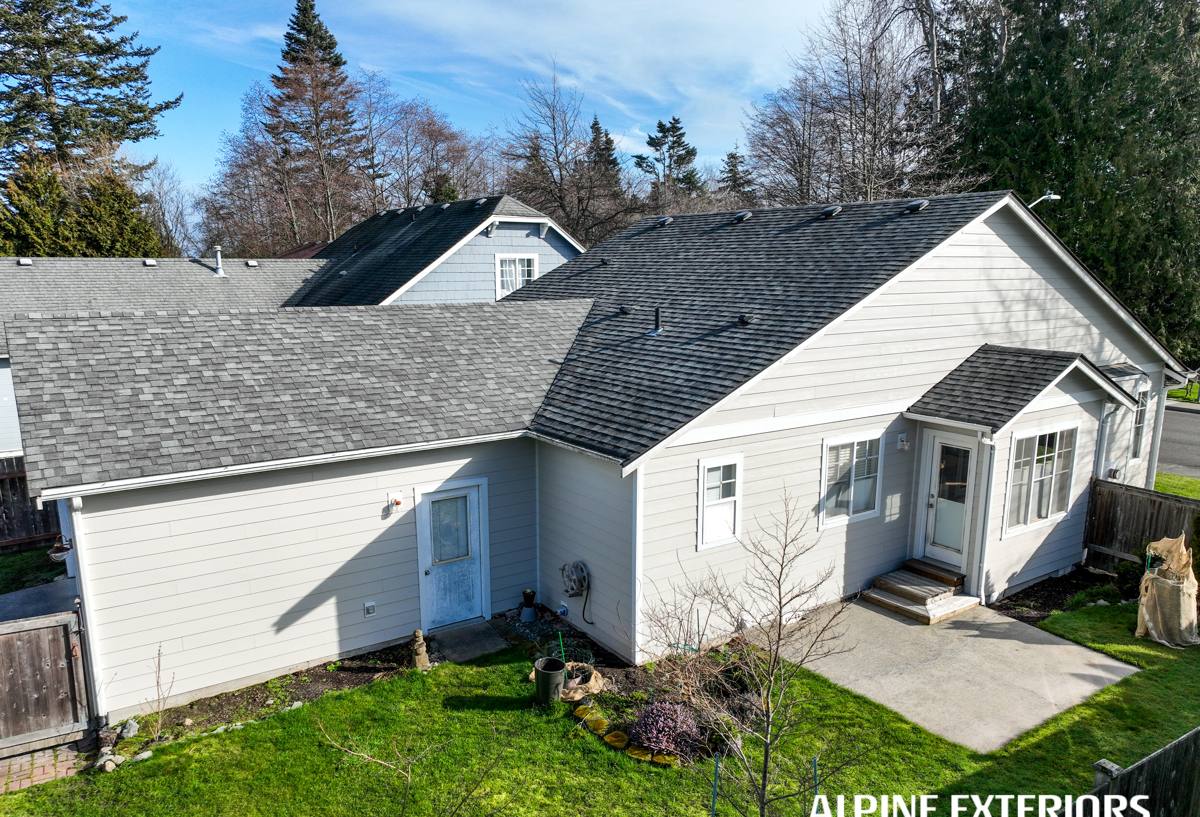
Why We Only Install James Hardie Fiber Cement Siding
We get asked fairly often why we don't offer vinyl, LP SmartSide, or other composite sidings. The honest answer is that we've made a standard for ourselves based on what actually holds up in this climate, not on what's cheapest to install or easiest to sell.
James Hardie fiber cement is engineered from cement, sand, and cellulose fiber. It doesn't absorb water the way wood-based products do, it doesn't warp or rot, and it's non-combustible, which matters more every year given regional wildfire smoke seasons. Hardie also makes a specific HZ10 product line engineered for the Pacific Northwest's wet, moderate climate, which is a meaningfully different formulation than what gets sold in hot, dry regions. That regional engineering is part of why we trust it here specifically, not just in general.
We're not going to tell you every other siding product is worthless. Vinyl is inexpensive and low-maintenance in the sense that it doesn't need painting. LP SmartSide has real fans and a lower material cost than fiber cement. But we've seen enough of both fail early in King County's wet cycle, seam separation on vinyl, edge swelling on OSB-based composite, that we stopped installing them. If you want a deeper explanation of any specific product, ask us. We'll give you a straight answer, not a sales pitch.
How the Work Actually Happens on a Capitol Hill Home
Assessment First
Before we talk products or pricing, we look at the actual condition of your walls: what's underneath the current siding, whether there's existing moisture damage, how your house is oriented relative to prevailing wind and rain, and where the shaded, slow-to-dry zones are. That assessment shapes the plan more than any general recommendation would.
Installation to Spec, Not Just to Code
Fiber cement siding is only as good as its installation. Correct fastening, proper clearances above grade and at roof lines, and correctly lapped and sealed joints are what keep water out over the long run. James Hardie publishes detailed installation requirements, and shortcuts on those details are the single biggest reason any fiber cement job underperforms. We install to those specifications because that's what the warranty actually depends on, not because it's the minimum a building inspector will accept.
The Rest of the Exterior
Siding doesn't work in isolation. A roof that's shedding water properly, windows that are flashed and sealed correctly, and decking that isn't holding moisture against the house all affect how the siding performs. We handle roofing, windows, and decks alongside siding for exactly that reason, so the whole exterior is working together instead of one contractor's good work getting undermined by another's shortcuts somewhere else on the house.
Comparing Siding Options for a Home Like Yours
| Material | Moisture Behavior in Wet Climates | Maintenance | Typical Lifespan |
|---|---|---|---|
| James Hardie Fiber Cement | Does not absorb water or rot; engineered HZ10 line for PNW climate | Repaint every 12-15+ years with ColorPlus finish; occasional wash | 30-50 years with proper install |
| Vinyl Siding | Doesn't absorb water, but seams and panels can warp, gap, or crack in wind and temperature swings | Low, but damaged panels are hard to color-match later | 20-30 years, variable |
| LP SmartSide / Wood Composite | Engineered wood strand product; vulnerable at cut edges and joints if not sealed and maintained | Requires vigilant caulking and repainting | 15-30 years, highly install-dependent |
| Cedar / Primed Wood | Absorbs moisture readily; prone to rot, especially in shaded, damp areas | High; frequent repainting and moss treatment | 15-25 years with diligent upkeep |
What Drives Cost on a Capitol Hill Project
- Home size and wall complexity — more corners, dormers, and trim details mean more labor and material.
- Condition underneath the existing siding — hidden rot or moisture damage found during tear-off adds repair work before new siding goes on.
- Access — narrow side yards and tightly spaced lots, common on Capitol Hill, can add time for scaffolding and material staging.
- Siding profile and color — lap width, shingle-style panels, and ColorPlus finish selections all affect material cost.
- Scope — bundling siding with roofing, window, or deck work in one project is often more efficient than tackling them separately over several years.
Why a Local Crew Matters Here
A siding crew that mostly works in drier parts of the country will make different default assumptions than one that works King County jobs year-round, about how much clearance to leave at grade, how aggressively to flash a valley, how to handle a shaded wall that stays damp for days after a storm. We're on Capitol Hill roofs and walls often enough to know which details actually matter in this specific climate, not just which details are technically code-compliant everywhere.
Local also means we're not disappearing after the invoice is paid. If a warranty question comes up five years from now, or you want an opinion on a trim detail before you paint, you're calling a crew that's still working in the same neighborhoods, not chasing a job three states away.
A Practical Pre-Project Checklist
- Walk the exterior and note any soft spots, bubbling paint, or visible moss concentration, especially on north-facing and shaded walls.
- Check where gutters and downspouts discharge relative to your siding and foundation.
- Look at trim and window flashing for gaps or failed caulk, common failure points even when the siding itself looks fine.
- Note any areas where decks, porches, or additions butt up against the main wall, these transitions are common trouble spots.
- Think about whether roofing, windows, or deck work should be bundled with a siding project rather than done separately later.
What to Expect When You Work With Us
We'll walk your property, look at what's actually happening with your current exterior, and give you a straightforward assessment, what's worth fixing now, what can wait, and what a James Hardie installation would look like for your specific house. We're not going to push a bigger project than you need, and we're not going to pretend a cheaper product will perform the same way Hardie does in this climate.
If you're in Capitol Hill and thinking about siding, roofing, windows, or a deck, we're glad to come take a look and put together a free, no-pressure estimate.