 King County
 Capitol Hill's Climate Is Hard on Old Windows
Capitol Hill has one of the older, denser housing stocks in King County — a mix of early-1900s craftsman bungalows, converted Victorians, mid-century apartment buildings, and newer infill construction packed onto tight urban lots. A lot of that older stock still carries its original wood-frame, single-pane windows, or a round of aluminum replacements from decades ago that were never great performers to begin with.
The Pacific Northwest's marine climate doesn't help. Driving rain pushed sideways by wind finds every gap in old glazing and failed weatherstripping. Long stretches of damp, low-sun weather feed a moss and mildew season that runs longer here than almost anywhere else in the country. And even though Capitol Hill sits inland from the open water, salt-tinged air off Puget Sound still reaches this far into Seattle on windier days, adding a slow corrosive edge to old aluminum frames and hardware. None of this is dramatic on its own — it's the cumulative wear that adds up to drafts, fogged glass, and heating bills that creep higher every winter.
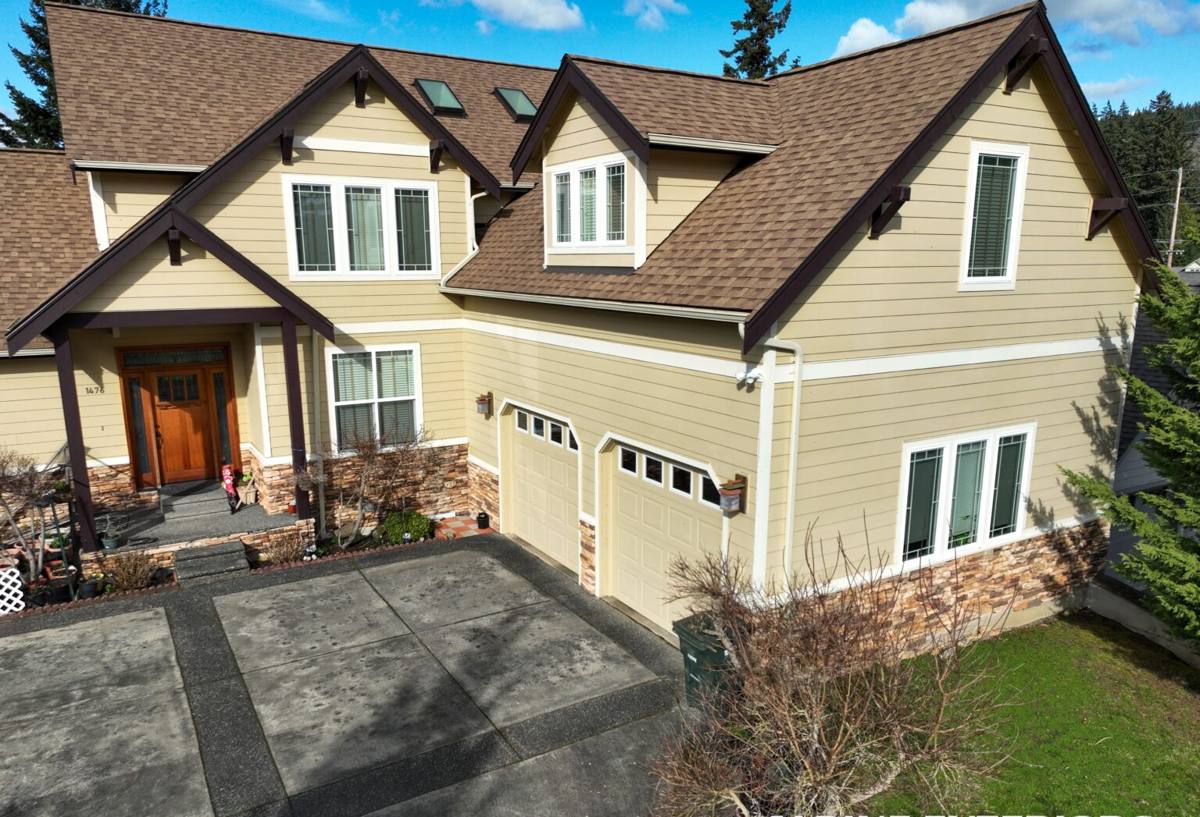
What "Energy-Efficient" Actually Means Here
Window shoppers get bombarded with marketing terms. In this climate, only a few numbers actually matter for how a window performs on a Capitol Hill home.
U-Factor Is the Number to Watch
U-factor measures how well a window resists heat loss — lower is better. Seattle's climate is mild but persistently cool and wet for most of the year, so a low U-factor (roughly 0.27 to 0.30 or lower for most vinyl and fiberglass units) does more for your heating bill here than it would in a climate with big summer cooling loads.
SHGC Matters More Than It Used To
Solar Heat Gain Coefficient measures how much solar heat a window lets through. Traditionally an afterthought for Seattle homeowners, it's worth more attention now as summers here have been running hotter and drier — a moderate SHGC keeps south- and west-facing rooms from overheating in August without sacrificing the daylight this region's long, dark winters make valuable.
Air Leakage and Condensation Resistance
These two numbers are where a lot of "energy-efficient" windows quietly fail in wet climates. A window can carry a good U-factor on paper and still leak air around a poorly sealed sash, or fog up with interior condensation during King County's cold, damp mornings if it isn't rated and installed correctly.
Matching the Window to the House
Capitol Hill's housing mix means there's no single "right" window for the neighborhood — the right call depends on the house.
Craftsman and Early-1900s Homes
These homes often have narrow, vertically proportioned window openings and trim details worth preserving. Wood-clad or wood-look composite windows with true divided-lite or simulated-divided-lite patterns tend to keep the house's character intact while bringing the glass and seals up to modern performance.
Mid-Century and Post-War Homes
Simpler window openings and cleaner lines give more flexibility. Vinyl or fiberglass units in standard configurations usually deliver the best efficiency-per-dollar without fighting the house's original design.
Condos, Townhomes, and Newer Infill
Tighter building envelopes and, often, HOA or building-association rules on exterior appearance change the equation. Matching existing sightlines and finish colors matters as much as the glass package here.
Frame Materials: What Holds Up in This Climate
Every frame material handles King County's wet winters differently. Here's how the common options compare for a Capitol Hill home.
| Material | Moisture Handling | Maintenance | Typical Fit |
|---|---|---|---|
| Vinyl | Good — won't rot, low moisture absorption | Low — occasional cleaning | Mid-century and newer homes, budget-conscious replacements |
| Fiberglass | Excellent — very stable in wet/dry cycling | Low | Any era; strong long-term value |
| Wood-clad | Good if properly flashed and finished; exterior cladding protects the wood core | Moderate — exterior clad shell needs periodic inspection | Craftsman and historic-character homes |
| Aluminum | Poor without a thermal break — conducts cold and can condensate | Low, but corrosion risk near salt-influenced air | We generally steer clients away from it for this climate |
We don't install bare aluminum-frame replacement windows as a rule — not because every aluminum window ever made fails, but because an un-broken aluminum frame is a poor fit for a climate with this much sustained dampness and cool air. It conducts cold straight through, which invites interior condensation, and standard aluminum frames don't hold up as well as vinyl or fiberglass against decades of Puget Sound humidity. That's a standard we apply consistently, not a knock on any one brand.
What a Correct Installation Actually Involves
The window unit itself is maybe half the job. In a climate that gets driving rain from multiple directions, the installation details determine whether that window stays dry for the next 20 years or starts leaking within five.
- Old frame and any hidden rot removed and the opening inspected down to the sheathing
- Proper flashing installed at the sill and head — not just caulk over the gap
- A continuous weather-resistive barrier integrated with the flashing, not taped over it as an afterthought
- Window shimmed level, plumb, and square before fastening — a slightly out-of-square window stresses seals and shortens their life
- Low-expansion foam or fiberglass insulation packed around the frame, avoiding gaps and avoiding over-packing that can bow the frame
- Interior and exterior sealant applied at the correct joints, matched to the siding and trim material
- Final operation check — smooth open/close, tight seal, and no visible daylight around the sash
Skip any one of these steps and the window can still look fine from the curb while quietly letting water behind the siding — a problem that tends to show up as rot or interior staining a season or two later, well after the crew that installed it is gone.
Our Process, Start to Finish
We keep this straightforward:
- On-site assessment. We look at your existing windows, framing condition, and how the house is oriented to sun, wind, and rain exposure.
- Product recommendation. We walk through frame material, glass package, and style options suited to your home's age and your budget — no upsell to features that don't make sense for your situation.
- Accurate measurement and ordering. Every opening gets measured individually; older Capitol Hill homes rarely have perfectly uniform openings from window to window.
- Removal and inspection. Old units come out carefully so we can check the framing underneath before anything new goes in.
- Installation to the standard above. Flashing, sealing, shimming, and insulation done in the correct order, not shortcuts to save an hour.
- Final walkthrough. We test operation, check seals, and clean up before we call the job done.
Permits, HOAs, and Working a Dense Neighborhood
Capitol Hill's density brings a few logistics that a crew unfamiliar with the neighborhood can trip over. Seattle permitting requirements can apply depending on the scope of the work and whether the home is in a designated historic district, so we check that before scheduling rather than after. Many of the neighborhood's condos and townhomes also fall under HOA or building-association rules governing exterior appearance, colors, and even the timing of exterior work — worth confirming early so there are no surprises mid-project.
Street parking, narrow lots, and shared walls between buildings also change how a crew stages material and equipment day to day. A crew that already works this part of King County plans around that instead of learning it on your job.
Signs Your Windows Are Costing You Money
Not every window needs replacing, but these are the signals worth taking seriously in this climate:
- Visible condensation or fogging between the panes of a double-pane window — a sign the seal has failed
- Drafts you can feel near the frame on a windy, rainy day
- Wood trim or sill that's soft, discolored, or shows paint failure — a sign moisture is getting behind the frame
- Windows that are difficult to open, close, or lock
- A noticeable jump in heating costs without a change in usage
- Visible moss, mildew, or black staining building up on or around the frame year after year
Keeping Windows Performing Through Moss Season
Even a correctly installed, energy-efficient window benefits from basic upkeep in a climate this wet. Clear debris from sills and tracks before the fall rains set in, so water has somewhere to go instead of pooling against the frame. Check exterior caulking annually — it's a five-minute inspection that catches small gaps before King County's long moss season turns them into bigger moisture problems. And if you notice condensation building up on the inside of the glass through the winter, it's worth a look — sometimes it's a ventilation issue, sometimes it's an early sign a seal is starting to go.
If your windows are drafty, fogged, or just past their useful life, we're happy to take a look and give you a straightforward, no-pressure estimate — no upsell, no pressure, just an honest read on what your Capitol Hill home actually needs. Use the form below to get started.