 King County
 Storm Damage on West Seattle Roofs Isn't Like Storm Damage Everywhere Else
West Seattle sits out on its own peninsula, with water on multiple sides and a lot of mature tree canopy tucked between the houses. That combination means roofs here take a different kind of beating than roofs a few miles inland. Wind coming off the Sound doesn't hit evenly — it gusts and swirls around bluffs, hills, and gaps between houses, which is why you'll sometimes see one roof stripped of shingles while the roof two doors down looks untouched. Add in salt-laden air, driving rain that comes in sideways during winter storms, and a moss season that barely takes a break, and you've got a roof that needs to shed water and hold fasteners tight under conditions most manufacturers didn't design their default warranties around.
We work storm repairs across King County, but West Seattle specifically has enough of its own quirks — exposure, tree cover, older housing stock mixed with newer construction — that we treat it as its own thing rather than applying a one-size-fits-all repair approach.
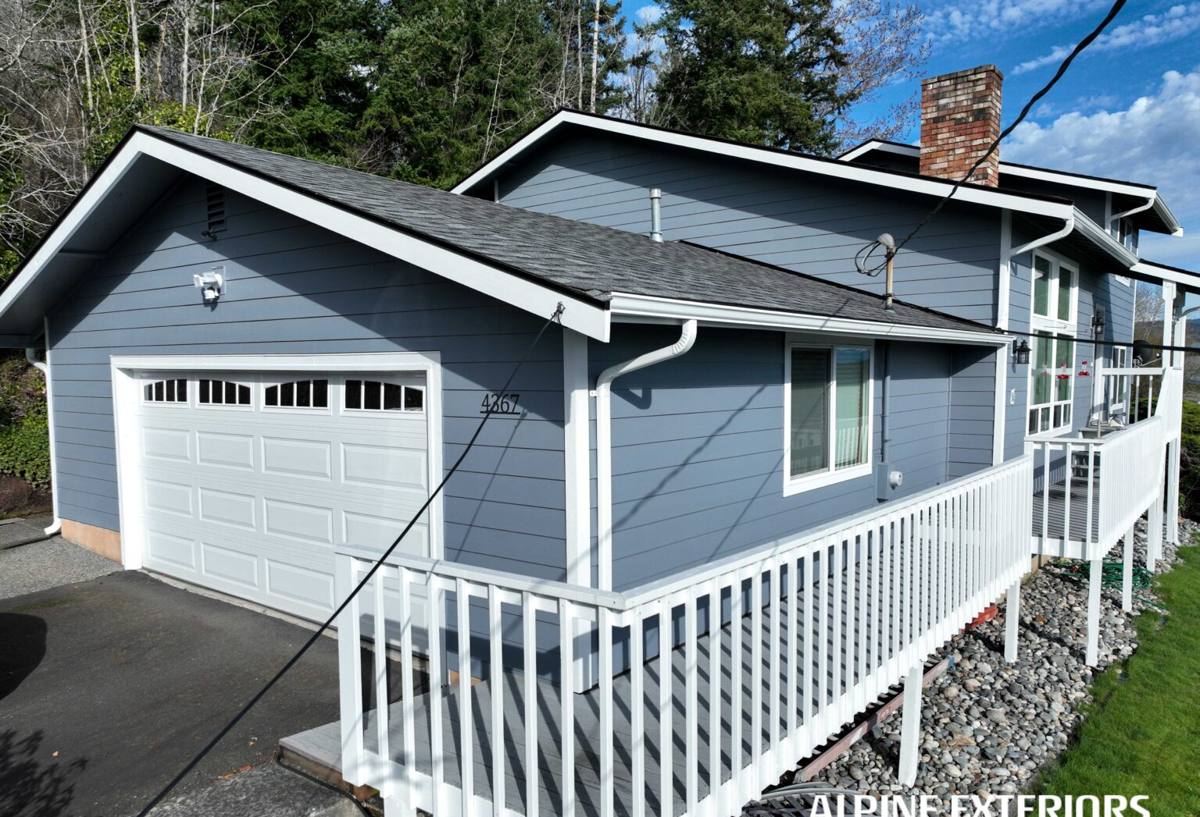
What Storm Damage Actually Looks Like Here
Wind Damage
Sustained gusts during fall and winter storms lift shingle tabs, break the adhesive seal strip, and in worse cases tear shingles off completely. Wind damage is often patchy rather than uniform — a few courses along a ridge or a corner of the roof where wind uplift is strongest, rather than the whole field.
Debris Impact
With the amount of mature tree cover around many West Seattle properties, falling limbs and wind-thrown branches are a regular cause of storm calls. Impact damage can be obvious — a cracked or punctured section — or subtle, like bruised shingles that lose granules and start failing months later.
Water Intrusion Signs
Driving rain finds any gap a storm creates. Watch for staining on interior ceilings, a musty smell in the attic, daylight visible through roof sheathing, or granules collecting in gutters after a storm. None of these mean the whole roof is failing, but they all mean water is getting somewhere it shouldn't.
Why Fast, Correct Repair Matters in This Climate
In a drier climate, a small storm-damaged spot can sit for a while without much consequence. That's not really true here. Once a shingle tab tears or a flashing seam opens up, the long Pacific Northwest wet season keeps feeding moisture into that spot for months at a stretch. Combine that with a moss season that can run eight months or more in shaded, moisture-holding areas, and a minor storm repair that gets put off tends to turn into a decking or sheathing repair by spring. Salt-carried air along the coastal parts of West Seattle also accelerates corrosion on exposed nail heads and metal flashing, so damaged flashing left in place doesn't just leak — it deteriorates faster than it would inland.
The practical takeaway: storm damage here is rarely an emergency in the sense of an immediate collapse risk, but it is genuinely time-sensitive. The gap between "small repair" and "much bigger repair" is often just one more heavy rain event.
What a Proper Storm Damage Repair Involves
Inspection First, Not Guesswork
A correct repair starts with actually getting on the roof (weather permitting) and checking the decking underneath damaged shingles, not just the surface. Wind and impact damage can look worse or better than it actually is from the ground, and a repair that only addresses what's visible from the street tends to miss compromised decking or a flashing seam that's already let water in.
Matching Materials, Not Just Patching
Shingle color and profile change over the years, so an exact match to a roof that's five or ten years old isn't always possible. We aim for the closest reasonable match and place repairs where they'll be least visible, but we're upfront when a perfect blend isn't realistic rather than promising something we can't deliver.
Repair vs. Replacement — an Honest Read
Most storm damage is a legitimate repair, not a replacement situation. But if a roof was already near the end of its service life before the storm, or if the damage is spread across a large enough area, patch repairs stop making financial sense compared to replacing the affected slope or the whole roof. We'll tell you which situation you're actually in rather than defaulting to whichever job is bigger.
Our Process for West Seattle Storm Repairs
- Initial contact and description: you tell us what you're seeing — missing shingles, a leak, debris on the roof — and roughly when the damage appeared.
- On-site inspection: we get eyes on the roof and, where accessible, the attic side too, to check for hidden moisture.
- Written scope and estimate: what's damaged, what needs to happen to fix it correctly, and a straightforward price — no pressure tactics, no artificial deadlines.
- Repair work: matched materials, proper flashing and underlayment where it's exposed, and cleanup of storm debris and old material from the site.
- Final check: we walk the repair with you (or send photos/notes if you're not available) so you know exactly what was done.
We don't upsell a full roof replacement onto a straightforward repair call. If replacement genuinely is the better option, we'll explain why with specifics, not just a recommendation to take on faith.
What Drives the Cost of a Storm Repair
Every roof and every storm event is different, so we won't quote a number without seeing the damage. But the factors that move the price up or down are consistent:
| Factor | Why It Matters |
|---|---|
| Size of the damaged area | A few shingles is a different job than a full slope |
| Roof material | Composition shingle repairs are generally more straightforward than tile, metal, or wood shake |
| Roof pitch and accessibility | Steep or hard-to-reach sections take longer and require more safety setup |
| Decking condition underneath | Rotted or soaked sheathing has to be replaced before new shingles go down, adding material and labor |
| Flashing involvement | Repairs around chimneys, vents, or valleys take more time than open-field shingle repair |
| How long the damage sat | Water that's had weeks or months to soak in usually means a bigger repair than damage caught right after the storm |
As a broad range, straightforward wind or debris repairs on a composition shingle roof often land somewhere in the low hundreds to low thousands of dollars; anything involving decking replacement or extensive flashing work runs higher. We'll give you an actual number after we've seen the roof, not before.
Insurance and Storm Claims
Many storm repairs are covered under a standard homeowner's policy, particularly wind and impact damage from a specific storm event. We're not insurance adjusters and won't promise coverage that's ultimately your carrier's call, but we can document the damage clearly — photos, a written scope, dates if known — which is exactly what most adjusters ask for. If you're planning to file a claim, it's worth having that documentation done before any repair work starts.
After a Storm: A Quick Homeowner Checklist
- Walk the yard and check for shingle pieces, granules, or branches that came off the roof
- Look at gutters and downspouts for buildup of granules, moss, or debris
- Check attic spaces or top-floor ceilings for new staining, damp spots, or smells
- Note the date and general conditions of the storm in case you need it for an insurance claim
- Avoid climbing onto the roof yourself, especially on wet or mossy surfaces
- Call for an inspection sooner rather than later — small openings get worse fast in this climate
Why a Crew That Already Works West Seattle Makes a Difference
Storm repair isn't just a generic skill — knowing how wind actually moves across a specific neighborhood, how much moss buildup to expect on a north-facing slope shaded by trees, and how salt air affects fastener life over time all come from doing the work here repeatedly, not from a one-off job. A crew that regularly works King County roofs, and West Seattle in particular, tends to catch things a generalist might miss: a flashing style that's common on the area's older homes, a moss pattern that signals a drainage issue rather than just cosmetic buildup, or a repair that needs to account for another storm season arriving before summer gives the roof a real chance to dry out.
There's also a practical side to it — familiarity with the area means faster response and fewer surprises about access, parking, or typical roof construction in different parts of the neighborhood.
Get a Straightforward Look at Your Roof
If a recent storm left you with missing shingles, a new leak, or just some peace-of-mind questions about what's up there, we're glad to take a look. The estimate is free, there's no pressure to act on it immediately, and you'll get a plain answer about what's actually going on with your roof. Fill out the form below to get started.