 King County
 An Honest Answer to a Question We Get a Lot
Homeowners in King County often come to us with a specific siding product already in mind, and LP SmartSide is one of the more common ones. It's marketed well, it's available through a lot of lumberyards, and plenty of contractors will install it without a second thought. We won't. Not because we think every homeowner who has it is in trouble, and not because we're trying to talk you into something more expensive out of habit. We simply don't put it on houses anymore, and we think you deserve a straight explanation of why, so you can make your own decision with full information.
This page isn't a takedown. LP SmartSide is a real engineered wood product with real engineering behind it, and it has a place in the market. It's just not a product we're willing to stand behind on homes exposed to the kind of weather we get around Puget Sound.
What LP SmartSide Actually Is
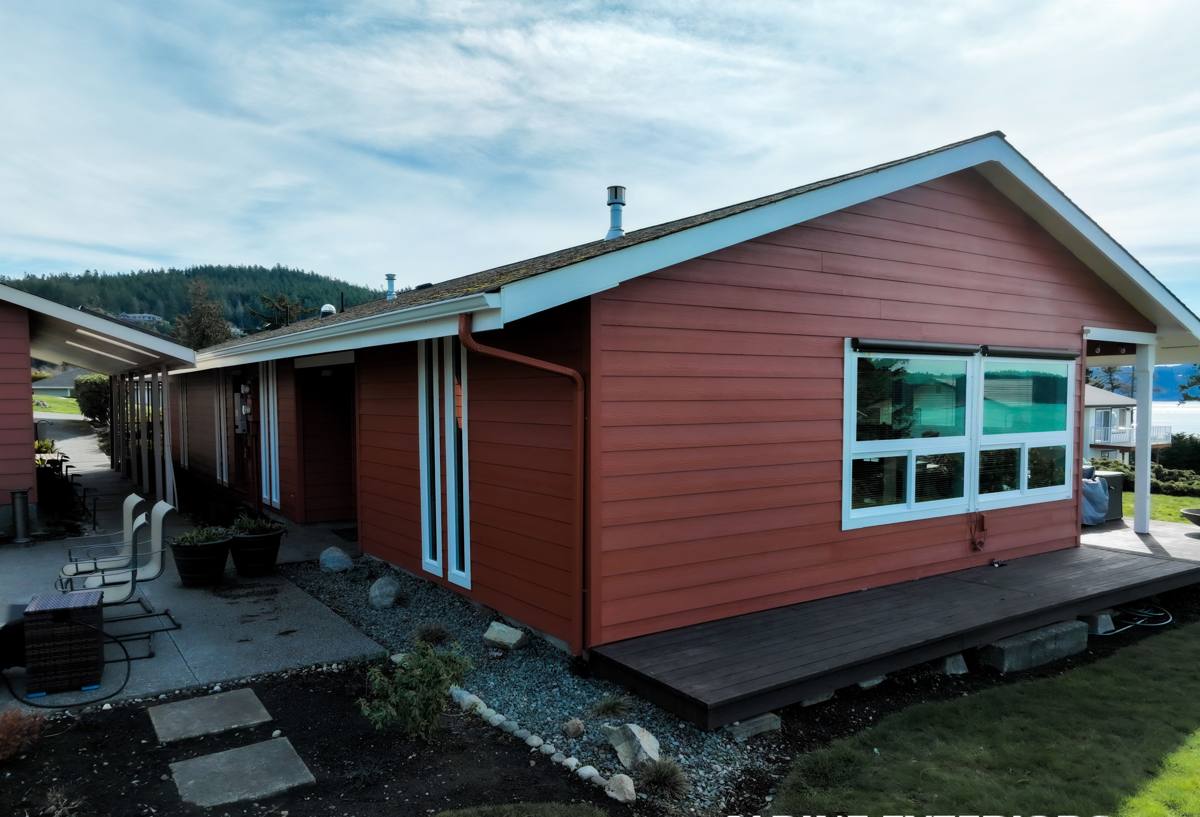
LP SmartSide is an engineered wood siding, built from strand-based wood fiber that's treated with resins, waxes, and zinc borate for insect and moisture resistance, then pressed into panels or lap boards and coated with a factory finish. It's lighter than fiber cement, easier to cut without special blades, and generally less expensive to purchase. For builders working in drier climates, or on budget-sensitive projects where the exterior isn't expected to take much of a beating, it's a legitimate option.
Give credit where it's due: LP has improved this product significantly since the OSB-based siding failures of the 1990s that gave engineered wood a bad name industry-wide. The zinc borate treatment and improved resin systems are a real upgrade over that earlier generation. We're not claiming the current product is the same as what failed decades ago — it isn't.
Where the Trade-Offs Start to Matter
Wood Fiber Is Still Wood Fiber
No matter how it's engineered, the core of LP SmartSide is wood strand composite. Wood swells when it absorbs moisture and shrinks when it dries out, and the resin treatment slows that process but doesn't eliminate it. Fiber cement, by contrast, is made from sand, cement, and cellulose fiber — materials that are dimensionally stable whether they're wet or dry. In a climate with steady annual rainfall and a real wet season, that difference compounds over the life of the siding.
Field Cuts Change the Equation
The factory-applied treatment on LP SmartSide protects the face and factory edges of the board. Every cut made on site — for a window, a corner, a utility penetration — exposes raw substrate that has to be field-sealed with the manufacturer's specified sealer, every time, without exception. Miss a cut edge, skip a step because a crew is behind schedule, or use the wrong sealant, and that spot becomes a moisture entry point. Fiber cement doesn't have this vulnerability in the same way; a cut edge on Hardie board isn't the weak point that a cut edge on engineered wood is.
Installation Tolerance Is Narrow
LP SmartSide's warranty performance depends heavily on getting clearances right — ground clearance, deck and roof clearance, kick-out flashing, caulking at every joint, and gaps at trim. These aren't unique requirements; good installation matters for any siding. But because the substrate itself is moisture-sensitive, small installation mistakes on LP SmartSide tend to show up as visible problems years earlier than the same mistakes would on a moisture-stable product.
King County Weather Is a Stress Test
This is really the core of our decision. King County sits in a climate that throws a lot at an exterior wall: driving rain off the Sound, a long gray moss season that keeps north-facing walls damp for months at a stretch, and salt air in the areas closer to the water. None of that is exotic or extreme, but it's persistent, and persistent moisture exposure is exactly the condition that engineered wood products are least suited for. A siding that performs fine in a drier inland climate can behave very differently after a decade of Western Washington winters.
We're not installing siding for a showroom. We're installing it on homes that will sit through forty or fifty inches of annual rainfall, sustained humidity, and shaded, moss-prone north walls for the next several decades. That's the standard we hold every product to before we'll put our name on the job.
Side-by-Side Comparison
| Factor | LP SmartSide | James Hardie Fiber Cement |
|---|---|---|
| Core material | Engineered wood strand composite | Cement, sand, and cellulose fiber |
| Moisture response | Can swell, expand, or degrade at exposed/unsealed cuts | Dimensionally stable wet or dry |
| Combustibility | Combustible (wood-based) | Non-combustible |
| Factory finish | Factory-primed or pre-finished, field touch-up common | ColorPlus factory finish, baked-on, matched touch-up available |
| Field-cut sensitivity | High — every cut edge needs proper sealing | Low — cut edges are not a primary failure point |
| Fit for sustained coastal/rain climates | Requires diligent maintenance to hold up long-term | Engineered product lines (HZ5/HZ10) built for the Pacific Northwest |
The Maintenance Burden You're Signing Up For
Every siding product needs some maintenance — that's true of Hardie too. But LP SmartSide asks more of a homeowner over time: caulk joints need regular inspection and re-sealing, cut edges and penetrations need to be checked for gaps, and any coating wear at the face needs to be addressed before it becomes a moisture path into the substrate. In a climate where the siding rarely gets a real chance to dry out between storms during the wet months, deferred maintenance has less margin for error. We'd rather sell you a product where an occasional missed inspection doesn't put the substrate at risk.
What Happens to the Warranty in Practice
LP SmartSide's warranty, like most siding warranties, is conditioned on installation following the manufacturer's instructions to the letter — correct clearances, correct fastening, correct field sealing of every cut. That's a reasonable ask on paper, but it means the warranty is only as strong as the installer's discipline on details that are easy to rush and hard to inspect after the fact. If a problem shows up five or ten years down the road tied to a sealing or clearance issue, proving it back to the original installation can be a real headache for a homeowner. We don't want to sell a product where the safety net depends on nobody ever cutting a corner, on a job site where corners get cut more often than anyone likes to admit.
Why We Standardized on James Hardie Instead
We install James Hardie fiber cement exclusively, and it's not a brand-loyalty thing — it's because the material itself solves the problems above. It's non-combustible, which matters more every year in Washington. It doesn't swell, rot, or feed insects because there's no wood fiber to feed on. The HZ5 product line is specifically engineered for climates like ours, with weather-resistant testing built around exactly the kind of driving rain and moisture cycling King County sees. The ColorPlus factory finish is baked on and backed by its own finish warranty, so you're not relying on field-applied paint holding up on every surface. And because the substrate is stable, the day-to-day maintenance burden on the homeowner is genuinely lower over the life of the siding.
We're not saying Hardie is maintenance-free — no siding is. We're saying that when we've compared what each product asks of a homeowner over 20-30 years in this climate, fiber cement is the one we're comfortable standing behind.
What This Means If You're Comparing Options
If you're getting quotes from multiple contractors and LP SmartSide is on the table, here's what we'd want you to ask before deciding:
- Who is field-cutting and sealing the boards, and what's their process for every cut edge — not just the visible ones?
- What does the manufacturer warranty actually require to stay valid, and who's responsible for documenting that the install met those terms?
- Is the siding rated or recommended for a coastal/high-rainfall climate zone, or is that being left out of the conversation?
- What's the realistic maintenance schedule — caulk inspection, coating touch-up — and who's expected to keep up with it?
- How does the material perform on north-facing walls that stay shaded and damp through moss season?
If a contractor can't answer these clearly, that's worth noting regardless of which siding you end up choosing.
Talk to Us About Your Home
We'd rather explain our reasoning up front than install something we don't fully trust in this climate and have to answer for later. If you're weighing siding options for a King County home, we're happy to walk through what we'd actually recommend for your specific exposure — sun, shade, rain-facing walls, and all — with a free, no-pressure estimate. There's no obligation, just a straight assessment from a crew that only installs what we'd put on our own homes.