 King County
 What Capitol Hill's Climate Does to Old Siding
Capitol Hill sits up on high ground, but elevation doesn't buy a home much protection from what King County's marine climate throws at a wall over the years. Moist air off the Sound and the lake basins around Seattle carries a steady dose of salt and moisture even well away from the immediate waterfront, and that air finds its way into wood fiber, seams, and fastener heads on every exposure of a house, not just the side facing the water. Add in driving, wind-pushed rain during the fall and winter months and a moss and mildew season that can run most of the year on shaded, north-facing walls, and you have a climate that is quietly hard on siding even when nothing looks obviously wrong from the sidewalk.
The neighborhood's mix of older homes and mature street trees makes this worse in a specific way: dense tree canopy keeps walls shaded and slow to dry after a storm, and older siding systems — especially anything with a wood-fiber core or a field-applied paint finish — were rarely installed with the drainage detailing that modern building science calls for. A wall that can't dry out between storms is a wall where rot, delamination, and moss growth get a head start, often behind the siding where nobody sees it until the damage is significant.
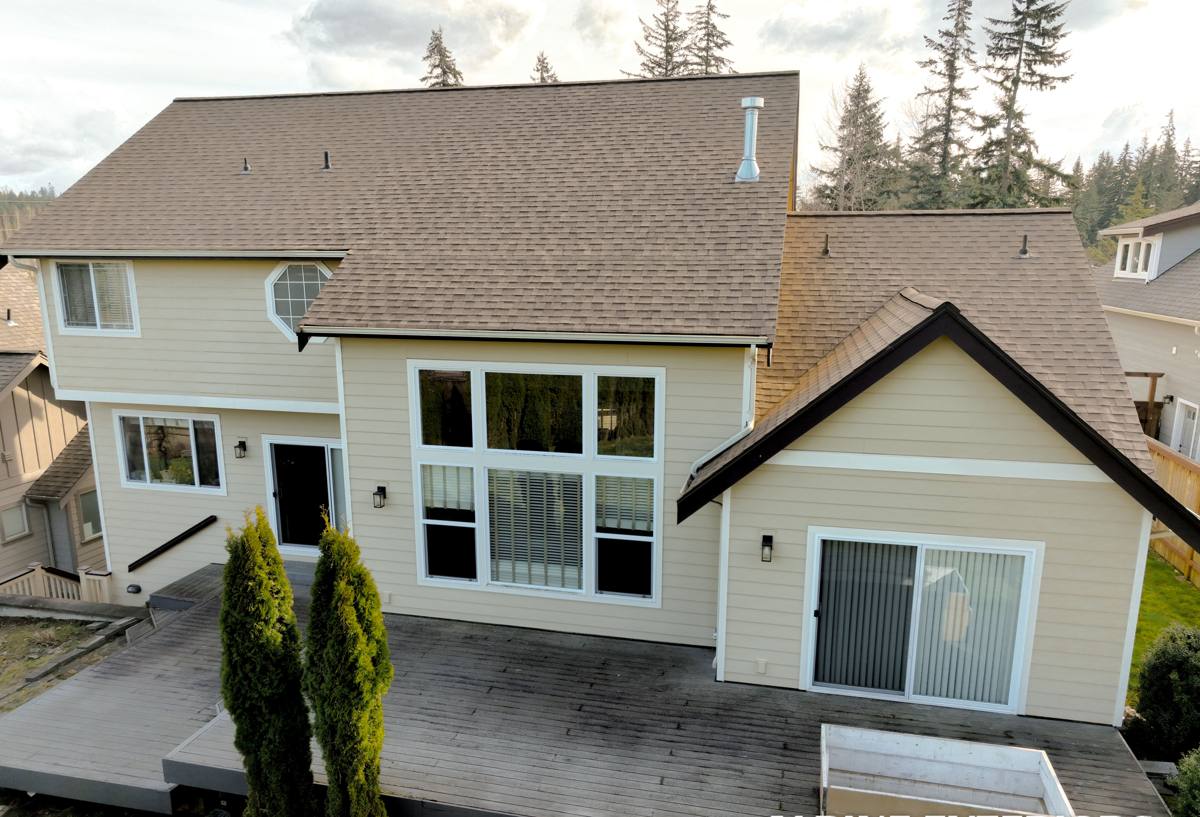
Signs a Capitol Hill Home Needs Siding Replacement
Because so much of the real damage happens behind the siding, the visible warning signs are often smaller and easier to dismiss than homeowners expect. Worth taking seriously if you notice them on a Capitol Hill property:
- Soft or spongy spots when you press on siding, especially near the bottom courses or below windows
- Persistent moss or dark streaking on shaded walls that comes back within weeks of being cleaned
- Paint that's peeling, bubbling, or failing faster than a normal repaint cycle would explain
- Visible cracking, buckling, or gaps opening up at seams and corners
- Warped or wavy panel lines when you sight down a wall in low-angle light
- A musty smell in an adjacent room, or interior wall discoloration near an exterior wall
- Caulk that's separated or missing at trim and window edges
Any one of these on its own might be a small, fixable issue. Several together, especially on a home more than 15-20 years old with its original siding, usually means it's worth having someone look at the wall assembly itself rather than just patching the surface.
What a Correct Siding Replacement Actually Involves
Full Tear-Off, Not an Overlay
Installing new siding directly over old siding is sometimes offered as a cheaper shortcut, but it leaves whatever has been developing behind the old material — hidden rot, a failed or missing water-resistive barrier, poor flashing — exactly where it was, just covered up again. On a climate like King County's, where moisture problems build slowly and invisibly, a full tear-off down to the sheathing is the only way a crew can actually verify what they're building on top of. We treat this as the standard, not an upcharge.
Sheathing and Framing Repair
Once the old siding is off, any soft, delaminated, or water-damaged sheathing and framing needs to be cut out and replaced before new siding goes on. This is the step that most affects a final price versus the initial estimate, because you can't always know the extent of hidden damage until the wall is open. A contractor who's worked a lot of older Capitol Hill homes will budget for this possibility upfront rather than treating it as a surprise.
Water-Resistive Barrier and Drainage Gap
A new weather-resistive barrier, properly lapped and sealed around every penetration, is what actually keeps bulk water out of the wall cavity — the siding itself is the first line of defense, not the last. In a climate with sustained wind-driven rain, we also build in a drainage gap behind the siding so any moisture that does get past the outer layer has somewhere to go and dry out, rather than sitting against the sheathing.
Flashing and Fastening
Windows, doors, and every roof-to-wall transition need flashing sequenced correctly — installed in the right order relative to the barrier so water is always directed outward and down, never trapped behind a lap. Fasteners matter too: corrosion-resistant fastener specification isn't optional in a marine climate, since ordinary hardware can start staining and weakening at the head well before the siding itself shows its age.
Why We Install Only James Hardie Fiber Cement
We standardized on James Hardie fiber cement siding and don't install vinyl, LP SmartSide, primed wood, cedar, or other fiber cement brands. That's a deliberate professional standard, not a sales position, and it's worth explaining honestly rather than just asserting.
Vinyl is inexpensive and low-maintenance in the sense that it doesn't need painting, but it's a thin plastic product that can warp, fade, and crack in temperature swings, and it doesn't hold up to impact the way a denser material does. Wood-fiber products like LP SmartSide use engineered wood with a resin-treated core — reasonably durable when detailed correctly, but the core is still wood fiber, meaning cut edges and joints need diligent sealing to keep moisture out, which matters a great deal in a climate that stays wet for months at a stretch. Cedar and primed wood siding can look excellent, but they're an ongoing maintenance commitment: recurring painting, caulking, and moisture vigilance that a lot of homeowners underestimate when they choose the look.
James Hardie fiber cement is non-combustible, dimensionally stable across temperature and moisture swings, and doesn't have a wood-fiber core to worry about at cut edges. It's not maintenance-free, but the maintenance it needs is far lighter than wood or vinyl over a comparable lifespan.
ColorPlus Factory Finish
Most Hardie siding we install uses the ColorPlus factory-applied finish system rather than field paint. It's baked on under controlled conditions, resists fading better than a job-site paint job, and comes with its own finish warranty — which matters in a climate where UV and moisture both work against a painted surface year-round.
Climate-Engineered HZ Product Lines
Hardie manufactures its siding in climate-zone-specific formulations, and the Pacific Northwest falls under the HZ5 line, engineered for wetter, more moisture-exposed regions rather than a one-size-fits-all formula. Pairing the right HZ formulation with correct installation is what actually delivers the long-term performance the product is capable of — the material and the installation detail both have to be right.
How Common Siding Materials Compare in This Climate
| Material | How It Handles King County's Wet Climate | Ongoing Maintenance |
|---|---|---|
| Vinyl | Can warp and become brittle with temperature swings; seams and butt joints are a common moisture entry point | Low, but limited lifespan and can't be repainted to refresh appearance |
| Cedar / primed wood | Attractive but a wood-fiber material that absorbs moisture readily if the finish isn't maintained | High — recurring painting, caulking, and moisture checks |
| LP SmartSide / engineered wood | Resin-treated wood core performs reasonably if cut edges and joints are sealed correctly and kept sealed | Moderate — periodic caulk and finish inspection at seams |
| James Hardie fiber cement | Non-combustible, dimensionally stable, HZ5 formulation built for this climate zone | Low — periodic cleaning and caulk inspection, no repainting cycle with ColorPlus finish |
Our Process for a Capitol Hill Project
- Walkthrough and assessment of the existing siding, wall condition, and any visible moisture or moss issues
- Written estimate that spells out tear-off scope, material, flashing and barrier details, and how hidden repairs would be handled if found
- Full tear-off to sheathing, with photos and a direct conversation if repair needs go beyond what was visible at estimate time
- Sheathing and framing repair as needed, followed by new water-resistive barrier and drainage-gap installation
- James Hardie siding installation with correct flashing sequencing, corrosion-resistant fasteners, and manufacturer-specified installation details
- Final walkthrough and manufacturer warranty registration
Dense, older neighborhoods like this one also come with practical access challenges — narrow lots, limited driveway staging space, mature trees and landscaping close to the walls, and street parking that has to be worked around for material delivery and scaffolding. A crew that's worked this kind of urban Seattle lot before plans for that upfront instead of discovering it on day one.
Why a Local King County Crew Matters Here
Siding installation is a set of details — barrier lapping, flashing sequence, fastener choice, drainage detailing — and those details need to match the climate they're being installed in. A crew that mainly works drier inland regions doesn't necessarily build the same habits around moss-prone, north-facing walls or sustained wind-driven rain that a King County-based crew develops from doing it week after week in this exact climate. Local experience also means faster response if something needs a look after the job is done, and familiarity with the kind of older housing stock and tight urban lots common on Capitol Hill and across close-in Seattle neighborhoods.
Keeping New Siding Performing Long-Term
Correct installation is most of the job, but a small amount of homeowner attention afterward keeps a new Hardie siding job performing for decades:
- Rinse siding periodically, especially shaded and north-facing walls where moss and mildew take hold first
- Keep gutters clear so overflow doesn't run down the wall face repeatedly
- Trim back vegetation and tree branches that keep a wall section shaded and slow to dry
- Check caulking at trim, window, and door edges every year or two and refresh where it's separated
- Have any impact damage or cracked panels addressed promptly rather than left through another wet season
None of this is heavy maintenance — it's the kind of periodic attention that protects the investment rather than a real ongoing burden.
If your Capitol Hill home is showing any of the signs above, or you'd simply like an honest look at what your siding's actual condition is, we're glad to walk the property and explain what we find. Reach out below for a free, no-pressure estimate.