 King County
 Capitol Hill's Real Roofing Challenge: Shade, Moss, and Steady Rain
Capitol Hill is one of Seattle's oldest and most densely built neighborhoods, and its roofing problems are shaped by that history as much as by the weather. Mature street trees and tightly packed lots mean a lot of roof surfaces sit in partial shade for much of the day, which is exactly the condition moss and lichen need to take hold. Add King County's long wet season, months where a roof can stay damp for days at a stretch, and you get the two issues we see most often on Capitol Hill homes: moss working into the shingle mat, and granule loss from years of standing moisture rather than any single storm event.
None of this means asphalt shingle roofing is a poor fit here. It's the opposite, actually. A correctly installed, well-ventilated shingle roof handles Puget Sound rainfall just fine for its full rated life. The failures we get called out for are almost always installation shortcuts or deferred maintenance, not the material itself. That's the distinction this page is about: what a shingle roof needs to actually perform in this specific neighborhood, not roofing advice written for a drier climate.
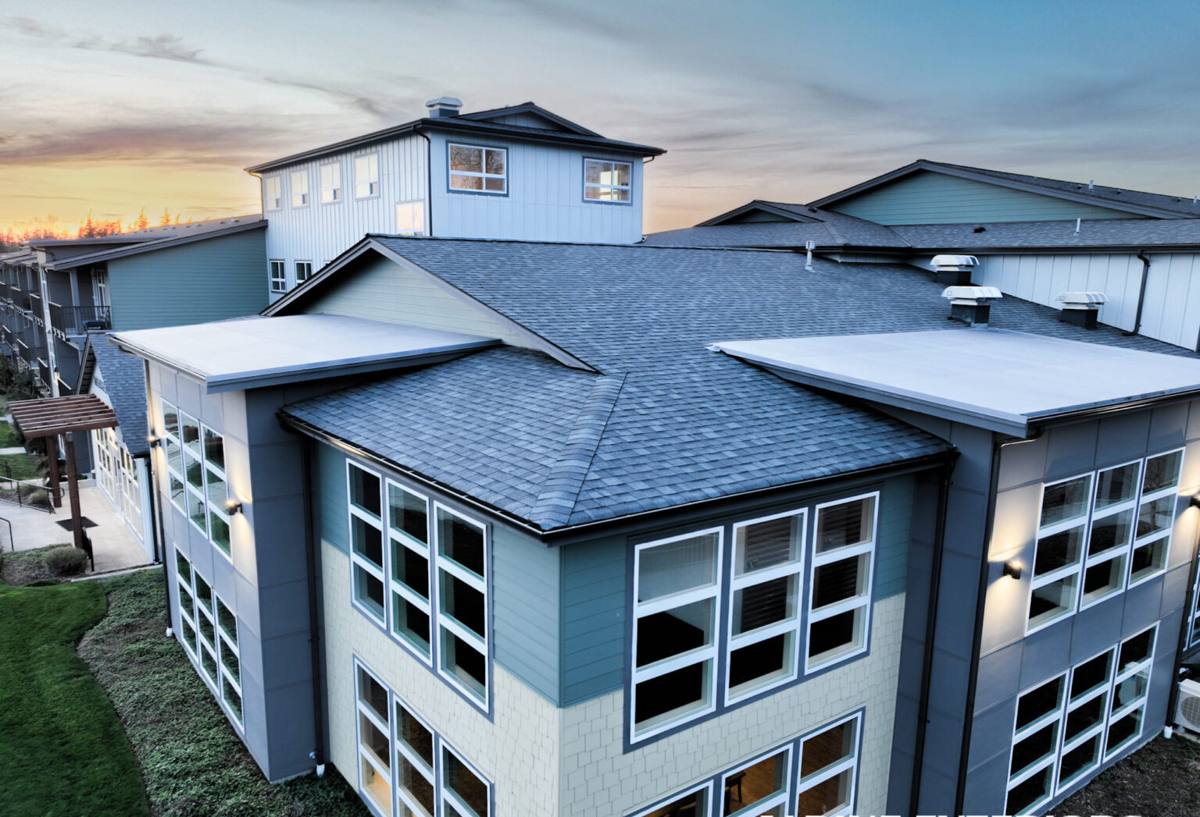
What a Correctly Installed Shingle Roof Looks Like Here
A shingle roof is a system, not just a layer of shingles nailed to plywood. In a wet, shaded climate like Capitol Hill's, the layers underneath the shingles matter as much as the shingles themselves.
Underlayment and Ice/Water Barrier
We use synthetic underlayment across the full roof deck rather than old-style felt, which sags and tears once it's absorbed moisture. Along eaves, valleys, and any low-slope transitions, we add a self-adhering ice and water barrier. King County doesn't get the deep freezes some regions do, but we do get cold snaps that follow heavy rain, and that combination is exactly when water can back up under shingles at the eaves and find its way into the deck.
Ventilation
Attic ventilation is where a lot of otherwise decent roofing jobs quietly fail. Without balanced intake at the soffits and exhaust at the ridge, moist air gets trapped against the underside of the roof deck. Over a few Seattle winters that trapped moisture leads to sheathing rot, premature shingle aging from underneath, and mold in the attic, none of which show up until the damage is already done. We check and correct ventilation on every re-roof, not just when it's obviously broken.
Fastening and Flashing
Shingles need to be nailed to manufacturer spec, correct nail count, correct placement in the nailing strip, correct pattern at hips and ridges. We also replace step flashing and counterflashing at every wall intersection, chimney, and skylight rather than reusing old flashing or relying on caulk to bridge a gap. Caulk is a maintenance item, not a waterproofing method, and on a roof with this much rain exposure it will eventually fail.
Signs Your Capitol Hill Roof Needs Attention
Most roofing problems in this neighborhood develop slowly, which is why they're easy to miss from the ground. A few reliable warning signs:
- Dark streaking or a greenish-black cast to the shingles, usually the first visible sign of algae or moss colonization
- Moss growth thick enough to hold water against the shingle surface, especially on north-facing slopes and anywhere overhung by trees
- Granules collecting in gutters or at downspout outlets, a sign the shingle's protective surface is wearing thin
- Shingle edges curling or cupping, which reduces wind resistance and lets wind-driven rain get underneath
- Soft spots, sagging, or visible daylight in the attic, which point to deck damage rather than a simple shingle issue
- Water stains on interior ceilings, particularly after a heavy rain event rather than a slow drip over time
A roof showing one or two of these signs is often still a repair. A roof showing several, especially deck softness or interior staining, usually means the underlayment and possibly the decking have already been compromised, and a full tear-off is the more honest recommendation.
Choosing the Right Shingle for This Climate
Not every asphalt shingle product is built the same way, and the right choice depends on your roof's exposure, your budget, and how long you plan to stay in the home. Here's how the common options compare for a King County installation:
| Shingle Type | Typical Lifespan | Wind Rating | Best Fit |
|---|---|---|---|
| 3-Tab | 15-20 years | Lower | Budget-conscious projects, secondary structures |
| Architectural / Dimensional | 25-30 years | Higher, laminated construction | Most Capitol Hill homes; the current standard choice |
| Impact-Resistant (Class 3/4) | 25-30+ years | Highest, plus impact rating | Homes under heavy tree canopy with branch/debris exposure |
For most homes on this hill, we recommend architectural shingles. Their thicker, laminated construction sheds water more effectively than a flat 3-tab and holds up better against the wind gusts that come through during winter storms. On lots with heavy overhead tree cover, an impact-resistant shingle is worth the added upfront cost, it resists bruising from falling limbs and cones, which is a real and recurring issue under mature trees rather than a manufacturer marketing point.
Our Process, Start to Finish
- On-site inspection. We walk the roof and the attic, not just a drive-by look from the street, and check ventilation, decking condition, and flashing at every penetration.
- Written estimate. You get a clear scope of work and price before anything is scheduled, including whether we're recommending a repair, an overlay, or a full tear-off, and why.
- Tear-off and deck check. Old material comes off down to the deck so we can actually see the sheathing condition rather than roofing over a hidden problem.
- System installation. Underlayment, ice and water barrier, flashing, ventilation, and shingles installed to manufacturer specification.
- Site cleanup and magnetic sweep. Debris, old material, and stray nails are cleared from the yard, driveway, and any adjacent alley or parking area before we consider the job done.
Working on Capitol Hill's Older Homes and Tight Lots
Capitol Hill's housing stock skews older and denser than a lot of the county, a mix of early-1900s houses, converted duplexes, and homes built close to their neighbors on narrow lots. That layout changes how a re-roof actually gets done. Staging materials and setting up a dumpster or debris chute often has to work around alley access, on-street parking, and limited driveway space rather than a wide-open yard. Steeper, older roof pitches are also more common here than in newer suburban construction, which affects both the safety setup for the crew and how carefully flashing has to be detailed at dormers and roof-to-wall transitions that weren't always built to modern standards.
Some parts of Capitol Hill also fall within areas where exterior changes are subject to added review, so if your property is in one of those zones, it's worth confirming what applies to your project before work starts. We're used to sequencing a job around these constraints, tight access, older framing, and any applicable review, rather than treating every roof like it's on a standard suburban lot.
Homeowner Maintenance Checklist Between Roofing Jobs
A shingle roof's biggest enemy on Capitol Hill isn't any single storm, it's years of trapped moisture and organic growth. A little regular upkeep goes a long way:
- Clear gutters and downspouts at least twice a year, more often if you're under heavy tree cover
- Have moss physically removed rather than pressure-washed, which can strip granules and drive water under the shingles
- Trim back branches that overhang the roofline to reduce shade and debris buildup
- Check the attic for daylight, damp insulation, or musty odor once a year, ideally at the start of the wet season
- Look at flashing around chimneys and skylights for gaps or lifted edges after any major windstorm
- Schedule a professional inspection every few years even if nothing looks obviously wrong from the ground
Why a Local Crew Matters for This Job
Roofing crews that work all over the Puget Sound region know general best practices. Crews that work Capitol Hill specifically know how this neighborhood's shade patterns, older framing, and tight-lot logistics actually play out on a job site. That's not a small distinction. It's the difference between a ventilation plan that accounts for a shaded, tree-covered roof and one that's copied from a generic spec sheet, and between a crew that shows up with a plan for alley access and street parking versus one that's improvising on arrival.
We also stand behind the work with a warranty on both materials and labor, and we're straightforward about what's a repair versus what genuinely needs a full replacement. On a roof this exposed to rain and shade, that honesty upfront saves homeowners money over the life of the roof, not just at the point of sale.
Get a Free Estimate
If your Capitol Hill roof is showing moss, granule loss, curling shingles, or you just want an honest read on how much life it has left, we're glad to take a look. Use the form below to request a free, no-pressure estimate and we'll walk you through exactly what we find and what it would take to fix it.