 King County
 Why Renton Roofs Wear Out Faster Than the Brochure Says
Renton sits at the south end of Lake Washington, in the wetter, greener half of King County, and that location shapes what a roof here has to survive. Storms track in off Puget Sound carrying driving, sideways rain rather than the gentle straight-down rain of drier climates. That same marine air carries a faint salt content that, combined with near-constant humidity, accelerates corrosion on fasteners, flashing, and metal components. Add a moss season that can run from early fall through late spring under the region's tree cover, and you have a climate that is genuinely harder on a roof than most manufacturers' warranty language assumes.
None of this means Renton homeowners need to over-build. It means the details that get skipped on a rushed, bargain install — proper underlayment lap, correctly flashed transitions, real attic ventilation — are exactly the details that determine whether a roof makes it to year 30 or starts failing at year 12. A new roof installation done right for this area is not a different product so much as a more disciplined installation.
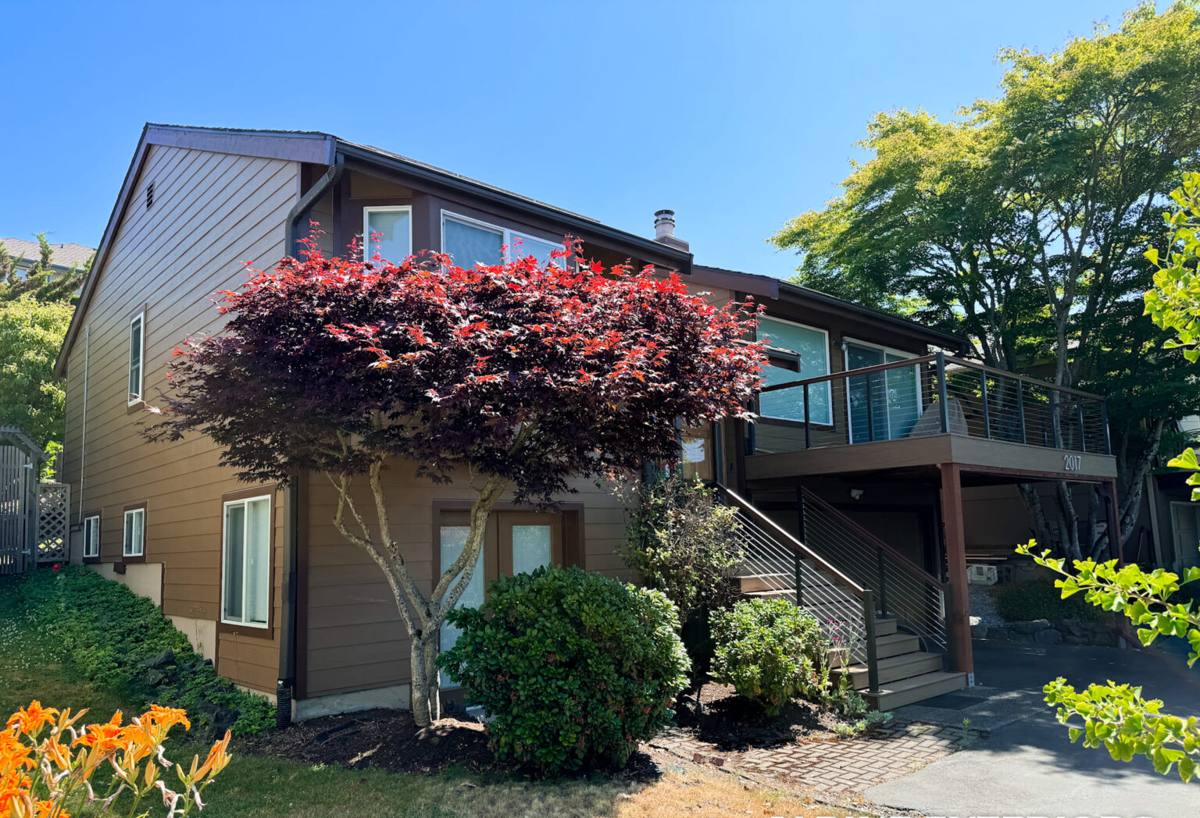
Signs Your Renton Home Needs a New Roof, Not Another Repair
Repairing a roof buys time. Replacing it solves the problem. Knowing which situation you're in saves money either way — patching a roof that's structurally done is wasted spend, and replacing one that just needs a repair is wasted spend in the other direction.
From the Inside
- Water stains on ceilings or upper walls that reappear after drying, even if the visible leak point has been patched before
- Daylight visible through the roof deck from inside the attic
- Sagging or soft spots when walking the attic on top of the ceiling joists (never walk directly on drywall)
- Musty smell in upper rooms or closets that share a wall with the attic, which often points to trapped moisture rather than an active leak
From the Outside
- Shingles that are cupping, curling at the edges, or losing granules in visible patches
- Moss established thick enough that it's lifting shingle edges rather than just sitting on the surface
- Valleys, roof-to-wall transitions, or chimney flashing that look patched, caulked, or improvised rather than properly integrated
- A roof that is 20-plus years old, regardless of how it looks from the ground — asphalt roofs in this climate rarely make it meaningfully past their rated life
What a Correct New Roof Installation Actually Involves
The parts of a roof job that are visible from the street — the shingle color, the clean lines — are the easy part. The parts that determine whether the roof survives a Renton winter are underneath, and they're the parts a homeowner has to trust the crew got right because there's no way to inspect them once the roof is closed up.
Tear-Off and Deck Inspection
A full tear-off removes the old roofing down to bare decking. This matters in our climate specifically because it's the only point where anyone can actually see the plywood or plank sheathing underneath. Years of slow moisture intrusion around old flashing or nail penetrations often leave the deck soft, delaminated, or stained in ways that don't show from above. Any compromised sheathing gets replaced before anything new goes down — installing new roofing over a weak deck just resets the clock on the same failure.
Underlayment and Water-Resistant Barrier
Underlayment is the roof's backup plan for the water that gets past the shingles, and in a region with sustained wind-driven rain, it earns its keep more often than in drier parts of the country. Eaves, valleys, and low-slope sections get a self-adhering water-and-ice barrier; the rest of the field gets a synthetic underlayment lapped correctly, shingle-fashion, so water is always shed downhill onto the layer below it rather than trapped behind a seam.
Ventilation
Every new roof installation should include a real look at intake and exhaust ventilation, not just a shingle swap. This is covered in more depth below because it's one of the most under-discussed parts of a roof job — and one of the most common reasons a roof underperforms its rated lifespan in this climate.
Flashing and Transitions
Chimneys, skylights, sidewalls, and valleys are where the overwhelming majority of roof leaks actually originate — not the open field of shingles. Correct flashing is step-flashed and counter-flashed into the wall or chimney (not just caulked over the top), and valleys are lined with a metal or high-durability membrane sized for real water volume, not just aesthetics.
Material Installation
Shingles, panels, or shakes go down to the manufacturer's nailing pattern and exposure spec — not "close enough." Fastener placement affects wind resistance directly, and in an area that sees genuine winter windstorms off the Sound, under-driven or misplaced nails are a common cause of shingles blowing off in year three or four rather than lasting the full warranty period.
Choosing the Right Roofing Material for a Wet, Mossy Climate
There is no universally "best" roofing material — there's a best fit for a given home's budget, roof pitch, and tolerance for maintenance. Here's how the common options actually compare for a Renton climate specifically:
| Material | Typical Lifespan | Moss / Moisture Behavior | Relative Cost | Maintenance |
|---|---|---|---|---|
| Asphalt composition shingle | 20–30 years | Moss-prone without zinc/copper strips or regular cleaning; performs well when properly ventilated | Lowest upfront | Periodic moss treatment, gutter clearing |
| Standing-seam metal | 40–60 years | Sheds moisture fast, very moss-resistant on smooth panels; fasteners need to be corrosion-rated for marine air | Highest upfront | Low — occasional inspection of seams and fasteners |
| Synthetic shake / composite | 30–50 years | Good moss resistance, doesn't absorb water like wood shake | Mid-to-high | Low — occasional debris clearing |
We install and stand behind asphalt, metal, and synthetic composite roofing depending on what fits the home and budget. Where a homeowner is set on a natural wood shake look, we'll walk through the honest trade-offs — wood shake's higher maintenance burden and moisture sensitivity in a climate this wet — rather than talk anyone out of a style preference; it's simply a material that demands more upkeep here than the alternatives.
Ventilation and Moisture: The Part Homeowners Don't See
A roof deck is sandwiched between two sources of moisture in this climate: rain from above and warm, humid indoor air rising into the attic from below. Balanced ventilation — intake at the eaves, exhaust at or near the ridge — is what keeps that indoor moisture from condensing on the underside of the deck instead of exiting the attic. Without it, the plywood can stay damp long after a storm passes, which is exactly the condition that lets moss and moisture-loving fungi take hold on the roof surface and rot take hold underneath it.
Renton doesn't see the heavy, sustained snow loads of the Cascades, but the region does get occasional hard freezes, and a poorly ventilated attic in freezing weather can still develop localized ice buildup at the eaves from melted snow or frost refreezing. Correct ventilation, paired with the ice-and-water barrier described above, addresses both the everyday moss/moisture problem and the occasional freeze event in one system rather than treating them separately.
Our Renton Roof Installation Process
- Inspection and honest estimate. We look at the whole system — deck, flashing, ventilation, not just the shingle surface — and give a written scope, not a verbal ballpark.
- Permitting. Full roof replacements typically require a permit; we handle the application and inspection scheduling so it isn't on the homeowner's plate.
- Property protection. Landscaping, siding, and gutters get covered or protected before tear-off begins, and magnetic sweeps for nails happen throughout and at the end of the job.
- Tear-off and deck inspection. Old material comes off down to bare sheathing, which gets inspected and repaired as needed.
- Underlayment, flashing, and ventilation install. The moisture-management system goes in before a single course of finish material is laid.
- Material installation. Shingles, panels, or shakes go down to spec, with valleys, edges, and penetrations finished last.
- Cleanup and final walkthrough. Debris and fasteners are cleared, and we walk the finished roof and attic with the homeowner before calling the job done.
Cost Factors for a New Roof in Renton
Pricing a roof over the phone is a guess; every one of the factors below can move an estimate significantly, which is why an in-person look matters more than a quoted square-footage price.
| Factor | Why It Moves the Estimate |
|---|---|
| Roof size and number of facets | More square footage and more valleys/hips mean more material and labor time |
| Pitch and access | Steep or hard-to-access roofs require more safety setup and take longer to work |
| Number of existing layers | Removing multiple old layers costs more in labor and disposal than a single-layer tear-off |
| Deck condition | Rotted or delaminated sheathing found during tear-off adds repair cost that can't always be seen beforehand |
| Material choice | Asphalt, metal, and synthetic composite carry different material and installation costs, shown in the comparison above |
| Ventilation upgrades | Adding proper intake/exhaust venting where none existed is a smaller add-on than most homeowners expect relative to the long-term payoff |
Moss, Debris, and Long-Term Roof Care in King County
A correctly installed roof still needs basic upkeep in a climate this wet and tree-covered. None of this is complicated, but skipping it shortens the roof's life regardless of how good the installation was.
- Clear needles, leaves, and moss debris from valleys and gutters at least twice a year — more often on heavily treed lots
- Have moss growth treated before it establishes thickly enough to lift shingle edges, not after
- Keep overhanging branches trimmed back to reduce shade, debris load, and physical abrasion on the roof surface
- Check attic ventilation isn't blocked by insulation, especially after any insulation upgrades
- Have flashing around chimneys, skylights, and sidewalls visually checked after major windstorms
Why Hire a Crew That Already Works in Renton
Roofing code and inspection expectations vary by jurisdiction, and a crew that regularly pulls permits with the City of Renton and works elsewhere across King County already knows the local inspection process, typical soil and drainage conditions around foundations during tear-off, and the neighborhood-specific quirks — tree cover, roof pitch trends, older versus newer housing stock — that show up repeatedly on jobs in this area. That familiarity shows up as fewer surprises mid-project and a faster permit-to-completion timeline than a crew learning the local process for the first time.
It also matters after the job is done. A local crew is a phone call away, not a multi-hour drive, if a windstorm knocks a branch onto the new roof or a question comes up two years in. For a project as weather-exposed as a roof, that ongoing accessibility is part of what you're actually paying for.
If your roof is showing its age or you just want a straight answer on whether it needs replacing or can hold on a few more years, we're glad to take a look. Reach out for a free, no-pressure estimate — we'll give you an honest read on your roof's condition and what a correct installation would involve, no obligation either way.