 King County
 Why Capitol Hill Decks Wear Out Faster Than the Manual Says
Every deck manufacturer publishes a lifespan estimate, and almost none of those numbers were calculated with a Puget Sound winter in mind. Capitol Hill sits close enough to the Sound that salt-laden air reaches fasteners, flashing, and any exposed metal hardware, slowly working corrosion into joints that a drier inland climate would leave alone. Add in driving rain that comes in sideways during a real King County storm, and water finds its way under railings, into end-grain cuts, and behind ledger boards in ways that vertical rain never would.
Then there's moss. Capitol Hill's mature tree canopy and close-set lots mean a lot of decks sit in partial shade for much of the year, and our wet season stretches long — often October well into May or June some years. That's a lot of months where a deck surface simply doesn't get the sun exposure it needs to dry out between rains. Moss and algae aren't just cosmetic; they hold moisture against the wood or composite surface and make the deck slicker and more dangerous underfoot.
None of this means Capitol Hill homeowners are doing anything wrong. It means decks here need to be built and detailed differently than a deck in a dry climate, and it means replacement — not another round of patching — is often the more honest answer once a deck starts showing real wear.
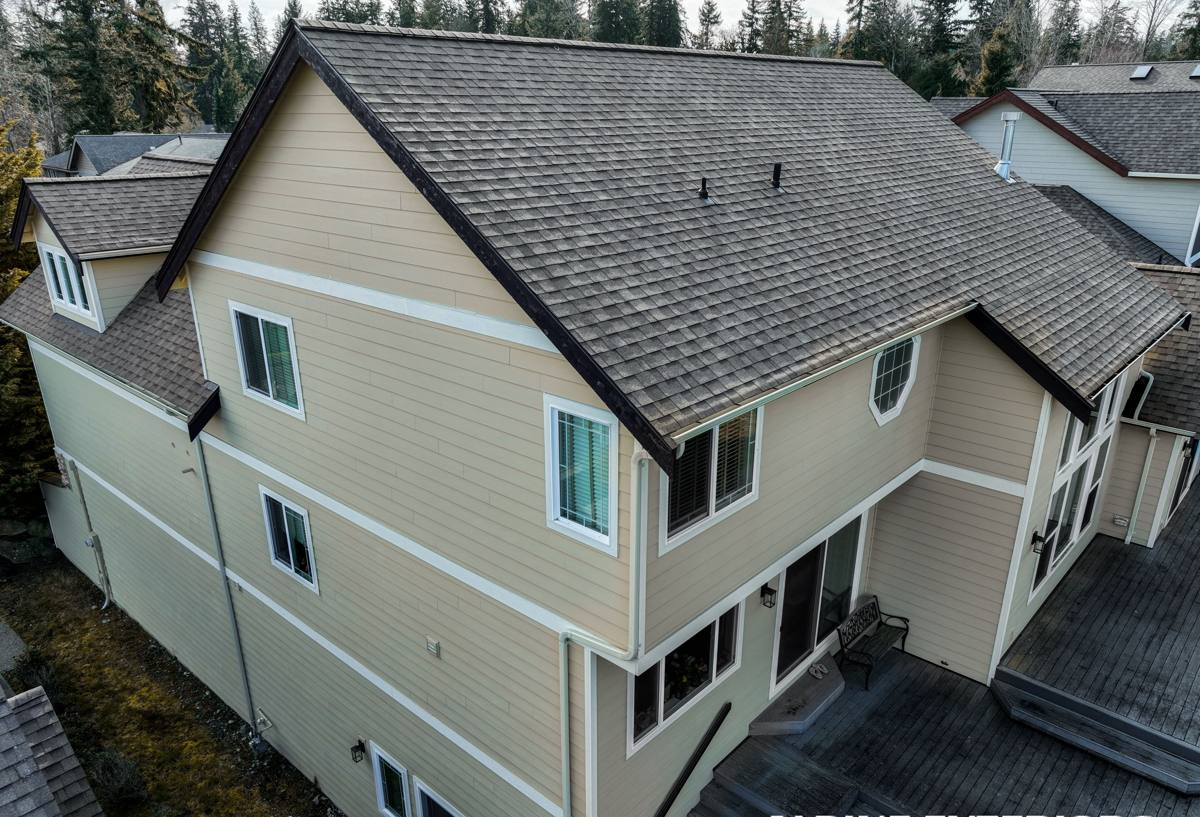
Signs Your Deck Needs Replacement, Not Just Repair
A lot of homeowners call us wanting a repair quote and end up learning the deck is past the point where repair makes sense. Here's how we tell the difference:
- Soft or spongy spots in the decking, especially near the house or in shaded corners — usually means rot has already started underneath
- A screwdriver or awl sinks easily into joists, beams, or the ledger board with light pressure
- Persistent moss or black-green staining that comes back within weeks of cleaning
- Visible gaps opening up between boards, or boards cupping and twisting
- Rust streaks running down from fasteners or metal connectors
- Railings that flex or wiggle more than they used to
- The ledger board attachment to the house looks like it was never properly flashed
One or two of these on an otherwise sound deck might mean targeted repair is enough. Several of them together, or any structural softness in the framing, usually means the deck has reached the end of its practical life and repair would just be delaying an inevitable full rebuild — often at a higher combined cost than replacing it once, correctly.
What a Correct Deck Replacement Actually Involves
It Starts Underneath, Not on Top
The decking boards are the part everyone sees, but the part that determines whether a deck lasts 10 years or 30 is everything underneath: footings, posts, beams, joists, and the ledger connection to the house. A replacement done right starts with an honest assessment of that structure, not just a swap of the surface boards.
The Ledger Board and Flashing
In our climate, the ledger board — where the deck attaches to the house — is the single most common failure point we see, because it's also the hardest spot for water to escape once it gets in. Correct flashing here means metal flashing integrated with the house's water-resistive barrier, not just caulk and hope. This is also where a lot of lower-cost deck jobs cut corners, because it's slower work that doesn't show once the decking goes down.
Footings and Framing
Footings need to be sized and set to current code depth for our frost and soil conditions, and framing needs joist spacing that matches the decking material you're choosing — composite and wood have different span requirements. We also make sure joist tops are protected with flashing tape, which keeps rain from sitting on top of the joist and rotting it from above, a slow failure mode that's easy to miss until the deck is already soft.
Fasteners and Hardware
Given the salt air exposure Capitol Hill gets, we use corrosion-resistant, coated or stainless-rated fasteners and structural connectors rather than standard hardware. It costs a little more up front and it's the difference between hardware that's still solid in year 15 and hardware that's rusting through by year 6.
Choosing the Right Decking Material for This Climate
There's no single "best" decking material — there's a best fit for your budget, your maintenance appetite, and how much sun versus shade your specific deck gets. Here's how the common options actually perform in a wet, mossy, salt-air climate like ours:
| Material | Moisture & Moss Behavior | Maintenance | Typical Lifespan Here |
|---|---|---|---|
| Pressure-Treated Wood | Resists rot but surface stays porous; moss and algae take hold in shaded, damp spots without regular cleaning | Annual cleaning, re-stain or seal every 2-3 years | 15-20 years with upkeep |
| Cedar | Naturally rot-resistant, ages to gray if unsealed; still needs sealing to shed water in heavy rain | Seal or oil every 1-2 years to hold color and repel moisture | 15-20 years with upkeep |
| Composite Decking | Doesn't rot, but lower-quality composites can hold surface moisture and still grow algae film if never cleaned | Occasional wash, no staining or sealing required | 25-30+ years |
| PVC Decking | Fully non-porous; best moisture and moss resistance of the group | Lowest maintenance; occasional rinse | 25-30+ years |
We install all of the above and we'll give you a straight answer about which one fits your deck's sun exposure, your budget, and how much yearly maintenance you actually want to do — not just whichever one has the best margin for us.
Our Deck Replacement Process
- On-site evaluation. We inspect the existing deck's framing, ledger, and footings in person before quoting anything, because a deck that looks fine from the top can hide serious problems underneath.
- Written scope and material selection. You get a clear scope of work and help choosing decking material, railing style, and any add-ons like built-in lighting or privacy screening.
- Permitting. Most deck replacements above a certain height or footprint require a permit in King County jurisdictions. We handle that paperwork so you don't have to chase it down.
- Tear-out. Full removal of the old decking, railings, and any framing that doesn't meet current standards, with responsible disposal.
- Rebuild. New or reinforced footings and framing as needed, properly flashed ledger connection, corrosion-resistant hardware, then decking and railing installation.
- Final walkthrough and inspection. We review the finished deck with you and coordinate any required jurisdictional inspection before calling the job done.
Permits and Code Considerations in King County
Deck permitting rules vary by exact jurisdiction within King County — Seattle's requirements aren't identical to those of neighboring cities, and requirements can also shift with deck height, size, and proximity to property lines. Rather than assume, we pull the correct requirements for your specific address before work starts. Skipping this step is one of the more common ways homeowners run into trouble later, whether that's at resale or when a future project requires proof the existing deck was permitted correctly.
Maintaining Your New Deck Through Our Wet Season
Even the best-built deck benefits from a little seasonal attention in a climate like ours. A short annual routine goes a long way toward getting the full lifespan out of the materials you paid for:
- Clear leaves and debris from between boards and along the house-side edge before the fall rains set in
- Rinse or lightly scrub shaded areas where moss tends to establish, ideally before it gets a foothold
- Check that gutters and downspouts near the deck aren't dumping extra water onto it
- Inspect railing posts and stair connections once a year for any looseness
- For wood decking, plan on resealing on the schedule your specific product calls for — don't wait until it looks obviously dry and gray
- Keep planters and furniture legs from sitting directly on the deck surface for months at a time, which traps moisture underneath them
What Deck Replacement Typically Costs
Costs vary widely based on deck size, framing condition, height off the ground, material choice, and railing style, so any number without an in-person look is a rough guess at best. In general terms, homeowners should expect pressure-treated and cedar rebuilds to sit at the lower end of the range, with composite and PVC decking costing more upfront in exchange for lower long-term maintenance. Structural surprises underneath an old deck — rotted framing, undersized footings, an improperly flashed ledger — are the most common reason a quote shifts once tear-out begins, which is exactly why our estimates start with a real inspection rather than a phone-quote guess.
Why Hiring a Crew That Already Works Capitol Hill Matters
Capitol Hill's older housing stock, tight lot spacing, and mature landscaping create work conditions that differ from a newer suburban build site — narrower access for material staging, existing structures and plantings to work around, and older homes where the original ledger attachment often predates current flashing standards. A crew that regularly works this neighborhood knows to check for those conditions upfront instead of discovering them mid-project. It also means we're familiar with the general permitting expectations across King County jurisdictions and won't be learning that process on your job.
If your deck is showing soft spots, persistent moss, loose railings, or it's simply old enough that you're wondering whether it's still safe, we'd rather give you a straight, no-pressure answer in person than guess over the phone. Fill out the form below for a free estimate, and we'll take a look at what's actually going on underneath your deck before we recommend anything.