 King County
 Siding Built for Capitol Hill's Housing Stock
Capitol Hill is one of the more densely built residential neighborhoods in King County, with a mix of older Craftsman and Victorian-era homes, mid-century houses, and newer infill construction packed onto tight lots. Many of these homes have been re-sided at least once already, sometimes with materials that were never a great match for the Pacific Northwest's wet, shaded conditions. That layered history matters when it's time to side a home here again: what's underneath the current siding, how the walls have been drying (or not drying) for the last few decades, and how tight the lot is all shape what a correct installation looks like.
We install James Hardie fiber cement siding exclusively. We don't offer vinyl, LP SmartSide, Cemplank, Allura, or wood siding as alternatives, because after years of working on King County homes, Hardie is the only product we're willing to stand behind for the climate and building stock we work in every day.
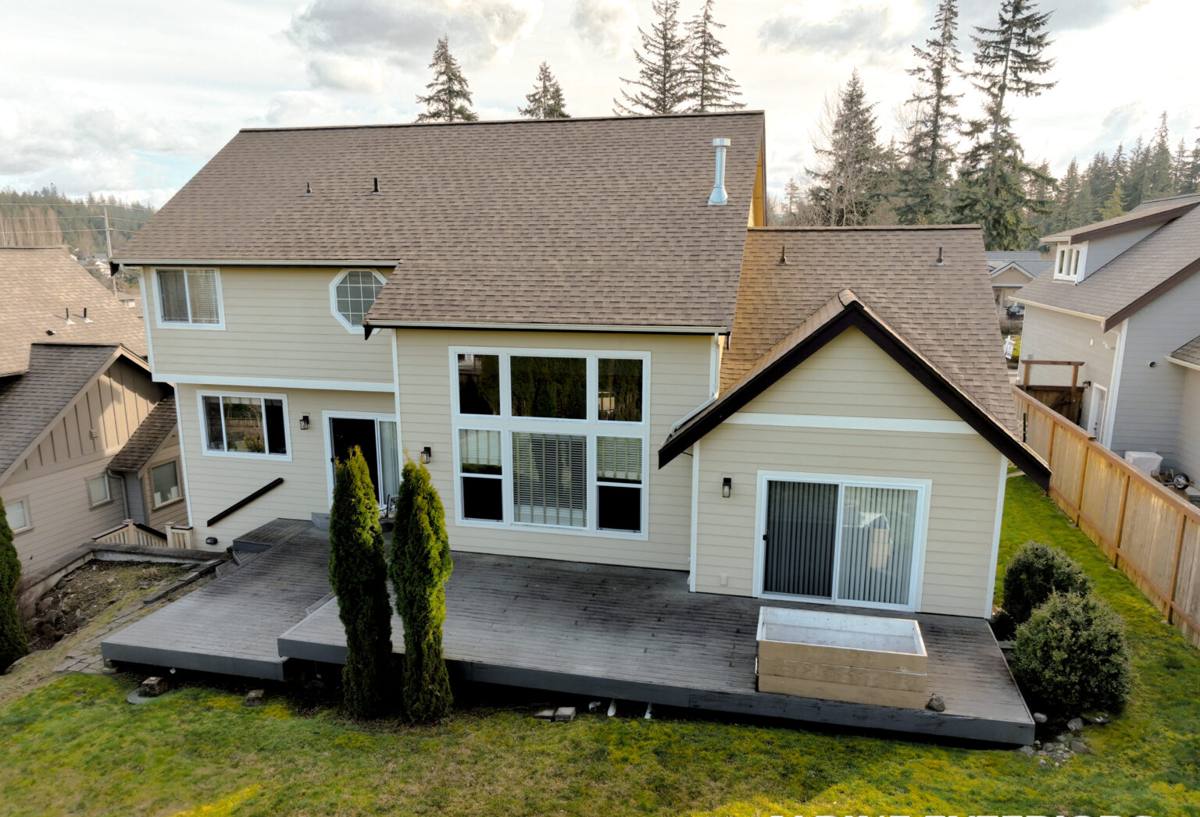
What King County's Climate Does to Siding Over Time
Seattle-area weather is deceptively hard on exterior materials. It isn't dramatic storms that cause the damage — it's the slow, cumulative effect of moisture that never fully leaves. A few things define this climate for siding purposes:
- Driving rain that gets pushed sideways into walls during fall and winter storms, testing every seam, joint, and piece of flashing.
- A long moss and algae season — shaded, damp surfaces here can stay wet for days at a time, which is exactly what moss and mildew need to take hold.
- Salt-laden marine air that moves through the broader Puget Sound region, which accelerates corrosion on fasteners, trim, and any material that isn't rated for a coastal-influenced climate.
- Short drying windows — even in summer, mornings are often overcast and damp, so siding gets less time to fully dry out between rain events than it would in a drier climate.
On a neighborhood like Capitol Hill, where mature street trees and tightly spaced homes create shaded, low-airflow side yards, these effects are magnified. A wall that gets partial sun and steady airflow dries out fine. A wall wedged between two houses in permanent shade does not — and that's where you see siding fail first.
Why James Hardie Fiber Cement Fits This Climate
Moisture behavior
James Hardie siding is fiber cement — a mix of cement, sand, and cellulose fibers. It doesn't absorb and swell with moisture the way wood-based products can, and it doesn't develop the soft spots, delamination, or edge swelling that show up on engineered wood siding after repeated wet-dry cycles in a climate like ours. That matters a lot on a shaded Capitol Hill lot where a wall might stay damp for days after a storm.
It won't feed moss and algae growth
No siding material is immune to moss and algae landing on its surface in a climate this wet, but the surface matters. Hardie's factory-applied ColorPlus finish is baked on and doesn't have the porous, absorbent surface that lets organic growth get a foothold and stain the material underneath. Growth on Hardie tends to sit on top of the finish rather than working into it, which makes a periodic gentle wash far more effective than it is on porous siding.
Non-combustible material
Fiber cement is non-combustible, which is a real consideration anywhere in King County given regional wildfire smoke seasons and the tighter lot spacing common on Capitol Hill, where homes sit closer to their neighbors than in most suburban settings.
Why We Use Hardie's Climate-Engineered HZ Lines
James Hardie doesn't sell one universal product — it engineers different HZ ("Hardie Zone") formulations for different climate zones around the country, adjusting the product for the moisture, freeze-thaw, and humidity patterns of the region it's going into. For Capitol Hill and the rest of King County, that means a product line engineered around exactly the conditions described above: sustained wet weather, moderate temperatures, and high humidity, rather than a formulation built for a hot, dry, or freeze-heavy climate. Buying "James Hardie siding" without knowing which HZ line and profile is correct for our zone is one of the more common mistakes homeowners run into when comparing bids — the material name alone doesn't guarantee it's the right version for this climate.
What a Correct Installation Involves
James Hardie siding performs the way it's supposed to only when it's installed to the manufacturer's specifications. Fiber cement is less forgiving of shortcuts than some homeowners expect — the material itself is excellent, but a rushed or careless install can undercut everything it's designed to do. The table below outlines the difference between a correct install and the kind of shortcuts we see on re-side jobs.
| Detail | Done Correctly | Common Shortcut |
|---|---|---|
| Weather-resistive barrier | Continuous, properly lapped house wrap with sealed penetrations behind the siding | Reused or patched old barrier with gaps at seams and penetrations |
| Flashing at windows and doors | Integrated flashing that directs water outward, away from the wall assembly | Caulk used in place of proper flashing |
| Fastener placement | Corrosion-resistant fasteners driven per Hardie's spacing and clearance specs | Standard fasteners over-driven or spaced incorrectly, cracking the board |
| Clearance at grade and roofline | Minimum gaps maintained so siding never sits in standing water or constant runoff | Siding installed tight to grade, decks, or roof lines |
| Board joints | Sealed or flashed per spec, staggered for a clean, weather-tight look | Butt joints caulked and left as the only water defense |
Every one of these details is invisible once the job is finished and the siding looks good from the sidewalk. The difference only shows up years later, in whether the wall stays dry or starts trapping moisture behind the boards.
Cutting and finishing on site
Fiber cement dust from cutting is a respiratory hazard, and King County requires it to be managed properly on job sites — cut edges also need to be sealed with the correct product to maintain the material's moisture resistance where a factory edge has been exposed. On a tight Capitol Hill lot, dust and debris control also matters for keeping the job clean for neighbors sharing a narrow side yard.
Our Process for a Capitol Hill Home
- On-site assessment. We look at the existing siding, the condition of the sheathing and weather barrier underneath where accessible, drainage around the foundation, and shaded or low-airflow areas that are prone to moisture issues.
- Product and profile selection. We recommend the Hardie product line, profile, and ColorPlus color that fits the home's style and the specific exposure of each wall — a shaded north side and a sun-exposed south side aren't always treated identically.
- Tear-off and inspection. Once old siding comes off, we inspect the sheathing for hidden rot or moisture damage before anything new goes up. This step catches problems that were invisible from the outside.
- Weather barrier and flashing installation. This is the layer that actually keeps water out long-term — we install it to spec before a single piece of Hardie goes on the wall.
- Siding installation. Installed per James Hardie's fastening, clearance, and joint specifications to keep the manufacturer's warranty valid.
- Final walkthrough. We review the finished work with the homeowner and confirm trim, caulking, and paint lines are clean before calling the job done.
Why a Crew That Already Works Capitol Hill Matters
Capitol Hill throws a few practical challenges at a siding job that a crew unfamiliar with the neighborhood can underestimate:
- Tight lot lines and narrow side yards make staging materials, scaffolding, and dumpster placement genuinely harder than on a suburban lot with a wide driveway.
- Street parking and alley access for material delivery and equipment need to be planned around rather than assumed.
- Mature trees and shared property lines mean debris control and protecting a neighbor's yard or fence during tear-off is part of doing the job right, not an afterthought.
- Older homes in this part of King County sometimes reveal past repairs, non-standard framing, or hidden moisture damage once old siding comes off — a crew that's seen it before knows how to handle it without the project stalling out.
A contractor who works this specific neighborhood regularly has already solved these logistics problems dozens of times over. That translates into fewer surprises, fewer delays, and a cleaner job site for you and your neighbors.
Living With James Hardie Siding in a Moss-Prone Neighborhood
Correctly installed Hardie siding is low-maintenance, but "low-maintenance" doesn't mean "no maintenance" in a climate that stays wet as much of the year as ours does. A little seasonal attention keeps it looking right for the long run.
- Rinse siding gently with a garden hose once or twice a year, focusing on shaded areas where moss and algae are more likely to settle.
- Avoid pressure washers on siding — high-pressure water can force moisture behind boards and damage caulking and joints.
- Keep gutters clear so overflow doesn't run directly down the siding face during heavy rain.
- Trim back branches and shrubs that keep a section of wall shaded and damp longer than the rest of the house.
- Check caulking at trim, windows, and joints every couple of years and have any cracked or missing sections redone before water gets behind the boards.
- Repaint (if not using ColorPlus factory finish) on the manufacturer's recommended schedule rather than waiting until it visibly fades.
What Affects the Cost of a James Hardie Project Here
Every home is different, but a few factors consistently move the price on Capitol Hill jobs specifically:
| Factor | Why It Matters Locally |
|---|---|
| Access and staging | Narrow lots and limited parking can require more setup time and creative material staging |
| Condition under the old siding | Older homes may need sheathing repair or replacement once tear-off begins |
| Home style and trim detail | Craftsman and Victorian-era trim work takes more time to match than a simple modern facade |
| Product profile and color | Lap width, panel style, and ColorPlus color selection affect material cost |
| Height and roofline complexity | Multi-story homes or complex rooflines require more scaffolding and labor |
We give straight, itemized estimates rather than vague ballpark numbers, so you know exactly what you're paying for before work starts.
Get a Free Estimate for Your Capitol Hill Home
If your siding is showing its age, growing moss it didn't used to, or you're just planning ahead for a home in one of King County's older neighborhoods, we're happy to take a look. There's no pressure and no obligation — just an honest assessment of what your home needs and what a correct James Hardie installation would involve. Use the form below to request a free estimate.