 King County
 Why Fremont's Climate Is Hard on Roofs
Fremont sits close to Seattle's waterways, under a heavy tree canopy in many blocks, and squarely in the path of the wind-driven storms that move through King County every fall and winter. That combination is tough on roofing. Moisture-laden, faintly salt-tinged air off the water keeps roof surfaces damp longer than they would be inland, driving rain finds every weak seam and nail hole, and shaded, tree-lined lots turn into moss farms almost by default. None of that means a roof is doomed — it means repairs have to account for how this specific climate attacks a roof, not just patch what's visible.
Driving Rain and Wind-Driven Water
Most Puget Sound rain isn't heavy, but it's persistent and often comes in sideways during winter storms. Wind-driven rain doesn't just fall onto a roof — it pushes up under shingle edges, around chimneys, and into any gap in flashing that a calmer rain would never reach. A repair that only addresses the spot where water is dripping inside, without checking the flashing and laps above it, tends to fail again in the next storm.
A Long Moss Season
Between the shade from mature trees and months of damp weather, Fremont roofs can grow moss nearly year-round, with the heaviest growth in the cooler, wetter months. Moss holds moisture against the roofing material, lifts shingle edges as it grows, and works its way under flashing over time. Left alone, it turns a small maintenance issue into a repair, and eventually a repair into a replacement.
Moisture in the Air Near the Water
Homes closer to the Ship Canal and Lake Union sit in slightly damper, saltier air than homes further inland in King County. That air accelerates corrosion on exposed metal fasteners, flashing, and vents, which is why we pay close attention to metal condition, not just the roofing material itself, on every repair in this part of the county.
Recognizing When Repair Is the Right Call
Not every roof problem in Fremont needs a full replacement, and we won't sell one when a targeted repair will genuinely hold up. The trick is telling the difference between damage that's isolated and damage that's a symptom of the whole roof reaching the end of its service life.
Leaks vs. Cosmetic Wear
A stain on a ceiling, water at a light fixture, or damp attic insulation after a storm usually points to a specific failure point — a cracked pipe boot, lifted flashing, a few damaged shingles — that can be repaired directly. Widespread granule loss, brittle or curling shingles across large sections of the roof, or repairs that keep recurring in different spots are signs of a roof that's aging out overall, where repair becomes a stopgap rather than a fix.
Signs it's time to have a Fremont roof looked at:
- Water stains on ceilings or walls, especially after a windy rainstorm
- Missing, cracked, or curling shingles you can see from the ground
- Moss or dark streaking concentrated along shaded slopes or valleys
- Granules collecting in gutters or at downspout outlets
- Daylight visible through the roof deck from inside the attic
- Soft or spongy spots when the roof is walked
- Rusting, lifted, or separated flashing around chimneys, skylights, or vents
What We Check During a Fremont Roof Inspection
A repair is only as good as the diagnosis behind it. Chasing the spot where water shows up indoors, without tracing where it actually entered the roof, is how the same leak comes back a year later.
Interior Clues
We start in the attic where possible, looking for water tracking along rafters or sheathing, staining that doesn't line up with the visible ceiling stain, and any insulation that's compressed or damp — all of which help pinpoint where water is actually getting in, which is often several feet from where it shows up inside.
Exterior Clues
On the roof itself, we look at shingle condition slope by slope, since a north-facing or heavily shaded slope in Fremont will often show far more moss and wear than a slope that gets more sun and airflow. We check ridge and hip lines, valleys where debris collects, and the condition of the roofing material at its most exposed edges.
Flashing and Penetrations
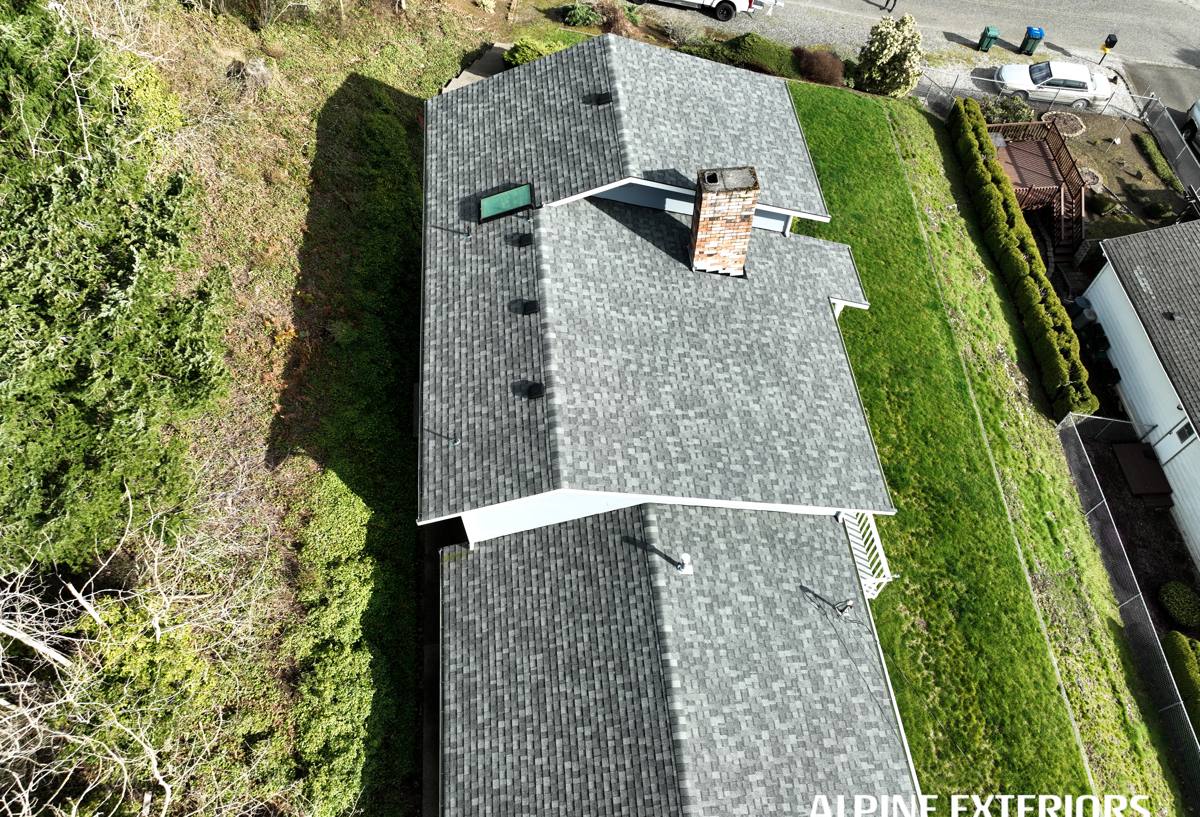
Chimneys, skylights, vent pipes, and any place a wall meets a roof are where the majority of real leaks originate, not the open field of shingles. Given how much wind-driven rain this area gets, we inspect these points closely every time, even when the customer's concern is about a different part of the roof.
Roofing Materials We See on Fremont Homes
Fremont's housing stock is a mix of early-1900s bungalows, mid-century homes, and newer infill construction, which means we work on a range of roofing materials, each with its own repair considerations in this climate.
| Material | Common On | Repair Considerations Here |
|---|---|---|
| Composition (asphalt) shingle | Most Fremont homes, older and newer | Widely available match materials; granule loss and moss lift are the main issues we see |
| Cedar shake or shingle | Older, character-driven homes | Needs breathing room and moss control; damp, shaded lots accelerate rot if not maintained |
| Low-slope / flat membrane | Additions, garages, some mid-century homes | Seams and edge details are critical; standing water from flat sections needs correcting, not just patching |
| Metal roofing or flashing accents | Newer builds and remodels | Fastener and seam corrosion is the main watch item given the marine-influenced air |
Our standard on repairs is to match the existing material and manufacturer profile as closely as possible, since a mismatched patch is both a visible flaw and a future failure point where the old and new materials don't shed water the same way.
How We Handle a Repair, Start to Finish
- Inspection. We look at the roof from the ground, on the roof itself where safe, and in the attic when accessible, tracing the leak or damage to its actual source.
- Honest diagnosis. We tell you plainly whether this is a contained repair or a sign of broader wear, and why.
- Clear scope and quote. You'll know what's being repaired, with what materials, and roughly what it costs before work starts.
- The repair itself. Damaged materials are removed back to solid decking, flashing is corrected rather than caulked over, and new material is tied in to shed water the way the surrounding roof does.
- Cleanup. Old materials, nails, and debris are cleared from the roof and the ground around the house, including gutters where work occurred.
- Follow-up. If moss or debris contributed to the failure, we'll tell you what to watch for and how often it's worth checking going forward.
Moss, Trees, and Debris: The Maintenance Homeowners Can Control
A good repair fixes what's broken. Keeping it fixed in Fremont's tree-heavy, damp environment depends partly on maintenance the homeowner can handle between professional visits.
- Clear gutters and downspouts at least twice a year, more often under heavy tree cover
- Have moss physically removed rather than left to grow thick, especially on shaded slopes
- Trim back branches that overhang the roof to cut down on shade, debris, and abrasion
- Keep valleys and roof-to-wall transitions clear of leaves and needles
- Have the roof looked at after any major windstorm, even if nothing looks wrong from the ground
None of this replaces a professional inspection, but it meaningfully extends the life of both the roof and any repair work done on it.
What Repairs Typically Cost (and What Changes the Price)
Roof repair costs vary with the size and location of the damage, the roofing material involved, and how many penetrations or flashing details are affected — a single-shingle fix costs far less than a repair involving a chimney flashing rebuild or a section of rotted decking. Broadly, small, isolated repairs tend to run in the low hundreds of dollars, while more involved repairs touching flashing, decking, or larger areas of shingle can run into the low thousands. Steep or hard-to-access roofs, and repairs discovered to involve hidden decking damage once the old material is removed, also affect the final price. We won't guess at a number without seeing the roof — every quote follows an actual inspection.
Why Hire a Crew That Already Works in Fremont
Roof repair looks straightforward from the ground, but the details that make a repair last are specific to the house and the neighborhood it's in. A crew that regularly works King County homes knows to expect heavier moss on shaded, tree-covered lots, to check fastener and flashing condition a little more closely given the damper air near the water, and to plan around the tight lots, mature landscaping, and access constraints common in Fremont's older streets. That familiarity shows up in fewer surprises during the job and repairs that are built for the conditions the roof will actually face, not a generic checklist.
If you're dealing with a leak, storm damage, or a roof that's showing its age, we're happy to take a look and give you a straight answer — no pressure, and no upsell to a replacement you don't need. Reach out using the form below for a free estimate.