 King County
 Storm Damage in Fremont: What King County Weather Actually Does to a Roof
Fremont's roofs take a slow, cumulative beating rather than one dramatic hit. King County storms bring driving rain that comes in sideways off the water, gusty wind events that lift and stress shingles rather than tear them off outright, and long stretches of damp, shaded weather that keep roof surfaces wet for days at a time. Add in the moist, marine-influenced air that sits over this part of the Puget Sound region, and you get a climate that's genuinely hard on roofing materials — not because any single storm is catastrophic, but because the wet season here runs long and rarely lets a roof fully dry out.
That combination — wind stress, driving rain, and near-constant moisture — is why storm damage in Fremont often looks different from storm damage in a drier climate. It's less about missing shingles scattered across the yard and more about loosened seals, lifted edges, and water finding its way into small gaps that widen over a season or two. A roof can look intact from the ground and still be failing underneath.
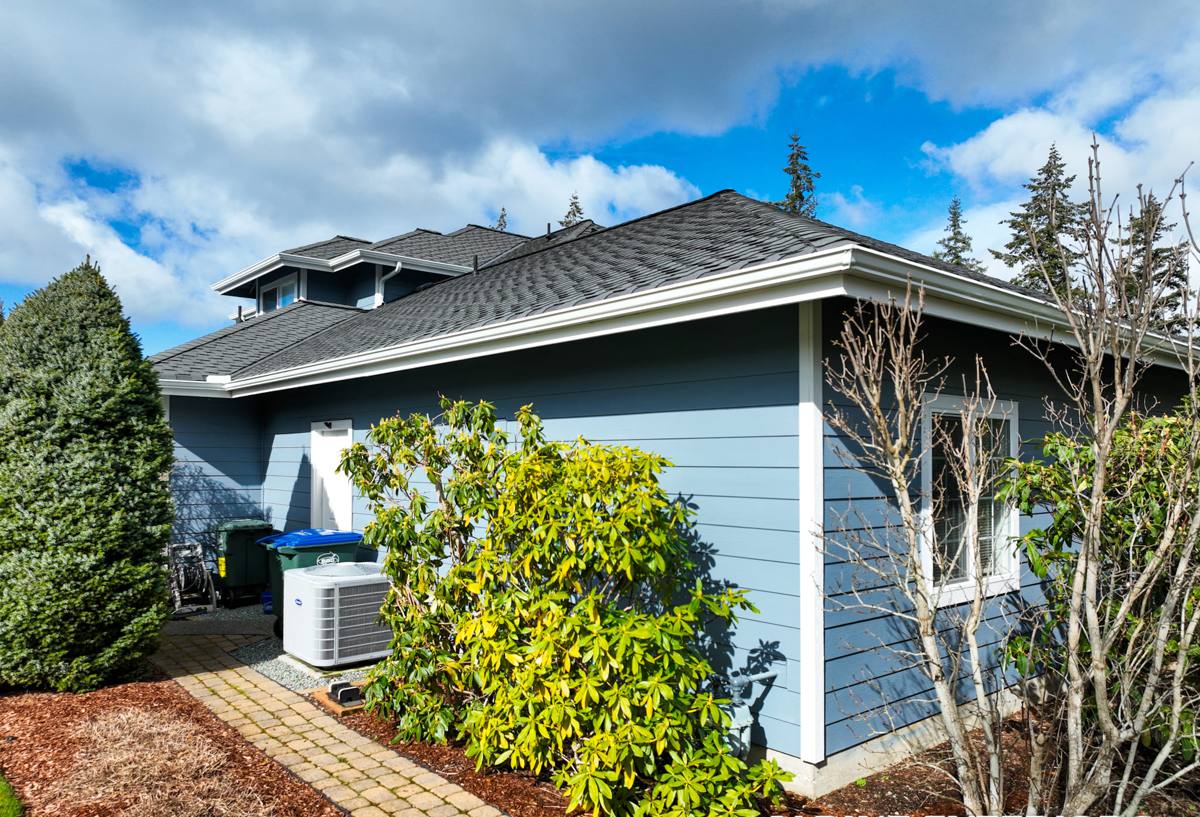
Signs Your Fremont Roof Has Storm Damage
Most storm damage isn't obvious from the street. Here's what we actually look for, and what you can watch for yourself between visits:
From the ground
Granules collecting in gutters or downspouts, shingles that look curled or lifted at the edges, and dark streaking or moss buildup concentrated in one area (often a sign wind has disturbed the shingle pattern and water is sitting where it shouldn't). Bent or missing flashing around chimneys and vents is easy to spot with binoculars and is one of the most common storm-related failure points we find.
Inside the house
A ceiling stain that appears after a windy rainstorm — even a small one — almost always means water is getting past the roof covering, not just pooling on top of it. Musty smells in an attic, daylight visible through the roof deck, or insulation that feels damp are all signs of an active leak that started as storm damage and has been quietly working its way inward.
What a Correct Storm Damage Repair Actually Involves
A good storm repair isn't just replacing whatever shingles are visibly gone. Wind and rain damage tends to spread beyond the obvious spot, so a repair that only patches what's easy to see often leaves the underlying problem in place.
- A full roof inspection, not just a spot-check of the reported problem area — wind damage rarely stays contained to one section
- Checking the roof deck itself for soft spots or rot where water has been getting through
- Inspecting and, where needed, replacing flashing at chimneys, vents, skylights, and roof-to-wall transitions — these are the most common places storm damage actually causes leaks
- Confirming underlayment condition, since a torn or aged underlayment can turn a minor shingle problem into a real leak
- Checking gutters and downspouts for storm debris that's blocking proper drainage, which can back water up under the roof edge
- Matching replacement materials as closely as possible in color and profile so the repair doesn't stand out
Skipping any of these steps is how a "fixed" roof ends up leaking again during the next storm.
Our Process: From Inspection to Finished Repair
We keep the process straightforward because storm damage is stressful enough without a confusing scope of work.
1. Inspection and documentation
We get on the roof (not just a ground-level look) and document the actual extent of the damage with photos, which also gives you something concrete if you're filing an insurance claim.
2. Honest scope and estimate
We tell you what actually needs to be repaired versus what's cosmetic or can wait. If the roof is old enough that a repair would just be a temporary patch on a system near the end of its life, we'll say so plainly.
3. The repair itself
We remove and replace damaged materials down to sound decking, reset or replace flashing, and re-seal transitions and penetrations — the spots most likely to leak again if rushed.
4. Final check
Before we consider the job done, we walk the repair area again and check that drainage, flashing, and shingle lines are all doing their job together, not just individually.
Repair vs. Replacement: How We Make the Call
Not every storm-damaged roof needs to be replaced, and not every roof is worth repairing again. We base the recommendation on the roof's age, the extent of damage, and how it's held up so far — not on upselling a bigger job.
| Factor | Repair usually makes sense | Replacement is worth discussing |
|---|---|---|
| Roof age | Roof is well within its expected lifespan | Roof is already near or past typical service life |
| Extent of damage | Damage is localized to one section or a few spots | Damage is spread across multiple roof planes |
| Deck condition | Roof deck is sound underneath | Rot or soft decking found in more than one area |
| Repair history | This is the first significant repair | Roof has needed repeated storm repairs in recent years |
| Material matching | Replacement material is a close match | Original material is discontinued or badly weathered elsewhere |
Materials and Methods That Hold Up in This Climate
Given how much moisture King County roofs deal with, we pay close attention to the details that matter more here than in drier regions. Flashing and sealants get more scrutiny than the shingles themselves, because a well-installed shingle roof still fails if the flashing around it doesn't shed water correctly. We use underlayment products rated for extended moisture exposure rather than the minimum spec, since roofs here spend far more days wet than dry. Ventilation matters too — a roof that can't breathe traps moisture in the attic, which accelerates deck rot and shortens the life of everything above it, storm damage or not.
We're also careful about matching repair materials to the existing roof rather than defaulting to whatever's on the truck. A repair that doesn't match in color, granule type, or profile is a repair that draws attention to itself and can affect resale appearance down the line.
Insurance and Storm Damage Claims — What to Know
Many storm repairs qualify for coverage under a standard homeowner's policy, particularly when there's a clear wind or rain event behind the damage. We're happy to document damage thoroughly with photos and a written scope that you can submit to your insurer, and we'll walk you through what we're seeing in plain terms. We don't handle the claim itself or promise a specific settlement outcome — that's between you and your insurance company — but a clear, honest inspection report from a contractor who actually got on the roof tends to make that process smoother.
Why Hiring a Crew That Already Works Fremont Matters
Roofing crews that work across a wide, varied region tend to apply a one-size-fits-all approach. A crew that regularly works Fremont and the surrounding King County neighborhoods knows how tree canopy and shade patterns affect moss growth on specific streets, how driving rain off the Sound tends to hit certain roof orientations harder, and which older roofing systems are common in this area and what their typical failure points look like. That familiarity means faster, more accurate diagnosis and fewer surprises once we're actually on the roof.
It also means we're not guessing at local permitting or disposal requirements, and we're realistic about scheduling around the wet season rather than promising work in conditions that make a quality repair difficult.
Protecting Your Roof Between Storms
A little attention between storm events goes a long way toward avoiding emergency repairs. Consider this a working checklist for Fremont homeowners:
- Clear gutters and downspouts at least twice a year, more often if you're under heavy tree cover
- Have moss growth treated and removed before it lifts shingles, not after
- Trim back branches that overhang the roof — they scrape shingles in wind and drop debris that traps moisture
- Check attic ventilation isn't blocked by insulation or storage
- Get a roof inspection after any significant wind event, even if you don't see obvious damage from the ground
- Address small leaks immediately rather than waiting — they rarely stay small in this climate
If a recent storm has you wondering about the condition of your roof, we're glad to take a look. We offer free, no-pressure estimates for Fremont homeowners — use the form below to get started.