 King County
 Why Woodinville Homes Need Siding Built for This Climate
Woodinville sits in the wetter, greener stretch of King County, and the exterior of a home here works harder than most homeowners realize. Long stretches of driving rain in the fall and winter, humid air moving in off the Sound, and shaded, tree-lined lots that stay damp well after a storm has passed all add up to one thing: siding that has to manage moisture correctly, year after year, or it starts failing from the inside out. Add in a moss and algae season that can run from late fall through spring, and you have a climate that is genuinely tough on the wrong exterior product.
That's the backdrop for every siding decision on a Woodinville home. Paint alone doesn't solve a moisture problem. Caulk alone doesn't stop wood rot. The material itself, and how it's installed, is what decides whether a home looks good and stays protected for the next 20-plus years, or needs patchwork repairs every few seasons.
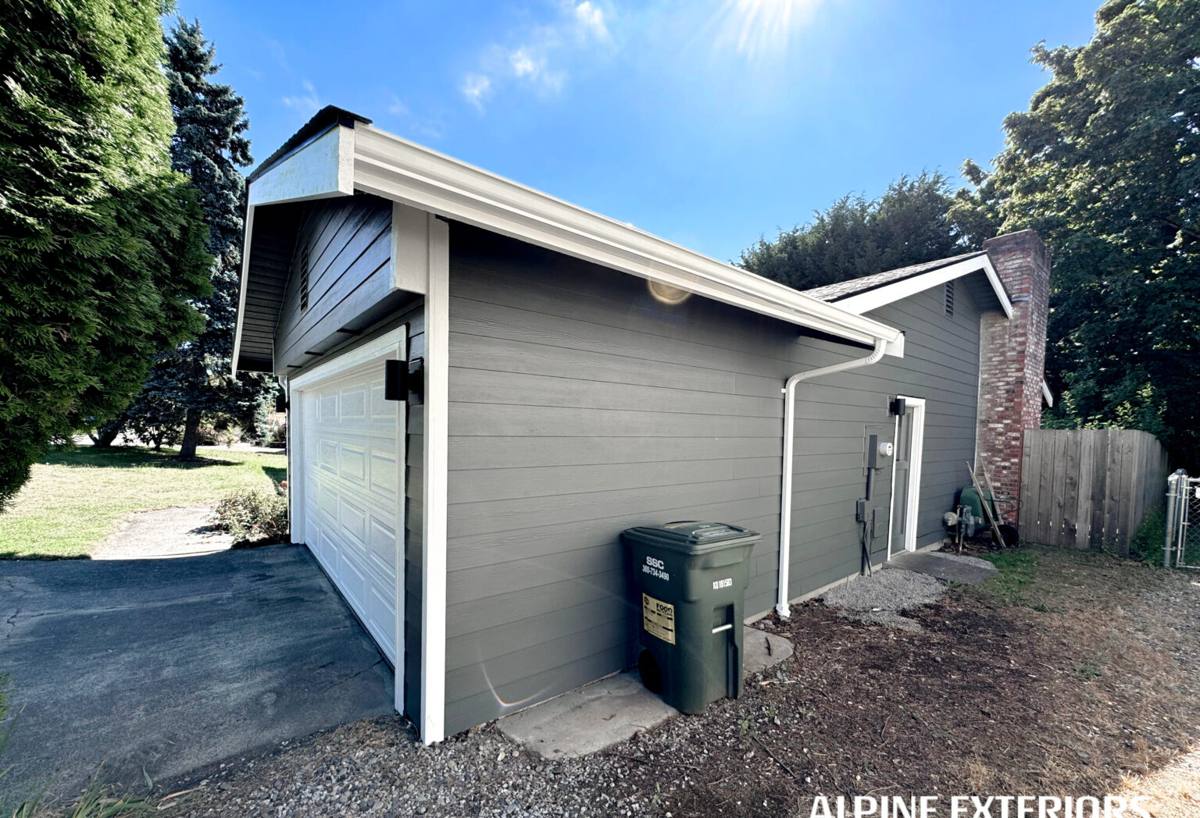
What Fiber Cement Siding Is, and Why It Fits This Region
Fiber cement siding is made from a blend of cement, sand, and cellulose fibers, pressed and cured into dense, dimensionally stable boards. Unlike wood, it doesn't swell and shrink dramatically with humidity swings. Unlike vinyl, it doesn't soften, warp, or become brittle with temperature extremes. And because it's non-combustible, it adds a real layer of fire resistance that wood-based and foam-backed products simply can't offer.
Why We Install James Hardie Specifically
Not all fiber cement is engineered the same way, and we've standardized on James Hardie products because they're built with region-specific formulations. Hardie's HZ5 product line is engineered for climates like ours, with freeze-thaw cycles, prolonged damp periods, and heavy seasonal rainfall. The factory-applied ColorPlus finish is baked on under controlled conditions, which gives a more consistent, fade-resistant, chip-resistant surface than field-applied paint ever can. That matters in a climate where a home's siding rarely gets a bone-dry week to properly cure a fresh coat of paint.
We don't install LP SmartSide, vinyl, Cemplank, Allura, or primed wood siding. That's a deliberate standard, not a matter of availability. We stand behind Hardie because we've seen how it performs on homes in this exact climate, and we'd rather install one product correctly and back it fully than offer a menu of options with different long-term outcomes.
What a Correct Fiber Cement Siding Job Actually Involves
Fiber cement siding is only as good as the assembly behind it. The board itself resists moisture well, but a siding system is a stack of materials working together — and in a climate that sees this much sustained rain, every layer matters.
Weather-Resistive Barrier and Drainage Plane
Before a single board goes up, the wall needs a properly lapped weather-resistive barrier, taped and sealed at every seam and penetration. Behind that, a drainage gap lets any moisture that does get past the siding find its way back out instead of sitting against the sheathing. This is the layer most homeowners never see and most lowball bids skip.
Flashing at Every Transition
Windows, doors, decks, roof lines, and anywhere two planes of the house meet are where water finds its way in. Correct flashing at these transitions, installed in the right sequence with the drainage plane, is non-negotiable. This is also where a lot of older siding jobs in this area fail first — not because the siding itself wore out, but because a flashing detail was never done right.
Fastening, Clearances, and Caulk Discipline
James Hardie publishes specific fastening patterns, minimum clearances from grade, decks, and roof lines, and joint treatment requirements. Skipping these to save time is exactly how a well-made product ends up with premature moisture problems. We follow manufacturer installation specs to the letter, because that's also what keeps the warranty intact.
| Assembly Step | Why It Matters in Woodinville's Climate |
|---|---|
| Weather-resistive barrier, taped and lapped | Keeps wind-driven rain from reaching the sheathing during long storm systems |
| Drainage gap behind siding | Lets incidental moisture drain and dry instead of sitting trapped against the wall |
| Flashing at windows, doors, and roof lines | Prevents the leaks that cause the most hidden rot damage over time |
| Proper fastener pattern and spacing | Keeps boards secure through wind events without cracking the material |
| Correct clearance from grade and decks | Reduces splashback and standing moisture exposure at the base of the wall |
| Factory-cured ColorPlus finish | Holds color and resists moss and mildew staining better than field paint |
Our Process for a Woodinville Siding Project
Every job follows the same disciplined sequence, whether it's a full re-side or a targeted section replacement.
- On-site assessment of the existing siding, sheathing condition, and any trouble spots (window flashing, deck ledgers, roof transitions)
- Removal of old siding and inspection of the sheathing underneath for hidden moisture or rot damage
- Repair or replacement of any compromised sheathing before anything new goes up
- Installation of a new weather-resistive barrier, taped and integrated with flashing at every penetration
- Installation of James Hardie fiber cement siding to manufacturer specifications, including fastening, clearances, and joint treatment
- Final walkthrough covering caulking, trim details, and cleanup
We don't cover over rot or skip the sheathing inspection to move faster. In this climate, hidden water damage is the single most common thing we find once old siding comes off, and addressing it before the new siding goes on is what actually protects the investment.
What Drives the Cost of a Fiber Cement Siding Project
Every home is different, but the same handful of factors shape the scope and price of a job. We give straightforward, honest estimates based on what your home actually needs — not a one-size-fits-all number.
| Factor | How It Affects the Job |
|---|---|
| Home size and wall complexity | More linear footage, corners, and trim details mean more labor and material |
| Condition of existing sheathing | Rot or water damage found underneath old siding adds repair scope |
| Siding profile and accessories | Lap width, trim style, and soffit or fascia work change material costs |
| Site access | Steep lots, mature landscaping, or tight setbacks can affect labor time |
| Existing moisture or moss damage | Wall sections with long-term moisture exposure may need extra prep |
Full re-sides are a significant investment, but they're also a once-a-generation project when done correctly with a durable, climate-appropriate material and proper installation.
Signs Your Current Siding Is Due for Replacement
Homeowners in this area often live with early warning signs longer than they should, mostly because the damage isn't visible from the street. A few things worth checking:
- Soft or spongy spots when you press on the siding, especially near the bottom courses
- Paint that keeps peeling or bubbling no matter how often it's redone
- Persistent moss or dark streaking that comes back within a season of cleaning
- Visible gaps, warping, or cupping in the boards, especially on shaded or north-facing walls
- Rising energy bills that can't be explained by anything else, which can point to a compromised wall assembly
- Visible daylight or drafts around window and door trim
Any one of these on its own might be minor. Several together usually mean the siding system, not just the surface, is failing.
Why a Crew That Already Works Woodinville Matters
Siding installation isn't just about the product — it's about knowing how a specific place behaves. A crew that regularly works in Woodinville and the surrounding King County communities has already seen how these lots drain, which wall orientations hold moisture longest under tree cover, and where moss tends to build up fastest after a wet winter. That local pattern recognition shows up in the details: where extra flashing attention goes, how clearances are handled near landscaping, and which trim details actually hold up through a full Puget Sound-area wet season.
It also means accountability. A company with an established local presence isn't hard to find if a warranty question comes up five or ten years down the road — and with a product like James Hardie that carries a strong transferable warranty, that ongoing relationship is part of the value, not just the installation day.
Caring for Fiber Cement Siding After It's Installed
One of the practical advantages of James Hardie siding is how little upkeep it needs compared to wood or repainted alternatives. A rinse with a garden hose once or twice a year is usually enough to keep moss and organic buildup from taking hold, especially on shaded walls. Because the ColorPlus finish is factory-cured, you're not on a repainting cycle the way you would be with field-finished wood siding — though caulked joints and trim should be checked periodically, since caulk is the one component that does wear out over time and needs occasional attention to keep the system watertight.
Correctly installed fiber cement siding is a low-maintenance, long-term solution for exactly the kind of climate Woodinville sits in — but "correctly installed" is doing a lot of the work in that sentence, which is why the installation details matter as much as the product choice itself.
If your siding is showing signs of wear, or you're planning ahead for a replacement, we're happy to take a look and walk you through what your home specifically needs. Reach out for a free, no-pressure estimate using the form below.