 King County
 Decking Built for Seattle's Wet, Shaded, Salt-Touched Air
Seattle decks live a harder life than the brochures for decking products usually admit. Between the driving rain off Puget Sound, the salt-carrying air along the shoreline, and tree canopy that keeps large sections of many yards in shade for most of the day, a deck here is under near-constant moisture pressure for eight or nine months of the year. Add a moss season that can start in October and not fully let up until May, and you have conditions that punish any decking material that isn't installed with drainage and ventilation as the top priority — not an afterthought.
Composite decking has become the default choice for a lot of King County homeowners precisely because it doesn't absorb water the way wood does, doesn't need annual staining, and resists the rot that shows up fast in shaded Seattle backyards. But composite isn't maintenance-free, and it isn't installation-proof either. The board itself is only part of the system. The substructure underneath, the flashing where it meets the house, and the spacing that lets air and water move through all matter just as much here as they do in drier climates — arguably more.
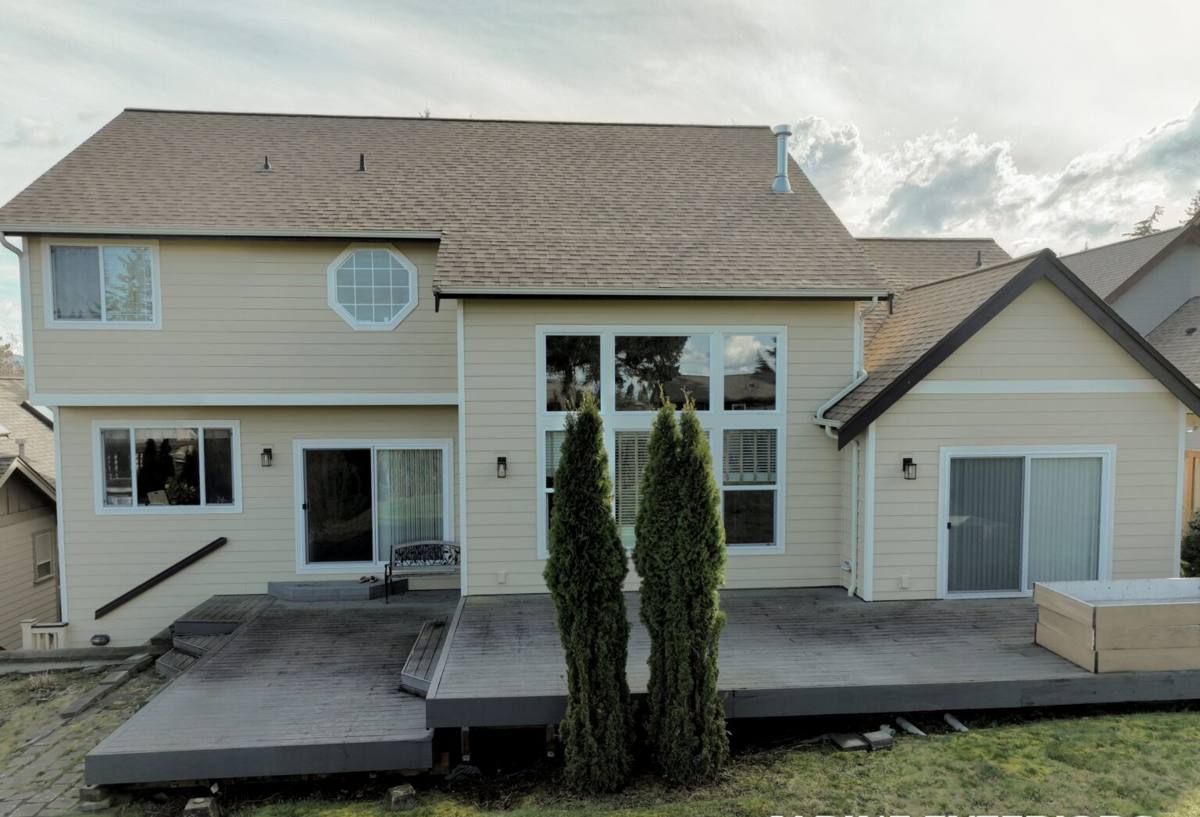
What Actually Damages a Deck in This Climate
Moisture That Never Fully Dries Out
In a lot of the country, a deck gets wet, then gets a real chance to dry between rain events. Seattle doesn't offer that. Low cloud cover, high humidity, and short winter days mean moisture can sit in a deck's substructure for days or weeks at a stretch. Untreated framing lumber, poorly flashed ledger boards, and decking installed tight against the house all trap that moisture instead of shedding it.
Moss, Algae, and Shade
Under mature Douglas fir, cedar, and maple canopy — common across King County lots — decks get less direct sun and stay damp longer than an open, south-facing deck would. That's ideal growing conditions for moss and algae, which show up first in the grooves and low spots of a deck surface and, if ignored, make the boards genuinely slick and dangerous underfoot.
Salt Air Near the Sound
Homes closer to Puget Sound and Lake Washington's windward edges deal with a fine salt content in the air that accelerates corrosion on exposed metal — fasteners, brackets, and railing hardware in particular. It doesn't touch a composite board's core, but it will eat through the wrong fastener over a decade if the hardware wasn't chosen for coastal exposure.
What a Correct Composite Deck Installation Involves
The composite board is the part homeowners see and price-shop, but most of what determines whether a deck lasts 25 years or needs rework in eight happens underneath it.
- Substructure material: Pressure-treated joists rated for ground contact where applicable, or a composite/steel joist system in persistently damp or shaded spots.
- Ledger flashing: A properly integrated ledger board flashing detail where the deck ties into the house — this is the single most common failure point we find on older Seattle decks, composite or wood.
- Joist tape or protection: A waterproof membrane over the top of each joist so fasteners don't create an entry point for standing water into the wood underneath.
- Board spacing and airflow: Correct gapping between boards and adequate under-deck ventilation so the structure can actually dry between rain events instead of staying saturated.
- Fastener selection: Stainless steel or coated fasteners rated for coastal/high-moisture exposure, especially on homes closer to the water.
- Footings sized for our soil: King County's mix of clay and glacial till soils needs footings sized and set to the depth local code requires, not a generic footprint.
Skip any one of these and the composite board on top can look fine for a few years while the structure underneath quietly fails.
Composite vs. Other Decking Materials in a Seattle Climate
There's no single "best" decking material for every home — it depends on budget, how much shade the deck sits in, and how much upkeep you want to do. Here's how the common options actually compare under our conditions.
| Material | Moisture Behavior Here | Moss/Algae Resistance | Maintenance | Typical Lifespan |
|---|---|---|---|---|
| Capped Composite | Doesn't absorb water into the core; surface sheds moisture well | Good — smooth cap resists growth, still needs periodic cleaning in shade | Occasional wash, no staining or sealing | 25–30+ years |
| Uncapped Composite | Can absorb some surface moisture over time | Fair — more prone to surface staining in shaded, damp spots | Periodic cleaning; more sensitive to prolonged wet exposure | 15–25 years |
| Pressure-Treated Wood | Absorbs and releases water readily; prone to swelling/checking | Poor without regular treatment | Annual or biannual staining/sealing | 10–15 years |
| PVC Decking | Fully water-resistant, no wood content | Good, similar to capped composite | Occasional wash | 25–30+ years |
We install capped composite on the large majority of Seattle decking projects because it matches this climate best — the cap layer is what actually resists moss growth and moisture intrusion, not just the recycled wood-plastic core underneath it. We're honest with clients that uncapped composite and basic pressure-treated lumber cost less up front, and for some budgets that's the right call. The trade-off is more maintenance and a shorter service life in a climate that doesn't give a deck much of a break.
Choosing the Right Board for Your Property
Shaded Lots
If your deck sits under tree cover — common in neighborhoods with mature landscaping across King County — a capped composite board with a textured, variegated finish hides the early stages of surface staining better than a flat, solid color, and cleans up easier when moss does start to form.
Open, Sun-Exposed Decks
Decks with more direct sun exposure deal less with moss but more with heat buildup on darker boards. Lighter and mid-tone composite colors stay more comfortable underfoot and show less fading over time than very dark tones.
Near-Water Properties
For homes closer to the Sound or Lake Washington, we lean toward composite systems paired with stainless or marine-grade hardware throughout — railing posts, fascia screws, and structural connectors included — since that's where salt air does its damage first.
Permits and Code Considerations in King County
Most raised decks require a permit, and the specifics depend on your jurisdiction — Seattle proper, unincorporated King County, and surrounding cities each administer their own permitting process with their own inspection points. Guardrail height, baluster spacing, footing depth, and ledger attachment to the house are the items inspectors check most closely, and they're also the details that matter most for a deck's long-term safety. We pull the required permits and schedule inspections as part of the project rather than treating that as optional paperwork — it's part of what you're paying for when you hire a licensed crew instead of doing it under the radar.
How We Approach a Seattle Decking Project
- On-site assessment: We look at drainage, shade exposure, existing structure condition (if this is a replacement), and how the deck ties into the house.
- Material walkthrough: We go over composite tiers, colors, and railing options against your budget and the specific conditions of your lot — not a one-size answer.
- Written estimate: Clear scope, materials, and timeline before any work starts.
- Permitting: We handle the permit application and inspection scheduling with the relevant jurisdiction.
- Demo and structural work: Removal of the old deck if applicable, footing and framing work built to current code and sized for our soil conditions.
- Decking and railing install: Hidden-fastener composite installation with correct spacing, followed by railing and any trim or fascia work.
- Final walkthrough: We go over the finished deck with you, including basic care guidance specific to your site's sun and shade exposure.
Keeping a Composite Deck Ahead of Our Wet Season
Composite decking cuts the maintenance burden dramatically compared to wood, but "low-maintenance" isn't "no-maintenance" here. A little seasonal attention keeps a composite deck looking and performing the way it's supposed to for its full service life.
- Sweep debris — fir needles, maple seed pods, leaves — out of board grooves regularly, especially in shaded areas where they trap moisture.
- Rinse the deck surface periodically through fall and winter to keep moss and algae from getting established.
- Use a soft-bristle brush and a composite-safe cleaner for buildup that a hose rinse doesn't clear — avoid pressure washers on composite unless set to a low, wide-fan setting.
- Check under-deck ventilation isn't blocked by stored items, plantings, or debris that trap moisture against the structure.
- Inspect railing hardware annually for corrosion, particularly on properties closer to the water.
- Confirm gutters and downspouts near the deck are directing roof runoff away from the structure, not onto it.
Why Hiring a Crew That Already Works Seattle Decks Matters
A lot of decking problems we get called to fix didn't start with bad material — they started with a crew that installed a Southwest or Midwest detail set in a Pacific Northwest climate. Under-ventilated substructures, ledger flashing that wasn't built for months of driving rain, and fasteners that weren't rated for our air all show up as the same result a few years later: soft framing, staining, or hardware failure that has nothing to do with the composite board itself. A crew that works King County full-time builds decks assuming rain and shade are the normal case, not the exception, because around here, they are.
If you're weighing a new composite deck or replacing an aging wood one, we're happy to walk your property, look at your specific sun and drainage conditions, and put together a straightforward, no-pressure estimate — just fill out the form below to get started.