 King County
 Why Siding Choice Matters More in Fremont
Fremont sits close enough to the water that homes here deal with a different mix of weather stress than siding a few miles inland has to survive. Salt-laden air off the water accelerates corrosion on fasteners and metal trim, wind-driven rain gets pushed sideways into wall assemblies during winter storms, and the long stretch of gray, wet months from fall through spring gives moss and algae months at a time to establish themselves on any surface that stays damp. None of this is exotic — it's ordinary King County weather — but it adds up over the life of a siding product faster than homeowners moving from drier climates expect.
The practical effect is that siding materials which perform fine in a lab or in a drier region can fail early here, usually not by cracking outright but by slowly absorbing moisture, softening, delaminating at seams, or growing a permanent green-black film that no amount of pressure washing fully removes. We install James Hardie fiber cement exclusively because it's engineered to resist exactly this kind of slow water damage, and because a correctly installed Hardie system gives Fremont homeowners a siding product they won't have to think about for decades.
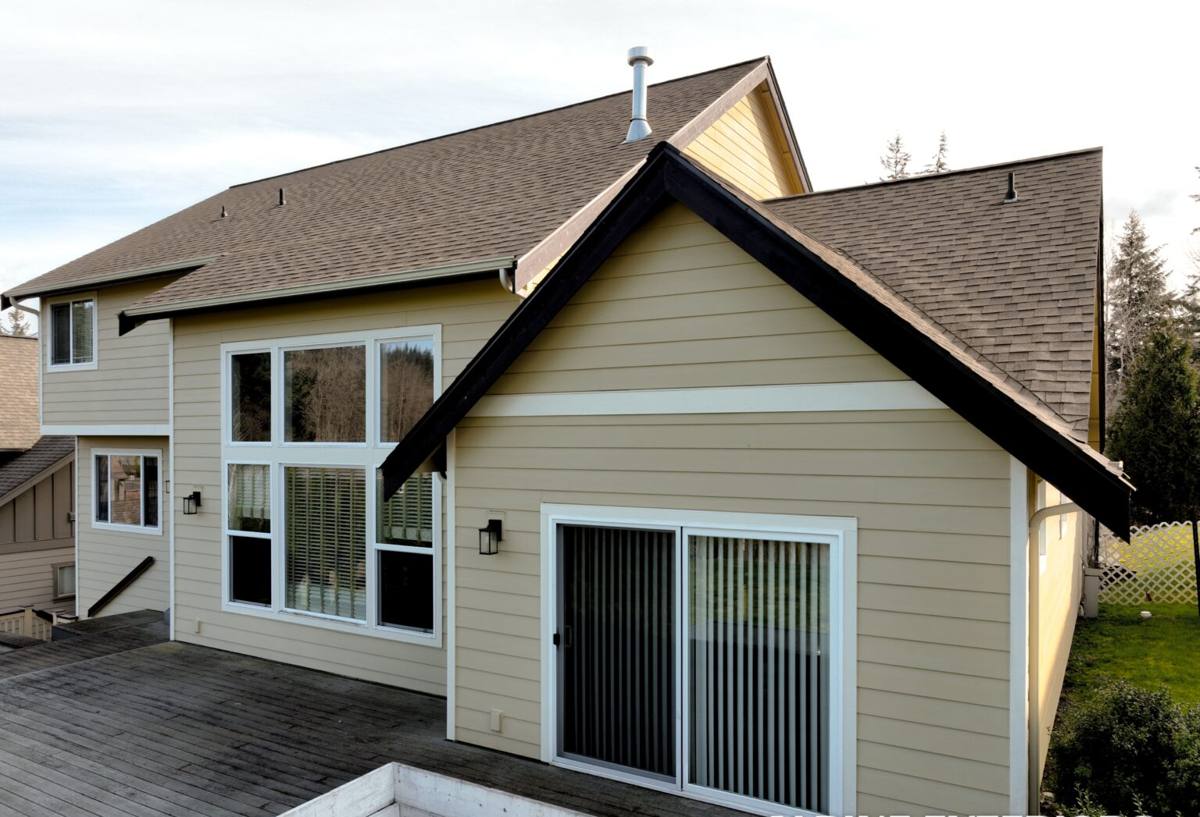
What Local Homes Are Up Against
Salt Air and Metal Fatigue
Salt in the air doesn't just affect homes directly on the waterfront — it travels on wind and settles on exterior surfaces well inland from any shoreline. Over years, it accelerates rust on exposed fasteners, uncoated flashing, and cheaper trim hardware. Siding systems that rely heavily on exposed metal components or thin coatings tend to show this wear first around nail heads, corner trim, and butt joints.
Driving Rain
Rain that falls straight down is far less damaging than rain pushed horizontally by wind, which is common during winter storm systems moving through the Puget Sound area. Wind-driven rain finds every gap in a siding installation — unsealed laps, poorly flashed windows, siding installed too close to grade — and pushes water behind the cladding rather than letting it run off the surface.
Moss and Algae Season
Between the shade from mature trees common in established Fremont neighborhoods and months of overcast, damp weather, north-facing and shaded wall sections rarely get a chance to fully dry out. That's the exact condition moss and algae need to take hold, and once established on a porous or degraded siding surface, they're difficult to fully remove without damaging the material underneath.
How James Hardie Addresses These Specific Problems
James Hardie fiber cement is manufactured from cement, sand, and cellulose fiber, which makes it dimensionally stable and resistant to moisture absorption in a way that wood-based and foam-core products aren't. For Western Washington and the rest of King County, Hardie engineers its HZ5 product line specifically for wetter, more humid climate zones — the formulation and factory finish are built around resisting moisture-related damage rather than just looking good on install day.
The ColorPlus factory finish matters just as much as the substrate. It's a baked-on, resin-based finish applied under controlled factory conditions, which gives it more consistent coverage and better adhesion than field-applied paint. That matters directly for moss and algae resistance — a tighter, more consistent finish gives organic growth less texture to grip onto, and it holds up to pressure washing and routine cleaning far better than a field-painted surface that's already been weakened by UV and moisture exposure.
James Hardie Product Lines We Install
| Product | Best Use | Why It Fits This Climate |
|---|---|---|
| HardiePlank Lap Siding (HZ5) | Most common wall application | Engineered moisture resistance for wetter climate zones; classic lap profile suits Fremont's mix of craftsman and traditional homes |
| HardieShingle | Accent gables, dormers | Staggered or straight-edge shingle look without the maintenance burden of real cedar shingles in a damp climate |
| HardiePanel | Modern facades, accent walls | Clean vertical lines popular on newer infill construction; smooth or stucco-look textures |
| HardieTrim | Corners, fascia, window/door trim | Resists the rot and swelling that wood trim develops in constant damp conditions |
What a Correct Installation Actually Involves
Fiber cement siding is only as good as the installation behind it. Most of the siding failures we get called out to inspect in this region trace back to installation shortcuts, not the material itself. A correct James Hardie installation for a Fremont home includes:
- A weather-resistive barrier installed and lapped correctly behind the siding, with all penetrations properly sealed
- Rainscreen or furring strategy considered where wall assembly and exposure call for it, giving any moisture that does get behind the cladding a path to drain and dry
- Proper flashing at every window, door, and roofline intersection — this is where the majority of water intrusion actually starts
- Correct nailing pattern and fastener spacing per Hardie's published installation specifications, not a generalized "good enough" approach
- Minimum clearance maintained between the bottom of the siding and grade, decks, and roof lines to prevent wicking
- Factory-cut and factory-primed edges used wherever possible, with any field cuts properly sealed before installation
- Caulking used correctly and sparingly — over-reliance on caulk to compensate for poor flashing is a common shortcut that fails within a few years
Hardie's warranty is written around installation meeting these specifications. A beautiful-looking install that skips flashing details or nailing specs can still void warranty coverage and set the homeowner up for the same moisture problems the product was chosen to avoid.
Our Process for Fremont Projects
1. On-Site Assessment
We start by walking the exterior with the homeowner, looking at current siding condition, trouble spots (usually shaded north walls, areas near grade, and anywhere with visible moss or staining), and any underlying issues like soft trim or water staining on interior walls that point to existing intrusion.
2. Product and Color Selection
We walk through which Hardie profile and ColorPlus color fit the home and the neighborhood context, and explain realistic maintenance expectations for each option.
3. Written, Itemized Estimate
The estimate spells out product lines, square footage, trim and flashing work, and any prep or repair work uncovered during assessment — no vague lump-sum pricing.
4. Prep and Removal
Old siding comes off, and we inspect the sheathing underneath for rot or water damage before anything new goes up. Damaged sheathing gets replaced, not covered over.
5. Installation to Spec
Weather barrier, flashing, and siding installation follow Hardie's published specifications and King County building code, with attention to the drainage and clearance details that matter most in this climate.
6. Final Walkthrough
We walk the finished job with the homeowner, point out warranty registration steps, and cover basic care going forward.
Signs Your Current Siding Is Already Losing the Fight
Fremont homeowners considering a siding project are often prompted by one or more of these warning signs:
- Persistent moss, algae, or black streaking that returns quickly after cleaning
- Visible warping, bubbling, or soft spots, especially near the bottom courses or around windows
- Peeling or chalking paint that needs repainting more often than every 7-8 years
- Gaps opening up at seams, corners, or trim joints
- Musty smells or interior wall staining that suggest moisture is getting behind the cladding
- Visible fastener rust or staining bleeding down the face of the siding
Any one of these on its own might just mean a repair. Several together, especially combined with the home's age and known siding material, usually mean the wall assembly has been taking on water for a while and full replacement is the more honest recommendation.
Why It Matters That We Already Work in This Area
Installation details that matter in a drier climate get less forgiving here. A crew that mostly works siding jobs in low-humidity regions and treats King County like "basically the same, just wetter" tends to under-detail flashing and drainage, because they haven't had to watch what happens to a marginal install after five Puget Sound winters. Working Fremont and the surrounding King County area regularly means we're familiar with the housing stock — the mix of older craftsman and bungalow homes alongside newer infill construction — and with how local microclimates, tree cover, and lot orientation affect where moisture problems tend to show up first on a given property.
It also means we're set up to pull the right permits, coordinate inspections, and work efficiently within a King County jurisdiction we already know, rather than learning local requirements on the homeowner's timeline.
Cost Factors for a Fremont Siding Project
| Factor | How It Affects Scope |
|---|---|
| Home size and wall complexity | More corners, gables, and dormers mean more trim and cut work, which adds labor time |
| Current siding removal | Tear-off and disposal of existing material adds cost versus new construction |
| Sheathing/structural repair | Rot discovered during removal is priced separately since it can't be fully known until old siding is off |
| Product line and profile | Lap, shingle, and panel products carry different material and labor costs |
| Trim and detail work | Window/door trim, corner boards, and fascia work add to both material and labor |
| Access and site conditions | Tight lots, retaining walls, or limited equipment access can affect labor time |
We don't publish a flat per-square-foot number because the variables above genuinely change the scope from one home to the next — an honest estimate has to be based on your specific house, not a average.
Maintenance Once It's Installed
James Hardie siding is low-maintenance, not maintenance-free, especially in this climate. A yearly rinse-down with a garden hose (not a high-pressure washer aimed directly at seams) keeps salt residue and early moss growth from building up. Keep gutters clear so overflow doesn't run down the wall face, and trim back vegetation that keeps a wall section shaded and damp. Beyond that, ColorPlus finish is designed to go many years without repainting, which is one of the clearer cost advantages over field-painted materials once you account for the repainting cycle those products need in a wet climate.
Get a Straight Answer on Your Home
If you're dealing with moss that keeps coming back, siding that's showing its age, or you're just planning ahead for a home in Fremont, we're happy to take a look and give you a straightforward, no-pressure assessment of what your siding actually needs. Use the form below to request a free estimate.