 King County
 Fremont's Climate Is Hard on Asphalt Shingle Roofs
Fremont sits in one of the wetter, greener pockets of King County, and that combination is tough on a roof. Salt-tinged air off the water, long stretches of driving rain, and a moss season that can run most of the year all work against asphalt shingles in ways that a drier climate never would. None of that means asphalt shingles are the wrong choice here — they're still the most practical, cost-effective roofing material for the vast majority of homes in this neighborhood. It means the installation has to account for local conditions instead of following a generic, one-size-fits-all approach.
A shingle roof that's installed correctly for King County's climate will shed water fast, resist moss colonization, and hold its seal through repeated freeze-thaw cycles and windstorms. A roof installed without those details in mind will show granule loss, moss streaking, and soft spots years before it should. The difference almost always comes down to what happens underneath the shingles, not just the shingles themselves.
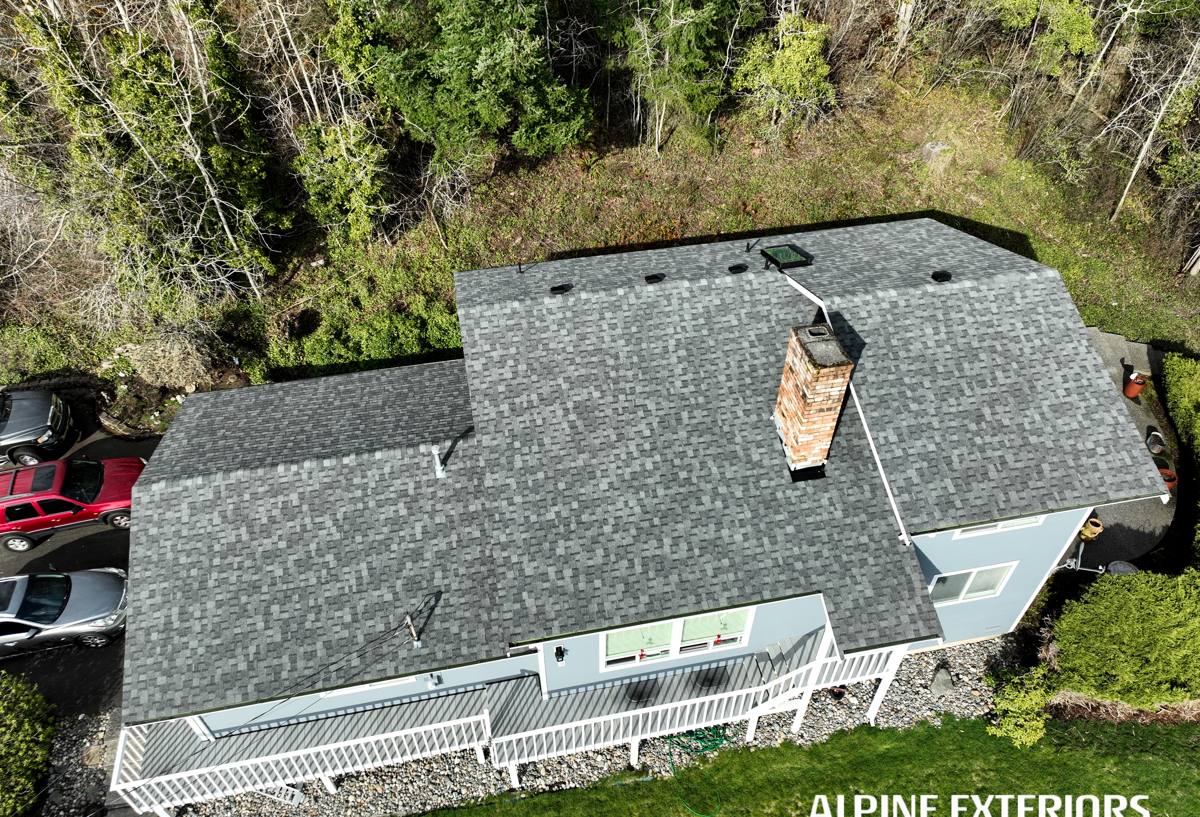
What a Correct Asphalt Shingle Installation Involves
Shingles are the visible layer, but they're only one part of a roofing system. In a climate with this much sustained moisture, every layer underneath has to do its job.
Underlayment and Water-Shedding Details
Synthetic underlayment holds up better against prolonged dampness than older felt products, and it should be lapped correctly so water is always shedding downhill, never trapped against the deck. Ice-and-water shield belongs at eaves, valleys, and any low-slope transition — the places where water lingers longest and where moss and standing moisture do the most damage over time.
Ventilation That Actually Works
A roof deck that can't breathe stays damp longer after every rain, which is exactly what moss and algae need to establish themselves. Balanced intake and exhaust ventilation keeps the underside of the deck drier and helps the shingles themselves shed heat and moisture more evenly, which extends their working life.
Flashing and Transition Points
Most leaks don't happen through the shingle field — they happen at chimneys, skylights, sidewalls, and valleys where flashing has failed or was never installed correctly. In a climate with this much driving rain, wind-blown water finds every shortcut, so these transitions need to be flashed and sealed with the assumption that water will be tested against them constantly, not occasionally.
Warning Signs Your Fremont Roof Needs Attention
Most roofs don't fail all at once. They give warning signs first, and catching them early is almost always cheaper than waiting.
- Granules collecting in gutters or at the base of downspouts
- Dark streaking or green-black patches, especially on north-facing slopes that stay shaded and damp
- Shingle edges curling, cupping, or lifting
- Cracked, torn, or missing shingles after a windstorm
- Visible daylight or damp insulation in the attic
- Soft or spongy spots when walking the roof deck
- Ceiling stains or peeling paint on an interior wall below the roofline
Any one of these on its own isn't necessarily an emergency, but several together usually mean the roof is past routine maintenance and into repair-or-replace territory.
Choosing the Right Shingle for This Climate
Not every asphalt shingle product is built the same way, and in a climate this wet, those differences matter more than they would somewhere drier.
| Shingle Type | Typical Lifespan | Best Suited For | Climate Trade-Offs |
|---|---|---|---|
| Standard 3-tab | 15–20 years | Budget-conscious re-roofs, simple roof lines | Lower wind rating, less resistant to moss and algae without added treatment |
| Architectural / laminate | 25–30 years | Most Fremont homes; steep and standard pitches | Heavier, better wind and impact performance, holds up better to sustained moisture |
| Algae-resistant (copper- or zinc-infused granules) | 25–30+ years | Shaded lots, north-facing slopes, tree-heavy properties | Slows moss and algae growth but doesn't eliminate the need for airflow and periodic cleaning |
| Impact-rated (Class 4) | 30+ years | Homes wanting maximum durability and possible insurance credit | Higher upfront cost; check with your insurer on whether it affects premiums |
For most homes in this neighborhood, a mid-weight architectural shingle with algae-resistant granules is the practical sweet spot — it costs more than 3-tab up front but spends far less of its life fighting moss and losing granules to constant rain.
Moss, Algae, and Long-Term Roof Care
Why Moss Takes Hold Here
Moss needs moisture, shade, and something to grip onto, and a lot of King County roofs offer all three for months at a time. Tree cover, north-facing slopes, and long wet seasons mean moss spores that would dry out and die elsewhere have plenty of time to establish a root system in the shingle mat itself. Once moss is rooted rather than just sitting on the surface, it starts lifting granules and shortening the shingle's life.
What Actually Slows It Down
Good ventilation and sun exposure do more than any single product. Beyond that, keeping gutters and valleys clear of debris, trimming back overhanging branches where possible, and having moss physically removed — not just power-washed, which can strip granules — before it gets established are the habits that actually extend a roof's life here. Zinc or copper strips near the ridge can help slow regrowth on shaded slopes, but they're a supplement to good maintenance, not a replacement for it.
Our Process, Start to Finish
We keep the process straightforward because a roof replacement is disruptive enough without added confusion.
- On-site inspection. We walk the roof and the attic, not just look from the ground, and check for rot, ventilation problems, and flashing condition before quoting anything.
- Written estimate. You get a clear scope of work — tear-off, deck repair allowances, underlayment, flashing, shingle product — so there's no ambiguity about what's included.
- Scheduling around the weather. Given how much rain King County gets, we plan tear-off days with the forecast in mind and keep the deck protected if conditions shift.
- Tear-off and deck inspection. Old material comes off down to the deck so any rot or soft sheathing is caught and repaired, not covered up.
- Installation. Underlayment, ice-and-water shield at vulnerable points, flashing, ventilation, and shingles go in following manufacturer specs and the climate details above.
- Cleanup and walk-through. Magnetic sweep for nails, debris hauled off, and a final walk-through so you know exactly what was done.
Why a Crew That Already Works Fremont Matters
Roofing in a dense, established Seattle neighborhood comes with its own set of practical challenges — narrow lots, mature trees close to the house, steep driveways, and homes built across a range of decades with roof framing to match. A crew that regularly works in Fremont and the surrounding King County area has already worked through those logistics: how to stage a tear-off safely on a tight lot, what permitting and inspection expectations look like locally, and how older roof decks in this area typically need to be handled.
That local familiarity also shows up in smaller ways — knowing which slopes in this area tend to hold moss the longest, which flashing details fail first in this climate, and how to sequence a job around the region's rain patterns instead of guessing. It's the difference between a roof that's technically installed to code and one that's actually built for where it sits.
What Affects the Cost of a Roof Replacement
Every roof is priced individually, but a few factors consistently move the number more than others:
- Roof size and the number of facets, valleys, and penetrations
- Pitch — steeper roofs take longer and require more safety setup
- Number of existing layers to tear off
- Deck condition and whether rotted sheathing needs to be replaced
- Shingle product selected — standard 3-tab versus architectural or algae-resistant options
- Access — tree cover, tight lot lines, and steep driveways all affect staging and labor time
Because of that range of variables, a fair quote has to come from an actual on-site look rather than a phone estimate. Most straightforward, single-layer tear-offs on a typical home land in a broad mid-range, with complex rooflines, extensive deck repair, or premium products pushing costs higher — your written estimate will break out exactly where your project falls and why.
If your roof is showing moss, granule loss, or you're just not sure how much life it has left, we're happy to take a look. Fill out the form below for a free, no-pressure estimate — we'll walk the roof, tell you honestly what we find, and give you a clear, written quote with no obligation.