 King County
 Why Fremont Decks Wear Out Faster Than Homeowners Expect
Fremont sits close to the water, with the Ship Canal and Lake Union shaping the neighborhood's weather in ways that don't show up on a general Seattle forecast. Moisture off the water combines with King County's long rainy season to keep wood and hardware wet for months at a time. Add the mild, salt-tinged air that drifts in off the canal and you get a combination that speeds up corrosion on fasteners and connectors, softens untreated wood, and feeds the moss and algae growth that make older decks slick and dark by midwinter.
None of that is unusual for this part of King County — it's just what decks here are up against every year. A deck built without that in mind, or one that's simply reached the end of its service life, tends to show damage in specific, predictable places: ledger connections, joist ends, footings, and any spot where two boards meet and trap water. Understanding where and why a deck fails is the first step in deciding whether it needs repair or full replacement.
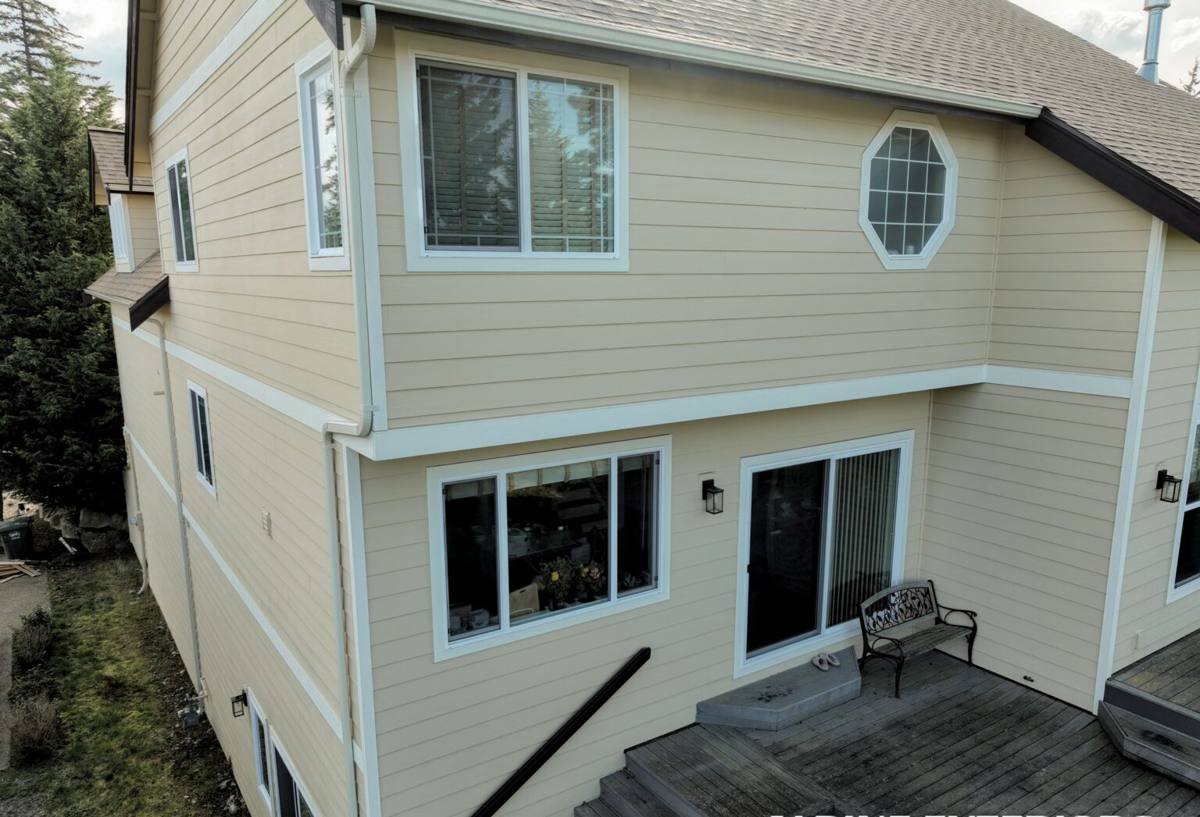
Repair or Replace? Reading the Real Signs
Homeowners often ask for a repair when the deck actually needs to come out. Surface problems — a few cracked boards, loose railings, faded finish — are usually fixable. Structural problems are a different story, and in a climate that keeps wood damp for long stretches, structural problems tend to hide beneath boards that still look fine from a distance.
Signs that usually mean replacement, not repair
- Soft, spongy, or spring-loaded decking when you walk across it
- A screwdriver or awl sinks easily into the ledger board, rim joist, or posts
- Visible gaps, rust streaks, or movement at the ledger-to-house connection
- Persistent moss or black staining that returns within weeks of cleaning
- Wobble or give at the railing posts, especially after leaning on them
- Footings that have shifted, heaved, or sit in standing water after rain
- A deck more than 20–25 years old that has never been rebuilt or had its structure inspected
If even one or two of these show up, it's worth having someone look at the framing underneath, not just the surface boards. A deck that looks presentable can still be structurally compromised where it counts.
What a Correct Deck Replacement Actually Involves
"Deck replacement" gets used loosely — some companies mean swapping the decking boards and calling it done. A real replacement addresses the structure the decking sits on, because that's almost always where Fremont's climate does the most damage.
Ledger board and house connection
The ledger is the board that attaches the deck to the house, and it's the single most important connection on the entire structure — it's also the one most likely to be hiding rot, since it sits directly against the siding where water can wick in. A correct replacement includes proper flashing at this connection, structural screws or bolts (not just nails), and a gap or drainage plane so water sheds away from the house rather than collecting against it.
Framing: joists, beams, and posts
Joists and beams need to be sized correctly for the deck's span and load, and every cut end should be sealed before it's covered by decking. Posts should bear on solid, code-compliant footings — not on a paver, a scrap of concrete, or bare soil, all of which we still find under older decks in this area.
Footings
Footings need to go below frost depth and rest on undisturbed or properly compacted soil. On sites with drainage issues — common near low-lying parts of the neighborhood — that sometimes means larger or deeper footings than the original deck had, especially if the old ones were undersized to begin with.
Fasteners and hardware
Every joist hanger, screw, and structural connector should be rated for outdoor and treated-lumber use. Standard hardware corrodes faster in this climate's humidity and salt air; using the wrong grade of fastener is one of the most common shortcuts we see on decks that failed early.
Guardrails and stairs
Railings and stair systems need to meet current code for height, baluster spacing, and load resistance — not just look sturdy. This matters most on older decks, which were often built to standards from decades ago.
Choosing Decking Material for a Wet, Mossy Climate
The decking surface takes the most visible abuse from rain, shade, and moss, so material choice matters more here than in drier parts of the country. There's no single "best" material — it depends on budget, how much maintenance you're willing to do, and how much sun the deck gets.
| Material | Moisture Resistance | Maintenance | Typical Lifespan Here |
|---|---|---|---|
| Pressure-treated pine | Moderate — treated core resists rot, but surface still absorbs water | Annual cleaning, periodic sealing | 10–15 years |
| Cedar | Good natural resistance, but softens faster in shaded, damp spots | Regular cleaning and refinishing to hold color and protection | 12–18 years |
| Composite (capped) | Very good — capped shell resists moisture and moss staining | Occasional washing, no sealing or staining needed | 25–30+ years |
| PVC decking | Excellent — fully synthetic, doesn't absorb water | Low; periodic washing | 25–30+ years |
In heavily shaded yards or spots near the water where boards stay damp longest, we generally steer clients away from unsealed wood species that need frequent upkeep to stay ahead of moss and soft spots. That's a maintenance and moisture-behavior tradeoff, not a knock on wood as a material — cedar and treated pine both perform well when they get sun and regular care. Composite and PVC simply ask less of the homeowner in a climate that doesn't give wood much of a chance to dry out between rains.
Board spacing and airflow
Whatever material you choose, spacing and ventilation underneath the deck matter as much as the boards themselves. Tight spacing traps moisture and debris, which accelerates moss growth and, on wood decks, rot. Proper gapping and a clear air path beneath the frame let the structure actually dry between storms instead of staying damp all winter.
Permits, Code, and Guardrails in King County
Most deck replacements in King County require a building permit, especially when the work involves new footings, structural framing, or a deck attached to the house. Permit requirements and inspection steps vary depending on the deck's size, height, and jurisdiction, so it's worth confirming specifics for your address rather than assuming based on a neighbor's project. A contractor who pulls the correct permit and schedules inspections is protecting your investment — it means the finished deck is documented as code-compliant, which matters for insurance and resale down the road.
Skipping permits to save time or money is a common shortcut on deck projects, and it's one we don't take. An unpermitted deck can complicate a home sale, and more importantly, skipping inspection steps removes the outside check that catches framing or footing mistakes before they're buried under decking.
How Our Deck Replacement Process Works
- On-site assessment. We inspect the existing deck's framing, ledger, footings, and posts to confirm whether replacement is actually needed and identify any moisture or drainage issues specific to your yard.
- Design and material selection. We walk through decking material options, railing style, and layout based on your budget, sun exposure, and how you use the space.
- Permitting. We handle the permit application and coordinate required inspections with King County or the local jurisdiction.
- Demolition and disposal. The old deck comes out, including hardware and footings that don't meet current standards, with the site cleared and protected.
- Framing and structure. New ledger flashing, joists, beams, footings, and hardware go in first, built to current code and sized for the deck's actual loads.
- Decking, railings, and stairs. Surface material and railing systems are installed with attention to drainage, spacing, and code-required guardrail details.
- Final walkthrough and inspection. We review the finished deck with you and confirm it passes any required final inspection.
Designing for Drainage and Moss Prevention
A big part of getting a deck to last in this climate happens before the first board is installed. Grading and drainage under and around the deck determine whether water sheets away or pools against the framing. Where the ground under a deck holds water, we look at options like gravel beds, drainage channels, or adjusted footing placement to keep the structure out of standing moisture.
Moss prevention is partly about material choice and partly about design. Full sun exposure isn't something we can change, but board spacing, airflow underneath the deck, and keeping the structure clear of overhanging vegetation all reduce how much moss and algae take hold. A deck that dries out between rains stays safer underfoot and needs far less scrubbing than one that stays shaded and damp all season.
Maintaining Your New Deck Through King County's Wet Months
Even a well-built deck needs some seasonal attention to get its full lifespan out of it, especially heading into the wetter fall and winter months.
- Sweep leaves and debris off the surface regularly — trapped debris holds moisture against boards and feeds moss
- Rinse or wash the deck a few times a year to keep moss and algae from establishing, more often in shaded areas
- Check that gaps between boards stay clear so water can drain through rather than pool
- Inspect railings and stair connections annually for movement or loosening
- For wood decks, plan on resealing or restaining on the manufacturer's recommended schedule, not just when it looks faded
- Keep gutters and downspouts near the deck clear so roof runoff isn't dumping extra water onto the structure
- Trim back plants and shrubs that shade the deck or block airflow underneath it
Why It Matters to Hire a Crew That Already Works in Fremont
Deck framing standards don't change block by block, but the practical issues we run into do vary by neighborhood — how close a lot sits to the water, how much shade a yard gets, and how the local jurisdiction handles permitting all shape the right approach. A crew that already works in Fremont and the surrounding King County area has already dealt with the drainage quirks, moss patterns, and permitting steps that come up here repeatedly, rather than learning them for the first time on your project.
That familiarity shows up in decisions that aren't always visible in a quote: where to add extra flashing, how to size footings for wetter soil, or which decking material actually holds up in a shaded, water-adjacent yard versus one that just looks good in a showroom. It's the difference between a deck that's built to a code minimum and one that's built to hold up against what this climate does to it, year after year.
If your deck is showing its age or you're not sure whether it needs repair or full replacement, we're happy to take a look. Reach out for a free, no-pressure estimate using the form below — we'll walk the structure with you and give you a straight answer about what it actually needs.