 King County
 Siding Installation in Kent: What the Climate Actually Demands
Kent sits in a stretch of King County that gets the full Pacific Northwest treatment: long stretches of driving rain from fall through spring, humidity that never fully clears out, and a moss season that can run most of the year on north-facing walls and shaded siding runs. Add in the salt-tinged air that drifts up the Puget Sound corridor and settles into low-lying areas, and you've got a climate that is genuinely hard on exterior materials. Siding here isn't just a cosmetic choice — it's the thing standing between your framing and months of sustained moisture exposure.
We install James Hardie fiber cement siding exclusively, and Kent is a good example of why. Homes in this area need a product that won't swell, cup, or rot when it takes on water repeatedly over a wet season, and won't feed the moss and mildew growth that this climate practically guarantees on anything organic or moisture-permeable.
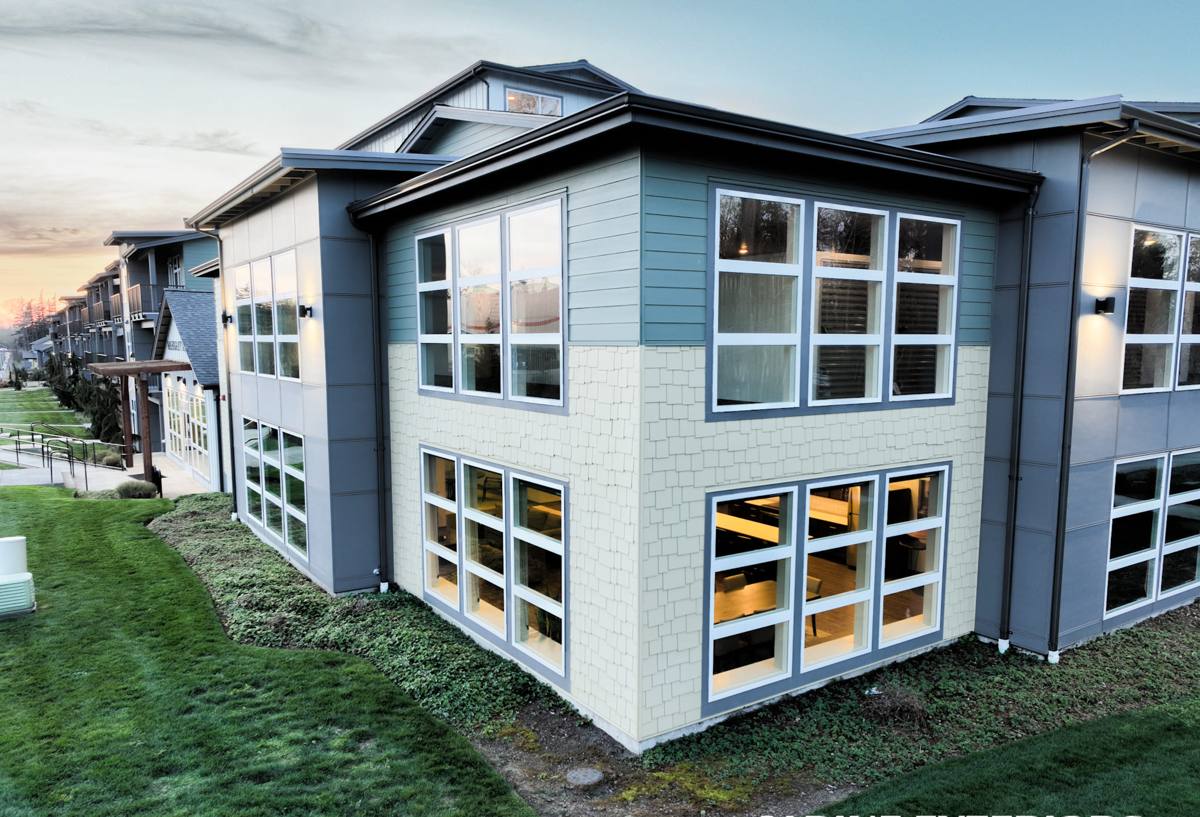
Why Kent Homes Are Hard on Siding
Rain Volume and Duration
It's not just how much rain King County gets — it's how long it sits. Siding here can stay damp for days at a stretch during the wet months, which means any product with wood content or poor moisture management is working against the odds every single winter. Fiber cement doesn't absorb and swell the way wood-based products do, which matters when a wall assembly might not fully dry out until late spring.
Moss and Organic Growth
Shaded elevations, tree cover, and constant moisture make Kent a strong candidate for moss and algae growth on siding. This isn't just an appearance issue — moss holds moisture against the surface, and on products sensitive to sustained dampness, that accelerates whatever damage is already happening underneath.
Salt Air Exposure
Kent isn't waterfront, but the broader Puget Sound air carries salt further inland than people expect, especially with the region's prevailing wind patterns. Salt-laden moisture is corrosive to fasteners and hard on finishes that aren't built to handle it, which is part of why factory-applied, engineered finishes matter more here than in drier inland climates.
What "Correct" Siding Installation Actually Involves
A lot of siding problems we get called out to inspect aren't product failures — they're installation failures. Fiber cement siding is a precise product, and in a wet climate like Kent's, the installation details matter as much as the material itself.
- Weather-resistive barrier: A properly lapped, sealed WRB behind the siding, installed before any cladding goes up
- Rainscreen or drainage gap: A gap between the siding and the WRB so incidental moisture can drain and the wall can dry, rather than trapping water against the sheathing
- Flashing at every penetration: Windows, doors, hose bibs, light fixtures, and vents all need proper flashing so water is directed out, not behind the siding
- Correct fastener pattern and type: James Hardie specifies fastener spacing, embedment, and corrosion-resistant fastener types — skipping this shortens the life of the installation regardless of the product
- Proper clearances: Siding held above grade, roof lines, decks, and patios per manufacturer spec so it isn't sitting in standing water or constant splash-back
- Caulking and sealant only where specified: Over-caulking traps moisture; under-caulking lets it in — both are common mistakes
Skipping any one of these doesn't usually show up in year one. It shows up in year five or eight, as trapped moisture, rot in the sheathing, or premature paint and finish failure — expensive problems hiding behind a wall that still looks fine from the street.
Why We Install Only James Hardie
We made a decision as a company to install one siding system: James Hardie fiber cement. That means we don't install vinyl, LP SmartSide, cedar, primed spruce, Cemplank, or Allura. That's a real limitation on what we offer, and we think it's the right one for this climate.
| Factor | What Kent's Climate Demands | Why Hardie Fits |
|---|---|---|
| Moisture cycling | Extended wet seasons, slow drying | Fiber cement doesn't swell, cup, or absorb water the way wood-based products do |
| Fire exposure | Dry summer wildfire smoke drift is a growing regional concern | Non-combustible fiber cement construction |
| Finish durability | UV, salt air, and sustained damp all stress paint | ColorPlus factory finish is baked on and warrantied, not field-applied paint |
| Moss and organic growth | Shaded, damp wall sections | Non-organic material doesn't feed fungal or moss growth the way wood siding can |
| Long-term cost | Repeated wet/dry cycles over decades | Engineered for regional climate zones (HZ product lines) rather than a one-size-fits-all spec |
To be fair to the alternatives: vinyl is inexpensive and low-maintenance in mild conditions, and cedar has a real aesthetic appeal that some homeowners specifically want. But vinyl can warp under thermal stress and doesn't offer the same fire performance, and cedar requires an ongoing maintenance commitment — refinishing, moisture monitoring, insect and rot vigilance — that most homeowners underestimate when they choose it. In a climate like Kent's, that maintenance burden compounds every wet season. We'd rather stand behind one system we trust completely than offer several we'd have reservations about.
How Our Process Works
1. On-Site Assessment
We look at your home's current siding condition, wall assemblies, moisture history (if any), sun and shade exposure, and any problem areas — north walls, spots near sprinklers, low-clearance sections near grade or decking.
2. Scope and Product Selection
We walk you through which James Hardie line and profile fits the home — lap siding, panel, or shingle-style — along with ColorPlus color options, and explain the reasoning, not just the price.
3. Tear-Off and Prep
Old siding comes off, sheathing is inspected for hidden moisture damage (common on homes with prior wood or vinyl siding in this climate), and any needed repairs are addressed before anything new goes up.
4. WRB, Flashing, and Drainage Plane
This is the step that determines whether the siding lasts 10 years or 40. We install the weather barrier, flash every penetration, and build in proper drainage before a single piece of Hardie board goes on the wall.
5. Installation to Manufacturer Spec
Fastener pattern, clearances, joint treatment, and caulking are all done to James Hardie's published specifications — not shortcuts, not "close enough."
6. Final Walkthrough
We review the completed job with you, point out anything you should know for future maintenance, and make sure you understand your warranty coverage.
Why a Crew That Already Works Kent Matters
Siding installation isn't just about the product — it's about understanding how a specific area's conditions play out on a real wall. A crew that regularly works King County neighborhoods like Kent has already seen how moisture behaves on shaded lots, which elevations take the worst of the driving rain, and where moss tends to establish first. That local pattern recognition shows up in small decisions during installation — where to be extra careful with flashing, which wall sections need closer attention to drainage — that a crew unfamiliar with the region might not think to prioritize.
There's also a practical side: permitting familiarity, knowing what inspectors in the area look for, and being able to respond quickly if a question comes up after the job is done. A local crew isn't a marketing point — it's a logistics and quality advantage.
Maintenance After Installation
James Hardie siding is low-maintenance, not no-maintenance. In a climate like Kent's, a few simple habits go a long way:
- Rinse siding periodically to prevent moss and algae buildup, especially on shaded or north-facing walls
- Keep gutters clear so overflow doesn't run down siding sections repeatedly
- Trim back vegetation and tree cover that keeps sections of wall damp and shaded
- Inspect caulking at trim and penetrations every year or two, and re-seal if it's cracked or pulling away
- Address any impact damage (from debris, equipment, etc.) promptly rather than letting it sit exposed
None of this is labor-intensive — it's the kind of upkeep that takes an afternoon a couple times a year and meaningfully extends the life of the installation.
What Affects Cost
Every Kent home is different, and we won't quote a number without seeing the site, but a few factors consistently drive cost on siding installation projects in this area:
| Factor | Why It Matters |
|---|---|
| Home size and wall complexity | More corners, dormers, and roof lines mean more cutting, flashing, and labor time |
| Current siding condition | Hidden rot or sheathing damage found during tear-off adds repair scope |
| Access and site conditions | Tight lots, slopes, or limited staging area affect crew efficiency |
| Siding profile and finish | Lap vs. panel vs. shingle-style, and ColorPlus color selection, affect material cost |
| Trim and detail work | Window and door trim, corner treatments, and accent details add labor |
We provide a firm, itemized quote after walking the property — not a rough phone estimate that changes once we're on-site.
If your Kent home needs new siding, or you're not sure whether your current siding is holding up the way it should under this region's rain and moss cycle, we're happy to take a look. Fill out the form below for a free, no-pressure estimate.