 King County
 Metal Roofing Built for Woodinville's Climate
Woodinville sits in a part of King County that gets the full Pacific Northwest treatment: long, wet winters, heavy tree cover that shades roofs for most of the day, and the kind of driving, sideways rain that finds every weak seam in a roofing system. A roof here isn't just shedding water in a quick storm and drying out the next day. It's staying wet for days at a stretch, sitting under conifers that drop needles and debris year-round, and dealing with the marine-influenced air that moves through the greater Puget Sound region. Metal roofing has become a popular answer to that combination because, installed correctly, it handles sustained moisture and moss pressure better than most other roofing materials on the market.
This page is about metal roofing specifically for Woodinville homes — what the local climate demands from the system, what a correct installation actually involves, and how we approach the job from first estimate to final walk-through.
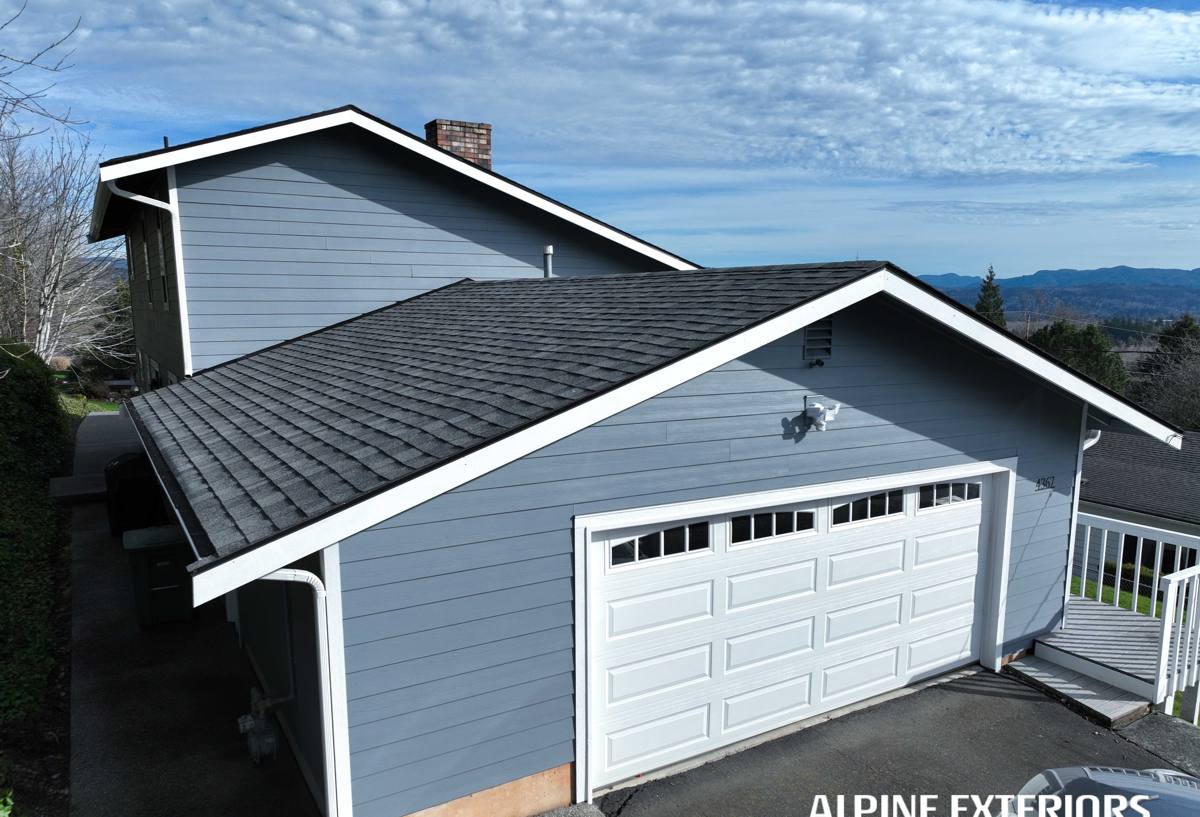
What King County's Climate Does to a Roof Over Time
Every roofing decision in this area comes back to moisture management. A few specific conditions matter more here than they would in a drier climate:
- Driving rain — wind-driven storms push water up and under roofing materials at seams, valleys, and penetrations, not just straight down onto the surface.
- Extended damp periods — roofs in wooded, shaded lots like many in and around Woodinville can stay wet for days after a storm, which is exactly the environment moss and moisture-loving organisms need to take hold.
- A long moss season — with cool, wet weather stretching across much of the year, moss and moisture retention are a near-constant concern on north-facing slopes and shaded sections of roof.
- Marine air — the moisture and mild corrosive influence of Puget Sound-area air is part of why fastener quality and coating systems matter more here than in a landlocked, dry climate.
None of these conditions are unique to metal roofing — every roof type in King County has to contend with them. But metal roofing, when the panels, flashing, and fasteners are matched correctly, gives you a system with far fewer places for water and moss to gain a foothold than a roof made of overlapping shingles or shakes.
Why Homeowners in Woodinville Choose Metal
Metal roofing isn't the right fit for every home or every budget, and we'll say so plainly during an estimate if it isn't. But for a lot of Woodinville properties — especially those with steep or complex rooflines, heavy tree cover, or owners planning to stay in the home long-term — it makes sense for a few honest reasons:
Fewer Moss-Friendly Surfaces
Moss needs a rough, porous surface and standing moisture to establish itself. A properly installed metal panel is smooth, sheds water quickly, and gives moss spores far less to grip onto compared to the granular surface of composition shingles or the wood grain of cedar shakes.
Long Service Life Under Wet Conditions
Quality metal roofing systems are built to hold up under decades of the wet-dry cycling that's typical of this climate, without the granule loss, curling, or moisture absorption that shortens the life of other materials.
Better Performance on Steep or Complex Roofs
Many Woodinville properties sit on wooded, sloped lots with rooflines that have multiple valleys, dormers, and pitch changes. Metal panels, particularly standing seam systems, handle these transitions with fewer seams and joints than shingle products, which means fewer opportunities for driving rain to find its way underneath.
Metal Roofing Systems: What's Actually Available
"Metal roofing" covers more than one product, and the right choice depends on your roof's pitch, your budget, and how the house looks from the street. Here's an honest comparison of the systems we work with most:
| System | How It's Fastened | Best Fit | Trade-Offs |
|---|---|---|---|
| Standing seam | Concealed clips, no exposed fasteners on the panel field | Steep or moderate-pitch roofs, homes prioritizing longevity and a clean line | Higher material and labor cost; requires precise installation |
| Stone-coated steel | Exposed or partially concealed fasteners depending on profile | Homeowners who want the look of shake or tile with metal's durability | More seams and fastener points than standing seam; coating quality varies by manufacturer |
| Corrugated / exposed-fastener panel | Through-fastened with gasketed screws | Lower-slope accessory roofs, shops, or budget-driven projects | Exposed fasteners need periodic inspection and eventually re-torquing or replacement as gaskets age |
For most primary residences in this area, we lean toward standing seam or a quality stone-coated system, specifically because fewer exposed fasteners means fewer places for driving rain to work its way in over a 30-plus-year service life. Exposed-fastener panels have their place, but we're upfront that they carry a longer-term maintenance commitment that standing seam avoids.
What a Correct Metal Roof Installation Actually Involves
Metal roofing has a reputation for being low-maintenance, and it is — but only when it's installed correctly the first time. A rushed or under-detailed metal roof can trap moisture, telegraph deck irregularities, or fail at the flashing long before the panels themselves wear out. A correct installation includes:
Deck Inspection and Prep
Before any panel goes down, the existing deck gets inspected for soft spots, delamination, or rot — issues that are common to find once old roofing is stripped off a house that's sat under tree cover for years. Any compromised sheathing gets replaced before moving forward.
Underlayment
A high-temperature, self-adhering or synthetic underlayment goes down as the roof's true water barrier. Given how long this climate keeps roofs wet, we don't cut corners here — the underlayment is what protects the deck if wind-driven rain ever gets past the metal surface at a seam or penetration.
Flashing at Every Transition
Valleys, chimneys, skylights, and wall-to-roof transitions are where the overwhelming majority of roof leaks originate, on metal roofs just as much as any other type. Custom-formed flashing, properly lapped and sealed, is what actually keeps driving rain out — not the panels themselves.
Fastening and Panel Layout
Panels are laid out to minimize seams in high-exposure areas and fastened according to the manufacturer's wind and moisture specifications. On standing seam systems, concealed clips allow the panel to expand and contract with temperature changes without stressing the fasteners.
Ventilation
A metal roof over an under-ventilated attic can trap moisture from inside the home against the underside of the deck. We check and, where needed, correct attic ventilation as part of the job — not as an upsell, but because it's part of what makes a metal roof last.
Moss, Debris, and Tree Cover: Local Considerations
Given how much of Woodinville sits among mature trees, we build a few extra considerations into these projects:
- Panel profile selection — smoother profiles shed needles and debris more readily than deeply textured stone-coated products.
- Valley and gutter design — valleys are sized and gutters set up to handle the volume of needle and leaf debris that shaded, tree-lined lots generate, reducing the chance of dammed water backing up under panels.
- Moss-resistant details at low-slope sections — any lower-pitch sections of roof, which hold moisture longer, get extra attention to drainage and underlayment.
None of this replaces homeowner upkeep — a metal roof under heavy tree cover still benefits from periodic debris clearing — but good design and installation choices reduce how often that's needed.
What Metal Roofing Costs to Consider
We don't post fixed prices because every roof's pitch, complexity, and access affect the bid, but here are the factors that move a metal roofing estimate up or down:
| Factor | Why It Matters |
|---|---|
| System type | Standing seam typically costs more upfront than exposed-fastener panel, reflecting labor and material differences |
| Roof complexity | More valleys, dormers, and penetrations mean more custom flashing and labor time |
| Deck condition | Sheathing repair or replacement adds cost but is not optional if the deck is compromised |
| Tear-off vs. overlay | Removing old roofing adds labor but lets us properly inspect and prep the deck — we generally recommend it |
| Access and pitch | Steep or hard-to-access roofs require more safety setup and time |
Metal roofing generally costs more than asphalt shingles at installation, but the trade-off is a much longer service life and lower long-term maintenance in a climate like this one. We'll walk through the real numbers for your specific roof during an estimate — no ballpark quote given over the phone without seeing the roof first.
Our Process, Start to Finish
- On-site assessment — we look at the existing roof, deck condition, ventilation, and any moss or moisture issues already present.
- System recommendation — based on your roof's pitch, tree exposure, and budget, we recommend a specific system rather than a generic "metal roofing" quote.
- Written estimate — scope, materials, and timeline in writing before any work begins.
- Tear-off and deck prep — old roofing removed, deck inspected and repaired as needed.
- Underlayment and flashing — the water-management layer goes in first, correctly, before a single panel is installed.
- Panel installation — installed to manufacturer spec for fastening pattern, seam layout, and expansion allowance.
- Final walk-through — we review the finished roof with you, including any maintenance notes specific to your property's tree cover and exposure.
Maintenance: What Owning a Metal Roof Actually Requires
One of the appeals of metal roofing in this climate is how little ongoing work it needs compared to shingle or shake roofs. Still, a short annual routine keeps it performing as intended:
- Clear needles, leaves, and debris from valleys and gutters, especially heading into the wet fall and winter months.
- Check for any dented or displaced panels after major windstorms.
- Inspect flashing around chimneys, skylights, and vents for sealant wear every year or two.
- If you have an exposed-fastener system, check fastener gaskets periodically — they're the one component on that system type that ages faster than the panels.
- Trim back overhanging branches where practical to reduce debris load and abrasion.
Why a Crew That Already Works Woodinville Matters
Metal roofing rewards precision — the water-management job is done by the underlayment and flashing details, not the panels alone, and those details are exactly where installation quality varies most between contractors. A crew that regularly works roofs in this part of King County has already seen how tree cover, prolonged damp weather, and moss pressure play out on real houses here, and builds those lessons into how valleys, low-slope transitions, and ventilation get handled — not as guesswork, but as standard practice on every job.
If you're weighing metal roofing for a Woodinville home, we're happy to take a look and walk you through what makes sense for your specific roof. Use the form below to request a free, no-pressure estimate.