 King County
 Roof Repair Built for Shoreline's Weather, Not Generic Weather
Shoreline sits right along Puget Sound, which means local roofs deal with a combination most inland Washington homes never see: salt-laden air off the water, wind-driven rain that gets pushed sideways under poorly sealed flashing, and a moss and algae season that can run eight or nine months out of the year in shaded, north-facing sections. A roof repair company that mostly works dry-side or southern King County jobs can still do competent work, but they're often solving for the wrong failure pattern. We work Shoreline roofs regularly, and the repairs we do here reflect what actually breaks down in this specific microclimate.
This page is about roof repair specifically — patching, resealing, replacing damaged sections, and extending the life of a roof that isn't ready for a full tear-off. If your roof is failing wholesale, that's a different conversation. Most of the calls we get in Shoreline are not that. They're a roof with 8-20 years of usable life left that has one or two problem areas causing active damage.
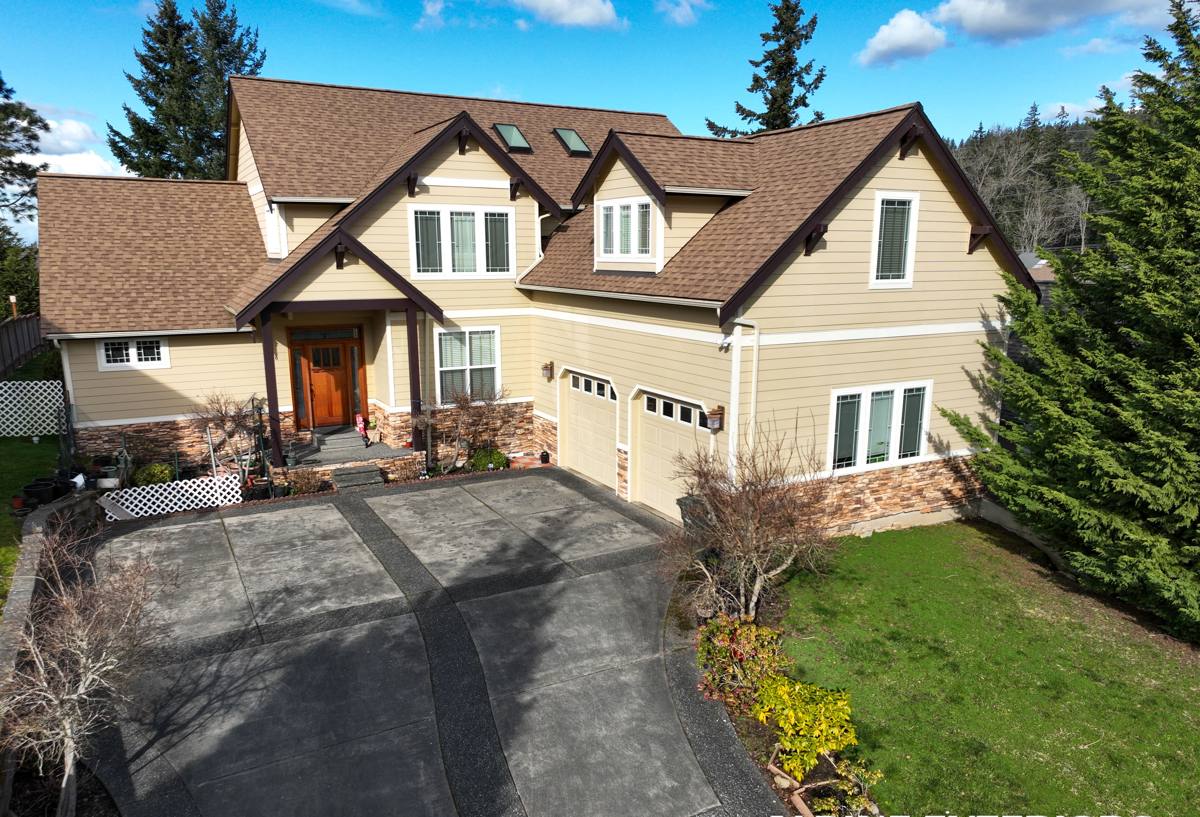
What Makes Shoreline Roofs Fail Early
Salt Air and Metal Fatigue
Proximity to Puget Sound means airborne salt settles on exposed metal — flashing, fasteners, gutter hangers, vent caps — and accelerates corrosion compared to roofs a few miles inland. Galvanized fasteners and lower-grade flashing show pitting and rust streaks years before they would elsewhere in King County. Once flashing corrodes at the seams, water finds a path underneath it, and that's when a small metal problem becomes a decking and insulation problem.
Driving Rain and Wind-Driven Water Intrusion
Puget Sound storms frequently come in with a horizontal component, not straight down. That matters because a roof can be watertight against vertical rain and still leak under wind-driven rain, since water gets pushed up and under laps, ridge caps, and flashing edges that were never sealed for lateral pressure. This is one of the most common "how did water get in there" situations we diagnose in Shoreline.
Moss, Algae, and Shade
Shoreline's mature tree canopy and marine-influenced humidity create ideal conditions for moss and algae growth, especially on north-facing slopes and anywhere shaded for most of the day. Moss isn't just cosmetic — as it grows, it lifts shingle edges and holds moisture directly against the roofing material, which shortens the lifespan of that section dramatically and is one of the top causes of localized rot we find under otherwise intact-looking shingles.
Signs Your Shoreline Roof Needs Repair Now
- Granules collecting in gutters or at downspout outlets — a sign of asphalt shingle wear
- Dark streaking or thick moss growth concentrated on shaded or north-facing slopes
- Water stains on interior ceilings, especially after a windy rainstorm rather than a calm one
- Rusted or lifted flashing around chimneys, skylights, or roof-to-wall transitions
- Curling, cracked, or missing shingles, particularly on slopes facing prevailing wind
- Soft or spongy decking felt underfoot during an inspection
- Daylight visible through the roof deck from inside an unfinished attic
Any one of these on its own might be minor. Two or more together, or any sign paired with an active interior leak, usually means it's time to have someone look before the next storm cycle.
What a Correct Roof Repair Actually Involves
A lot of "roof repair" in this trade is really just patching the visible symptom — a tube of sealant over a leak, a few replacement shingles laid over damaged decking. That approach buys a season, sometimes less, especially in a climate as wet as Shoreline's. A correct repair addresses the water's actual path, not just where it showed up inside the house.
Diagnosis Before Repair
We start by tracing the leak to its actual entry point, which is often several feet away from where the interior stain appears, since water travels along rafters and sheathing before dripping. This means checking flashing, valleys, penetrations (vents, chimneys, skylights), and shingle condition together, not just patching the nearest visible gap.
Decking and Structural Check
Any area that's had sustained moisture exposure gets checked for soft or delaminated decking. Repairing shingles over compromised plywood or OSB doesn't hold — the new material just fails again on the same weak spot. If decking is affected, it gets cut out and replaced before anything goes back on top.
Flashing and Sealing for Wind-Driven Rain
Because Shoreline gets more lateral wind-driven rain than inland areas, we pay particular attention to how flashing is lapped and sealed at valleys, walls, and penetrations — this is where a repair either holds through a real Puget Sound storm or doesn't.
Matching Materials
Where shingles need replacing, we match existing material as closely as possible in profile and color so the repair doesn't stand out as a patch, and so the surrounding roof ages evenly rather than showing a visibly newer section.
Common Shoreline Repair Types
| Repair Type | Typical Local Cause | Urgency |
|---|---|---|
| Flashing repair/replacement | Salt-air corrosion, wind-driven rain intrusion | High — active leak risk |
| Moss and algae treatment + shingle repair | Shade, marine humidity, north-facing slopes | Medium — worsens if ignored |
| Valley repair | Water concentration during heavy Sound storms | High — common leak point |
| Vent, skylight, chimney reseal | Aged sealant, fastener corrosion | Medium to High |
| Localized shingle replacement | Wind damage, granule loss, age | Low to Medium |
| Decking repair | Prolonged undetected moisture | High — structural |
Our Repair Process
- Inspection and diagnosis. We walk the roof and attic where accessible, tracing water paths rather than assuming the leak source is directly above the interior stain.
- Written scope and honest options. We tell you what needs to happen now, what can reasonably wait, and what the trade-offs are — repair, targeted section replacement, or (rarely) recommending a fuller conversation if the roof is genuinely at end of life.
- Repair. Decking replaced where needed, flashing corrected, shingles matched, moss and debris cleared from the work area.
- Cleanup and check. Job site cleared of debris and fasteners, and the repair area reviewed before we call it done.
Why We Choose the Materials We Do
For flashing and fasteners in a marine-influenced area like Shoreline, we favor corrosion-resistant materials over cheaper galvanized options, since the cost difference is small relative to how much longer it holds up against salt air. It's a maintenance and longevity decision, not a brand preference — cheaper material simply corrodes faster here than it would in a drier, inland part of King County.
On sealants and underlayment, we prioritize products rated for sustained moisture exposure rather than general-purpose options, because a repair that only has to survive a dry summer isn't the same job as one that has to survive a wet Pacific Northwest winter with wind-driven rain. This is a case where using the cheapest compliant product creates a maintenance burden for the homeowner within a year or two, which isn't a trade-off we think is worth making to save a small amount up front.
Ongoing Care Between Repairs
A repair extends the life of a roof, but Shoreline's climate means upkeep matters more here than in drier parts of the county. A few habits go a long way toward not needing another repair call sooner than necessary:
- Clear gutters and downspouts at least twice a year, more often under mature trees
- Have moss physically removed rather than just chemically treated on heavily shaded slopes
- Trim back branches that keep sections of the roof shaded and damp longer than the rest
- After any major windstorm off the Sound, do a visual check for lifted or missing shingles
- Address small leaks immediately — in this climate, a small leak rarely stays small over a full wet season
Repair vs. Replacement: How to Think About It
| Factor | Favors Repair | Favors Replacement |
|---|---|---|
| Roof age | Under roughly 15-18 years | Near or past manufacturer's expected lifespan |
| Damage extent | Localized (one slope, one valley, one penetration) | Spread across multiple slopes |
| Decking condition | Sound except in isolated spots | Widespread soft or delaminated decking |
| Shingle condition elsewhere | Still flexible, granules intact | Brittle, curling, or granule loss roof-wide |
We'll always tell you honestly which category your roof falls into rather than defaulting to whichever job is bigger.
Why Hiring a Crew That Already Works Shoreline Matters
Roofing code, permitting norms, and general best practice are consistent across King County, but the failure patterns aren't. A crew that repairs roofs across the whole Puget Sound region day to day recognizes salt-air corrosion, wind-driven rain intrusion, and shaded-slope moss damage on sight, because they see it constantly in this specific area. That familiarity shows up as a faster, more accurate diagnosis and a repair scoped to what this climate actually does to a roof — not a generic patch that happens to be located in Shoreline.
If you're seeing signs of a leak, moss buildup, or damaged flashing on your Shoreline home, we're glad to take a look and give you a straightforward assessment. Request a free, no-pressure estimate using the form below, and we'll walk you through exactly what we find and what your real options are.