 King County
 Board & Batten Siding Built for Kent's Weather
Kent sits in the Green River valley, low and often damp, where King County's marine air, driving rain, and a long moss season put steady pressure on a home's exterior. Board and batten siding — with its narrow vertical seams and exposed trim battens — looks sharp on a farmhouse remodel or a craftsman accent wall, but it also has more joints and more places for water to find a way in than a flat lap profile. Getting it right in this climate isn't optional; it's the difference between siding that looks good for a season and siding that holds up for decades.
We install board and batten for homeowners throughout Kent and the rest of King County, and we do it with one material: James Hardie fiber cement. This page covers what the style actually involves, what correct installation looks like in a wet Pacific Northwest climate, and how our process protects the work once we've left the site.
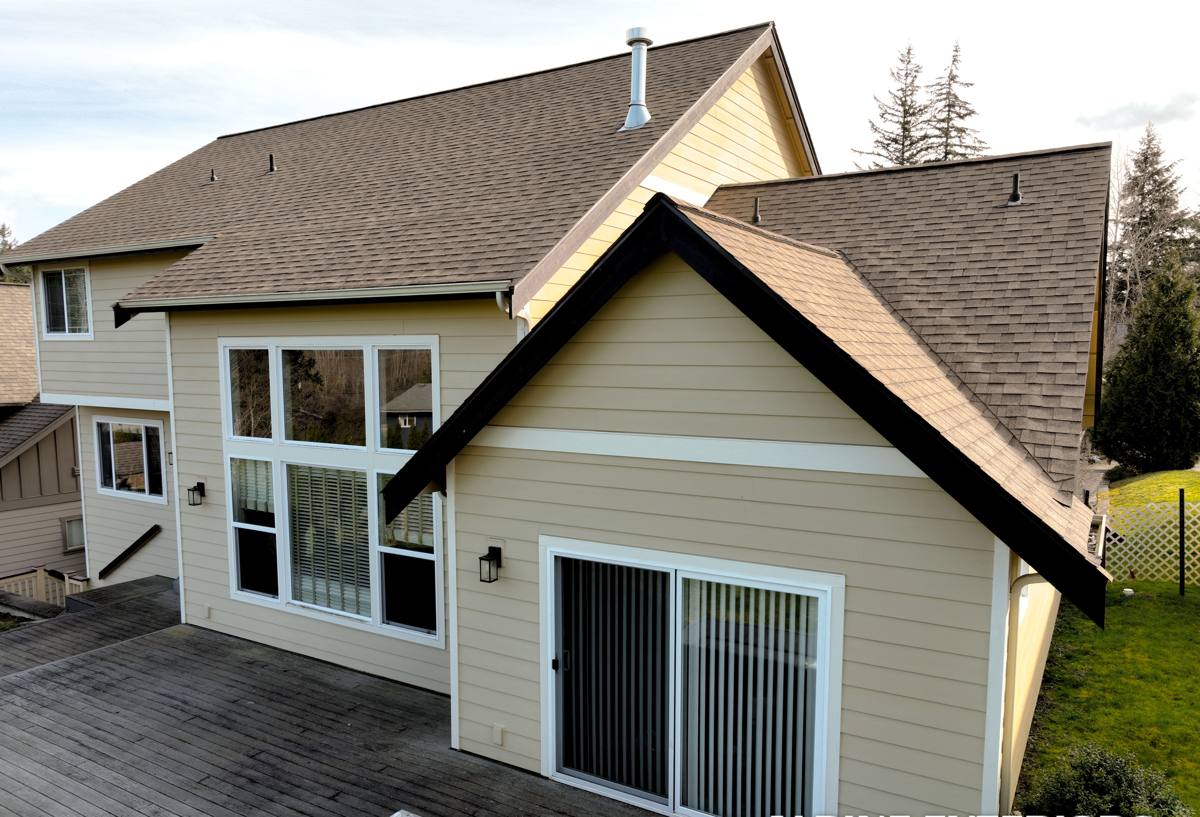
What Board & Batten Siding Is
Board and batten is a vertical siding pattern: wide flat panels or boards installed side by side, with narrow strips (battens) covering the seams between them. It's one of the oldest siding styles in North America, and it's had a strong resurgence on modern farmhouse and craftsman-style homes because of the clean vertical lines and the shadow lines the battens create.
Homeowners in Kent typically ask for it in one of two ways:
- Full board and batten — the entire home or a major elevation done in the vertical pattern
- Accent application — board and batten on a gable, dormer, entry feature, or upper story, paired with horizontal lap siding elsewhere
Both are legitimate design choices. The accent approach is popular here because it lets a home pick up the farmhouse or craftsman look without re-siding an entire structure, and it concentrates the extra installation care on a smaller, more manageable area.
Why We Only Install It in James Hardie Fiber Cement
Board and batten has more vertical seams per square foot than almost any other siding pattern, which means more edges exposed to weather. That's exactly where material choice matters most. We don't offer board and batten in vinyl, LP SmartSide, or primed wood — not because those products can't be installed, but because a pattern built on seams and butt joints is the worst possible place to put a material with known moisture or dimensional weaknesses. Wood battens swell, cup, and eventually rot at the joints. Vinyl battens flex and gap over time, especially with King County's temperature swings between summer heat and winter cold snaps. Engineered wood products depend heavily on unbroken factory sealing at every cut edge, and a board and batten pattern multiplies the number of cut edges on a home.
James Hardie fiber cement solves this differently. It's non-combustible, dimensionally stable across our wet-to-dry seasonal swing, and available in panel and batten profiles engineered specifically for this pattern — HardiePanel vertical siding paired with HardieTrim battens, finished in Hardie's factory-applied ColorPlus finish. The HZ5 product line is formulated for the Pacific Northwest's moisture exposure, and the ColorPlus finish is baked on and warrantied against fading and cracking, so the color holds up on every one of those exposed batten faces without repeated repainting.
What a Correct Board & Batten Installation Actually Involves
Board and batten looks simple from the street — vertical boards, trim strips, done. The part that determines whether it lasts is almost entirely hidden once the job is finished. A correct install includes:
- A drainage plane behind the panels — a weather-resistant barrier (and ideally a rain screen gap) so any moisture that gets past the surface has somewhere to go besides the wall sheathing
- Proper panel and batten fastening — following James Hardie's published fastener spacing and placement, not a generalized nailing pattern
- Flashing at every horizontal seam, window, door, and penetration — caulk is a supplement to good flashing, never a replacement for it
- Correct batten spacing over panel joints — battens need to fully cover and protect the seam beneath them, with room to move seasonally without splitting the caulk joint
- Ground clearance — a minimum gap between the bottom of the siding and grade, decking, or roofing so splash-back and standing moisture can't wick into the material
None of this is visible in a finished photo. It's also exactly where a rushed or underbid installation cuts corners, and where the eventual water damage traces back to.
The Moss and Moisture Factor
King County's long wet season means moss and algae growth on north-facing and shaded elevations is close to guaranteed over time, on any siding material. Board and batten's vertical grooves and batten shadow lines give moss slightly more surface texture to grip than a flat lap profile, which is one more reason the drainage details behind the panels matter — trapped moisture behind the siding is what turns surface moss into actual rot and sheathing damage underneath.
Common Mistakes We Fix or Avoid
We regularly get called to look at board and batten work — on this style specifically more than most — where the visible siding still looks fine but the details behind it were done wrong. The patterns we see most often:
- Battens caulked solid on all four sides with no ability for the panel to breathe or drain, trapping moisture behind the joint
- Siding installed tight to grade, a deck, or a lower roof with no clearance gap
- Missing or improperly lapped flashing at window and door heads, relying on caulk alone
- Fastener spacing stretched out to save time, leading to panel movement and eventual cracking at the fastener points
Every one of these is invisible on install day and shows up years later as staining, soft spots, or paint failure. Our process is built to avoid them from the start rather than fix them after the fact.
Comparing Siding Approaches for a Board & Batten Look
| Factor | James Hardie Fiber Cement | Primed Wood | Vinyl / Engineered Wood |
|---|---|---|---|
| Seam durability | Factory-cut, dimensionally stable, engineered for vertical patterns | Prone to swelling and cupping at butt joints | Seams can gap or flex with temperature swings |
| Moisture behavior | Won't rot; performs well with proper drainage detailing | Absorbs moisture at end grain and joints, needs vigilant maintenance | Varies; engineered wood depends on unbroken factory sealing at cuts |
| Finish longevity | ColorPlus factory finish, warrantied against fading/cracking | Field-painted, repaint cycle every several years | Field-painted or molded color that can fade unevenly |
| Fire rating | Non-combustible | Combustible | Combustible |
| Local track record | Widely used and proven across King County's climate | Traditional but maintenance-heavy in this climate | Mixed long-term results in high-moisture regions |
Our Installation Process in Kent
When we take on a board and batten project in Kent, the process runs in this order:
- On-site assessment — we look at existing siding condition, sheathing, elevation exposure, and drainage around the foundation before quoting anything
- Removal and sheathing check — old siding comes off and we inspect the sheathing underneath for hidden moisture damage before covering anything back up
- Weather-resistant barrier and drainage plane — installed per manufacturer spec, with attention to the higher seam count board and batten requires
- Panel and batten installation — James Hardie panels and trim battens fastened to spec, with flashing integrated at every horizontal joint, window, and door
- Finish and inspection — caulking where appropriate, final walk-through, and a review of the finished elevations with the homeowner
What to Look For in a Board & Batten Contractor
- Do they explain the drainage plane and flashing details, or only talk about the visible finish?
- Are they installing to the manufacturer's published fastening and clearance specs, or "how we've always done it"?
- Do they work regularly in King County's climate, or is this an unfamiliar region for their crew?
- Can they explain why they chose the material they're proposing — including its weaknesses?
- Do they offer a real warranty on both material and labor, in writing?
Why Hiring a Crew That Already Works in Kent Matters
Board and batten installed correctly in a dry climate and board and batten installed correctly for King County's wet season aren't the same job — the drainage detailing, flashing sequencing, and ground clearance decisions all need to account for how much rain this region actually sees and how long moss season runs. A crew that already works Kent and the surrounding King County area has made those calls on homes with the same exposure, the same soil moisture, and the same weather pattern your house deals with every winter. That's not a substitute for good workmanship, but it does mean fewer surprises and fewer details that get treated as an afterthought.
If you're considering board and batten siding for a full elevation or an accent feature on your Kent home, we're happy to take a look and walk you through what it would involve — no pressure, no obligation. Fill out the form below to request a free estimate.