 King County
 Siding Replacement on Queen Anne's Hill
Queen Anne sits up on one of Seattle's steepest hills, close enough to Puget Sound that salt-laden air reaches houses well above the waterline, and exposed enough that wind-driven storms hit upper floors and gable ends harder than they hit homes tucked into more sheltered parts of King County. The neighborhood's housing stock spans a wide range of ages and styles — older homes with decades of exterior history alongside newer construction — but nearly all of it shares the same exposure: salt air, driving rain, and a moss season that can run most of the year on shaded, north-facing walls. Siding that was a reasonable choice decades ago, or siding that was installed without much attention to these conditions, tends to show its age here faster than it would in a calmer, drier climate.
This page is specifically about siding replacement — pulling off failing or aging siding and installing a new system correctly — for Queen Anne homes. We install James Hardie fiber cement exclusively, and everything below reflects what a replacement project actually involves when the goal is a wall system that holds up to this hill's weather rather than one that just looks finished on handoff day.
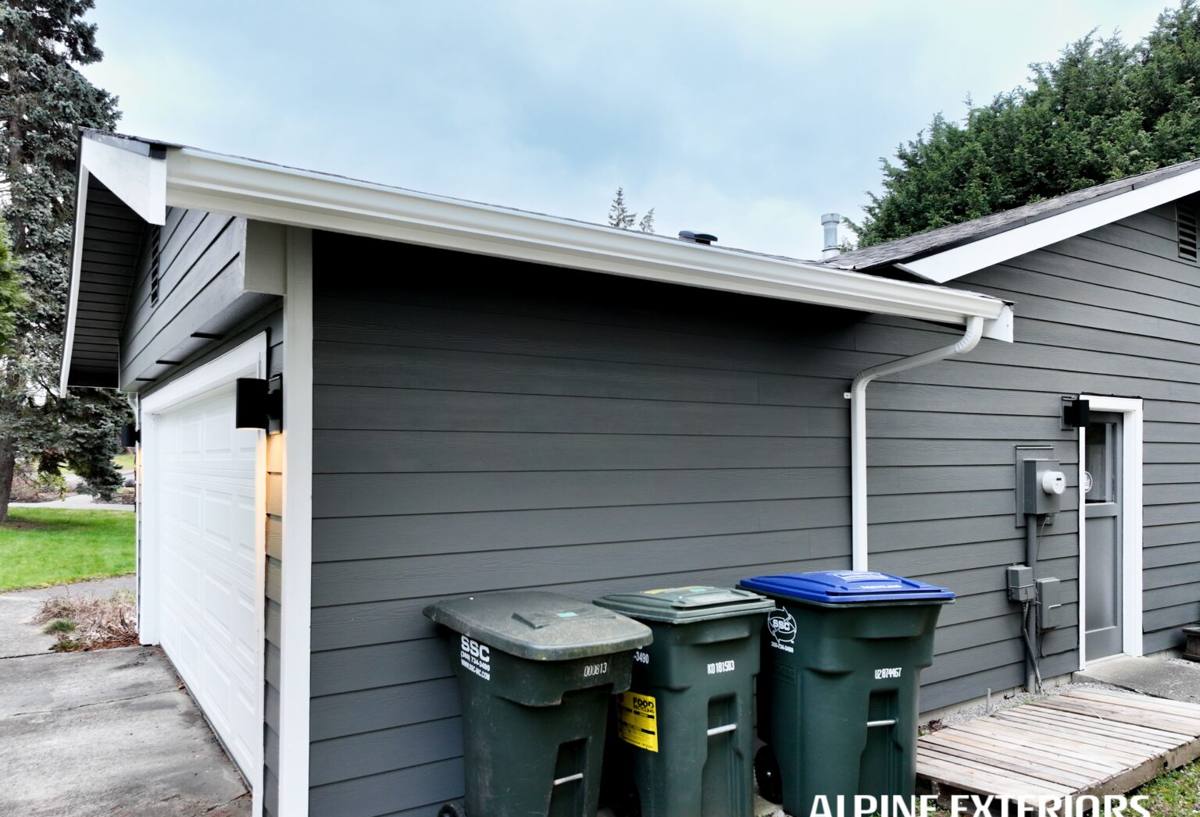
What Queen Anne's Climate Does to Siding
Salt Air Off Puget Sound
Even a mile or more from the water, homes on Queen Anne pick up salt-laden air carried up from Puget Sound, and elevation doesn't fully shield a house from it — in some cases it puts upper stories and exposed gables directly in the path of that air. Salt accelerates corrosion on fasteners, flashing, and trim hardware, and it wears down lower-grade paints and coatings faster than a dry inland climate would. On an aging siding system, that shows up as rust streaking at nail heads, pitted trim hardware, and paint that fails years ahead of schedule.
Driving Rain and Hilltop Wind Exposure
Storms crossing Puget Sound don't arrive as calm, straight-down rainfall by the time they reach a hill neighborhood like Queen Anne — wind pushes the moisture sideways into wall assemblies, window trim, and the seams where siding meets roofing or trim. That wind-driven load is harder on a house than the same total rainfall would be somewhere flatter and more sheltered, and it finds any gap an aging or poorly installed siding system has developed over the years. Homes higher up the hill or on more exposed faces tend to take the brunt of it.
A Moss Season That Runs Most of the Year
Mild temperatures combined with near-constant moisture give moss and mildew a long growing season across King County, and Queen Anne's mature tree canopy and shaded lots make it worse in spots. Any siding surface that stays damp longest — north-facing walls, areas under heavy tree cover, spots that don't get much direct sun in winter — becomes a growth surface over time. Older or more porous siding materials hold onto that moisture longer, which is part of why moss and soft trim tend to show up together on an aging exterior.
Signs a Queen Anne Home Needs Siding Replacement
Not every problem with a home's exterior calls for full replacement, but certain signs point toward it rather than a patch repair. Worth checking for:
- Soft, spongy, or crumbling siding when pressed, especially near the bottom of walls or around window and door trim
- Moss or dark staining that returns quickly after cleaning, particularly on shaded or north-facing walls
- Visible warping, cupping, or buckling panels, which often means moisture has already worked its way behind the surface
- Paint that's peeling, bubbling, or failing across large sections rather than one isolated spot
- Rust streaking at fastener heads or corroded trim hardware
- Interior signs — soft drywall, musty smells, or staining on walls that back up to exterior siding
- A siding material at or near the end of its realistic service life, even if it looks intact from the street
Any one of these can be isolated and worth a closer look before assuming the whole wall needs to come off. But when several show up together, or when a contractor pulls a section and finds the sheathing underneath already compromised, that's usually the point where repair stops being the more economical option.
Repair or Replace? Making the Right Call
Repair makes sense when the damage is limited to a small, isolated area and the rest of the siding, along with the sheathing behind it, is still sound. Replacement is the better call when damage is spread across multiple walls, when the siding material itself has reached the end of its useful life regardless of visible damage, or when pulling even a small section reveals that moisture has already gotten behind the surface and started affecting the sheathing. Patch repairs on a system that's failing more broadly tend to buy a homeowner a year or two at most, and they can mask how much moisture has already worked its way into the wall assembly. We'll tell a homeowner honestly when a repair is the more sensible near-term choice — full replacement isn't the right answer for every situation, and pushing it when it isn't warranted doesn't serve anyone.
Why We Replace Siding With James Hardie Fiber Cement — and Nothing Else
We install James Hardie exclusively. We won't install LP SmartSide, vinyl siding, Cemplank, Allura, primed spruce, or cedar. Each of those products has a place in the market and homeowners who are satisfied with them, but the decision to standardize on one system came from what we've seen on tear-offs across King County, not from a supplier arrangement or a sales angle. A few of the specific reasons:
- Non-combustible core: Fiber cement doesn't feed a fire the way wood-based or wood-derived siding products can, which matters for both safety and insurance considerations.
- Factory-applied ColorPlus finish: The color is baked on under controlled factory conditions rather than brushed on in the field, so it resists fading, chalking, and moisture-driven failure longer than most field-applied paint.
- Climate-engineered HZ5 formulation: Hardie's HZ5 product line is built specifically for regions with sustained moisture exposure and freeze-thaw cycling, which describes the Puget Sound climate well.
- Dimensional stability: Fiber cement doesn't swell, cup, or warp the way engineered wood or composite products can after years of exposure to wind-driven rain.
- Strong transferable warranty: Hardie backs the product with one of the stronger warranty structures in the industry, provided the installation follows their published spec.
For a hill neighborhood taking this much salt air and driving rain, we'd rather install one system we fully stand behind than offer a cheaper alternative that quietly shifts maintenance risk onto the homeowner a few years down the road.
What a Correct Replacement Job Involves
Tear-Off and Sheathing Inspection
Old siding comes off entirely, and the sheathing underneath gets inspected before anything new goes up. This is the step that separates a real replacement from a cosmetic overlay — installing new siding over damaged sheathing just buries the problem for the next owner to find. On older Queen Anne homes especially, this is often where hidden moisture damage from years of an underperforming siding system finally gets addressed.
Water-Resistive Barrier and Rain Screen Gap
A continuous, properly lapped water-resistive barrier goes on before any new siding, with every seam and penetration taped and sealed. A small drainage gap behind the siding lets any moisture that does get past the surface drain and evaporate instead of sitting against the wall sheathing — a detail that matters more here given how long the moist season runs.
Fastening, Spacing, and Clearances to Spec
James Hardie publishes exact fastener type, spacing, and clearance requirements, and they aren't optional extras — they're what keeps panels secure against hilltop wind loads and what keeps the manufacturer's warranty valid if a problem comes up later. Clearance above grade, decks, and roofing keeps the bottom edge of the siding out of standing water and splash-back, a common failure point on older homes where grading or landscaping has changed over the years.
Flashing, Trim, and Sealed Field Cuts
Every window, door, vent, and fixture interrupts the siding plane, and each interruption needs flashing that sheds water outward and downward rather than trapping it. Field-cut panel edges get sealed as they're cut, not at the end of the day, since an unsealed cut edge is one of the more common places fiber cement actually takes on water.
Our Siding Replacement Process
The sequence we follow on a Queen Anne replacement project stays consistent from house to house, even though the scope varies:
- Exposure assessment: We look at how each wall of the house is exposed — which faces take direct wind and salt air, which sit in shade or under tree cover, and where existing damage suggests a chronic moisture issue rather than a one-time problem.
- Tear-off and sheathing check: Old siding comes off, and any rot or soft sheathing gets identified and addressed before new material goes up.
- Weather barrier installation: The water-resistive barrier goes on with proper overlap and sealed seams, doing most of the real work of keeping wind-driven rain out of the wall assembly.
- Siding installation to manufacturer spec: New Hardie panels go up following the published fastening, spacing, and clearance requirements as the baseline, not as an upgrade option.
- Final walkthrough: We walk the completed job with the homeowner, confirm the work matches what was scoped, and go over basic maintenance expectations for a home in this climate.
Cost Factors for a Queen Anne Replacement Project
| Factor | Why It Affects Cost | Queen Anne Consideration |
|---|---|---|
| Home size and number of stories | More wall area and height mean more material and labor | Steep lots and taller homes can require more staging and access equipment |
| Sheathing condition underneath old siding | Rot or water damage found during tear-off adds repair scope | Older homes with aging siding are more likely to have hidden moisture damage |
| Trim and detail complexity | More windows, dormers, and roofline transitions mean more flashing and cutting work | Period architecture common in the neighborhood often carries more trim detail |
| Wind and salt air exposure | Water-facing or upper-level walls warrant closer attention to flashing and hardware | Elevation and hill position expose some walls more than others |
| Product line and finish selection | James Hardie offers multiple panel styles, textures, and ColorPlus finish options | Lap siding, shingle-style panels, or a mix are all options depending on the home's style |
These are general drivers, not a quote. Every Queen Anne home sits at a slightly different angle to the wind and water, under different tree cover, and with a different siding history underneath, so we walk the property and often pull a test section before putting a firm number on the work. Two houses on the same block can need very different scopes once old siding actually comes off.
Timing a Replacement Project Around Seattle's Weather
King County's wettest, windiest stretch typically runs from late fall through winter, and Queen Anne's hill exposure can make that stretch feel more intense than it does in more sheltered parts of the city. Spring and summer generally offer the driest, most stable conditions for tear-off and installation, since the water-resistive barrier, sealants, and fresh siding all perform better when they can be installed and allowed to set up under dry conditions rather than between storm systems. That said, siding that's already failing and letting moisture into the wall assembly is worth addressing on its own timeline — waiting for the ideal season isn't worth it if the damage is actively getting worse underneath.
Why a Crew That Already Works Queen Anne Matters
A crew that replaces siding across King County regularly, on homes with this exact combination of salt air, driving rain, and hill exposure, makes different judgment calls than one installing here occasionally between jobs in calmer parts of the region. That experience shows up in the decisions that don't make it onto a written estimate: which walls are worth extra flashing attention, how much sheathing damage is typical to expect once old siding comes off a home of a certain age, and which fastener and clearance details genuinely can't be shortcut regardless of schedule pressure. Queen Anne's exposure isn't identical to flatter, more sheltered King County neighborhoods, and a crew that's replaced siding here before builds accordingly instead of applying a generic approach to every job.
Get a Free, No-Pressure Estimate
If your Queen Anne home has siding that's showing its age — moss that keeps coming back, soft spots, paint that won't hold, or damage you can see from the street — we're glad to take a look and give you an honest, straightforward assessment of whether repair or full replacement makes sense. Reach out using the form below to schedule a free estimate, no pressure and no upsell script.