 King County
 Roof Repair in Kent: What Local Homes Actually Need
Kent sits in a stretch of King County where roofs work hard for their living. Long wet winters, a moss season that never really ends, and the kind of driving rain that finds every gap in flashing or shingles add up over the years. A roof that looks fine from the driveway can still be losing the fight underneath — and by the time a stain shows up on a ceiling, the damage has usually been building for a while. Roof repair here isn't just patching a leak; it's addressing the specific ways this climate wears a roof down.
We work on homes across Kent and the surrounding King County area, and the repair calls we get tend to follow a pattern: moss holding moisture against shingles, flashing that's failed around a chimney or skylight, gutters overwhelmed by heavy rain, and roof valleys that were never detailed quite right the first time. None of that is unusual for this region — it's just what a Pacific Northwest roof deals with, and it's why repairs here need to be handled by someone who understands the local conditions, not just general roofing.
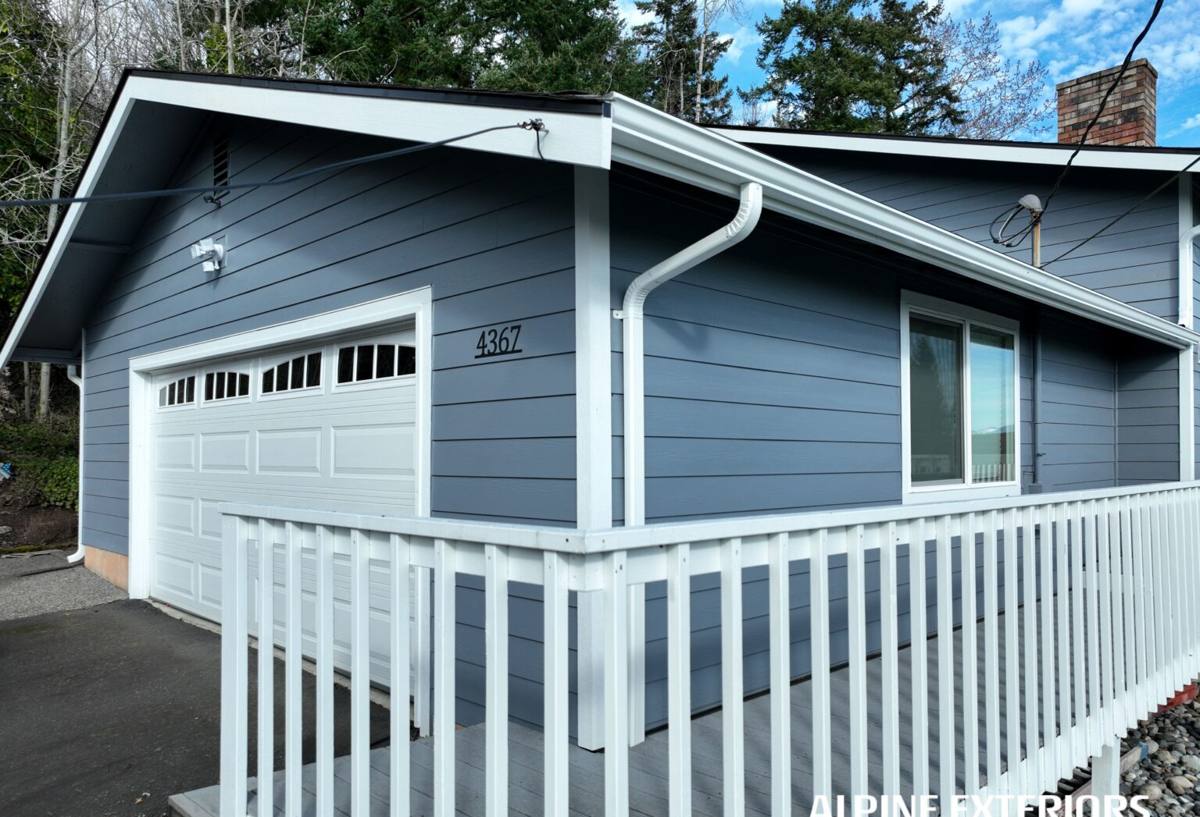
Why Kent's Climate Is Hard on Roofs
King County doesn't get the kind of dramatic storm damage some other regions see, but it makes up for it with persistence. Roofs here are rarely destroyed all at once — they're worn down gradually by moisture that never fully dries out.
Moss and Organic Growth
Shade, moisture, and mild temperatures are exactly what moss needs to thrive, and Kent has all three for a good chunk of the year. Moss doesn't just sit on top of shingles — it roots into the granules, lifts shingle edges, and holds water against the roof surface long after the rain has stopped. Left alone, that moisture works its way under shingles and into the underlayment, which is where small problems turn into rot and leaks.
Driving Rain and Wind-Driven Moisture
Rain that comes in at an angle behaves differently than rain that falls straight down. It gets pushed under shingle laps, around poorly sealed flashing, and into any gap that a calmer rain would never reach. This is why flashing detail and shingle overlap matter more here than in drier climates — a repair that would hold up fine somewhere else can still leak in a King County storm if it's not done with driving rain in mind.
Temperature Swings and Freeze-Thaw
It doesn't take a hard freeze to cause damage. Repeated cycles of cool, wet nights and mild days cause materials to expand and contract, which gradually loosens fasteners, opens seams, and stresses caulking and sealants around penetrations like vents and skylights.
Common Roof Repair Issues We See in Kent
- Moss-damaged shingles — lifted, cracked, or granule-stripped shingles under moss growth
- Flashing failures — around chimneys, skylights, and roof-to-wall transitions, usually where sealant has dried out or metal has shifted
- Clogged or damaged gutters — overflow that saturates fascia boards and can back water up under the roof edge
- Valley leaks — roof valleys handle the most water volume on the roof and are unforgiving of shortcuts
- Soft or spongy decking — a sign that moisture has been getting into the roof deck itself, not just the surface
- Nail pops and lifted shingle tabs — often from wind combined with age-related sealant failure
- Ventilation problems — poor attic airflow that traps moisture and accelerates roof deck damage from the inside
What a Correct Repair Actually Involves
A roof repair that holds up in Kent's climate starts with an honest diagnosis, not a quick patch over whatever's visible. A leak at a ceiling stain is often several feet away from where the water is actually entering the roof, because water travels along the underlayment or decking before it drips through. Skipping the diagnosis step is how homeowners end up paying for the same repair twice.
Our approach to a repair call:
- Inspect the full roof, not just the area near the reported leak — moss, flashing, valleys, penetrations, and gutter lines all get checked
- Identify the actual entry point by tracing water paths, checking decking condition, and looking at attic-side evidence where accessible
- Explain what we find in plain terms — what's causing the problem, what it will take to fix it, and what it would cost to ignore it
- Repair with materials and methods matched to the existing roof, so the fix blends in and performs like the rest of the system
- Address the underlying cause, whether that's moss, ventilation, or a flashing detail that was never right, not just the symptom
A repair that only replaces a few shingles without dealing with the moss or moisture source behind them is a repair that will need to be done again — often sooner than it should.
Repair vs. Replacement: How We Help You Decide
Not every roof problem in Kent needs a full replacement, and not every leak can be permanently solved with a patch. We give homeowners a straight answer based on the roof's age, material condition, and how widespread the damage actually is — not a sales pitch in either direction.
| Factor | Points Toward Repair | Points Toward Replacement |
|---|---|---|
| Roof age | Under 15-20 years, depending on material | Nearing or past expected lifespan |
| Extent of damage | Isolated to one area or system (flashing, one valley) | Widespread across multiple roof sections |
| Decking condition | Solid, no soft spots found | Soft, rotted, or damaged decking in multiple areas |
| Shingle condition overall | Rest of roof is sound, granules intact | Granule loss, brittleness, or curling roof-wide |
| History of repairs | First or second repair in this area | Repeated repairs to the same section |
If a repair is the right call, we'll say so. If the roof is genuinely past the point where patching makes financial sense, we'll explain why rather than let a homeowner keep paying for temporary fixes.
Moss Treatment and Prevention as Part of Repair
In a lot of Kent roof repairs, moss isn't a side issue — it's the root cause. Treating the moss that's already there and cleaning it off the roof surface is part of doing the repair right, but it's just as important to reduce the conditions that let moss take hold again. That can mean improving airflow to shaded roof sections, installing zinc or copper strips where appropriate, or simply setting a maintenance schedule so moss gets addressed before it causes damage rather than after. We treat moss control as part of protecting the repair we just made, not an upsell.
Gutters, Ventilation, and the Rest of the Water Management System
A roof doesn't work in isolation. Gutters that are clogged or undersized for King County's rain volume can push water back up under roof edges. Poor attic ventilation traps warm, moist air against the underside of the roof deck, which accelerates rot from the inside even when the roof surface looks fine. When we're on a roof for a repair, we check these connected systems, because fixing a leak while ignoring a gutter that's dumping water against the fascia just means a different repair call in a year or two.
Our Repair Process, Start to Finish
- Contact us for a free, no-pressure roof inspection and estimate
- We inspect the roof in person, including areas prone to moss and moisture buildup
- We give you a clear written explanation of the problem and the repair options
- You get a straightforward cost estimate before any work begins — no surprise add-ons
- We complete the repair using materials matched to your existing roof
- We clean up thoroughly and walk you through what was done and what to watch for going forward
Why Hiring a Crew That Already Works in Kent Matters
Roofing crews that work across King County day in and day out know how this region's roofs actually fail — not from a textbook, but from repeated hands-on experience with moss buildup, driving rain intrusion, and the specific flashing and ventilation issues common to homes in this area. That familiarity shows up in faster, more accurate diagnosis and repairs that address the real cause instead of just the symptom that's currently visible. A crew unfamiliar with the local climate is more likely to treat a Kent roof like it's dealing with a generic leak, when in reality the moisture behavior here is its own thing.
Roof Repair Checklist for Kent Homeowners
- Check for visible moss or dark streaking on the roof, especially on shaded slopes
- Look in the attic (if accessible) for water stains, damp insulation, or daylight through the roof deck
- Make sure gutters are clear and draining properly, especially before the wet season
- Note any ceiling stains, even small ones, and when they first appeared
- Have flashing around chimneys, skylights, and vent pipes checked annually
- Don't wait for an active leak — moss and flashing wear are easier and cheaper to address early
If you're dealing with a leak, moss buildup, or just want an honest read on your roof's condition, we're happy to take a look. Fill out the form below for a free, no-pressure estimate on roof repair for your Kent home.