 King County
 Why Decks in Kent Take a Beating
Kent sits in the Green River valley, low and often damp, in a stretch of King County that gets months of steady rain, heavy morning dew, and long stretches without direct sun to dry things out. Add in the marine-influenced air that moves through the Puget Sound region and you get a climate that is tough on any outdoor wood structure. Decks here don't fail because the material is bad — they fail because moisture sits where it shouldn't for months at a time.
The pattern we see on Kent decks is consistent: moss and algae build up on shaded boards and railings, driving rain gets pushed sideways into ledger boards and post bases by wind, and standing water finds any low spot in the decking and stays there. None of that is dramatic on its own, but it adds up year after year until fasteners rust, wood softens, and structural connections weaken.
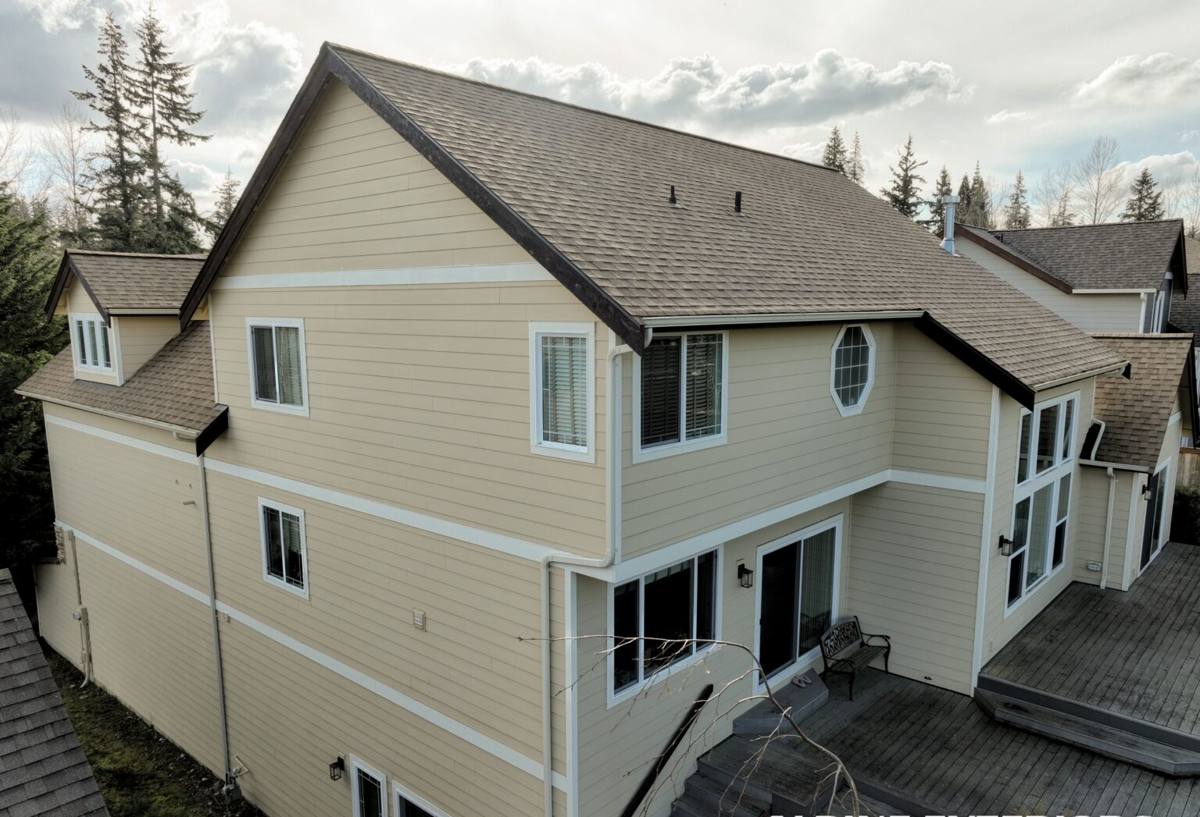
Signs a Kent Deck Needs Repair
Most deck problems show themselves early if you know where to look. A few minutes of walking the deck a couple of times a year catches most issues before they become expensive.
- Soft or spongy spots underfoot, especially near the house or stair landings
- Boards that have visibly cupped, warped, or split along the grain
- Green or black staining that keeps coming back after cleaning
- Rust streaks running down from fasteners or metal connectors
- Railings or stair stringers that flex or wobble when you lean on them
- Gaps opening up where the deck meets the house (the ledger board)
- Visible daylight or gaps under support posts
Any one of these by itself might be minor. Several together, especially near the ledger or support posts, usually means the deck needs a real inspection rather than a quick patch.
What a Correct Repair Job Actually Involves
A lot of deck "repairs" are really just cosmetic — a board swap or a coat of stain over a problem that's still there underneath. A correct repair starts by figuring out why the damage happened, not just where it shows.
Inspection First
Before any board comes off, we check the framing underneath: joists, beams, posts, and — most importantly — the ledger board connection to the house. In our experience, the ledger is where the most serious problems hide, because it's bolted to the house framing and is constantly exposed to water running off the siding or roofline above it. A deck can look fine on top and still have a compromised ledger connection underneath.
Fixing the Cause, Not Just the Symptom
If a section of decking is rotting because water keeps pooling there, replacing the boards without correcting the drainage or slope just buys a year or two before the same spot fails again. Correct repair work addresses flashing, gaps, fastener type, and slope alongside the visible damage.
Matching Materials and Fasteners
Mixing incompatible metals — for example, the wrong fastener against pressure-treated lumber — accelerates corrosion. We use fasteners and hardware rated for treated wood and exterior exposure so a repair doesn't create a new failure point somewhere else.
Common Repair Situations We See Around Kent
| Problem | Typical Cause | Repair Approach |
|---|---|---|
| Soft or rotted ledger board | Water intrusion where deck meets house, missing or failed flashing | Remove affected framing, correct flashing, reattach per structural connection standards |
| Cupped or split decking boards | Repeated wet/dry cycling, sun exposure on wet wood | Replace individual boards, improve airflow and drainage underneath |
| Wobbly railings or stairs | Loosened fasteners, moisture-softened posts | Reinforce or replace posts, upgrade to corrosion-resistant hardware |
| Persistent moss and algae staining | Shade, low airflow, standing moisture | Clean, treat, and address the underlying moisture or shade issue where possible |
| Rusted or failing fasteners | Incompatible metal, age, chronic moisture | Replace with exterior-rated, compatible fasteners |
| Sagging or uneven deck surface | Undersized or weakened joists, post settling | Sister or replace framing members, check post footings |
Repair or Replace?
Homeowners in Kent often ask us to just "fix what's broken," and sometimes that's exactly the right call. Other times, targeted repair isn't the better value once you look at the whole picture. A few honest guidelines:
- If the framing and ledger are sound and the damage is limited to decking boards or railings, repair is usually the right call and the more cost-effective one.
- If rot has reached the ledger board or multiple structural posts, repair costs start to stack up and a partial rebuild may hold up better long-term.
- If the deck is original to an older home and has never had flashing or moisture issues addressed, a repair without correcting those root causes tends to be a short-term fix.
- Age matters less than condition — a well-built 20-year-old deck with sound framing can often be repaired, while a poorly flashed 8-year-old deck may already have structural rot.
We'll tell you plainly which category your deck falls into. There's no benefit to us in talking a homeowner into a bigger job than the deck actually needs.
How Our Deck Repair Process Works
1. On-Site Inspection
We walk the deck with you, check the framing from underneath where accessible, and look closely at the ledger connection and any spots you've flagged as soft or damaged.
2. Straight Assessment
You get a clear explanation of what's actually wrong, what caused it, and what it will take to fix — including whether repair or partial rebuild makes more sense for your situation.
3. Written Scope and Estimate
Before any work starts, you know what's being replaced, what hardware and materials we're using, and what it costs. No surprise change orders for problems we should have caught at inspection.
4. The Repair Work
We remove and replace only what needs it, correct the underlying moisture or drainage issue where that's the actual cause, and use fasteners and flashing suited to Pacific Northwest exposure.
5. Final Walkthrough
We go over the completed work with you and flag anything worth keeping an eye on going forward, especially in areas we didn't replace but that are getting close to needing attention.
Wood vs. Composite: What Makes Sense for a Repair
When a section of an existing wood deck needs new boards, homeowners sometimes ask whether to switch that section to composite decking instead. Both have a place, and the right answer depends on the rest of the deck.
Pressure-treated lumber is the most straightforward match for repairing an existing wood deck — it blends structurally and visually with what's already there, and it's the lower-cost option for a patch repair. It does need periodic cleaning and refinishing to keep moss and moisture from taking hold again, which matters given how much of the year King County stays damp.
Composite boards resist moss staining and don't absorb water the way wood does, which can be appealing for a deck that's fighting shade and drainage problems. The trade-off is cost, and mixing composite into a repair on an otherwise all-wood deck can look inconsistent unless it's planned carefully. We'll walk you through both options honestly rather than pushing whichever costs more.
Maintenance That Prevents the Next Repair
A repaired deck stays repaired longer with a small amount of regular upkeep. This is the same checklist we give homeowners after we finish a job:
- Sweep debris and standing leaves off the deck regularly, especially in fall
- Clean moss and algae off shaded boards and railings at least once a year
- Check the ledger board area where the deck meets the house for gaps or soft spots
- Keep gutters and downspouts near the deck clear so runoff isn't draining onto it
- Reseal or restain wood decking on the schedule the product calls for, not just when it looks faded
- Tighten or replace any fasteners showing rust before they let go
Why a Crew That Already Works in Kent Matters
Deck repair done right depends on understanding how a specific structure has actually weathered, not just what a repair manual says in general. A crew that regularly works in Kent and the surrounding King County area has already seen how the local rain patterns, moss growth, and marine air affect decks built at different ages and with different original construction quality. That local pattern recognition is what separates a repair that actually addresses the cause from one that just replaces the board you can see.
It also means faster, more accurate estimates. We're not learning the region's climate behavior on your project — we're applying what we've already seen on decks nearby to figure out what's really going on with yours.
If you've got a deck in Kent showing any of the signs above — or you just want an honest opinion on its condition — we're happy to take a look. The estimate is free, there's no pressure, and you'll get a straight answer about whether repair makes sense or something more is needed. Use the form below to get started.