 King County
 Custom Decks Built for Kent's Weather, Not Just Its Look
A deck in Kent has to do more than look good in July. It has to survive eight or nine months of the year that are wet, gray, and cool, with moss spores blowing in on the wind and moisture sitting in the wood grain for days at a stretch. King County's marine climate — the damp air off Puget Sound, the driving rain that comes sideways in a windstorm, and the long moss season that runs from fall through spring — is hard on any outdoor structure, but decks take the worst of it because they're horizontal. Water doesn't run off a deck the way it runs off a wall or a roof; it sits, pools in low spots, and works its way into every joint and fastener hole it can find.
We build and repair custom decks throughout Kent and the surrounding King County area, and almost every deck failure we get called out for traces back to the same root cause: the deck was built for a dry-climate assumption, not a wet one. Undersized flashing, the wrong fastener metal, boards run tight against siding with no airflow behind them — none of these mistakes show up in year one. They show up in year four or five, as soft spots, black streaking, or a ledger board that's quietly rotting behind the house.
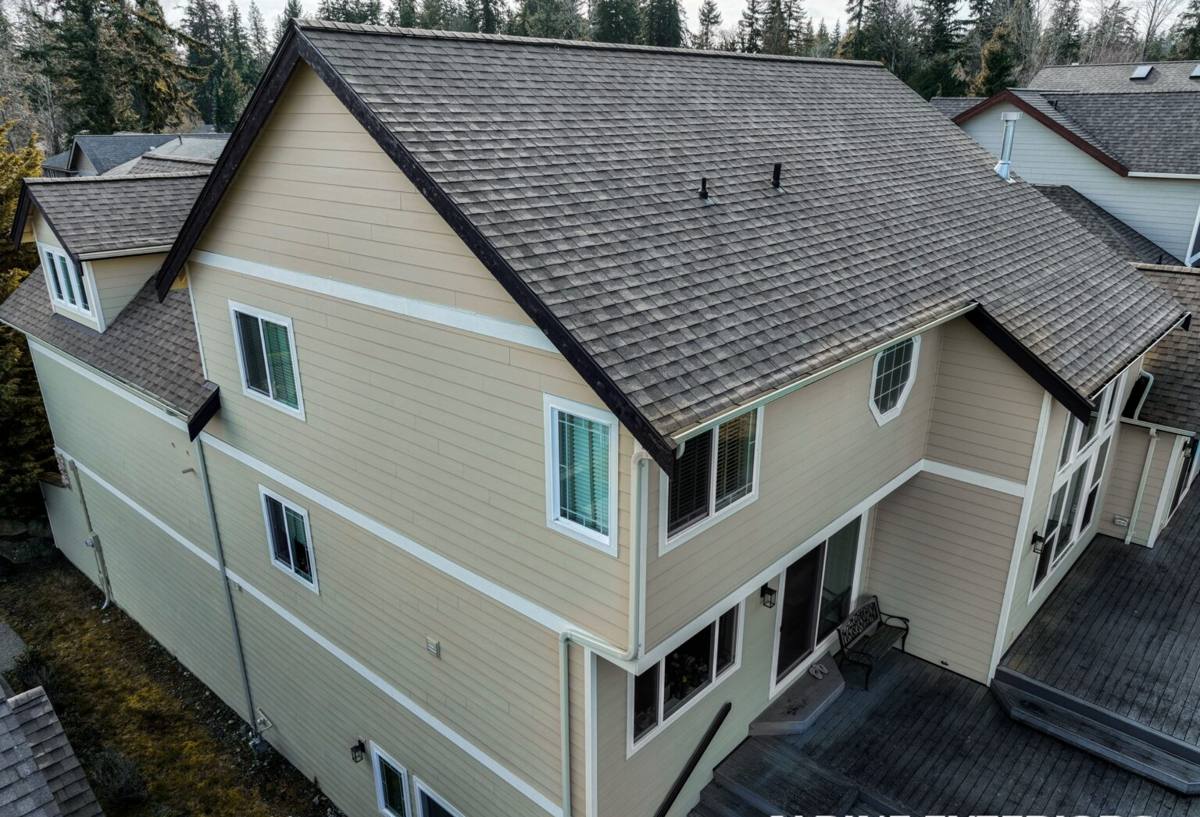
What Kent Homes Actually Need From a Deck
The basics of deck-building don't change from region to region — you still need solid footings, proper joist spacing, and code-compliant railings. What changes here is how much margin you build in against water and moss. A deck designed correctly for this climate looks almost identical to one built anywhere else, but the details underneath and the material choices are different.
Drainage and Airflow
Every deck we build is designed to shed water quickly and dry out between rain events. That means consistent board spacing for drainage, joist layouts that avoid low spots where water can pool, and enough clearance underneath for air to actually move. A deck sitting flush to grade with no airflow underneath is a deck that stays damp for days after every storm — and damp wood is exactly what moss and mildew need to take hold.
Ledger and Flashing Details
The ledger board — where the deck attaches to the house — is the single most common failure point on decks in this region, and it's almost always a flashing problem, not a framing problem. Water running down the siding needs a clear path over the top of the ledger flashing and away from the house, not a path that lets it wick behind the board. We flash every ledger connection properly and use a water-resistant barrier between the ledger and the house rim joist, which is a step that's easy to skip and expensive to fix later.
Fasteners and Hardware
Cheap or mismatched fasteners are one of the fastest ways to get ugly black staining and premature corrosion on a deck out here. We use fasteners and structural hardware rated for exterior, high-moisture use and matched to the decking and framing materials — mixing metals or using interior-grade screws is a shortcut that always costs the homeowner more down the road in staining, streaking, or hardware failure.
Choosing the Right Decking Material for This Climate
Every decking material available today can be made to work in King County, but they don't all behave the same way once the rain starts. We walk every homeowner through the real trade-offs rather than just pushing whatever has the best margin — the right choice depends on budget, how much upkeep you actually want to do, and how the deck sits relative to sun and shade.
| Material | Upfront Cost | Moss/Mold Resistance | Maintenance |
|---|---|---|---|
| Pressure-treated wood | Lowest | Fair — needs regular cleaning and sealing | Annual cleaning, re-sealing every 1-2 years |
| Cedar | Moderate | Good naturally, fades without upkeep | Periodic cleaning and staining to hold color |
| Composite decking | Higher | Very good — engineered to resist moisture | Occasional washing, no staining or sealing |
| PVC/capped decking | Highest | Best — fully moisture-resistant surface | Wash as needed, essentially no sealing |
Wood decking is a legitimate choice and plenty of Kent homeowners want the look of real cedar or fir, but it does require you to stay on top of cleaning and sealing — skip a season or two here and moss and mildew will get ahead of you. Composite and PVC decking cost more up front but shed water and resist moss growth without annual sealing, which is why we see more homeowners in this climate lean that direction for long-term, lower-maintenance decks. Neither is objectively "better" — it's a real trade-off between upfront cost and long-term upkeep, and we lay it out honestly rather than steering you toward the higher-margin option.
Framing and Substructure — Where Decks Actually Fail
The visible decking gets all the attention, but the framing underneath is what determines whether a deck lasts fifteen years or thirty. In a climate this wet, we treat the substructure as the part of the job that can't have shortcuts.
Footings
Footings need to be sized and set to King County building code depth, which accounts for our soil conditions and frost line. Undersized or shallow footings are a common issue we find on older decks that are starting to feel spongy or uneven — the deck hasn't rotted, it's settled.
Joist Protection
Untreated cuts and drilled holes in joists are an open invitation for rot in a climate that stays damp for months at a time. We seal cut ends and fastener penetrations before decking goes down, and where budget allows, we recommend joist tape over the top of the framing to keep water from sitting directly on the wood.
Post Bases
Posts set directly in concrete or sitting in standing water are a slow-motion failure. We use elevated post bases that keep the wood off wet concrete and let water drain away from the post end, which matters a lot more here than it does in a dry climate.
Railings, Stairs, and Code Compliance
Railing height, baluster spacing, and stair geometry are all governed by Washington building code, and King County permitting will check these details on any deck over a certain height off grade. We build every railing and stair system to code from the start rather than treating it as a punch-list item, and we handle the permitting and inspection process as part of the job so you're not left chasing it down yourself.
Material choice matters here too — a wood railing on top of composite decking, or metal cable rail, all have different maintenance needs and different tolerance for standing water at the base connections. We size and detail these connections the same way we do the deck itself: with drainage and long-term durability in mind, not just what looks right on installation day.
Our Process, Start to Finish
Design and Site Walk
We start with an on-site visit to look at how the house sits, where water naturally drains, sun and shade patterns, and what you actually want to use the space for. That informs the layout, decking material, and railing style before we ever write up a proposal.
Permitting
Most decks of any real size require a permit through the local jurisdiction. We handle the permit application and scheduling of inspections so the project stays compliant without you having to manage that process.
Build
Footings and framing go in first and get inspected before decking is installed. We don't cover up substructure work that hasn't been signed off — that inspection exists for a reason, and skipping ahead of it is how problems get buried instead of caught.
Final Walkthrough
Once the deck is complete, we walk it with you, cover basic care for whatever material you chose, and make sure everything — railings, stairs, gates if applicable — is solid before we call the job done.
Living With Your Deck: Maintenance in a Wet Climate
Even a well-built deck needs some seasonal attention in King County, and how much depends heavily on the material you chose.
- Clear leaves and debris out of gaps between boards before fall rains start — trapped organic matter is what feeds moss and mildew
- Sweep or rinse off moss growth as soon as you see it rather than letting it establish; it's far easier to remove early
- Check that gutters and downspouts near the deck aren't dumping extra water onto the deck surface or framing
- For wood decking, plan on cleaning and re-sealing on a regular cycle — skipping a season lets moisture and moss get ahead of the finish
- Walk the deck once a year and check for soft spots, loose fasteners, or gaps opening up at the ledger connection
- Keep planters and furniture feet off direct board contact where possible to avoid trapping moisture underneath
None of this is heavy work, but skipping it entirely is how a fifteen-year deck turns into a five-year deck in this climate.
Why Hiring a Crew That Already Works in Kent Matters
Deck-building fundamentals are the same everywhere, but the details that make a deck last in King County — ledger flashing, fastener selection, footing depth, drainage layout — are shaped by conditions specific to this region. A crew that mostly builds in drier climates isn't necessarily building wrong, but they're often building without the margin this weather demands, because they haven't had to fix the moss and rot problems that show up here a few years later.
We work in Kent and across King County regularly, which means we're familiar with local permitting requirements, typical soil and drainage conditions in this area, and the failure patterns that show up on older decks we're called in to repair. That local experience shapes every deck we build going forward — we've seen what happens when the details get skipped, and we build so they don't get skipped on your project.
Get a Free Estimate on Your Kent Deck Project
Whether you're planning a new deck, replacing an aging one, or dealing with a deck that's showing signs of moisture damage, we're happy to take a look and give you an honest assessment — no pressure, no obligation. Use the form below to request a free estimate and we'll walk through your options for this project together.